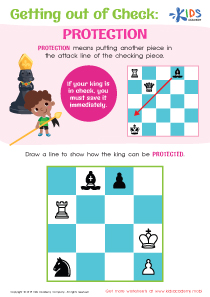
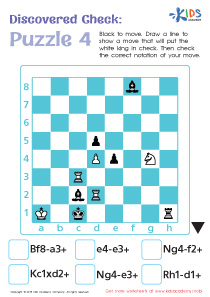
Critical Thinking Chess Worksheets for Ages 5-7
4 filtered results
-
From - To
Unlock the power of critical thinking for your young learners with our engaging Chess Worksheets designed for ages 5-7! These thoughtfully crafted worksheets introduce foundational chess concepts while promoting essential cognitive skills like problem-solving, logic, and strategic thinking. Each activity encourages children to explore different scenarios on the chessboard, fostering analytical abilities and creative planning. Perfect for classroom settings or at-home learning, our worksheets make learning fun and interactive. Equip your child with the tools they need to become critical thinkers while enhancing their appreciation for this timeless game. Explore our collection today and watch their skills flourish!
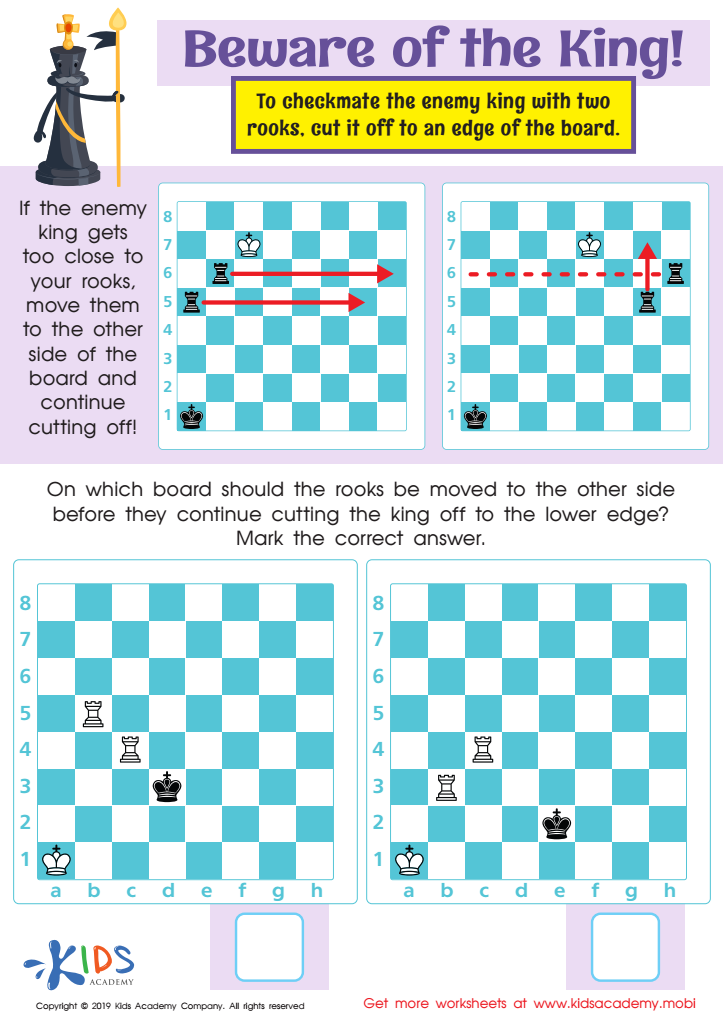
Beware of the King! Worksheet
 Assign to My Students
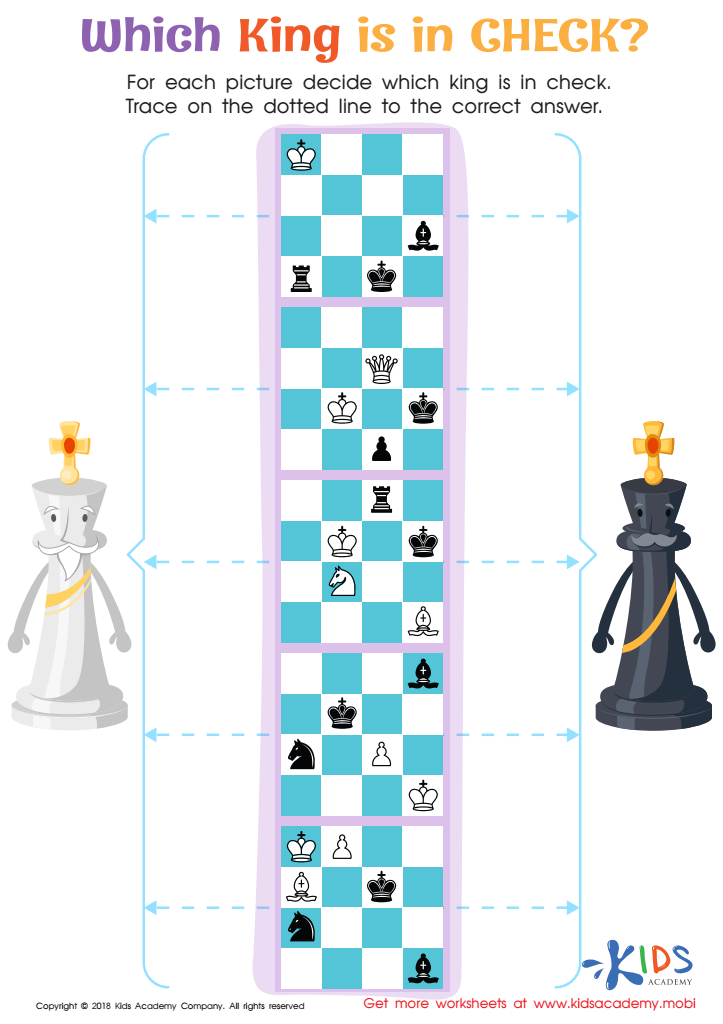
Which King is in Check? Worksheet
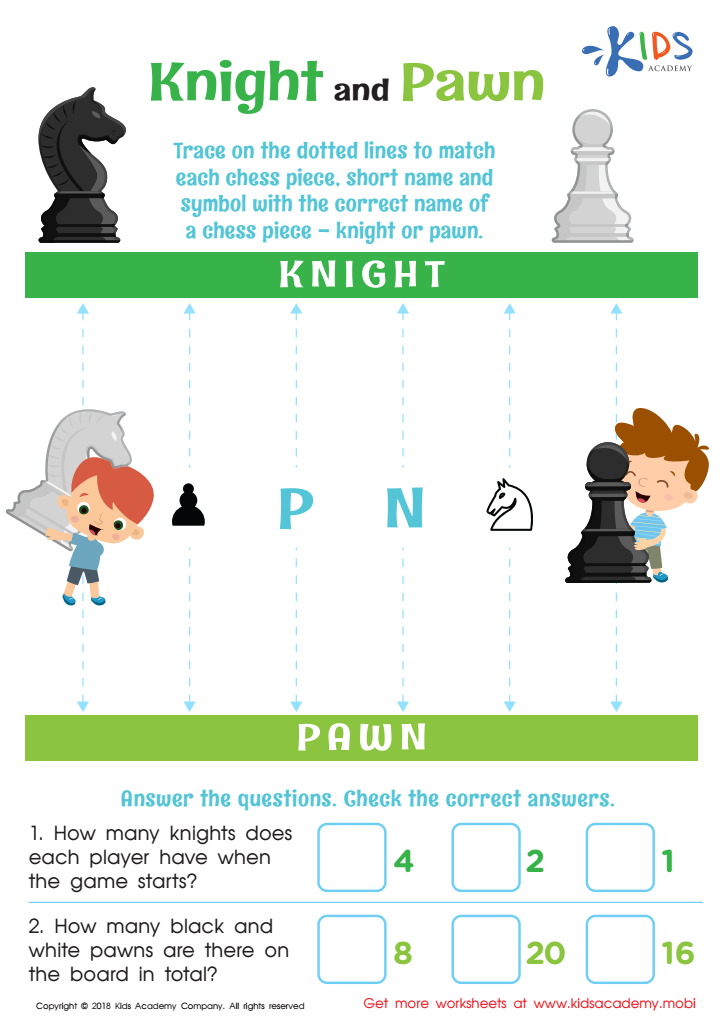
Knight and Pawn Worksheet
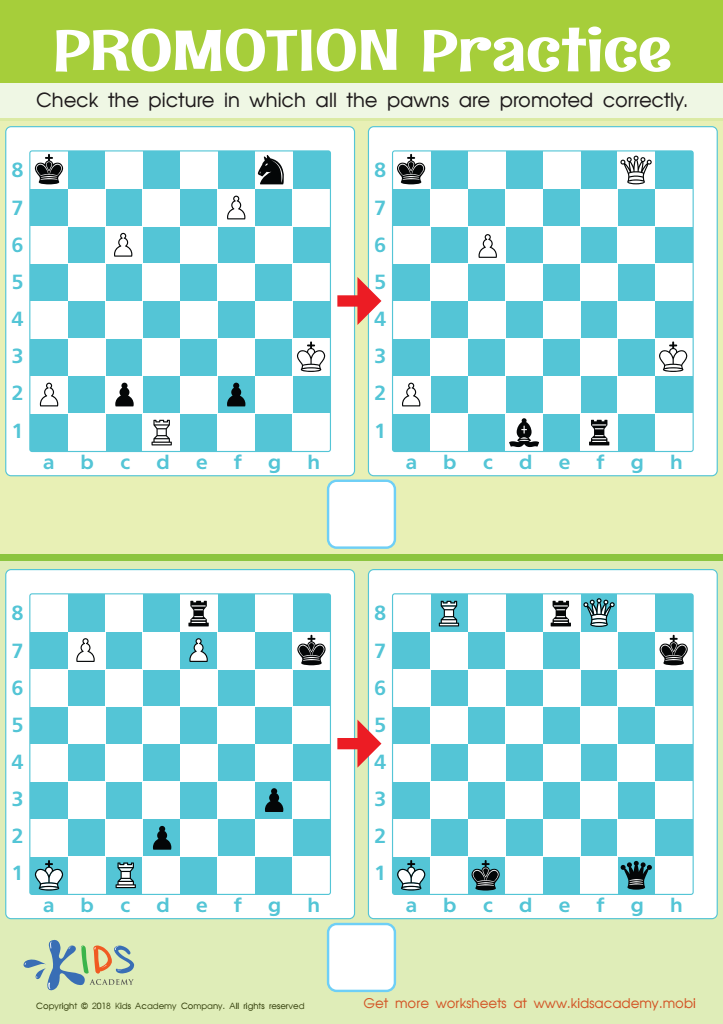
Promotion Practice Worksheet








Critical Thinking Chess is an invaluable tool for enhancing cognitive skills in children aged 5-7. Parents and teachers should care about introducing chess at this early stage because it fosters essential life skills such as problem-solving, decision-making, and strategic thinking. The game encourages children to think ahead and consider the consequences of their actions, which translates to better reasoning abilities in academic and everyday scenarios.
Moreover, playing chess improves concentration and memory. As children learn to recall the movement rules for different pieces and anticipate their opponent’s strategies, they develop patience and focus. This mental discipline can significantly benefit their overall learning experiences.
Chess also promotes social interaction and emotional intelligence. Children learn to respect opponents, handle wins gracefully, and cope with losses—important emotional skills they will carry into other areas of their lives. By participating in shared activities, kids develop communication skills and build relationships with peers.
In essence, engaging children in Critical Thinking Chess lays the groundwork for a wide array of cognitive abilities and social skills, which are vital for their academic success and personal development. Encouraging such growth presents a fantastic opportunity for parents and teachers to nurture well-rounded individuals.