Alphabetical order Worksheets for Ages 5-7
3 filtered results
-
From - To
Welcome to our comprehensive collection of Alphabetical Order Worksheets designed specifically for children aged 5-7! These engaging worksheets are perfect for helping young learners master the skill of arranging words in alphabetical order. Through fun and interactive exercises, kids will enhance their understanding of the alphabet, improve their vocabulary, and develop critical thinking skills. Our user-friendly resources offer a range of activities, including sorting, matching, and word puzzles, making learning enjoyable and effective. Whether in the classroom or at home, these worksheets are an excellent way to support your child’s early literacy development and set the foundation for future success. Explore our worksheets today!
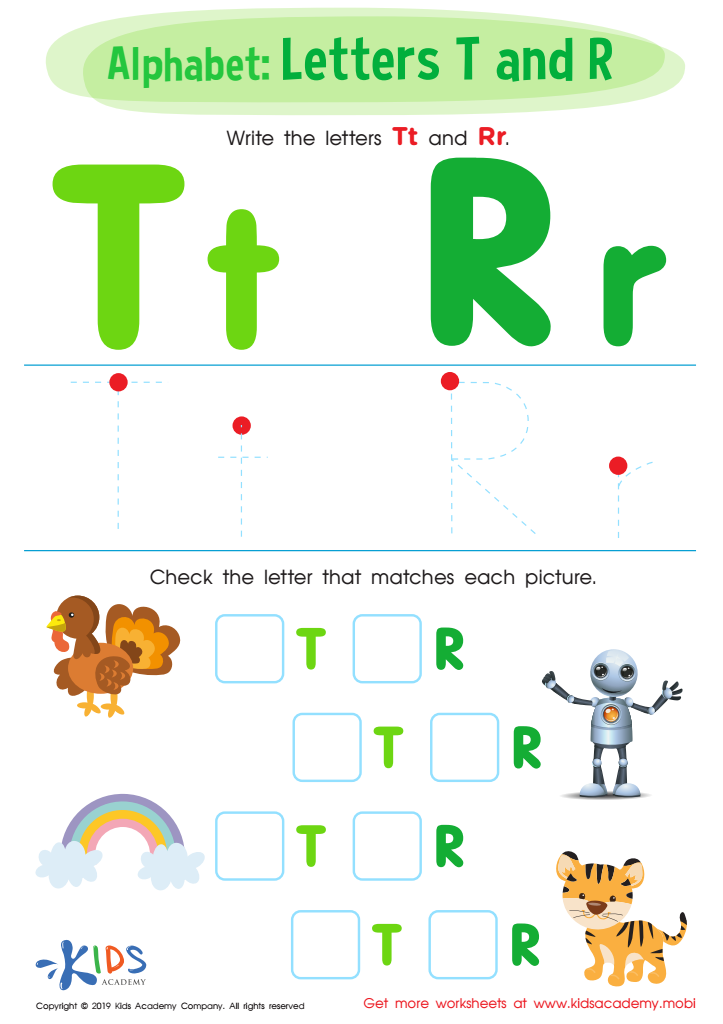
Letters T and R Worksheet
 Assign to My Students
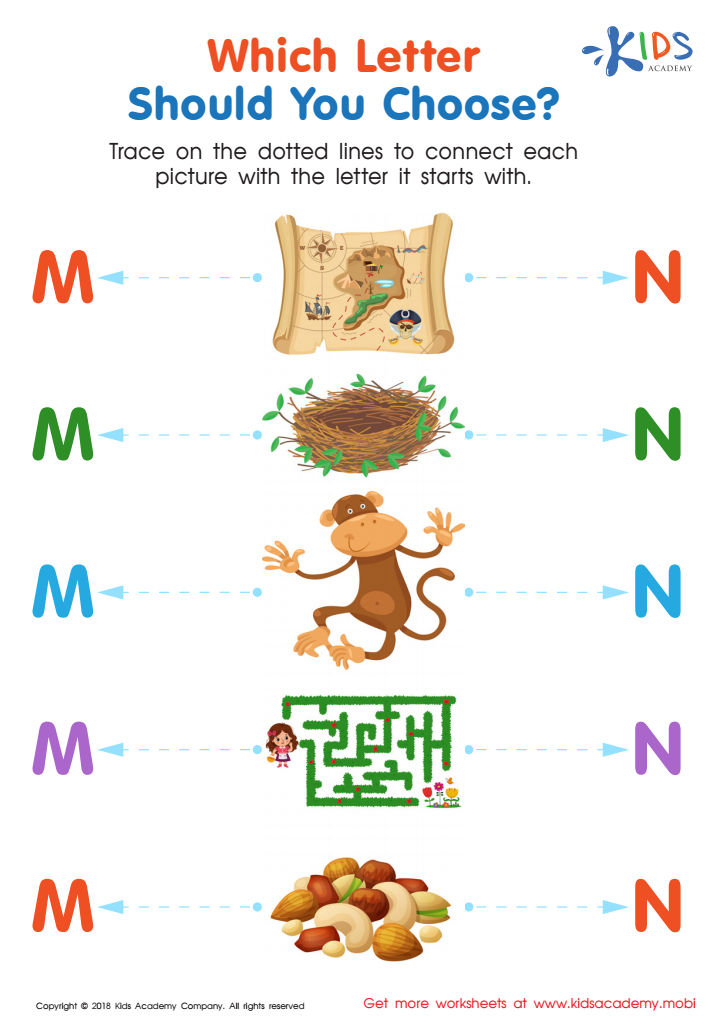
Which Letter Should you Choose? Worksheet
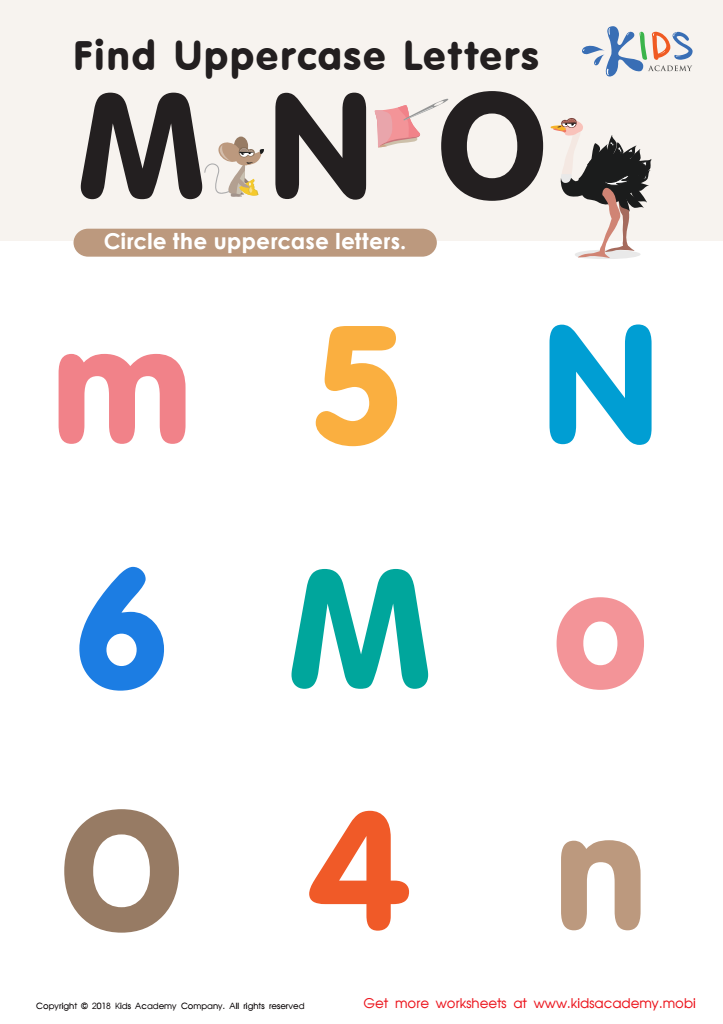
Find Uppercase Letters M, N, and O Worksheet







Understanding alphabetical order is fundamental for children aged 5-7 as it lays the groundwork for effective reading and writing skills. At this developmental stage, children are beginning to master the alphabet, recognize letters, and make connections between sounds and their corresponding letters. Familiarity with alphabetical order helps students organize information, enhance their vocabulary, and improves their spelling abilities.
Knowing how to alphabetize strengthens children’s research skills, allowing them to locate books, words, or answers more efficiently. As they progress in school, students are often required to sort and reference materials alphabetically, whether in libraries, classroom activities, or homework exercises. This ability cultivates independence and confidence in their learning experiences.
Additionally, engaging children in games and activities related to alphabetical order fosters a fun learning environment. It builds a strong foundation for further language development while encouraging teamwork and collaboration as they explore and practice together.
For these reasons, parents and teachers should prioritize teaching alphabetical order to enrich children's learning experiences, support their educational development, and prepare them for future academic challenges. This seemingly simple skill opens doors to a broader understanding of literacy and organized thought, which are essential for lifelong learning.








