Astronomy basics Worksheets for Ages 5-7
3 filtered results
-
From - To
Unleash the wonders of the universe with our "Astronomy Basics Worksheets for Ages 5-7"! Perfectly crafted for young learners, these interactive worksheets introduce kids to the fascinating world of stars, planets, and space exploration. Each activity is thoughtfully designed to spark curiosity, enhance educational foundations, and develop crucial learning skills. From identifying celestial bodies to understanding simple astronomical concepts, your child will embark on an exciting journey through the cosmos. Ideal for both classroom and home use, our worksheets make astronomy fun and accessible for all budding astro-enthusiasts. Explore the stars, and ignite a lifelong passion for the galaxy!
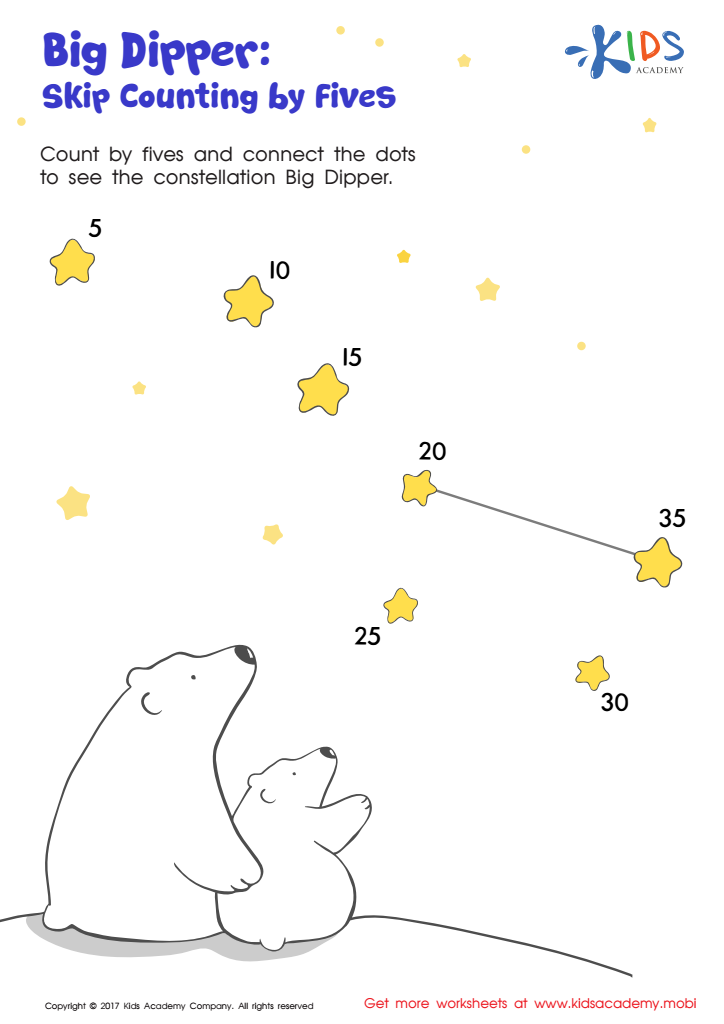
 Assign to My Students
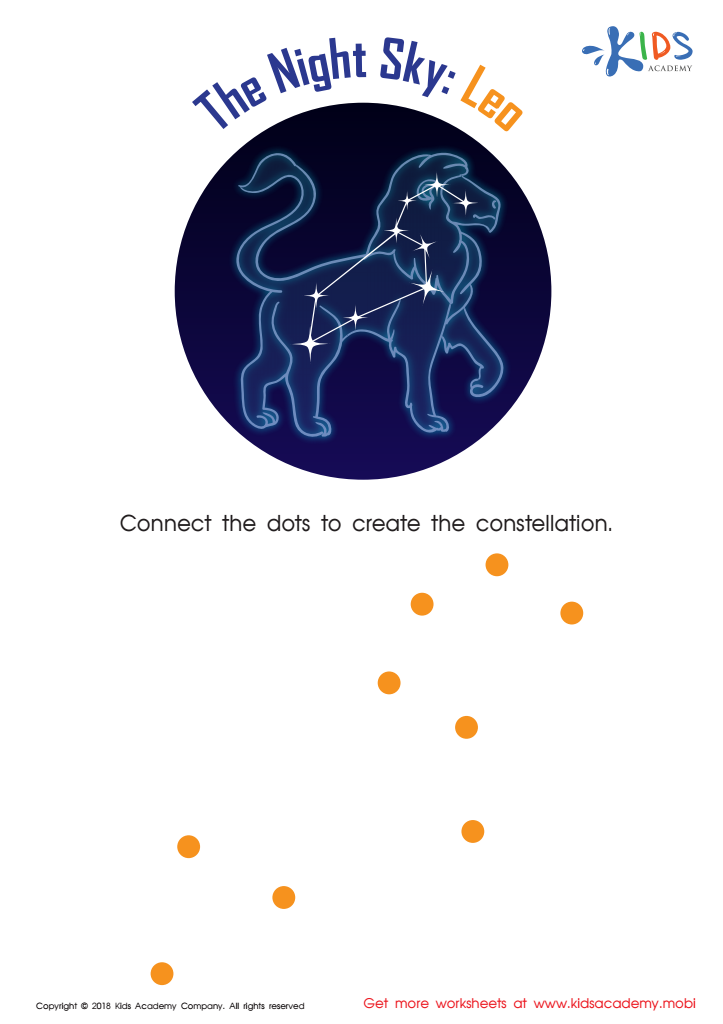
The Night Sky: Leo Worksheet
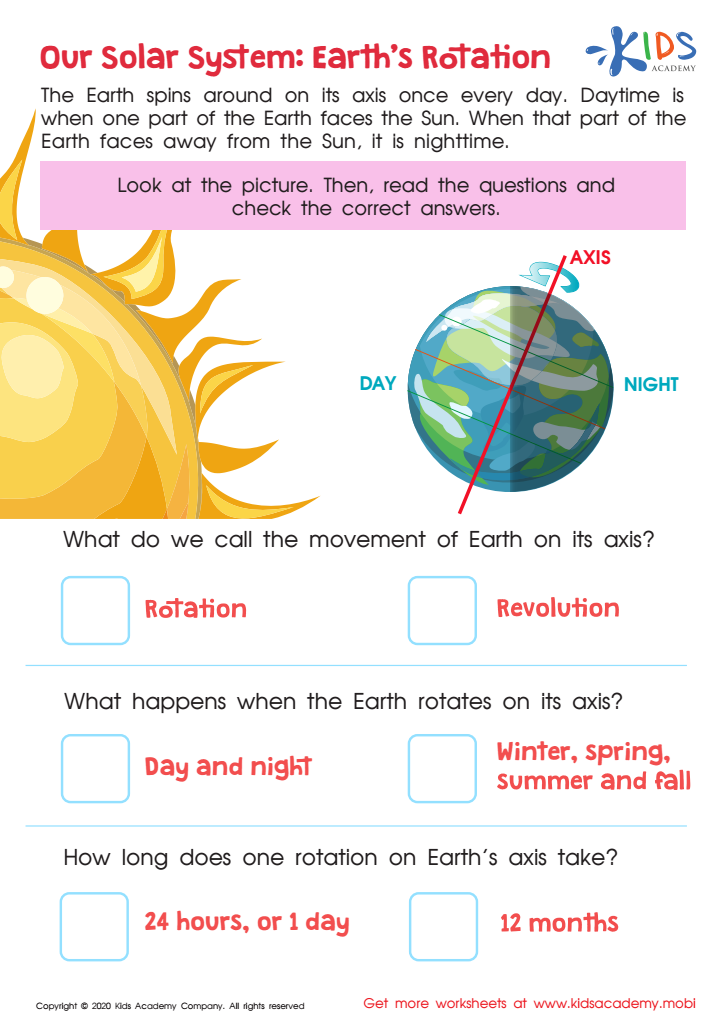
Our Solar System: Earth's Rotation Printable








Introducing children aged 5-7 to the basics of astronomy is both exciting and educational, sparking a sense of wonder and curiosity about the world around them. At this early stage, children's brains are highly receptive to new information, and learning about celestial bodies can significantly expand their horizons.
First, basic astronomy concepts help foster an early interest in science, laying groundwork for future STEM (science, technology, engineering, maths) learning. Understanding the sun, moon, stars, and planets helps young kids develop observation skills and critical thinking. They begin to ask questions and seek answers, thereby honing their problem-solving skills.
Moreover, discussing vast spaces, the concept of time through day and night cycles, and even simple observational activities can captivate their imagination and creativity. Space-themed stories or activities can make learning authentic and relatable, fostering a love of learning overall.
Parents and teachers can integrate astronomy basics seamlessly into day-to-day life. Observing the moon's phases, identifying simple constellations, or even discussing weather patterns related to planetary movement provide real-life context to abstract concepts. Moreover, these activities encourage family or class-bonding experiences through shared wonder and exploration.
Ultimately, early exposure to astronomy can inspire awe, instill a lifelong interest in science, and equip children with an expanded understanding of their place in the universe, ensuring a well-rounded foundation for future learning.








