Categorizing objects Worksheets for Ages 5-7
5 filtered results
-
From - To
Explore our "Categorizing Objects Worksheets" designed specifically for children ages 5 to 7. These engaging and interactive worksheets help young learners develop essential cognitive skills by sorting and classifying various objects. Through fun activities, kids will learn to identify similarities and differences, enhancing their critical thinking abilities. Each worksheet is tailored to keep children motivated while adapting to different learning styles. Perfect for at-home practice or classroom use, our resources provide a solid foundation in early math and science concepts, all while fostering a love for learning. Download your free worksheets today and watch your child's categorization skills flourish!
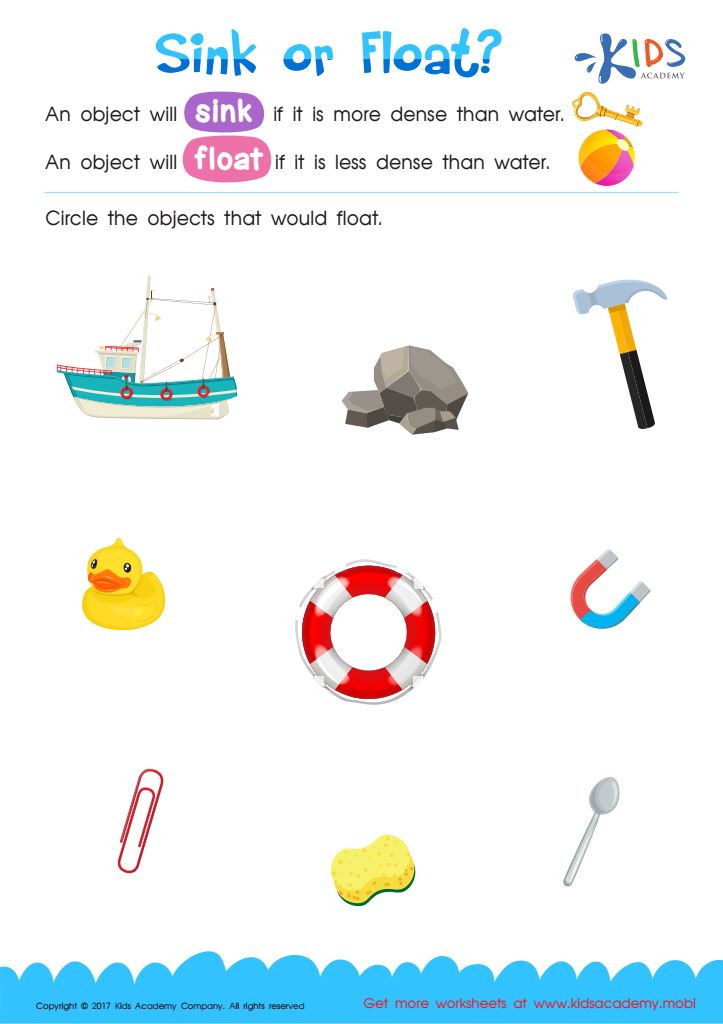
Sink or Float Printable
 Assign to My Students
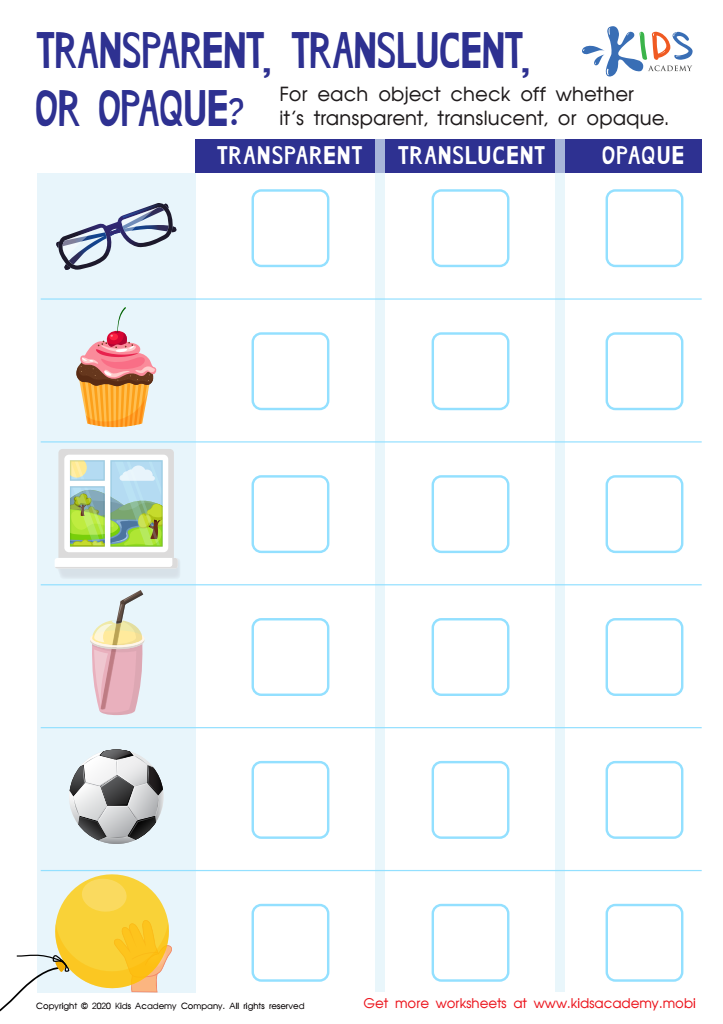
Transparent, Translucent, or Opaque Worksheet
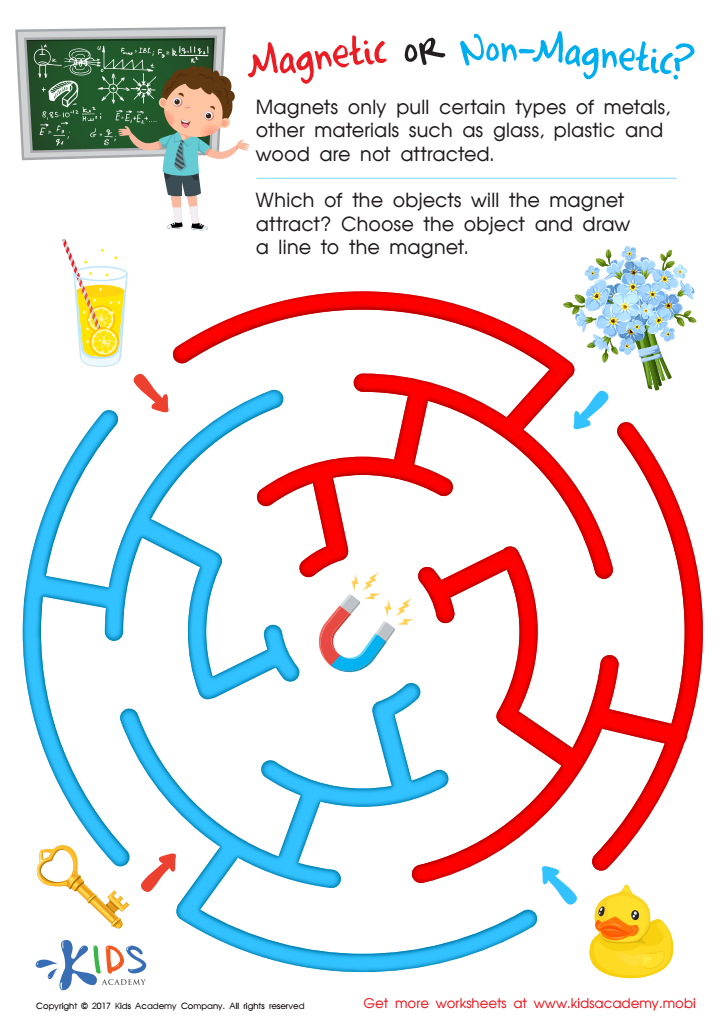
Magnetic or Non–Magnetic Worksheet
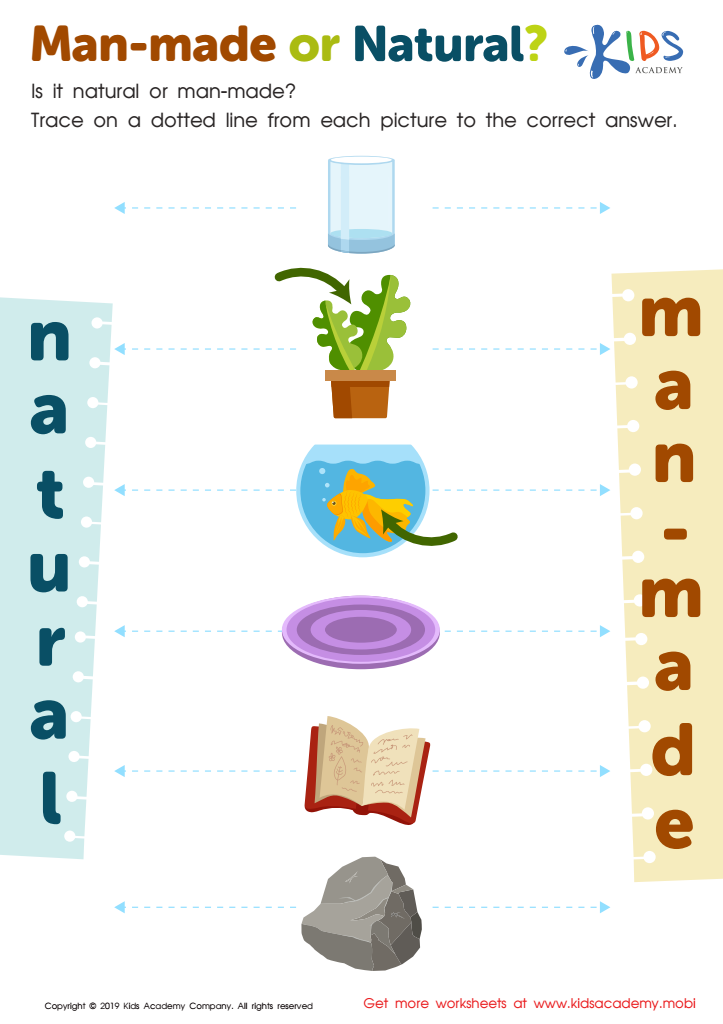
Man-Made or Natural? Worksheet





Categorizing objects is a fundamental skill for children aged 5 to 7, as it forms the basis for critical thinking and problem-solving. During these formative years, children actively explore their environment and begin to recognize patterns and relationships among objects. Parents and teachers should care about this skill because it enhances cognitive development and helps children make sense of the world around them.
Categorization encourages kids to group similar items, which sharpens their observation skills and promotes logical reasoning. For example, when children categorize animals by their habitats or sort fruits by color, they not only learn vocabulary but also develop an understanding of classification and differences. This foundation is crucial for later learning in subjects like science and math.
Furthermore, categorizing fosters creativity and boosts confidence. As children confidently classify and sort, they express their unique perspectives and insights, which nurtures their self-esteem.
Finally, these skills promote social interaction. Collaborative sorting activities allow children to engage with their peers, developing teamwork and communication skills. Overall, emphasizing the importance of categorizing objects empowers young learners to explore, understand, and navigate their surroundings more effectively, laying a strong groundwork for lifelong learning.








