Comparative skills Worksheets for Ages 5-7
3 filtered results
-
From - To
Enhance young learners' understanding of comparative skills with our engaging worksheets designed for ages 5-7. These tailored activities help kids develop crucial abilities such as comparing sizes, amounts, weights, and more through fun exercises involving visual aids and relatable scenarios. Our worksheets are perfect for honing observational skills, critical thinking, and building a strong mathematical foundation. Each activity encourages interactive learning, ensuring your child grasps the concept of comparisons in a joyful and effective manner. Ideal for both classroom use and at-home practice, our printable worksheets make learning comparisons enjoyable and accessible for young minds.
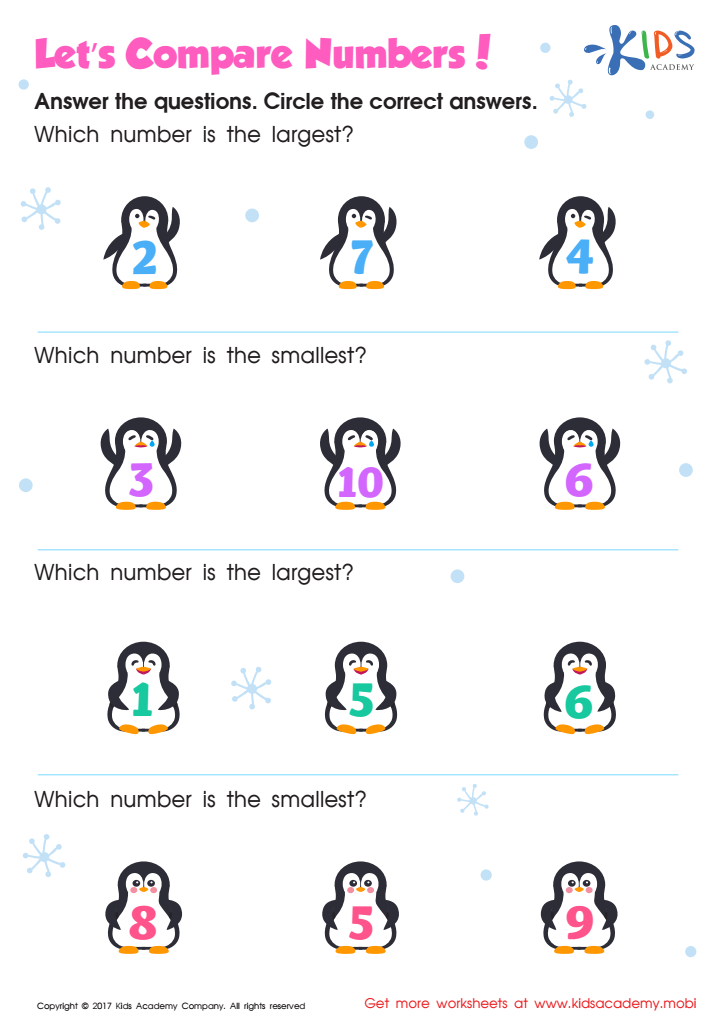
Comparing Numbers 1–10 Worksheet Kindergarten
 Assign to My Students
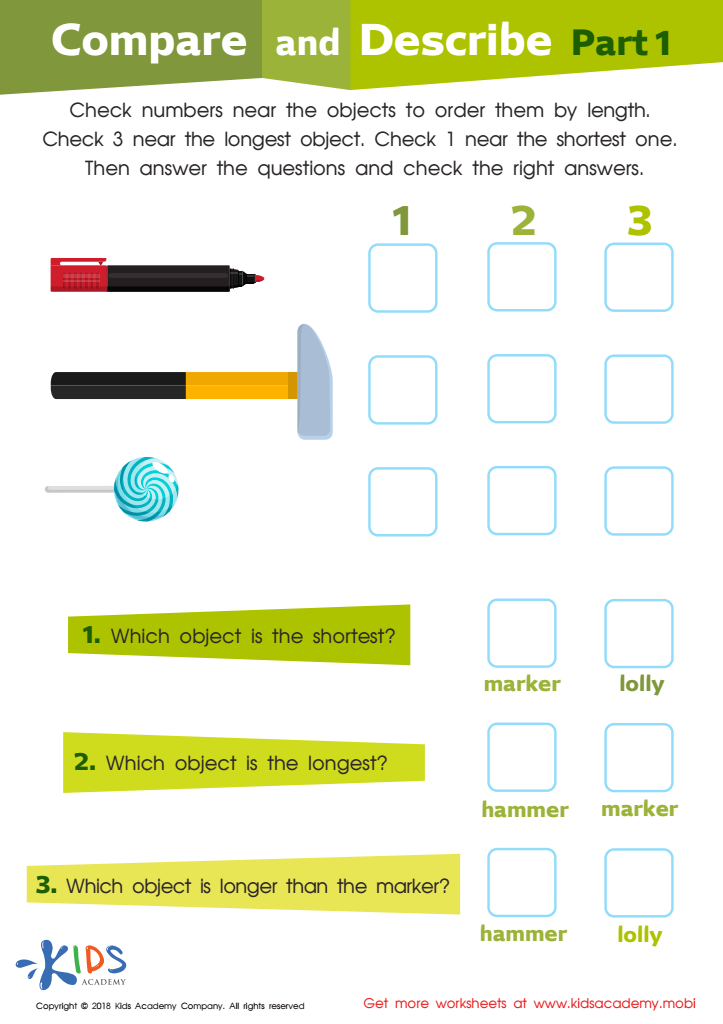
Compare and Describe: Part 1 Worksheet
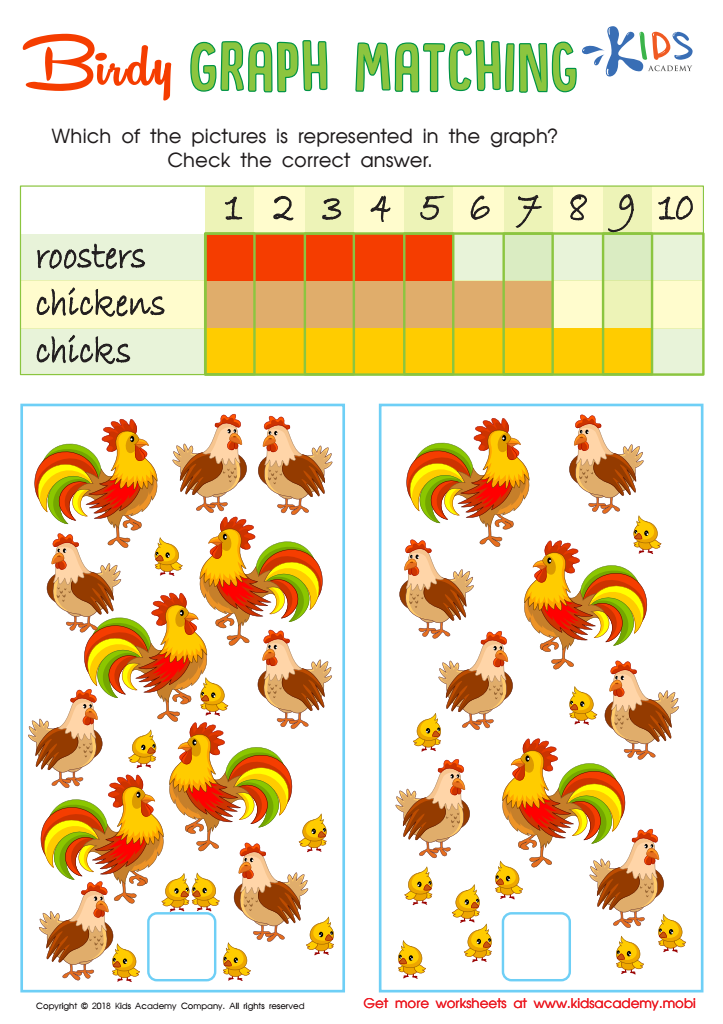
Birdy Graph Matching Worksheet





.jpg)


Comparative skills are crucial for young children, ages 5-7, as they form the foundation for critical thinking and problem-solving abilities. These skills involve recognizing and describing similarities and differences, which are fundamental for cognitive development. Parents and teachers should emphasize comparative skills to help children learn to categorize and organize information logically. For example, comparing the size, shape, or color of different objects enhances observational skills and introduces basic mathematical concepts, supporting future learning in science, math, and language arts.
Encouraging comparative thinking also aids in developing language and communication abilities. When children articulate how two items are similar or different, they practice using descriptive language and build their vocabulary. This early exercise in reasoning and articulation fosters a deeper understanding of their environment and experiences.
Moreover, comparative skills promote emotional and social development. By comparing their own experiences with those of others, children learn empathy and perspective-taking, crucial for social interactions. Engaging in comparison also supports decision-making, as children learn to weigh options based on observed differences and similarities.
In a nutshell, nurturing comparative skills from an early age prepares children for more complex cognitive tasks, enhances communication, fosters empathy, and builds a strong foundation for lifelong learning and personal development.








