
Constellation identification Worksheets for Ages 5-7
3 filtered results
Difficulty Level
Grade
Age
-
From - To
Subject
Activity
Standards
Discover the wonders of the night sky with our Constellation Identification Worksheets, specially designed for children ages 5-7! These engaging printables offer a fun and educational way for young learners to explore the patterns and stories of constellations. Each worksheet features vibrant illustrations and simple activities that encourage creativity and curiosity about astronomy. Kids will enjoy tracing, coloring, and matching constellations while developing essential skills such as observation and critical thinking. Perfect for home learning or classroom activities, our worksheets make learning about the stars an exciting adventure! Ignite a passion for space by starting your child's celestial journey today.
Favorites
With answer key
Interactive
 Assign to My Students
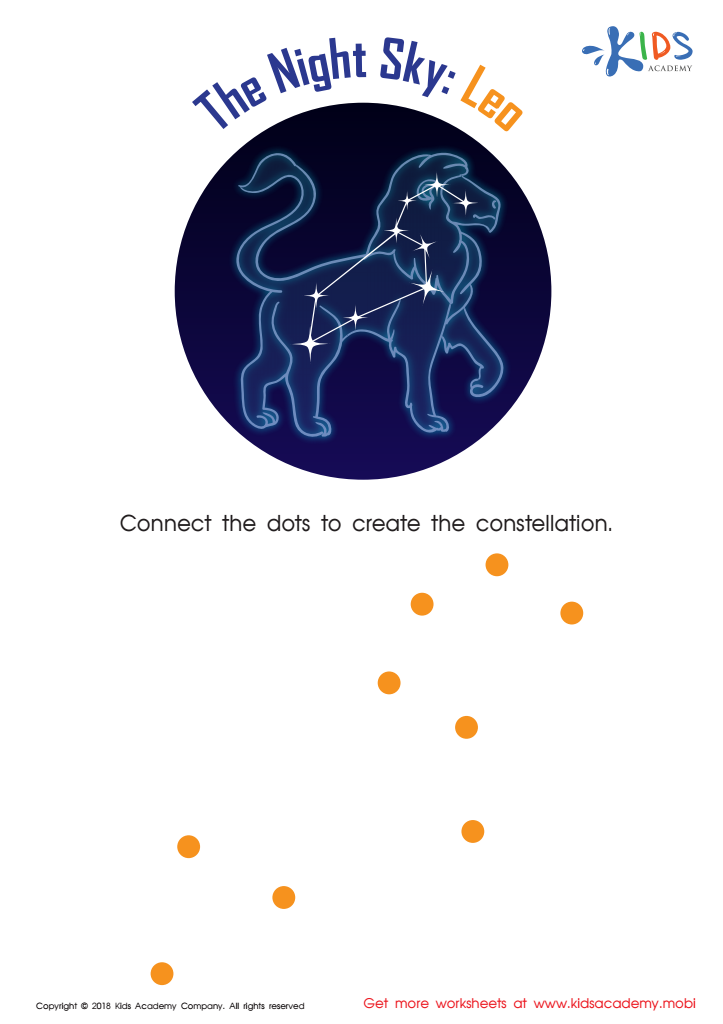
The Night Sky: Leo Worksheet
Let your kids explore the wonders of the stars with this fun worksheet! They'll connect the dots to create the constellation Leo. Night gazing instruments, a telescope or this printout can help your kids learn about constellations and horoscopes. Download the worksheet and let the star watching begin!
The Night Sky: Leo Worksheet
Worksheet
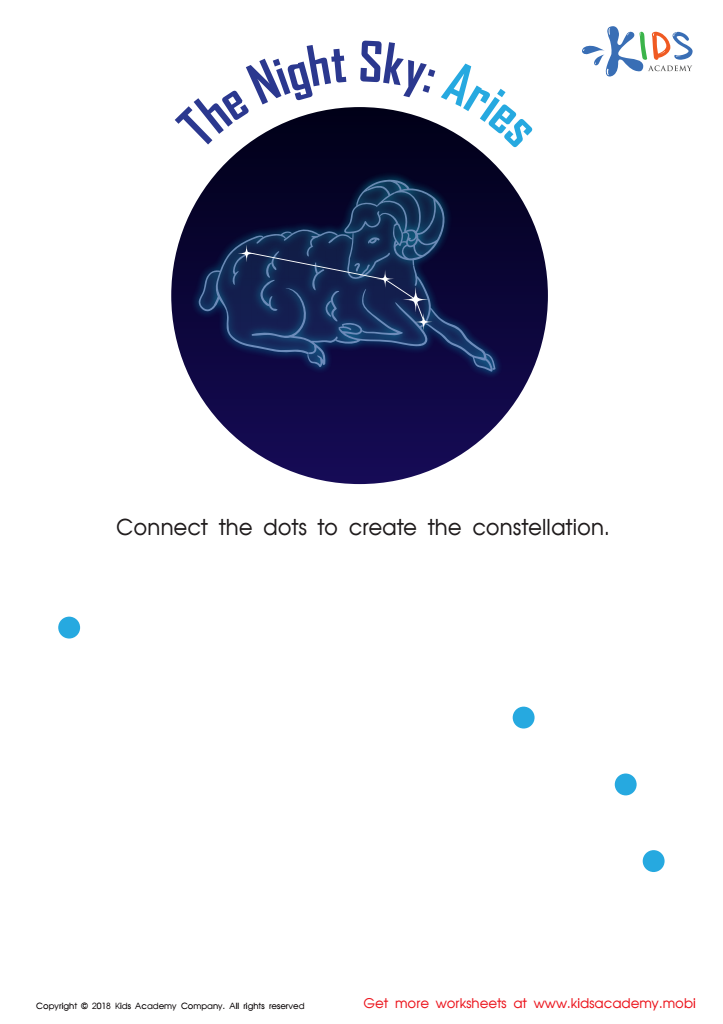
The Night Sky: Aries Worksheet
Does your child know constellations and horoscope? If you've got them interested in horoscope readings and star gazing, the Aries constellation in the pdf should be familiar. Have them look at the picture and identify it. If they can't, tell them it's Aries. Then, help them connect the dots to form the constellation.
The Night Sky: Aries Worksheet
Worksheet
Join Kids Academy for Free
Who is primarily going to use this learning content?







Constellation identification is a valuable activity for children aged 5-7 that promotes curiosity, creativity, and critical thinking. Learning about constellations helps foster a sense of wonder about the universe and nurtures a child’s natural inquisitiveness. This age group is particularly receptive to storytelling, and the myths and history behind constellations can ignite their imagination and spark a lifelong interest in science and astronomy.
Teachers and parents should encourage constellation identification as it introduces foundational skills like observation and pattern recognition, which are essential for cognitive development. When children learn to spot familiar shapes in a complex sky, they practice visual literacy and develop spatial awareness. Additionally, activities like stargazing can be fun, reinforcing teamwork and communication among families and peer groups.
Incorporating constellation identification into educational activities can also enhance STEM learning, linking celestial observations to lessons in math, science, and art. Moreover, discussing constellations creates opportunities for essential conversations about our planet, the environment, and the role of stars in cultures worldwide. By emphasizing these connections, caregivers can foster a holistic appreciation for learning while nurturing a generation of inquisitive learners eager to explore the universe's mysteries.








