Counting money Worksheets for Ages 5-7
3 filtered results
-
From - To
Enhance your child's financial literacy with our Counting Money Worksheets for Ages 5-7! These fun, interactive activities are designed to teach young learners the basics of recognizing coins and bills, addition, subtraction, and making change. With colorful and engaging exercises, kids will develop crucial math skills while gaining confidence and independence. Ideal for both classroom and at-home learning, our worksheets are an excellent resource for hands-on practice that makes learning about money enjoyable and practical. Start building your child's foundation for a successful financial future today with Kids Academy's expertly crafted counting money worksheets!
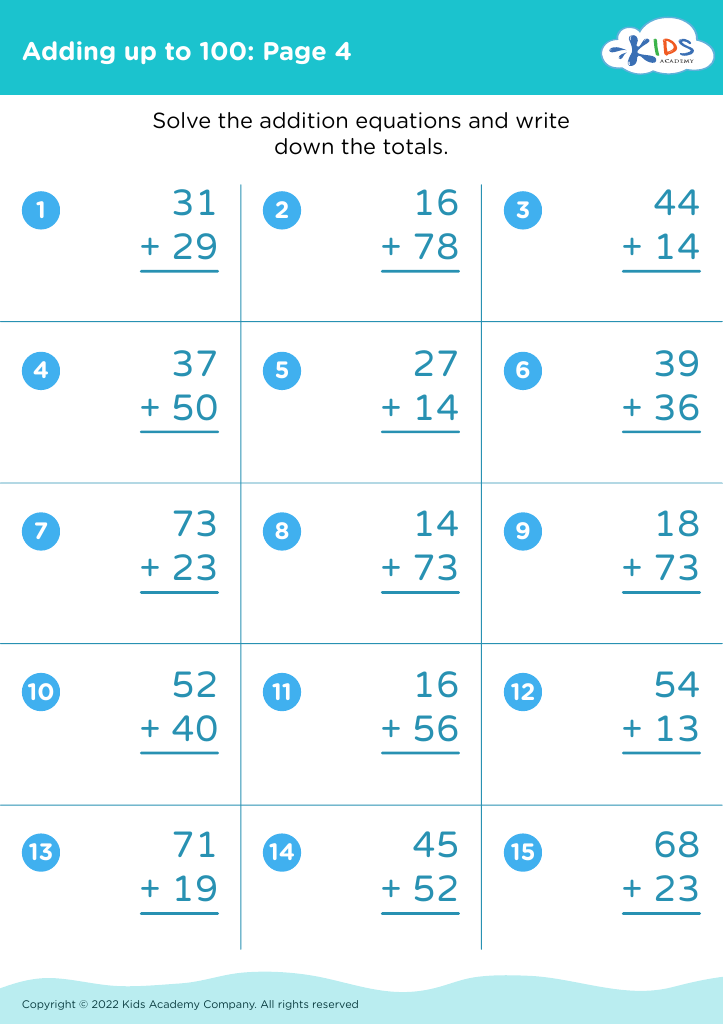
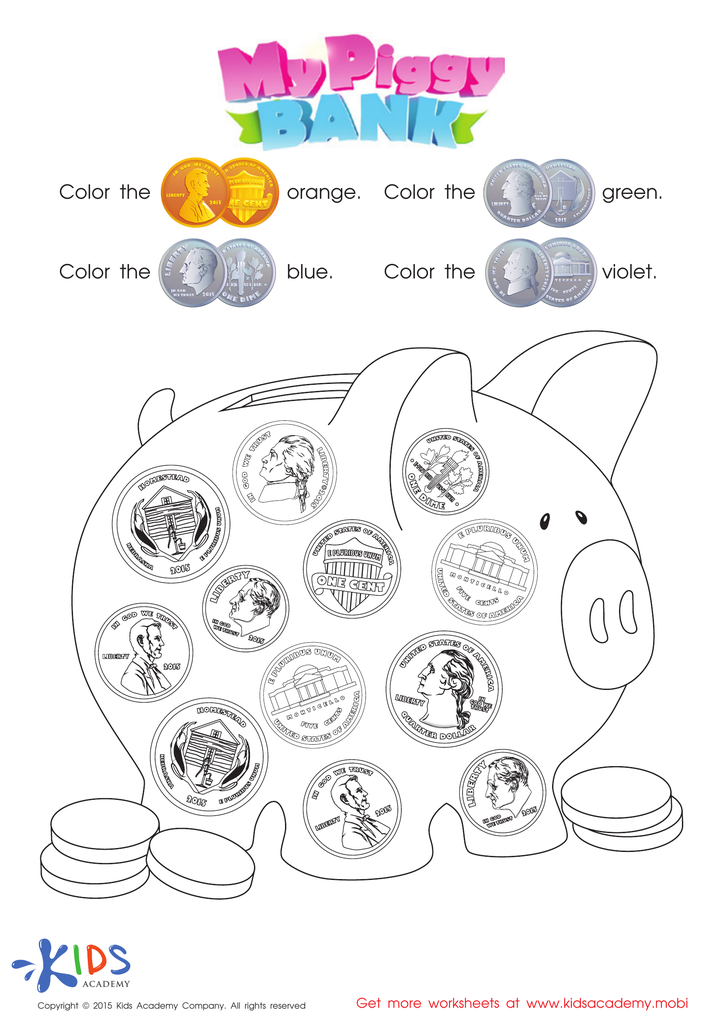
Recognizing Money Money Worksheet
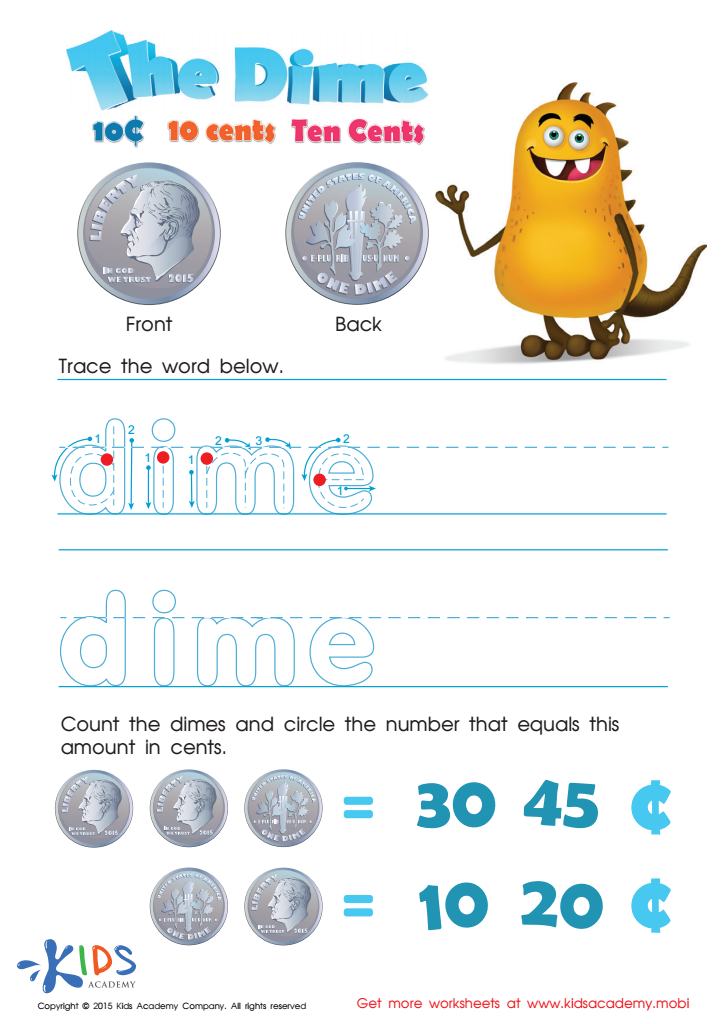
Ten Cents or the Dime Money Worksheet
 Assign to My Students








Teaching young children between the ages of 5 and 7 to count money is crucial for several developmental and practical reasons. Firstly, it lays a solid foundation for their mathematical skills. Learning to identify and count different denominations of coins and bills helps children grasp fundamental concepts of addition, subtraction, and value comparison, which are key components of their early math curriculum.
Secondly, it promotes financial literacy from an early age. Understanding money helps children realize its value, how it is earned, and the importance of saving. This knowledge can foster responsible financial habits and decision-making as they grow older, setting a precedent for economic independence and responsible spending.
Thirdly, counting money enhances cognitive development. It involves multi-sensory learning by touching coins, recognizing their shapes, colors, and symbols, and mentally calculating their values. This multi-faceted approach supports memory retention, problem-solving skills, and critical thinking.
Lastly, recognizing and handling money boosts confidence and practical life skills. Activities like playing store or counting allowance introduce real-world scenarios, making the concept of money tangible and teaching them how to navigate everyday encounters involving cash transactions.
Parents and teachers should thus prioritize money-counting exercises to help children develop mathematically, cognitively, and practically, ensuring they grow into competent and financially literate individuals.








