Filters

384 filtered results

Clear all filters
Favorites
With answer key
Interactive

384 filtered results

Difficulty Level

Grade


Check out this FREE "Counting practice" Trial Lesson for age 5-7!

Match Objects that Fit Together

Favorites
With answer key
Interactive
  • 5-7
  • Counting practice
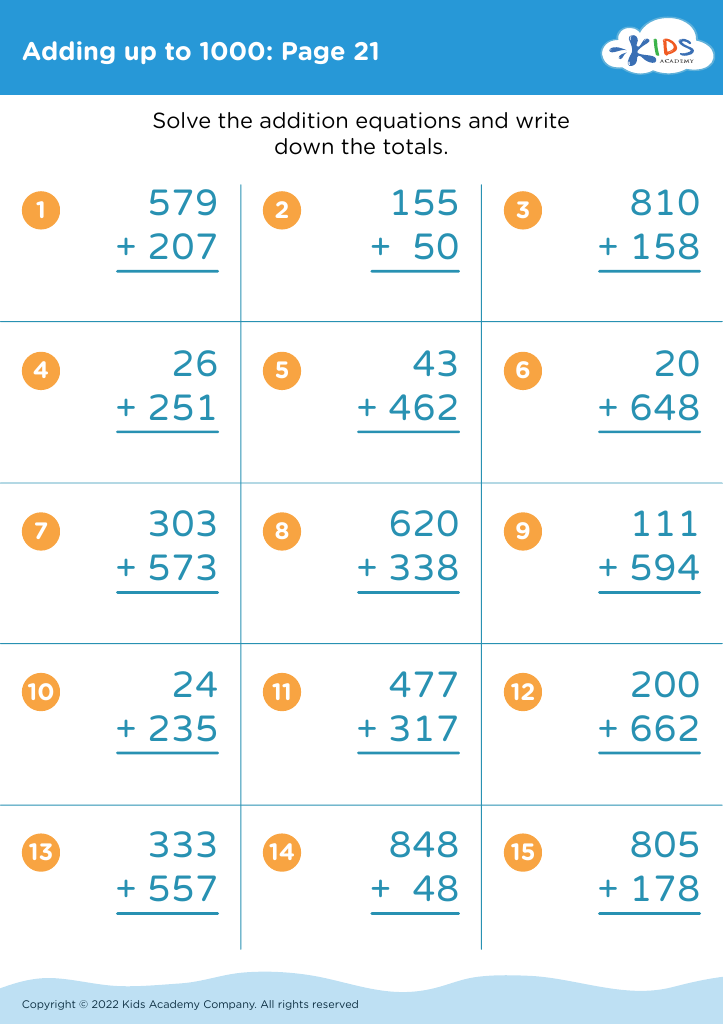
Adding up to 1000: Page 21

Adding up to 1000: Page 21

Adding up to 1000: Page 21
Worksheet
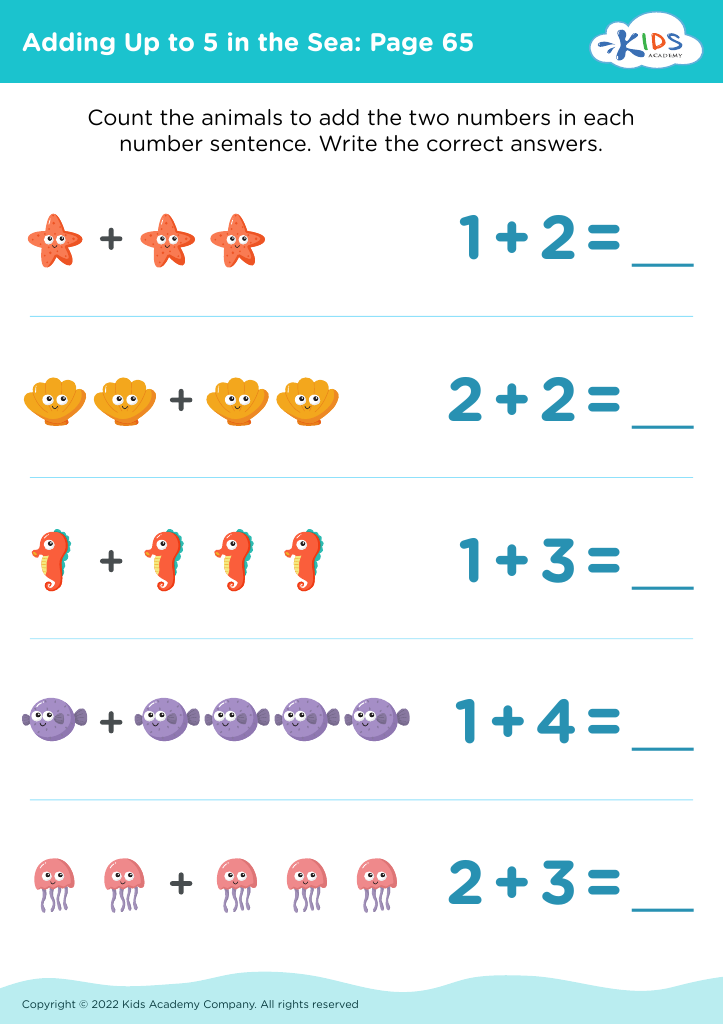
Adding Up to 5 in the Sea: Page 65
Worksheet
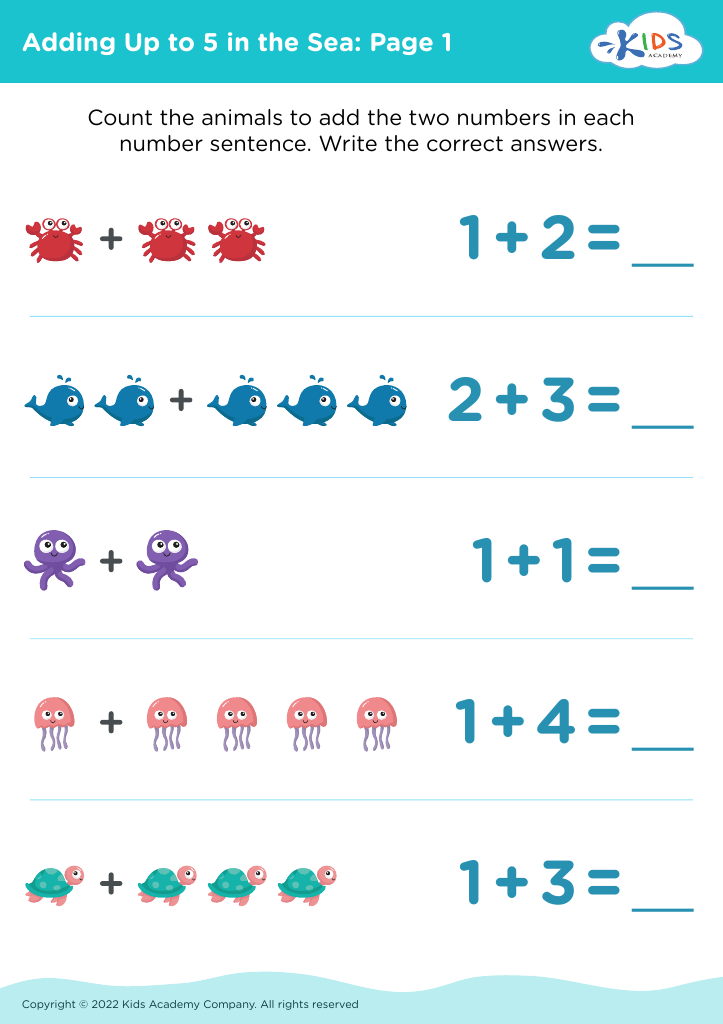
Adding Up to 5 in the Sea: Page 1

Adding Up to 5 in the Sea: Page 1

Adding Up to 5 in the Sea: Page 1
Worksheet
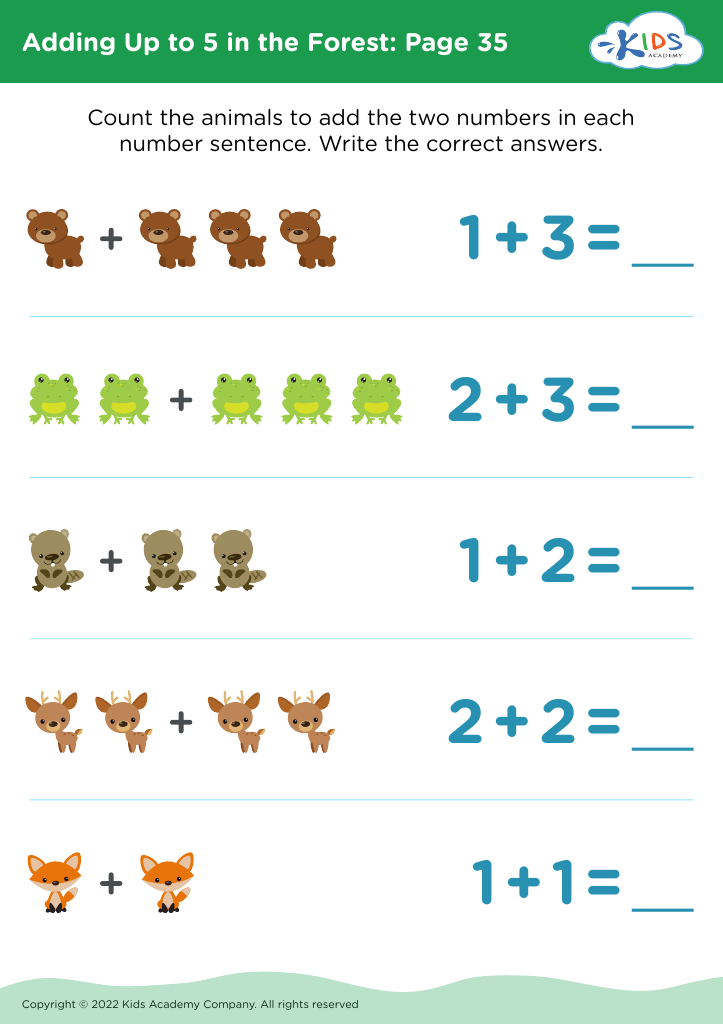
Adding Up to 5 in the Forest: Page 35
Worksheet
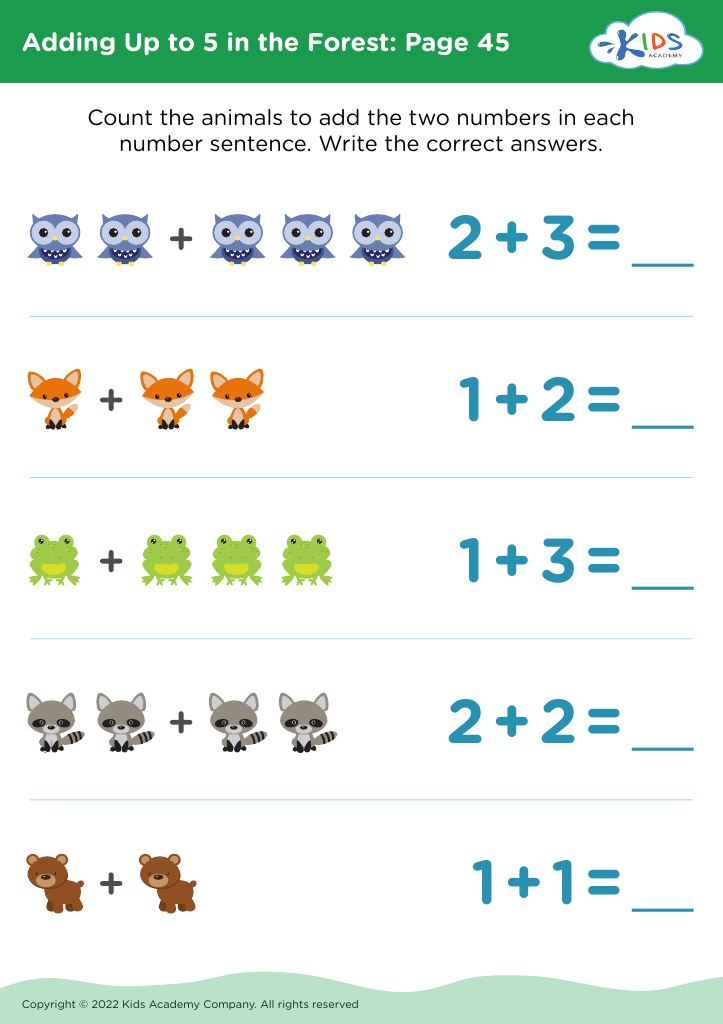
Adding Up to 5 in the Forest: Page 45
Worksheet
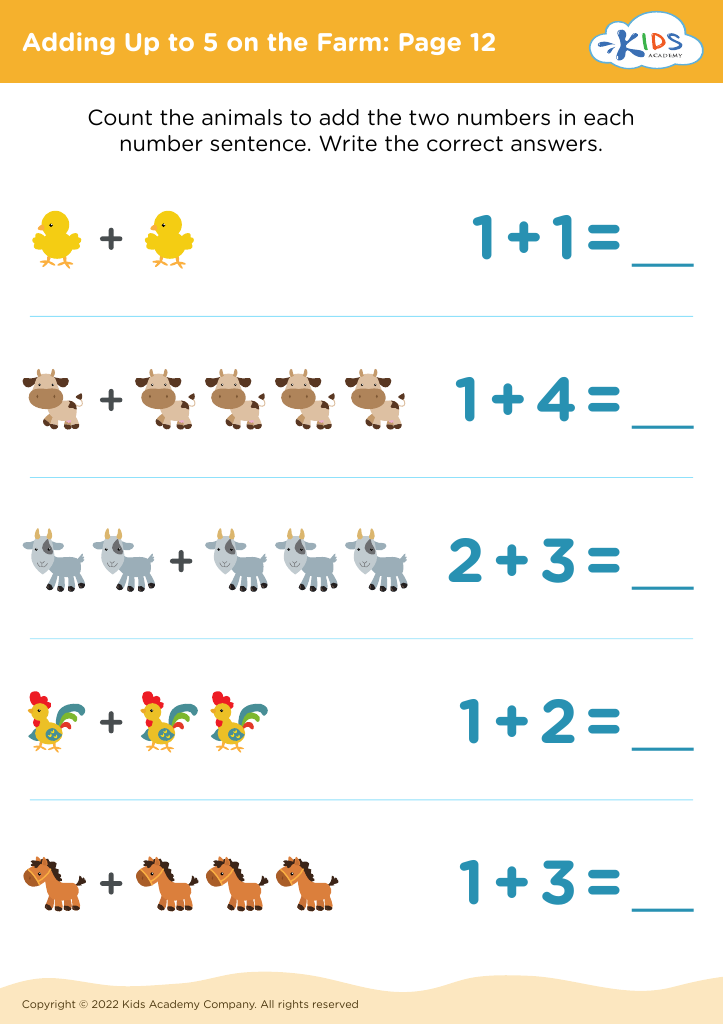
Adding Up to 5 on the Farm: Page 12
Worksheet
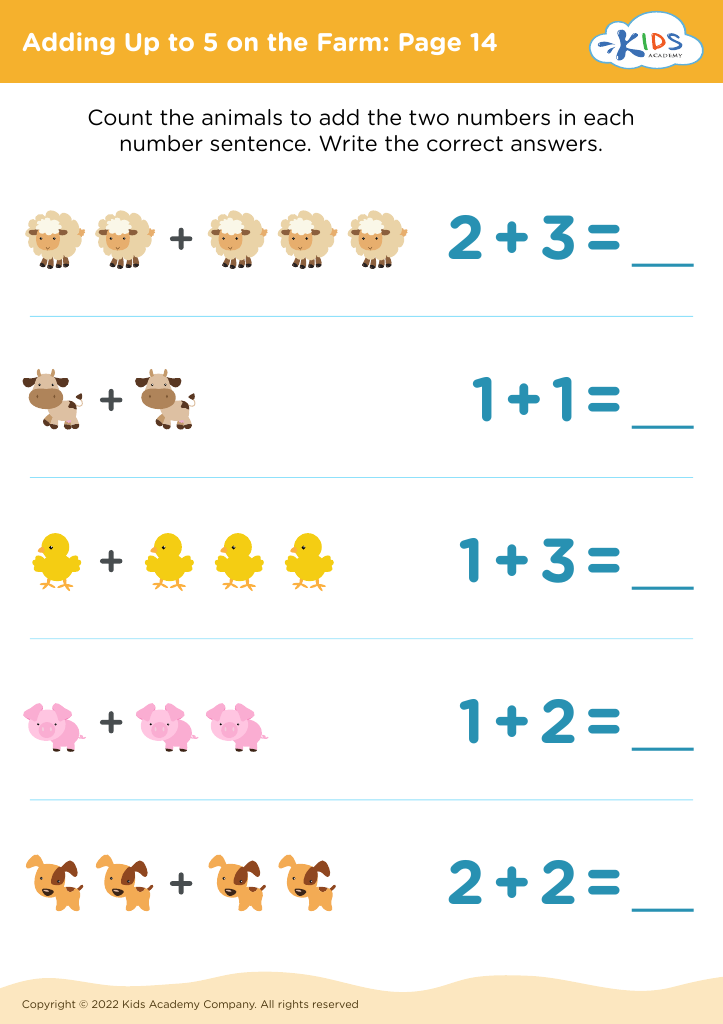
Adding Up to 5 on the Farm: Page 14
Worksheet
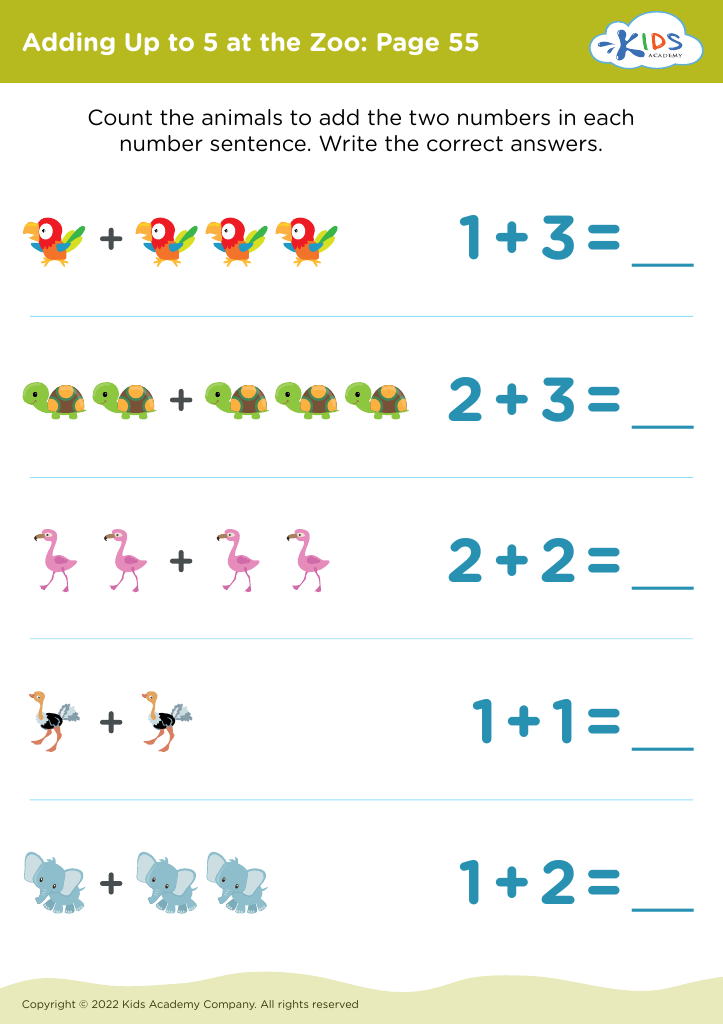
Adding Up to 5 at the Zoo: Page 55
Worksheet
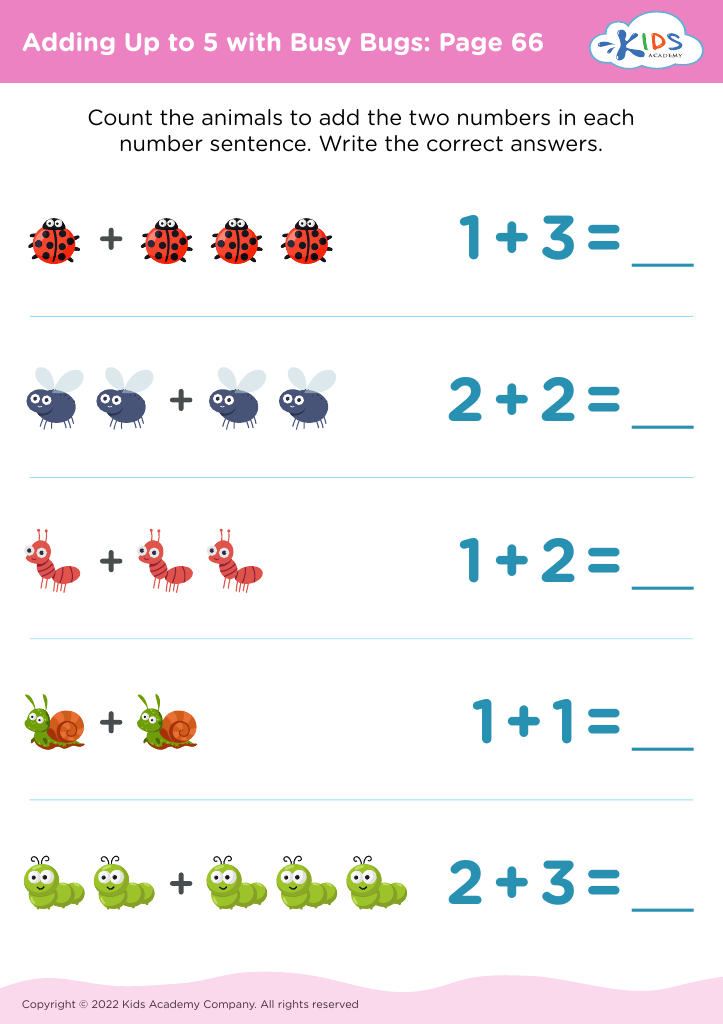
Adding Up to 5 with Busy Bugs: Page 66
Worksheet
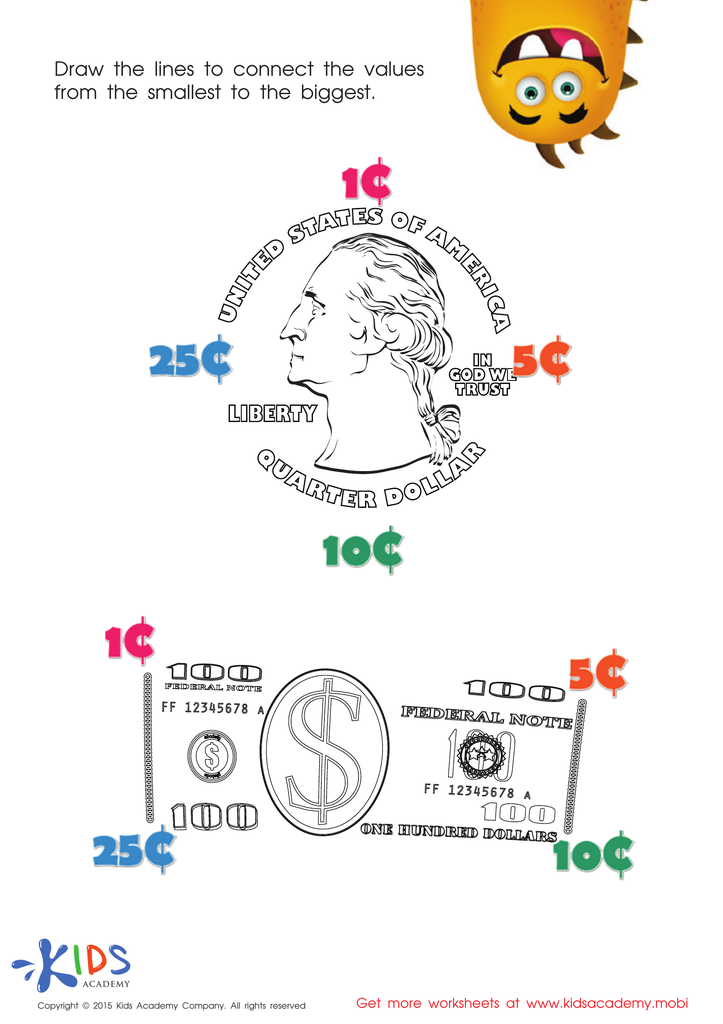
Printable Money Games and PDF Worksheets: Connecting the Values

Connecting the Values Money Worksheet
Counting games are a fun way to teach kids about money and counting money. We've learnt the penny, nickel, dime and quarter - can you identify them from the pictures? Draw a line from the smallest to the biggest value and remember the order. Kids Academy has more fun and informative worksheets on counting money.
Connecting the Values Money Worksheet
Worksheet
Adding Up to 5 in the Sea: Page 5

Adding Up to 5 in the Sea: Page 5

Adding Up to 5 in the Sea: Page 5
Worksheet
Adding up to 50 Without Regrouping: Page 46
Worksheet
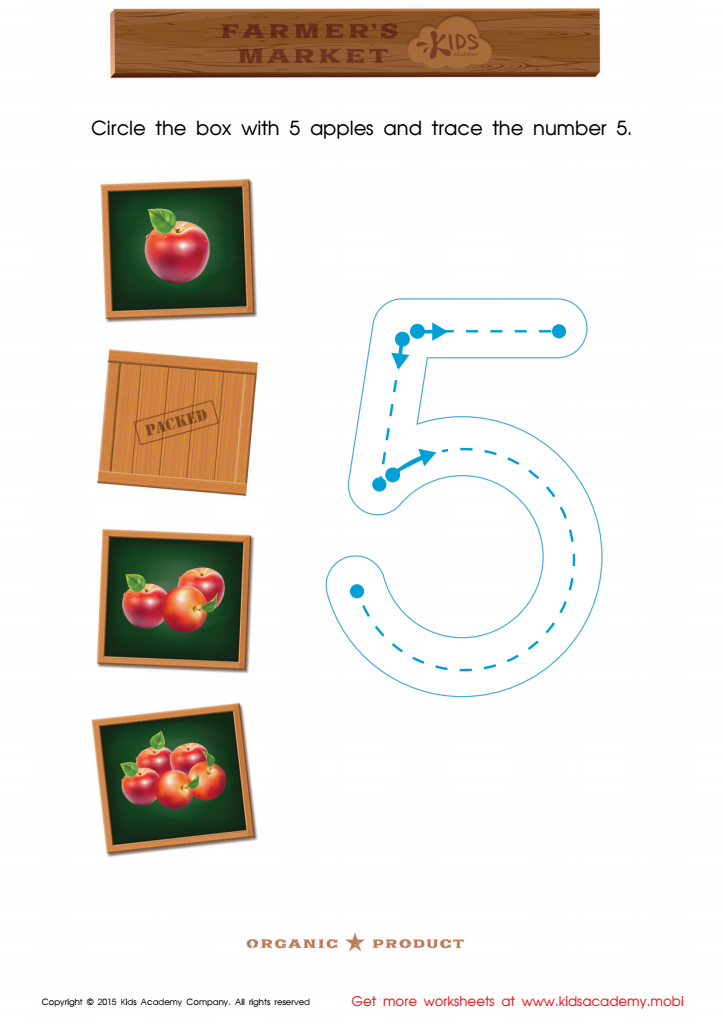
Math Game: Count the Apples and Trace the Number 5

Count the Apples and Trace the Number 5 Printable

Count the juicy apples in each box, find the one with 5 and trace the number 5 following the arrows. Practice makes perfect! Print and get your little mathematician counting.
Count the Apples and Trace the Number 5 Printable
Worksheet
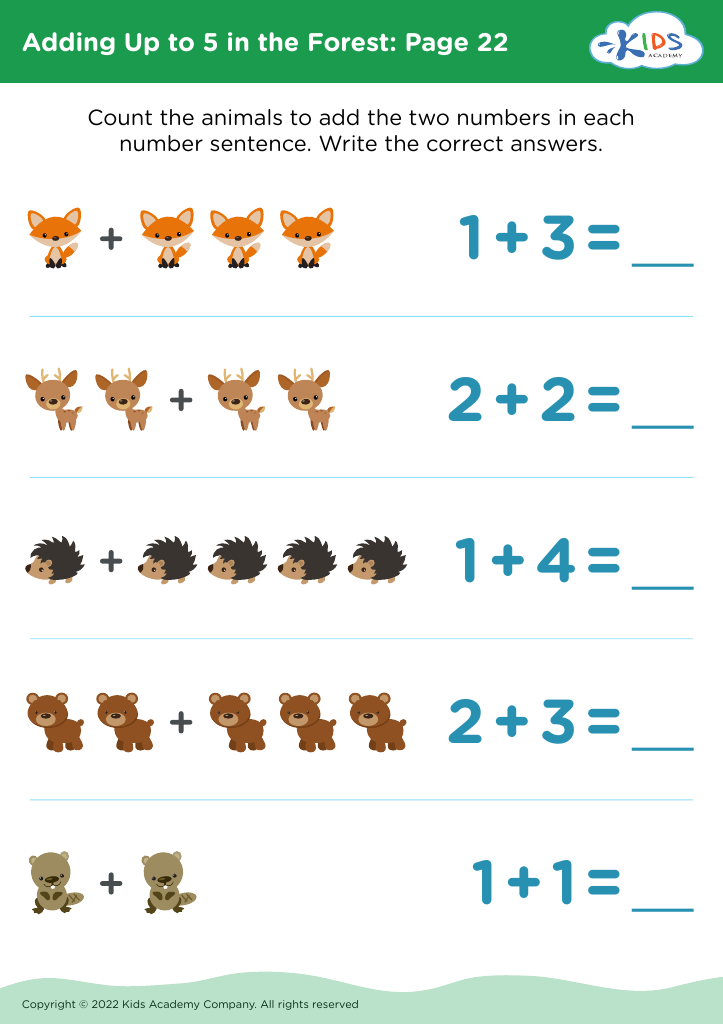
Adding Up to 5 in the Forest: Page 22
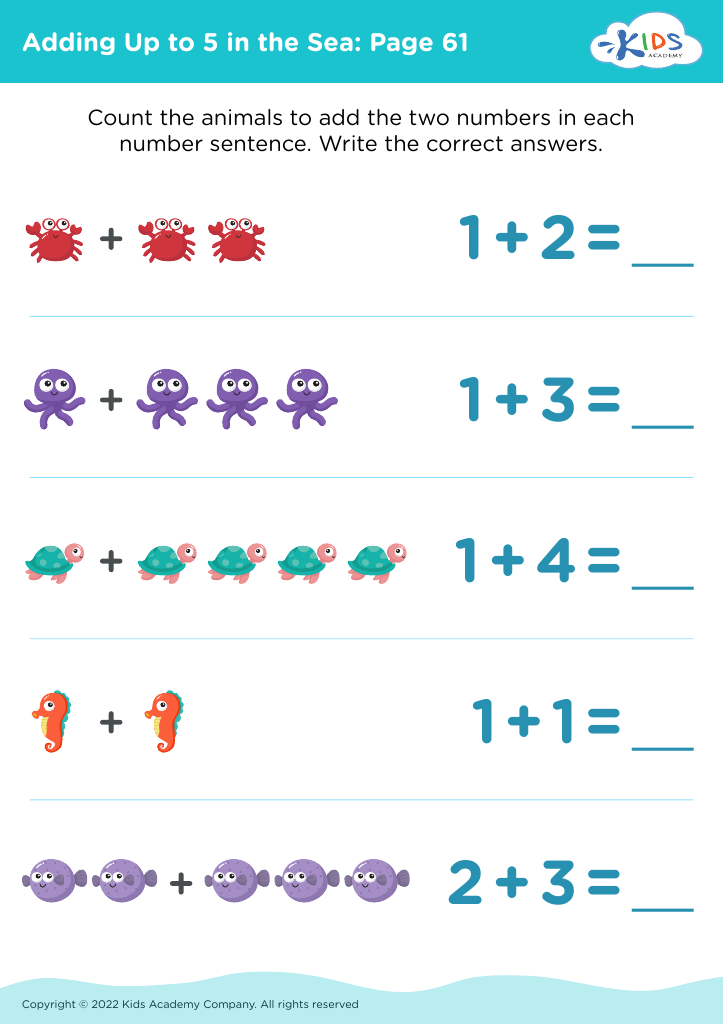
Worksheet
Adding Up to 5 in the Sea: Page 61
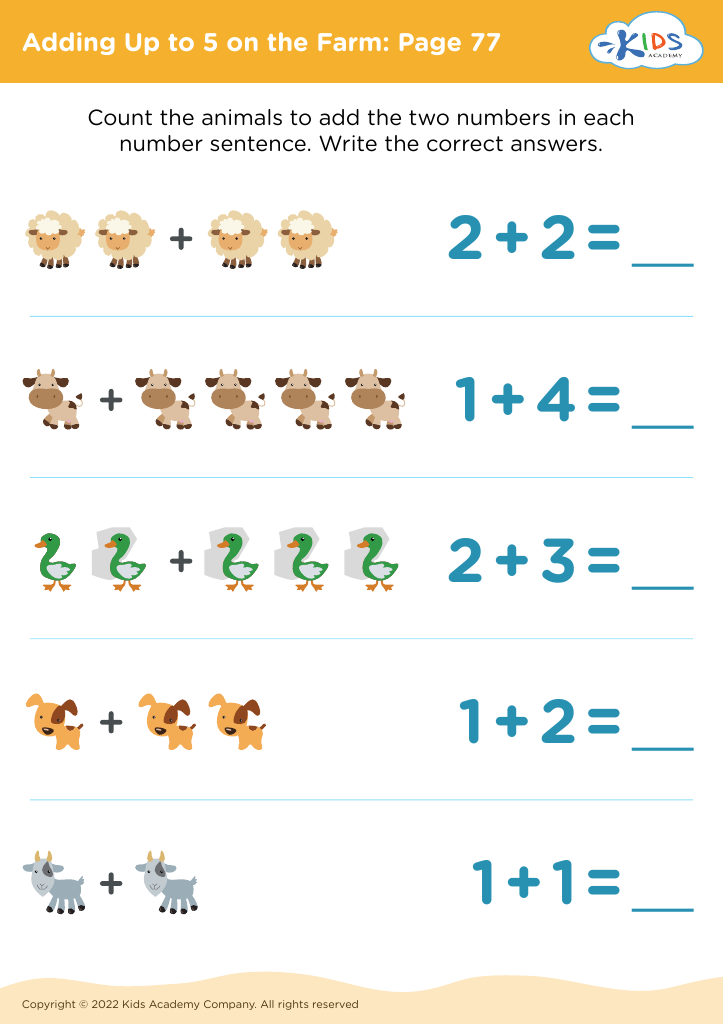
Worksheet
Adding Up to 5 on the Farm: Page 77
Worksheet
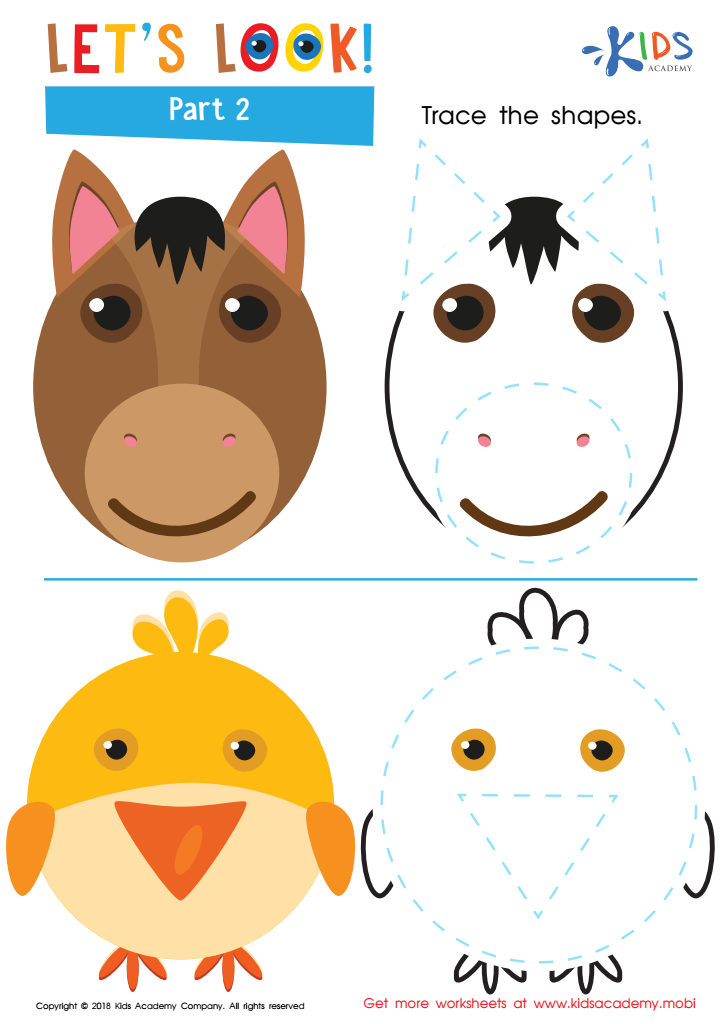
Let's Look! Part 2 Worksheet

Let's Look! Part 2 Worksheet

This tracing sheet helps your little ones develop their skills. Ask them to identify the animals, then trace the shapes in the space provided, following the dotted lines. It's a simple task that can help them grow and have fun!
Let's Look! Part 2 Worksheet
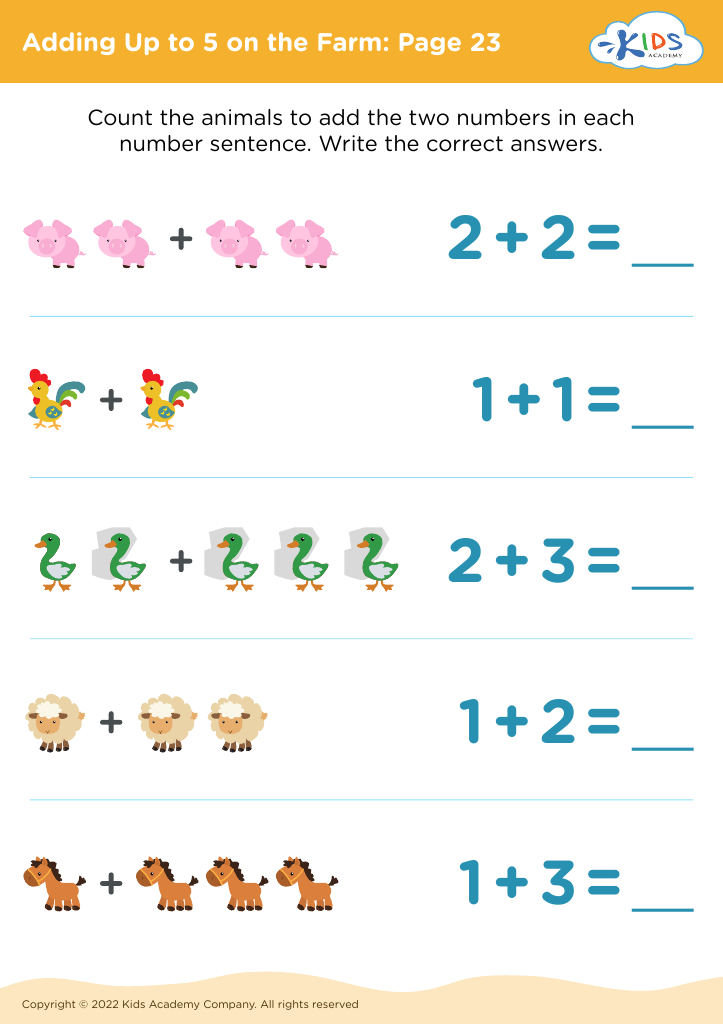
Worksheet
Adding Up to 5 on the Farm: Page 23
Worksheet
Match Tally Marks to Bar Graphs Worksheet
Match Tally Marks to Bar Graphs Worksheet
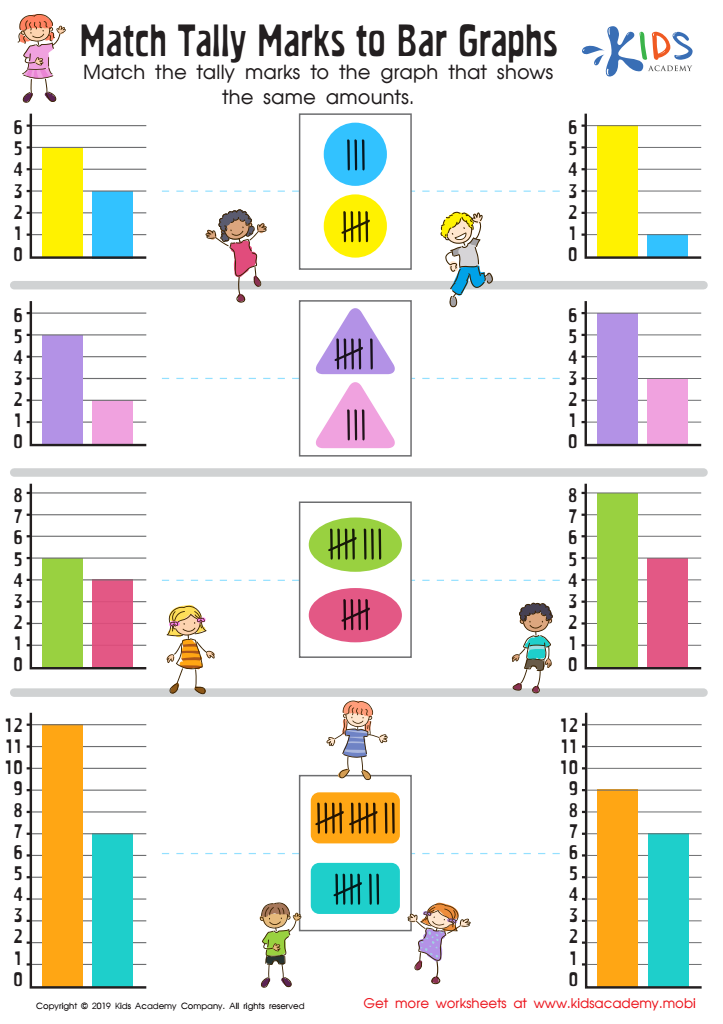
Learning math can be tough for kids. Rules and formulas can be confusing. Don't worry, this worksheet can help them understand graphs better. Show them how to match the tally marks with the graph that shows the same amount. It will help them grasp the basics and prepare them for more complex equations.
Match Tally Marks to Bar Graphs Worksheet
Worksheet
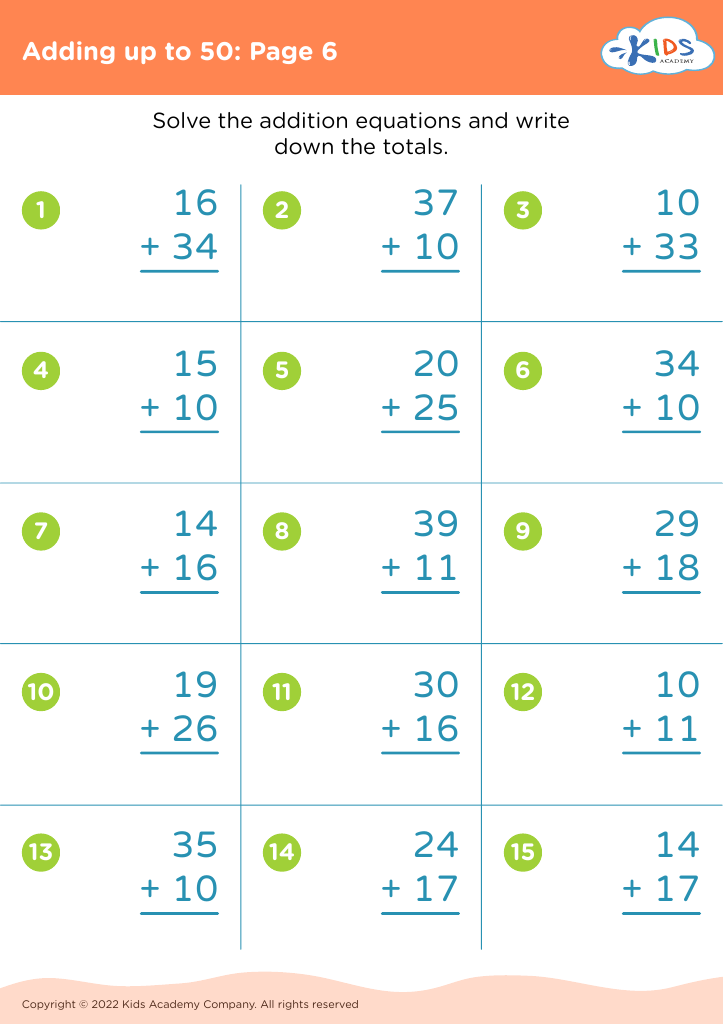
Adding up to 50: Page 6

Adding up to 50: Page 6

Adding up to 50: Page 6
Worksheet
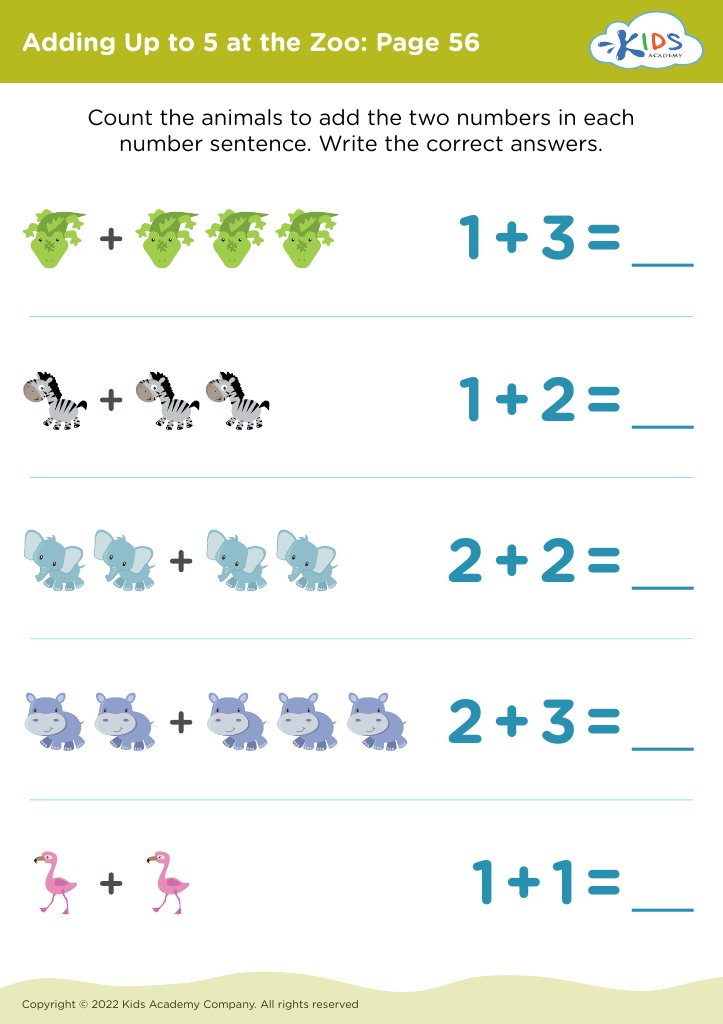
Adding Up to 5 at the Zoo: Page 56
Worksheet
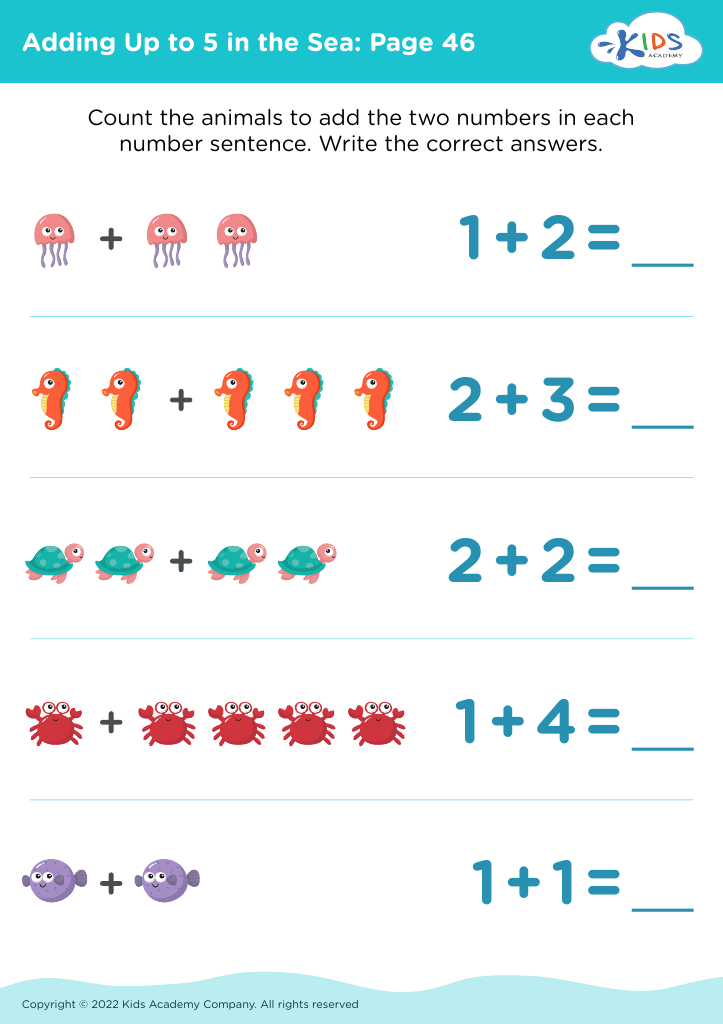
Adding Up to 5 in the Sea: Page 46
Worksheet
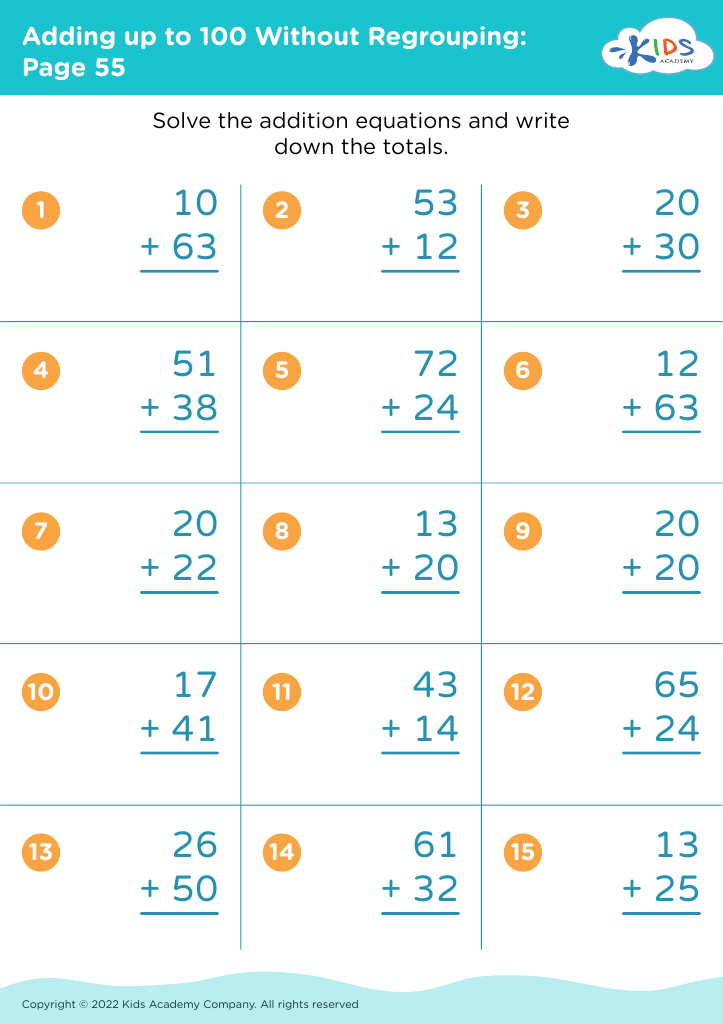
Adding up to 100 Without Regrouping: Page 55
Worksheet
Geometry Matching Worksheet

Fun Geometry Worksheet

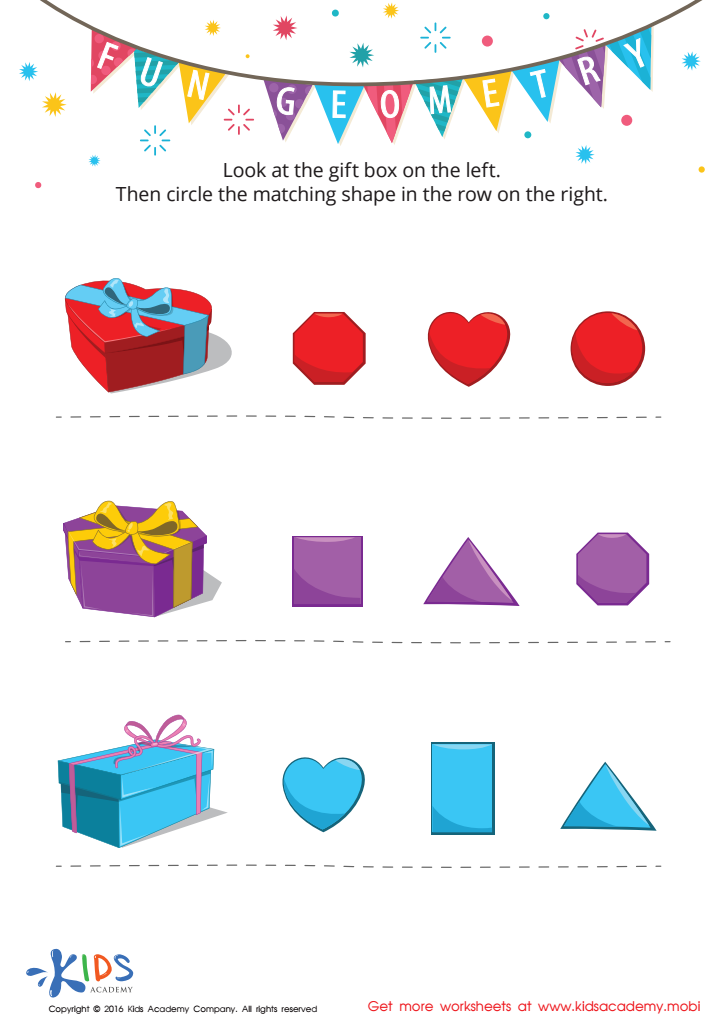
Give your child the gift of learning with this fun and educational geometry matching worksheet! It'll help them develop essential matching and problem-solving skills while having fun. Vibrant pictures will excite them to complete it and get a better grasp of the world around them.
Fun Geometry Worksheet
Worksheet


Counting practice for children ages 5-7 is essential for several reasons, making it a priority for parents and teachers alike. At this developmental stage, children are beginning to grasp foundational mathematical concepts, and counting is fundamental to their comprehension of numbers and quantities. Engaging in counting activities strengthens their cognitive skills, enhances memory, and fosters critical thinking as they learn to sort, categorize, and recognize patterns.

Moreover, counting practice supports language development by introducing mathematical vocabulary and concepts. As children verbalize their counting, they improve their communication skills alongside their numerical understanding. This practice also lays the groundwork for more complex math concepts, as proficient counting is necessary for addition, subtraction, and later arithmetic operations.

Additionally, incorporating interactive and fun counting exercises cultivates a positive attitude towards math, helping to reduce anxiety around the subject. When parents and teachers create a supportive environment that values counting, it encourages curiosity and a love for learning.

Ultimately, early counting skills build a solid mathematical foundation, contributing significantly to a child’s academic success. By prioritizing counting practice in their routines, parents and educators can better equip children for future challenges in math and beyond.