Detail identification Worksheets for Ages 5-7
3 filtered results
-
From - To
Boost your child's observational skills with our Detail Identification Worksheets designed for ages 5-7. These engaging, expertly crafted worksheets help young learners enhance their attention to detail, critical thinking, and observation abilities. Perfect for early graders, each activity encourages kids to spot differences, identify patterns, and make comparisons, paving the way for academic success. Our colorful, fun worksheets not only support educational development but also keep kids motivated with interactive content. Ideal for home or classroom use, these exercises make learning enjoyable and effective. Empower your children with the tools they need to succeed from an early age!
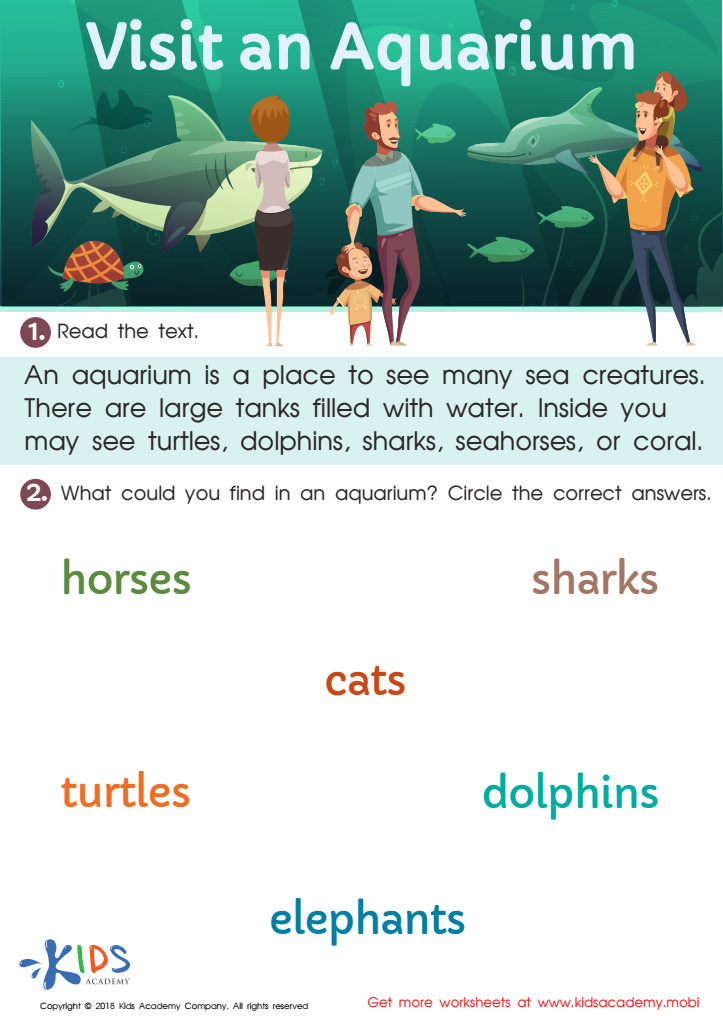
Visit an Aquarium Worksheet
 Assign to My Students
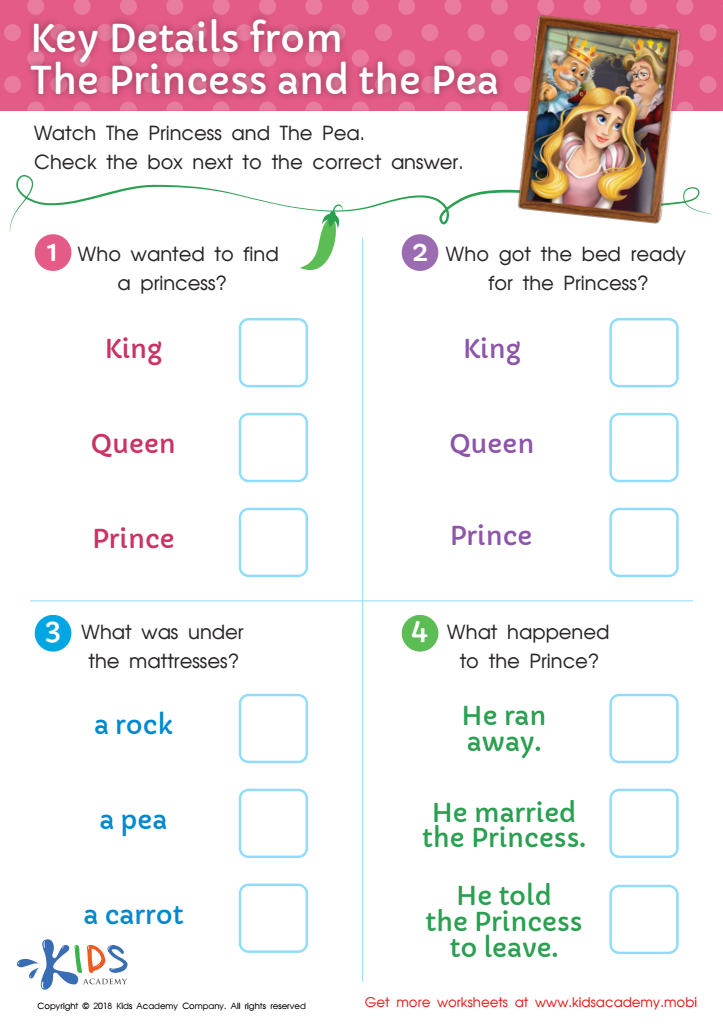
Key Details from the Princess and the Pea Worksheet
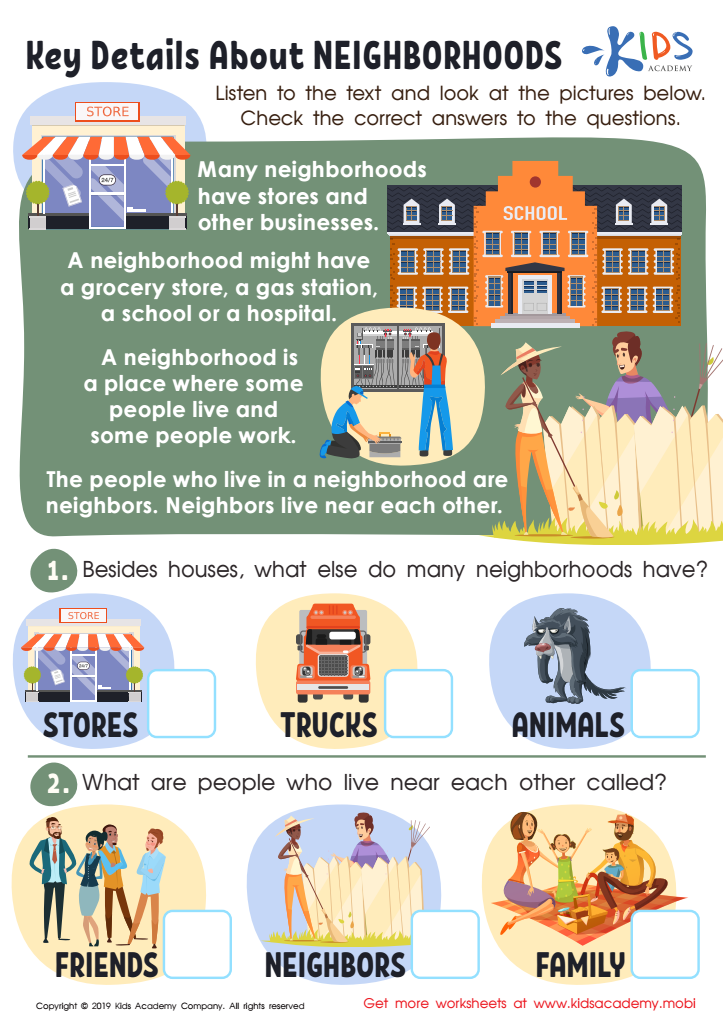
Key Details Neighborhoods Worksheet







Parents and teachers should care about detail identification for children ages 5-7 because it is a foundational skill that plays a critical role in early literacy and cognitive development. At this age, children are like sponges, readily absorbing new information, and the ability to identify details helps them understand and interact with the world around them more effectively.
Detail identification enhances reading comprehension by encouraging children to focus on specific elements of a story or text. This aids in recognizing characters, settings, and plots, fostering a deeper understanding of the material. For instance, when children can identify details like "the red ball" or "the happy dog," they start making connections that enhance narrative understanding and retention.
Moreover, honing this skill supports critical thinking and observational abilities. By paying attention to minute details, children learn to compare, contrast, and categorize information—a process that underpins problem-solving and logical reasoning.
In the classroom, activities that encourage detail identification, such as picture walks, scavenger hunts, and descriptive storytelling, not only make learning fun but also create a solid foundation for more complex skills needed in later education. Parental involvement in these activities at home further reinforces these abilities, creating a continuous learning environment where children can thrive both academically and socially.








