Directional understanding Worksheets for Ages 5-7
6 filtered results
-
From - To
Explore our engaging Directional Understanding Worksheets for children ages 5-7, designed to enhance spatial awareness and directional skills. These worksheets provide fun and interactive activities that help young learners comprehend concepts like left, right, up, down, and specific positional relationships. As kids connect the dots, draw paths, or follow directions, they develop critical thinking and problem-solving abilities. Our resources cater to various learning styles, making directionality enjoyable and accessible. Perfect for home or classroom use, these worksheets help foster foundational skills that support future academic success. Download and watch your child's confidence in spatial orientation grow!
 Assign to My Students
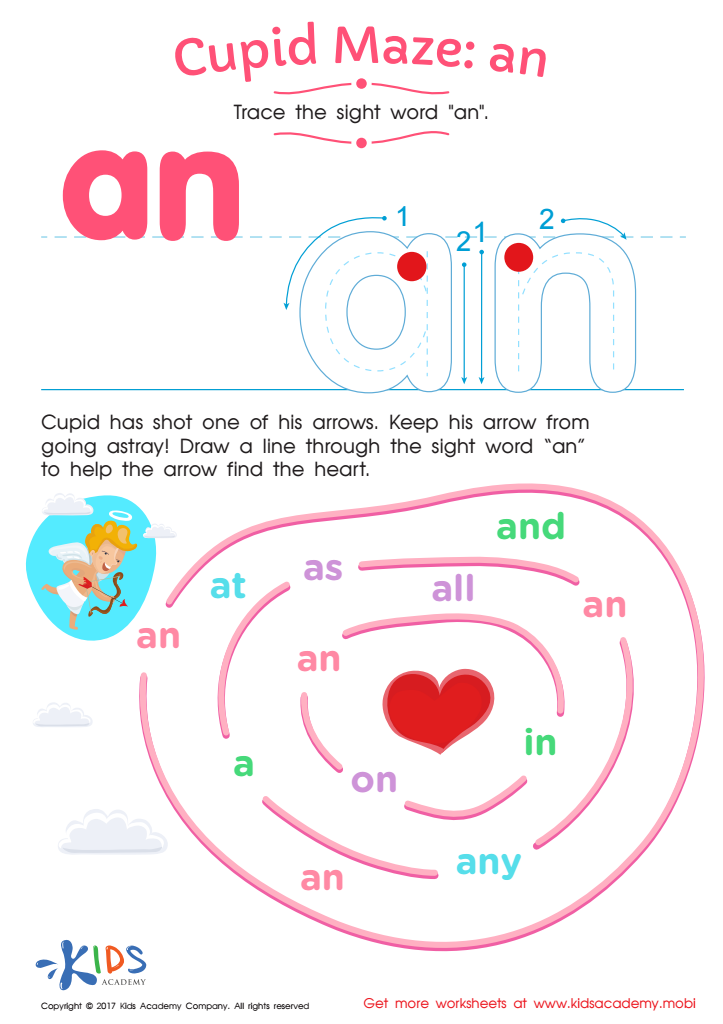
Cupid Maze: An Printable
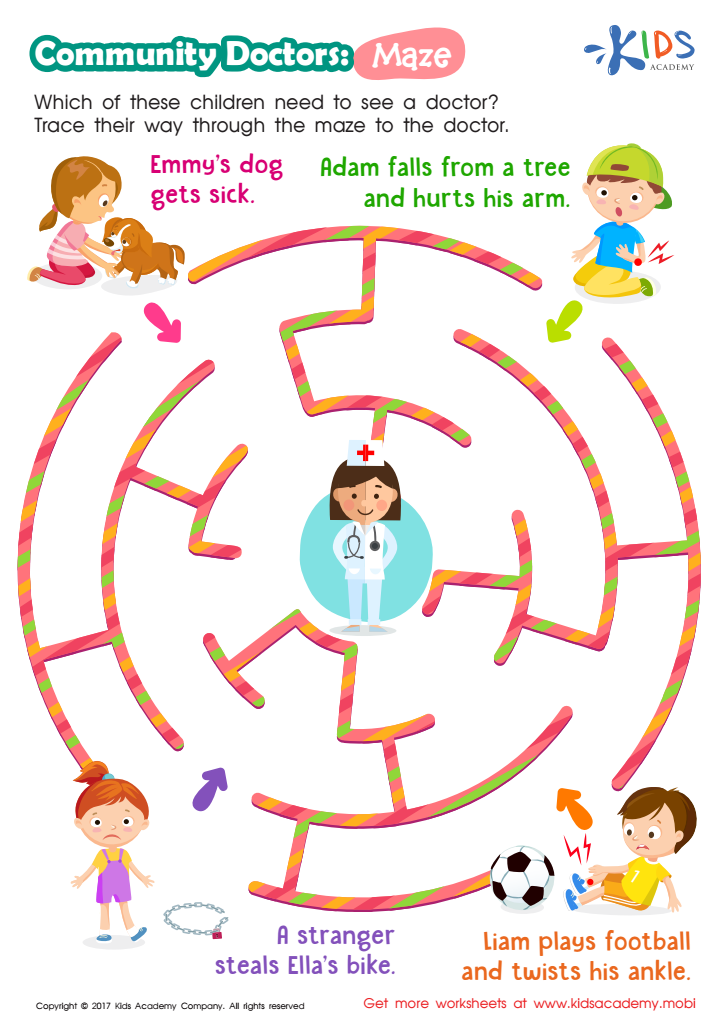
Community Doctors: Maze Printable
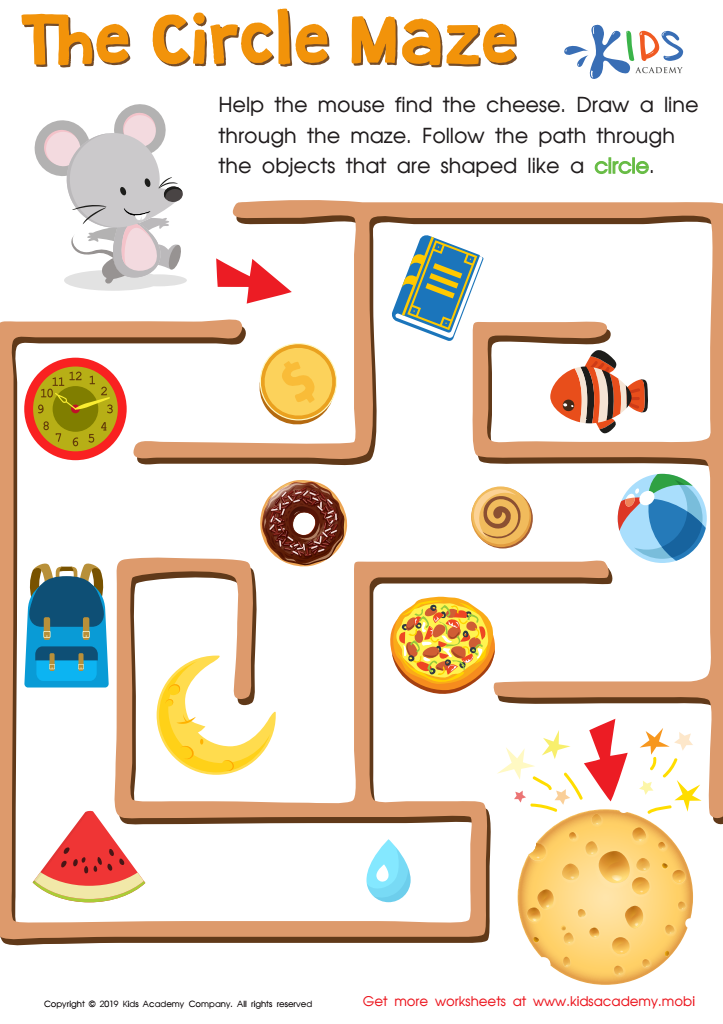
The Circle Maze Worksheet
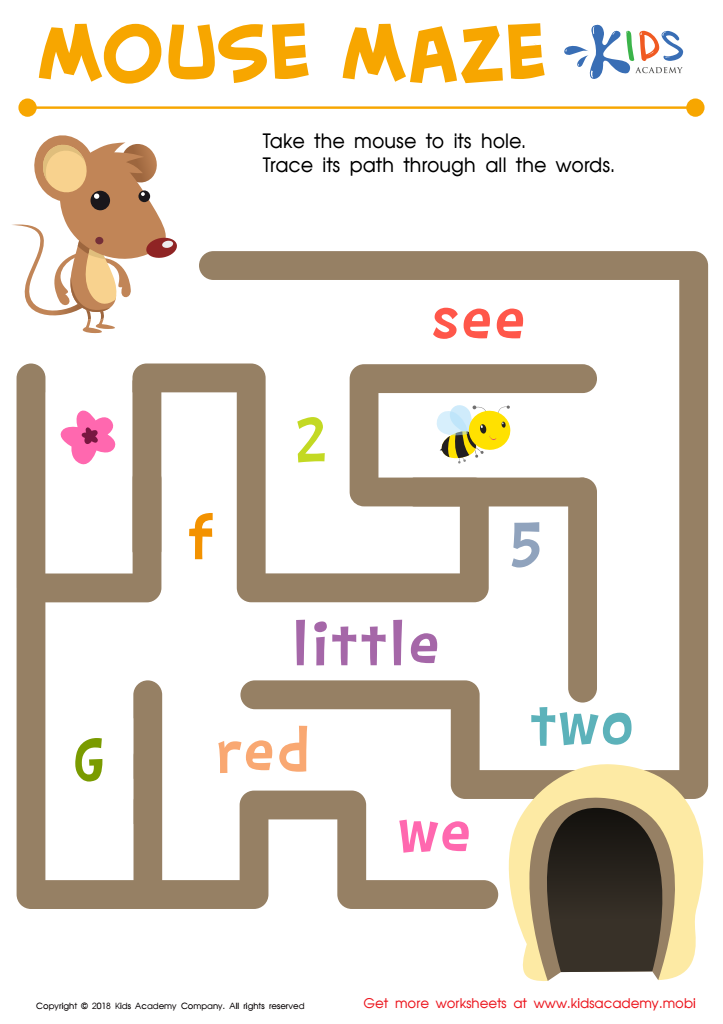
Find Words Mouse Maze Worksheet
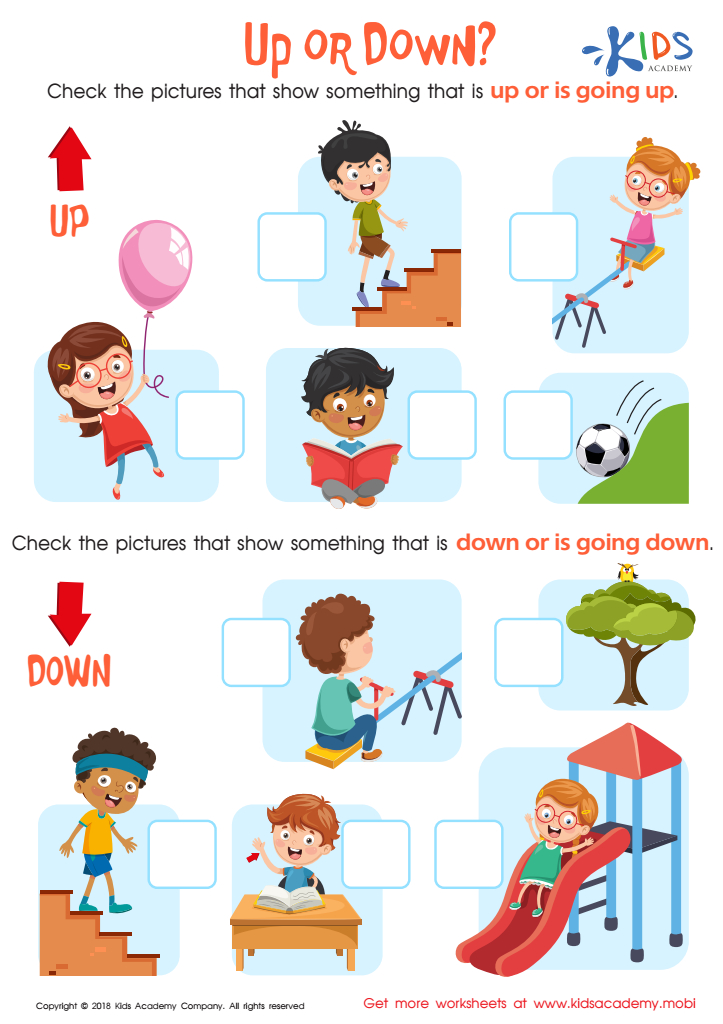
Up or Down Worksheet








Directional understanding is a crucial skill for children aged 5-7, impacting their cognitive development and everyday functioning. At this age, children are naturally curious and engaged with their immediate environment. By helping them understand concepts such as left, right, up, down, near, and far, parents and teachers can enhance their spatial awareness, which is fundamental for navigating their world.
Directional understanding plays a significant role in various academic subjects, particularly mathematics and literacy. For instance, learning about directions enables children to grasp geometrical shapes and tackle problems involving measurement. In reading and writing, it helps them understand the layout of text, manage their writing space, and follow written instructions.
Moreover, directionality becomes crucial as children begin to develop their motor skills. Activities like drawing, cutting, or even playing games require children to comprehend spatial relationships, which contribute to their coordination and confidence in various tasks.
Fostering directional understanding equips children with tools to communicate effectively, enhancing their social interactions. Overall, nurturing this skill in early childhood is not just about academic success; it’s about helping children build the foundational life skills necessary for daily activities and successful relationships in school and beyond.








