Enhancing mental arithmetic Worksheets for Ages 5-7
4 filtered results
-
From - To
Enhance your child's mental arithmetic skills with our engaging worksheets designed specifically for ages 5-7. These worksheets foster creativity and mathematical thinking, making learning fun and effective. Young learners will explore various activities that promote number recognition, addition, subtraction, and problem-solving capabilities. Our carefully crafted exercises not only build foundational math skills but also boost confidence in young mathematicians. With vibrant illustrations and interactive challenges, these worksheets cater to diverse learning styles, ensuring that every child can succeed. Equip your child with essential mental math skills that will support their future academic journey—start exploring our mental arithmetic resources today!
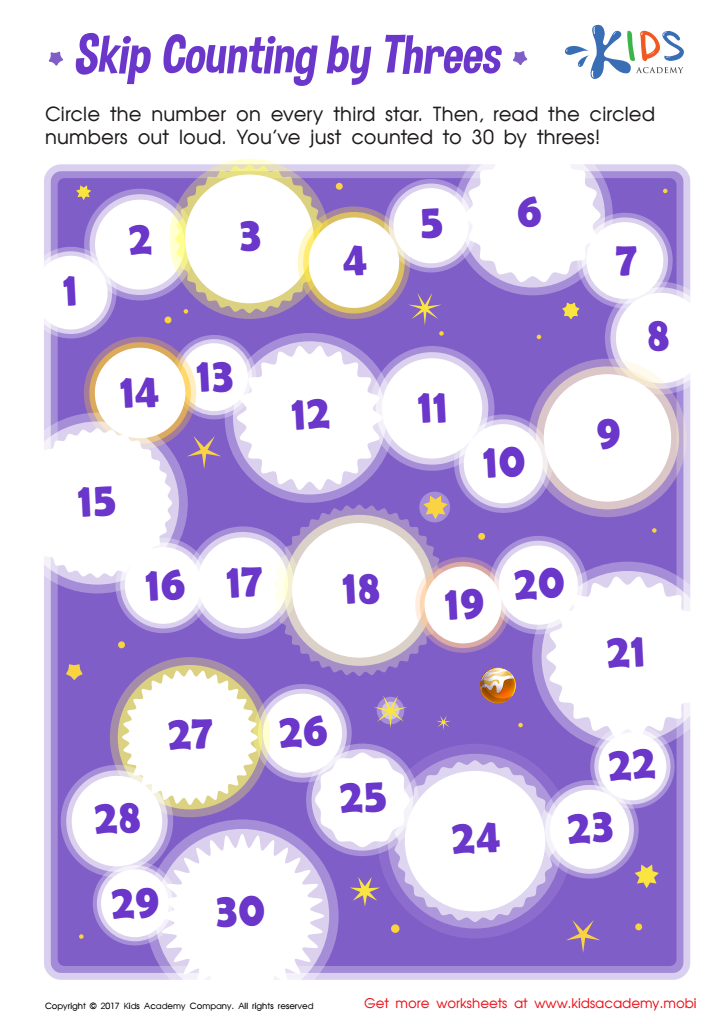
Skip Counting By Three Printable
 Assign to My Students
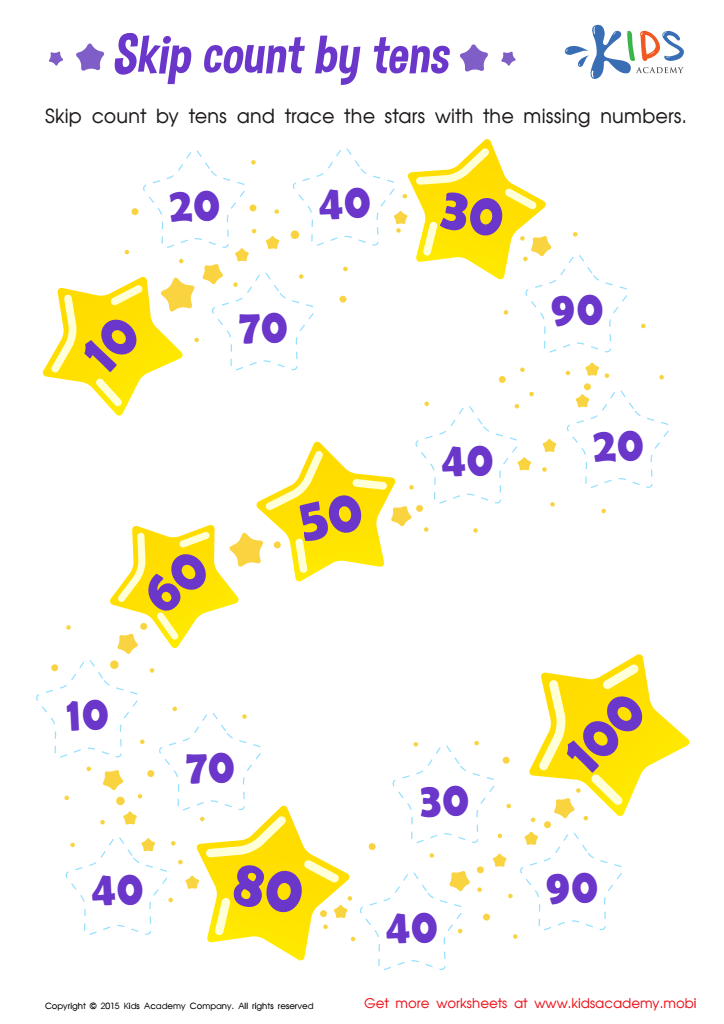
Learn dozens: Skip Count by Tens Printable
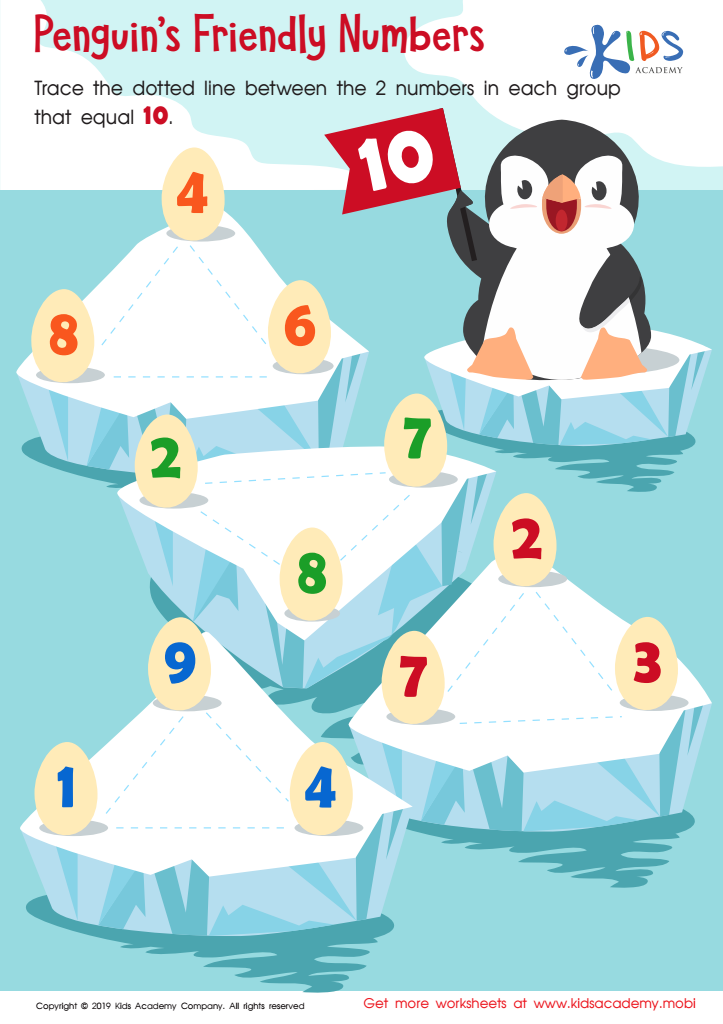
Penguin's Friendly Numbers Worksheet
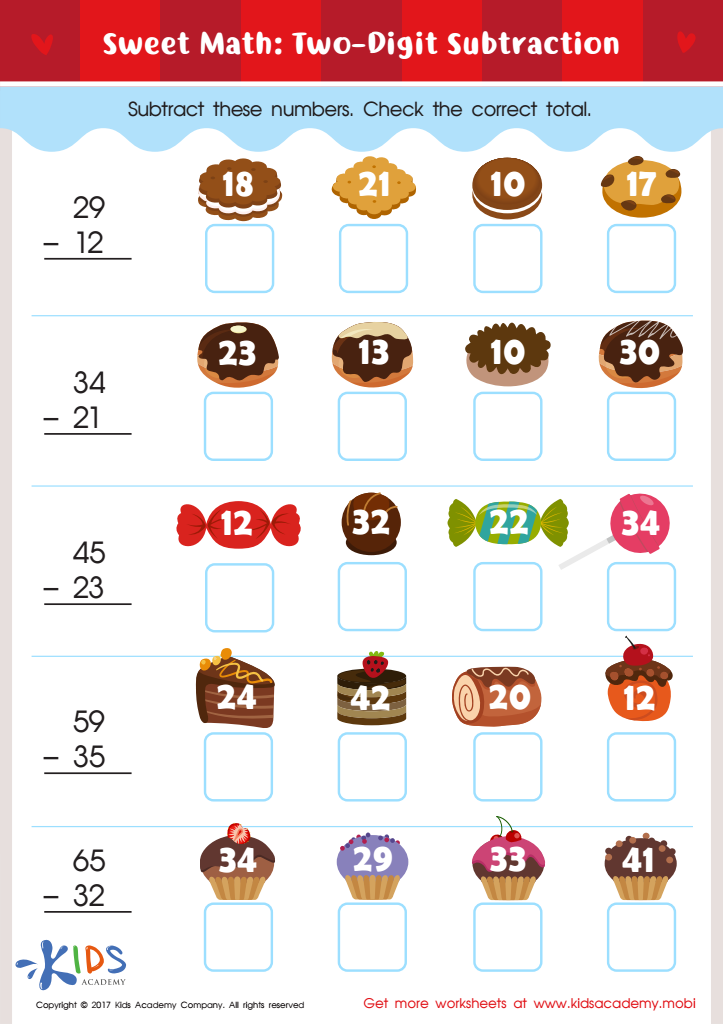
Two Digit Subtraction Worksheet



.jpg)




Enhancing mental arithmetic skills in children aged 5 to 7 is crucial for their cognitive development and self-confidence. During these formative years, children build foundational mathematical skills that serve as the basis for more complex concepts in the future. Developing mental arithmetic helps them understand numbers and operations more intuitively, fostering a positive attitude towards mathematics.
Parents and teachers should care about enhancing mental arithmetic because it not only improves numerical fluency but also boosts problem-solving abilities and critical thinking. Mastery of basic arithmetic enables children to perform calculations more efficiently, reducing frustration and anxiety associated with math tasks. Additionally, early arithmetic skills support overall academic performance, as they are interconnected with reading and logical reasoning.
Moreover, engaging children in mental math encourages active learning, promotes persistence, and cultivates a growth mindset, which is vital for overcoming challenges. Collaborative games and exercises make math enjoyable, strengthening the parent-child or teacher-student relationship. Ultimately, focusing on mental arithmetic equips children with essential life skills, preparing them to navigate future academic challenges and real-world situations with confidence and competence. Hence, supporting this aspect of their education is paramount for their long-term success and well-being.








