History knowledge Worksheets for Ages 5-7
4 filtered results
-
From - To
Explore the fascinating world of History with our engaging worksheets designed for ages 5-7! Each worksheet is crafted to captivate young minds, making learning about significant events and historic figures fun and accessible. Kids will uncover the past through activities that build foundational knowledge and critical thinking skills. From ancient civilizations to modern milestones, these worksheets support educators and parents in providing a well-rounded grasp of history. Perfect for classroom use or at-home enrichment, our worksheets will spark curiosity and foster a lifelong love for learning. Start your historical adventure with us today!
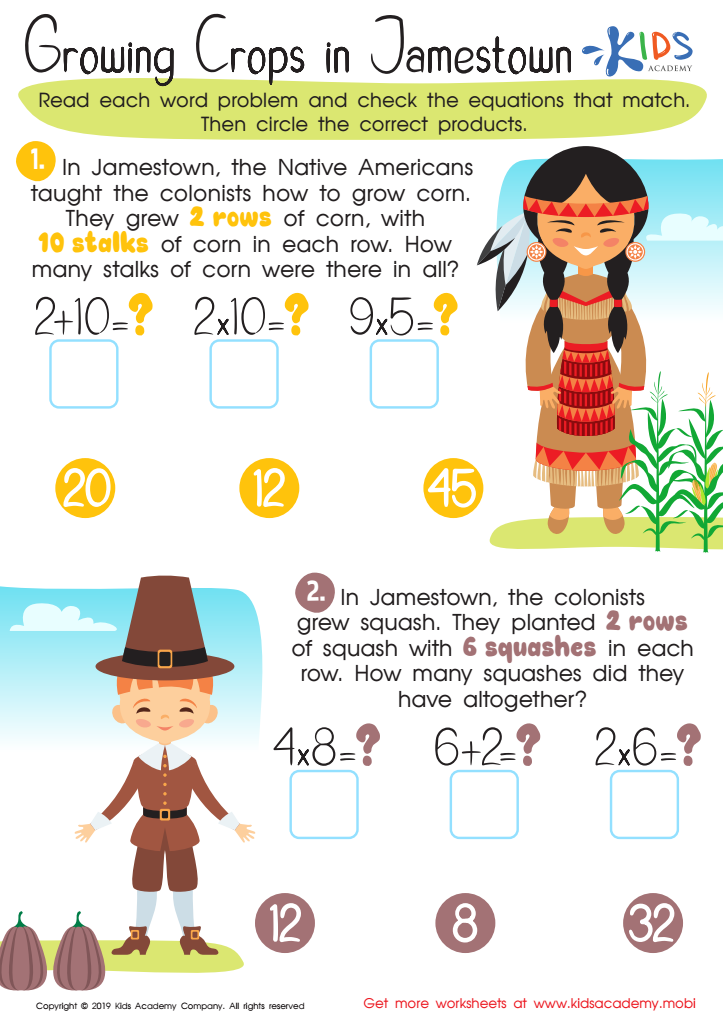
Growing Jamestown Worksheet
 Assign to My Students









Teaching history to children aged 5-7 is vital to shaping their understanding of the world. While young, they already begin to form ideas about their place in society and the significance of their heritage. Introducing history at an early age fosters a sense of identity and community, allowing them to appreciate the diverse experiences and cultures people bring to the world.
Understanding historical events, even at a basic level, helps children develop critical thinking skills. By discussing the past in a simple and engaging way, parents and teachers encourage youngsters to ask questions, draw connections, and recognize cause and effect. This intellectual curiosity lays the groundwork for future learning, making complex ideas more accessible as they grow.
Additionally, history teaches essential values like empathy, responsibility, and fairness. When children hear stories from different eras and cultures, such as struggles for justice or acts of kindness, they learn to appreciate others' perspectives and imbibe core moral principles. Stories from history serve as powerful lessons in right and wrong, guiding children's behavior in today’s world.
In fostering historical knowledge in children, parents and teachers don’t just teach facts but nurture enlightened, well-rounded individuals who are informed about the world's diverse past and better prepared for its future.








