Improving mental arithmetic Worksheets for Ages 5-7
3 filtered results
-
From - To
Discover our "Improving Mental Arithmetic Worksheets for Ages 5-7," designed to enhance young learners' mathematical skills in a fun, engaging way. These worksheets focus on fundamental arithmetic concepts, including addition, subtraction, and number recognition. With a variety of interactive exercises, children develop quick thinking and problem-solving abilities essential for their academic success. Each worksheet is tailored to meet the developmental needs of early learners, fostering confidence and enthusiasm for math. Ideal for parents and educators, these resources encourage independent practice and make learning enjoyable. Unlock your child's potential and watch them thrive in their mathematical journey with our thoughtfully crafted worksheets!
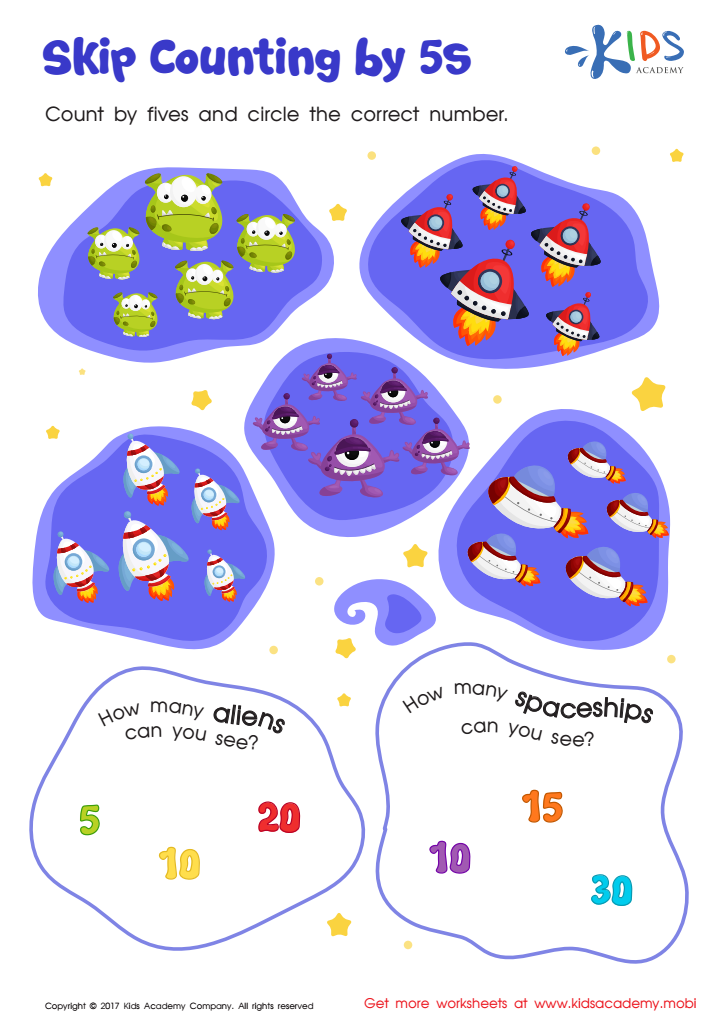
Skip Counting by 5s: Aliens and Spaceships Printable
 Assign to My Students
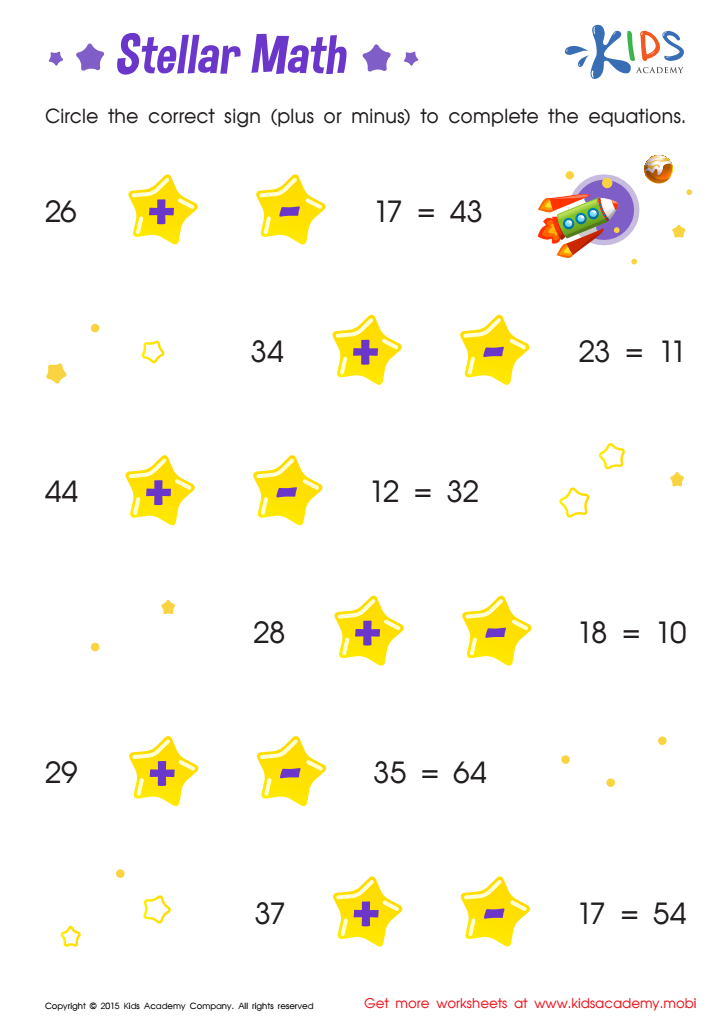
Stellar Math Substraction Worksheet
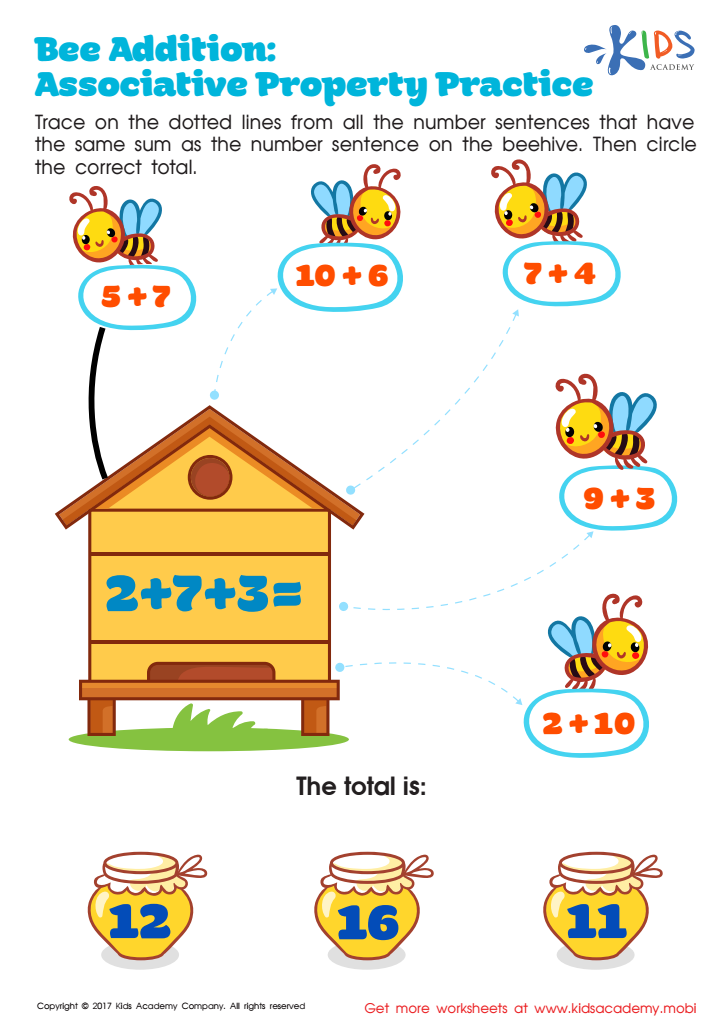
Bee Addition: Associative Property Practice Worksheet








Improving mental arithmetic for children aged 5 to 7 is crucial for several reasons. Firstly, these early years lay the foundation for mathematical skill development. By enhancing mental arithmetic abilities, children develop their number sense, which enables them to understand the relationships between numbers and improve their problem-solving capabilities.
Secondly, mental arithmetic encourages cognitive skills such as memory, concentration, and logical thinking. As children practice mental calculations, they engage their brains in critical, analytical skills that extend beyond mathematics, supporting overall academic performance. Furthermore, confidence builds as they master mental arithmetic, leading to greater enthusiasm for learning and tackling more challenging mathematical concepts in the future.
Another important aspect is that mental arithmetic promotes independence and reduces reliance on calculators or external tools. It empowers children to perform calculations during everyday activities, fostering a sense of accomplishment and practicality.
Finally, improving mental arithmetic at a young age can have long-term benefits. As children become confident and proficient in math, they may develop a more positive attitude toward mathematics, reducing anxiety and fear that often accompanies math as they progress through school. Parents and teachers play a vital role in nurturing these skills, setting the stage for lifelong mathematical success.








