Lowercase identification Worksheets for Ages 5-7
5 filtered results
-
From - To
Discover our engaging Lowercase Identification Worksheets designed specifically for children aged 5-7! These worksheets provide a fun and interactive way for young learners to enhance their literacy skills by recognizing and differentiating lowercase letters. Each activity encourages kids to identify, trace, and match lowercase letters, fostering essential pre-reading skills. With colorful illustrations and varied exercises, our worksheets promote a playful learning environment that keeps children motivated. Perfect for parents and teachers, these resources accommodate different learning styles and can easily be integrated into home or classroom settings. Help your child build a strong foundation for reading with our lowercase identification activities today!
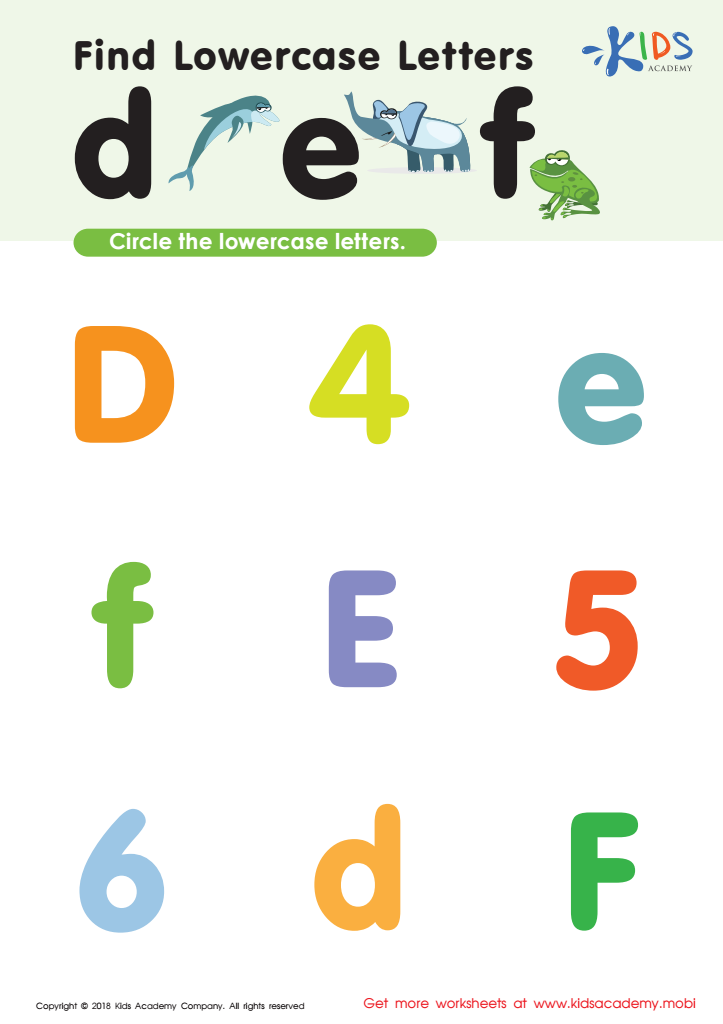
Find Lowercase Letters d e f Worksheet
 Assign to My Students
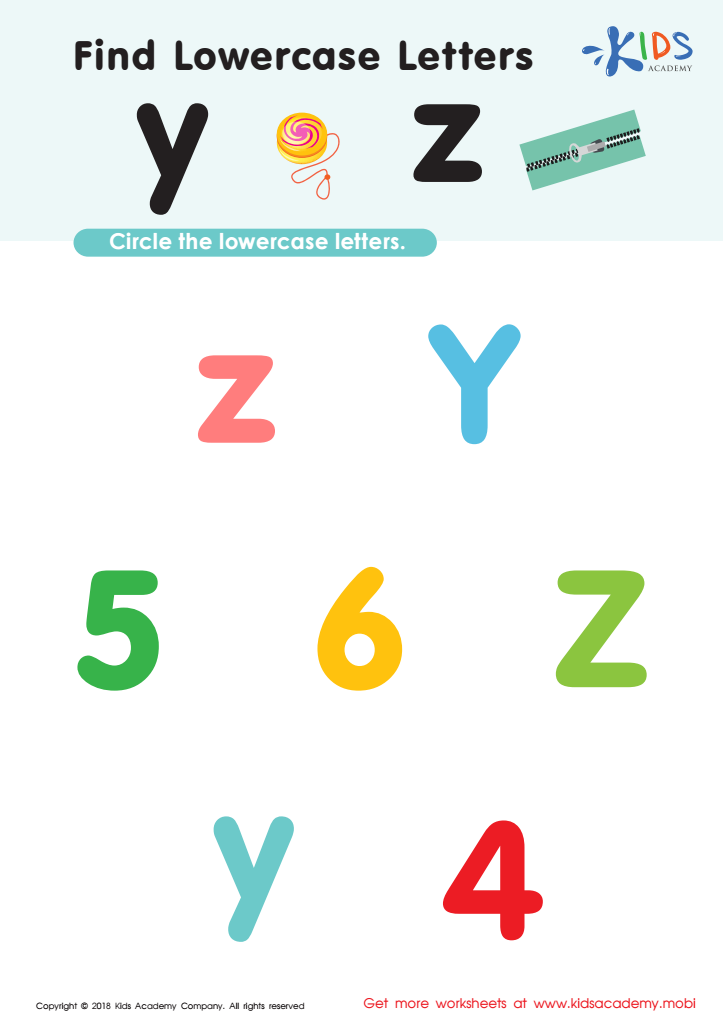
Find Lowercase Letters y z Worksheet

Find lowercase letters a b c Worksheet
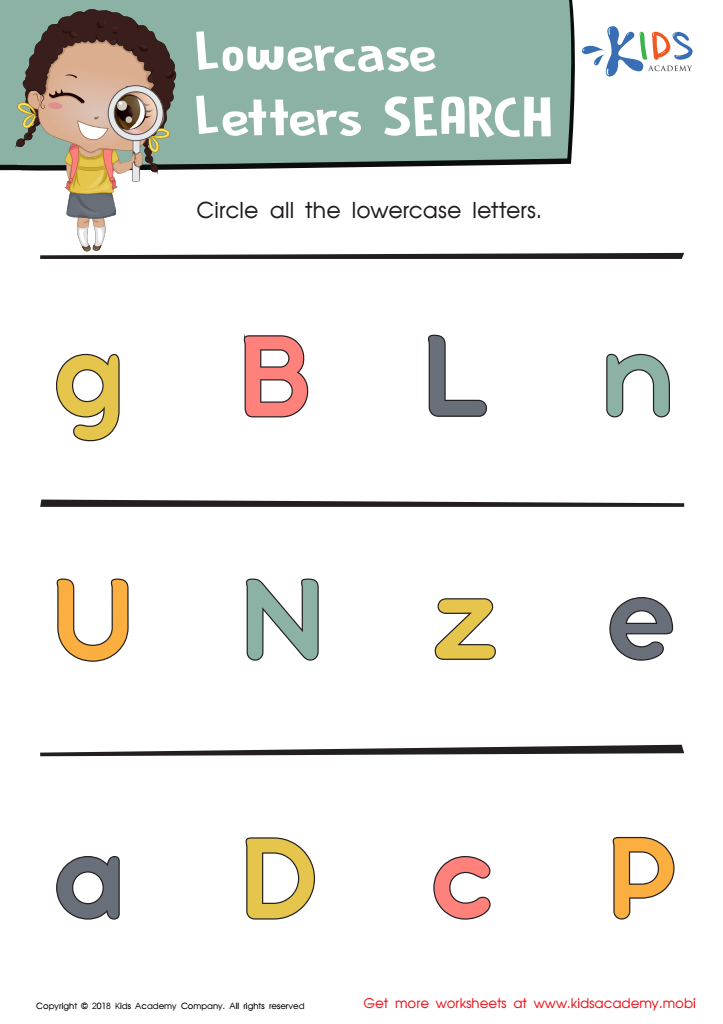
Lowercase Letters Search: Assessment Worksheet
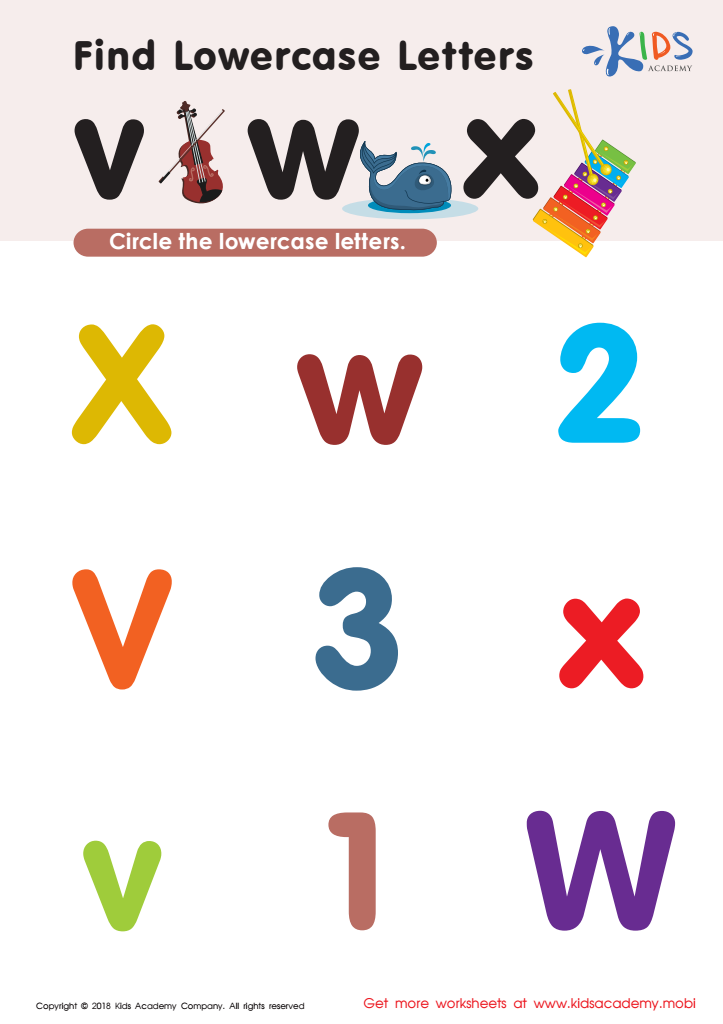
Find Lowercase Letters v w x Worksheet







Lowercase letter identification is a critical foundational skill for children aged 5-7, setting the stage for their literacy development. At this age, children are beginning to read and write, and recognizing lowercase letters is essential for decoding words. Unlike uppercase letters, which have a more uniform appearance, lowercase letters can be diverse in shape and size. Mastery of these distinctions aids children in learning phonetics and improving their overall reading comprehension.
Moreover, recognizing lowercase letters is vital for writing, as most of the text they encounter daily uses lowercase for words. When children can identify and use lowercase letters effectively, they build confidence in their writing abilities, facilitating smoother communication skills. This identification also enhances their engagement with printed material, encouraging a love for reading and learning.
Teachers and parents play a substantial role in this process through interactive activities, such as games, storytelling, and everyday lessons. By fostering lowercase identification, caregivers help children bridge critical gaps in their literacy skills, impacting their academic journey positively. Ultimately, understanding lowercase letters is not just about recognizing shapes; it is an essential stepping stone to developing proficient reading and writing skills that children will rely on throughout their educational careers.








