Mental arithmetic Worksheets for Ages 5-7
6 filtered results
-
From - To
Discover our engaging mental arithmetic worksheets designed specifically for children ages 5-7! These worksheets foster early math skills, helping young learners enhance their addition and subtraction abilities through fun and interactive exercises. Each worksheet is tailored to accommodate varying skill levels, ensuring that every child thrives as they practice basic arithmetic concepts in a playful environment. Ideal for home or classroom use, our resources support cognitive development and bolster confidence in mathematics. Look no further to inspire a love for learning; download our mental arithmetic worksheets today and watch your child flourish in their math journey!
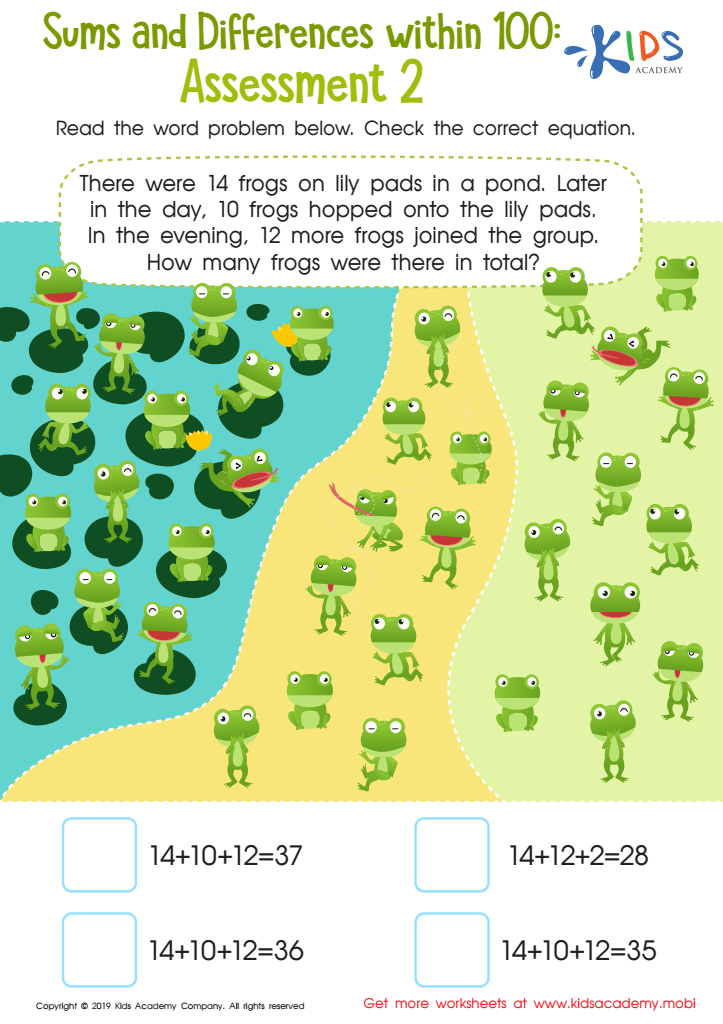
Sums and Differences Within 1 - Assessment 2 Worksheet
 Assign to My Students
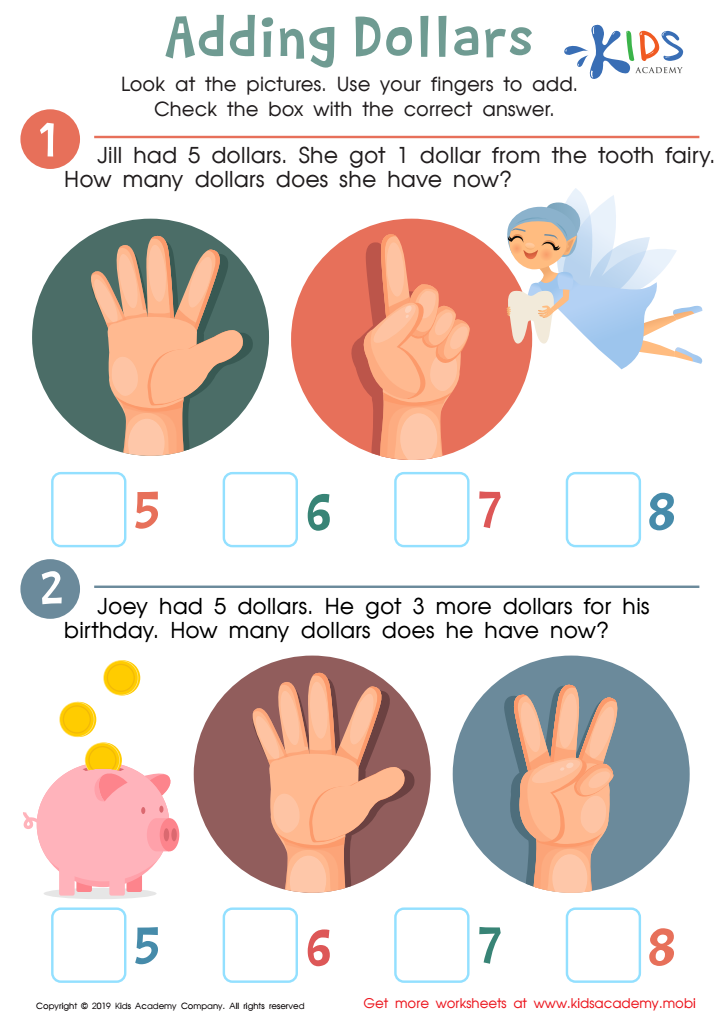
Tooth Fairy Addition Worksheet
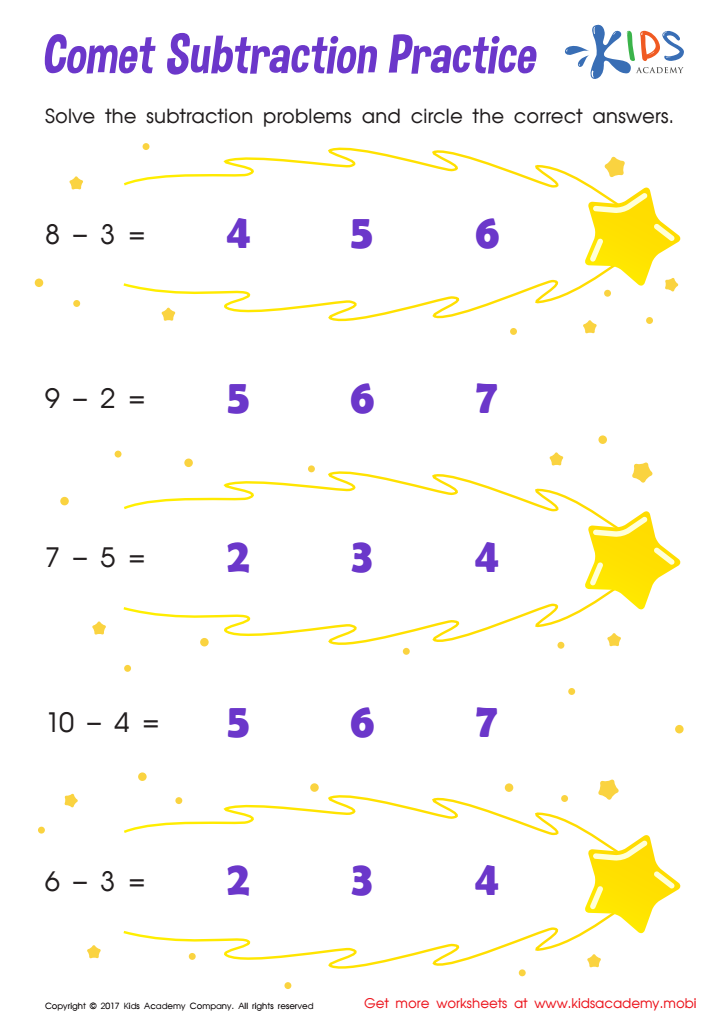
Comet Subtraction Practice Substraction Worksheet
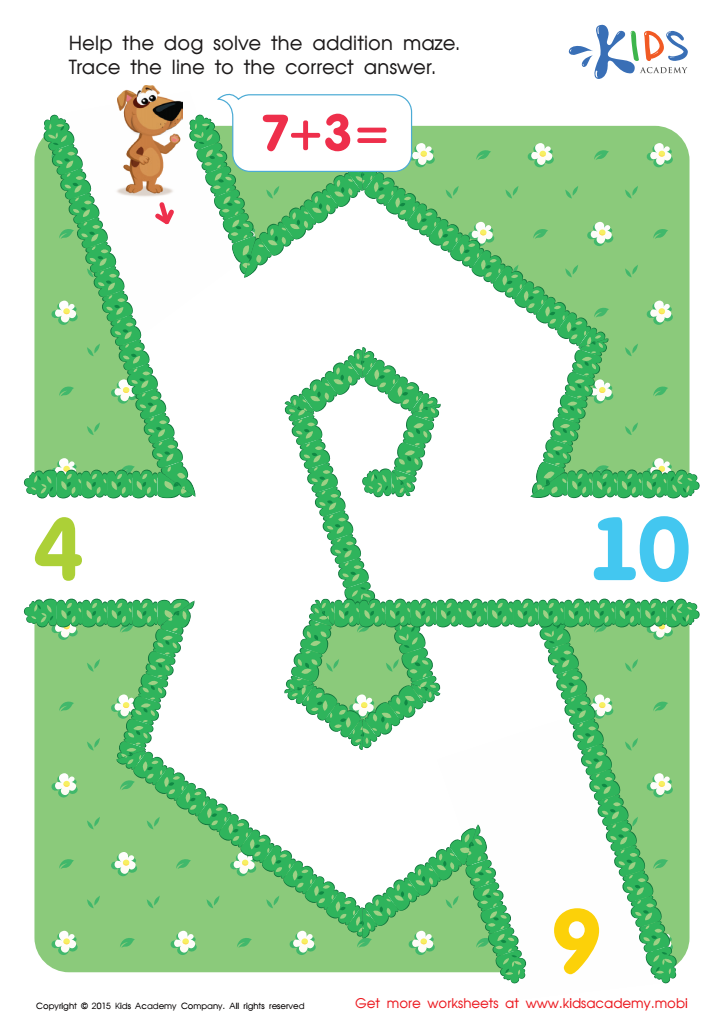
Seven Plus Three Worksheet
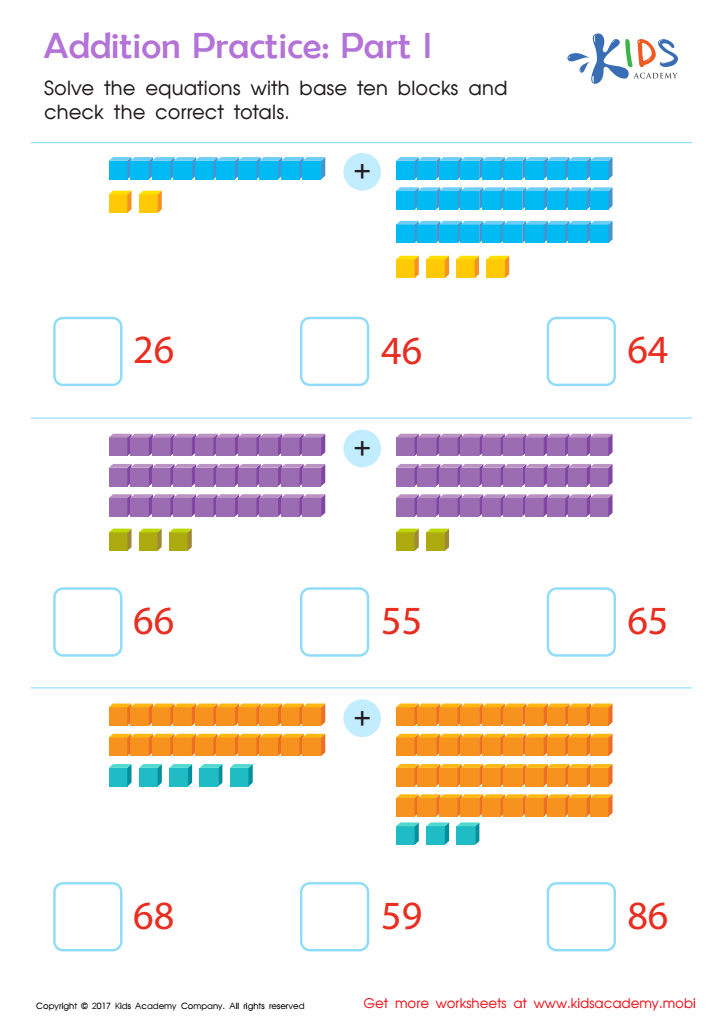
Addition Practice Sheet: Part 1
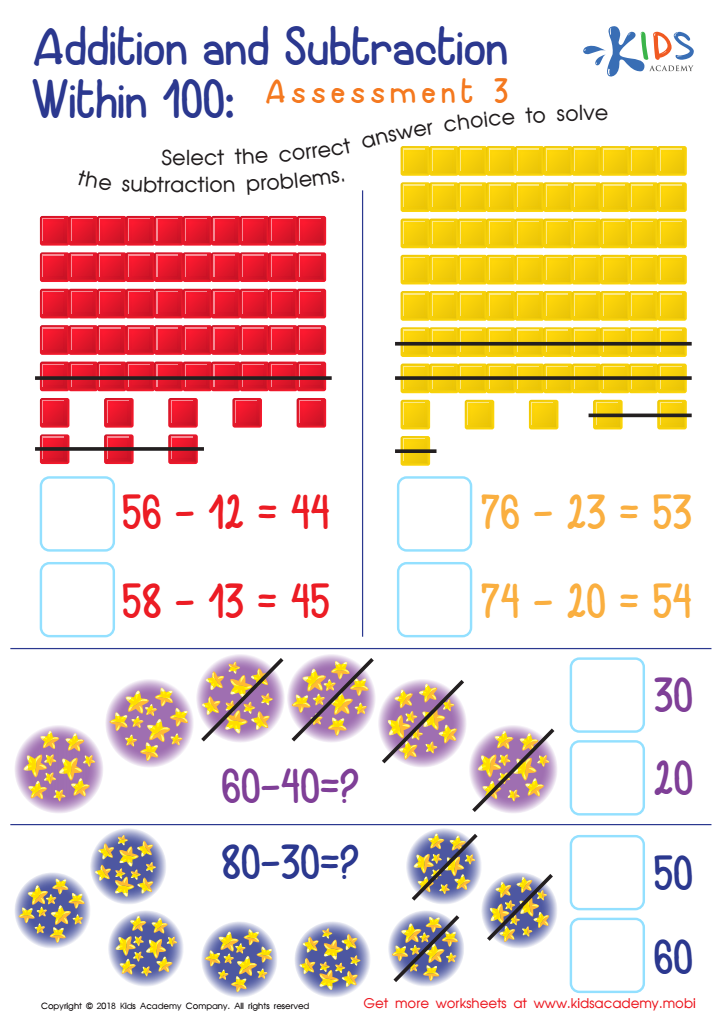
Addition and Subtraction Within 1: Assessment 3 Worksheet





.jpg)


Mental arithmetic is crucial for children aged 5-7, as it lays the foundation for their overall mathematical understanding and cognitive development. At this stage, children are naturally curious and eager to learn, making it an ideal time to introduce them to basic mathematical concepts such as addition and subtraction through mental calculations.
First, it enhances critical thinking and problem-solving skills. When kids practice mental math, they engage in logic and reasoning, which can improve their ability to work through more complex problems later on. Second, mental arithmetic helps build confidence. When children successfully solve problems in their heads, they develop a sense of achievement that encourages them to tackle more challenging tasks.
Additionally, mental arithmetic fosters memory skills and concentration. Memorizing number facts aids in quicker calculations and better retention of information. Lastly, in our increasingly digital world, the ability to perform mental calculations promotes independence. Students should not rely solely on calculators for basic operations; developing this skill enhances their functionality in everyday life.
In summary, parents and teachers should prioritize mental arithmetic as it supports cognitive growth, builds confidence, and nurtures essential skills that will serve children throughout their education and beyond.








