Number Matching Worksheets for Ages 5-7
4 filtered results
-
From - To
Number Matching Worksheets for Ages 5-7 from Kids Academy provide an engaging and educational way for young learners to practice essential math skills. These beautifully designed worksheets help children develop their number recognition, counting, and matching abilities. By linking numbers with their corresponding quantities, kids build a strong foundation for more advanced math concepts. Featuring a variety of playful themes and activities, these worksheets make learning enjoyable and accessible. Ideal for both classroom and home use, Kids Academy's Number Matching Worksheets ensure that early math skills blossom in a fun and supportive environment. Download now to enhance your child's learning journey!
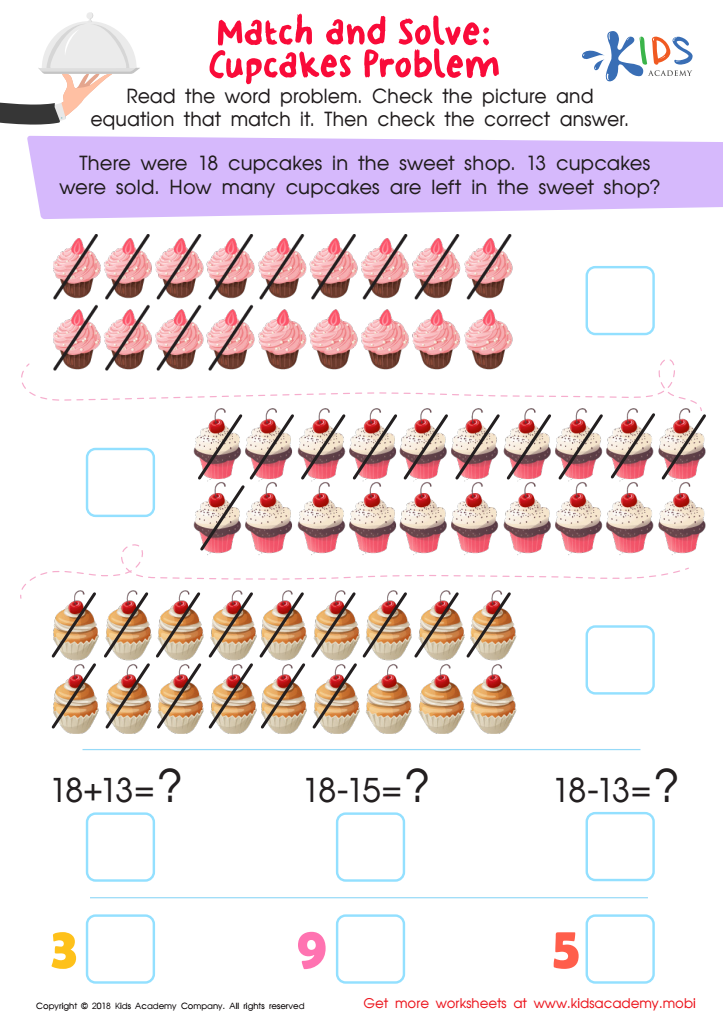
Match and Solve: Cupcakes Problem Worksheet
 Assign to My Students
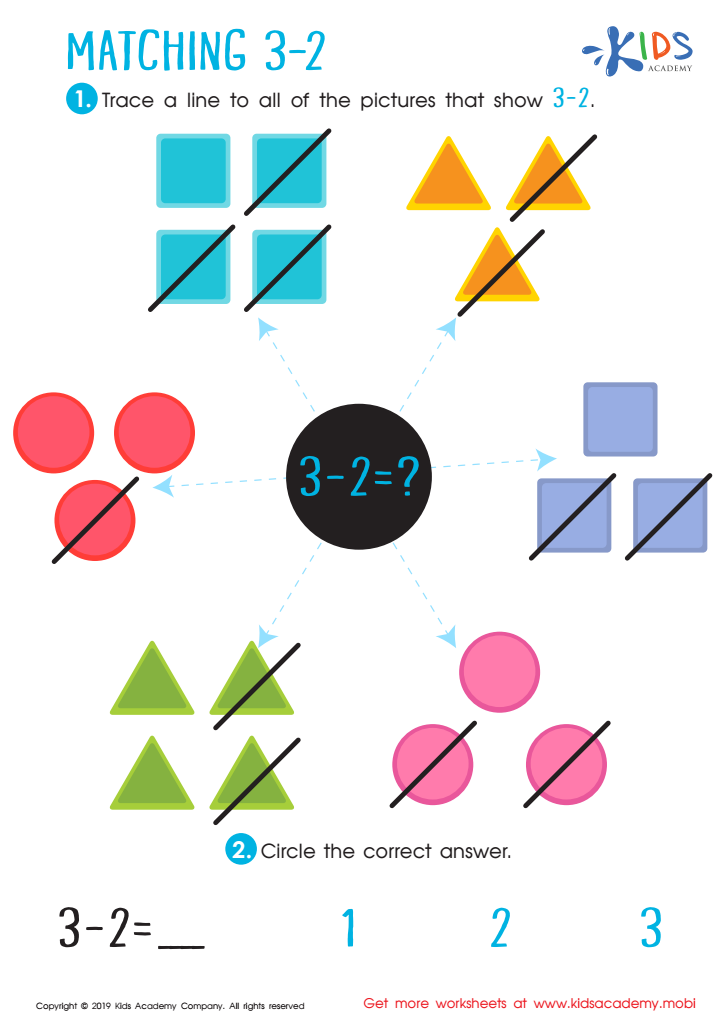
Matching 3-2 Worksheet
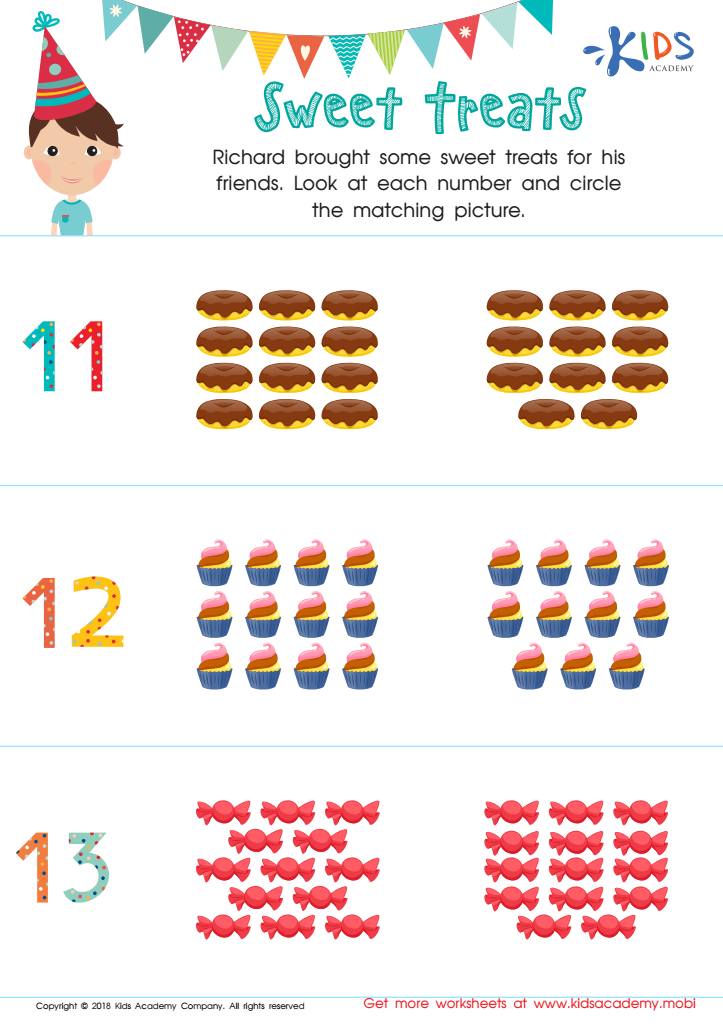
Kindergarten Math Worksheet Matching Numbers
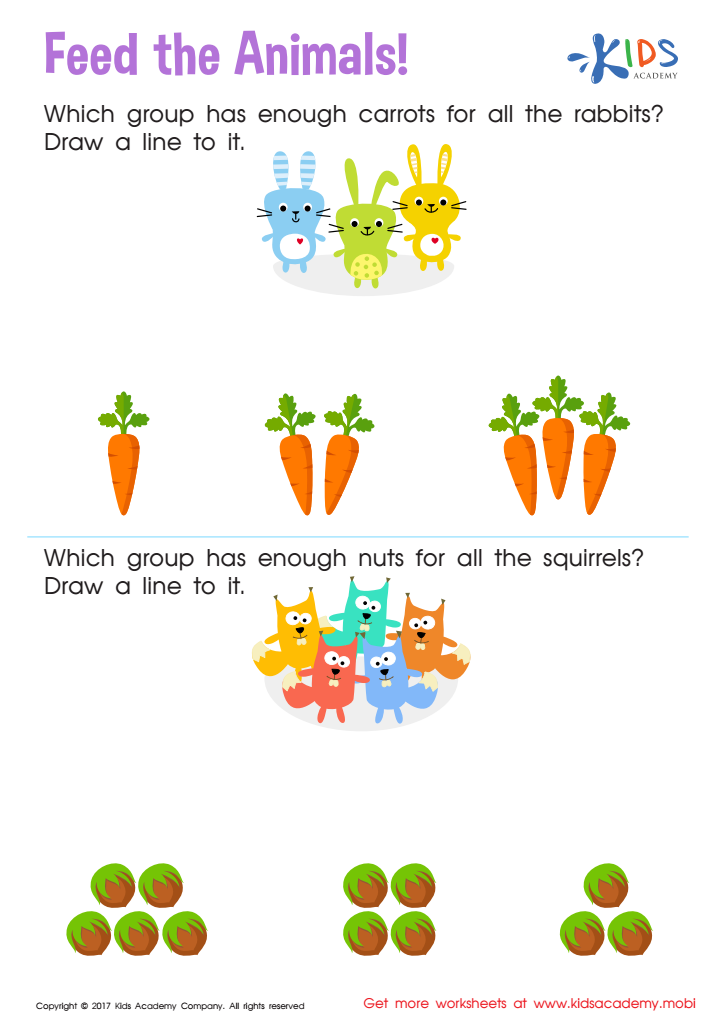
Count and Match: Feed the Animals Worksheet







Number matching activities are crucial for children aged 5-7 as they lay the foundational skills integral to early math education. At this age, children are beginning to develop their number sense, or the understanding of numbers and their relationships. By engaging in number matching activities, children improve their ability to recognize and correlate numbers with quantities, an essential step toward mastering more complex mathematical concepts.
For parents and teachers, focusing on number matching helps children improve their cognitive skills, such as memory, concentration, and problem-solving. For instance, a child who matches the number "3" with three apples is not only recognizing the numeral but also understanding the quantity it represents. This dual recognition builds stronger neural connections and promotes confidence in dealing with numbers.
Moreover, number matching activities can be tailored to be engaging and fun, encouraging a positive attitude toward learning. Games, colorful worksheets, and interactive digital tools captivate young minds, making learning an enjoyable experience. By fostering this positive disposition early on, parents and teachers instill a love for learning that can lead to academic success.
In conclusion, number matching is a simple yet powerful tool that contributes significantly to a child's cognitive development and lays the groundwork for future mathematical achievement. Therefore, it deserves attention from both parents and teachers.








