
Numerical problem solving Worksheets for Ages 5-7
6 filtered results
Difficulty Level
Grade
Age
-
From - To
Subject
Activity
Standards
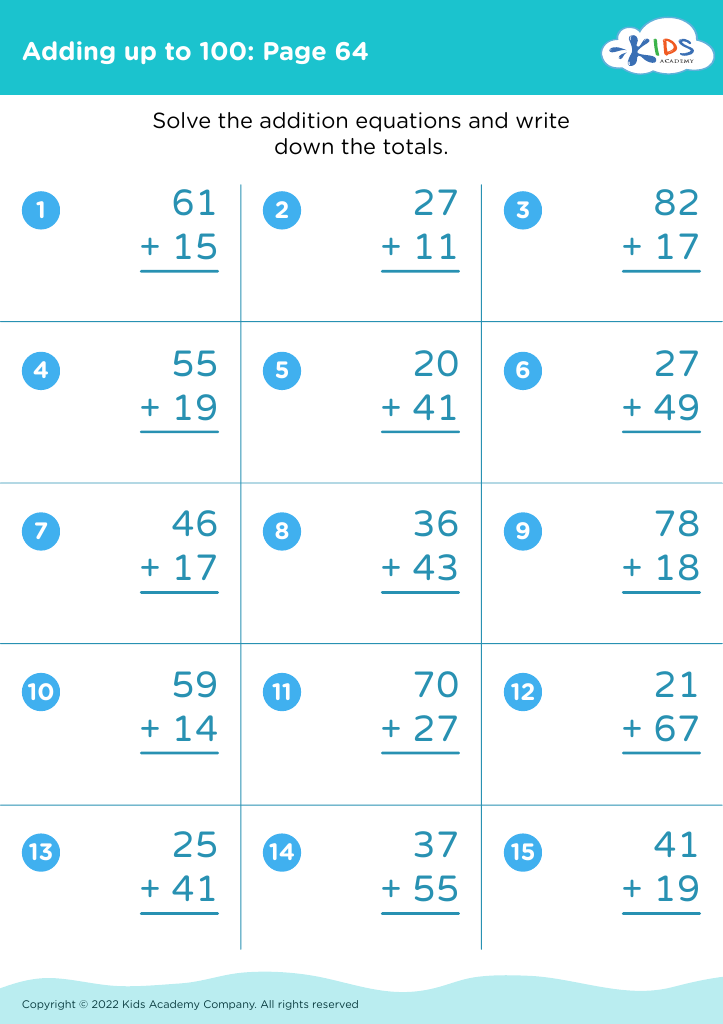
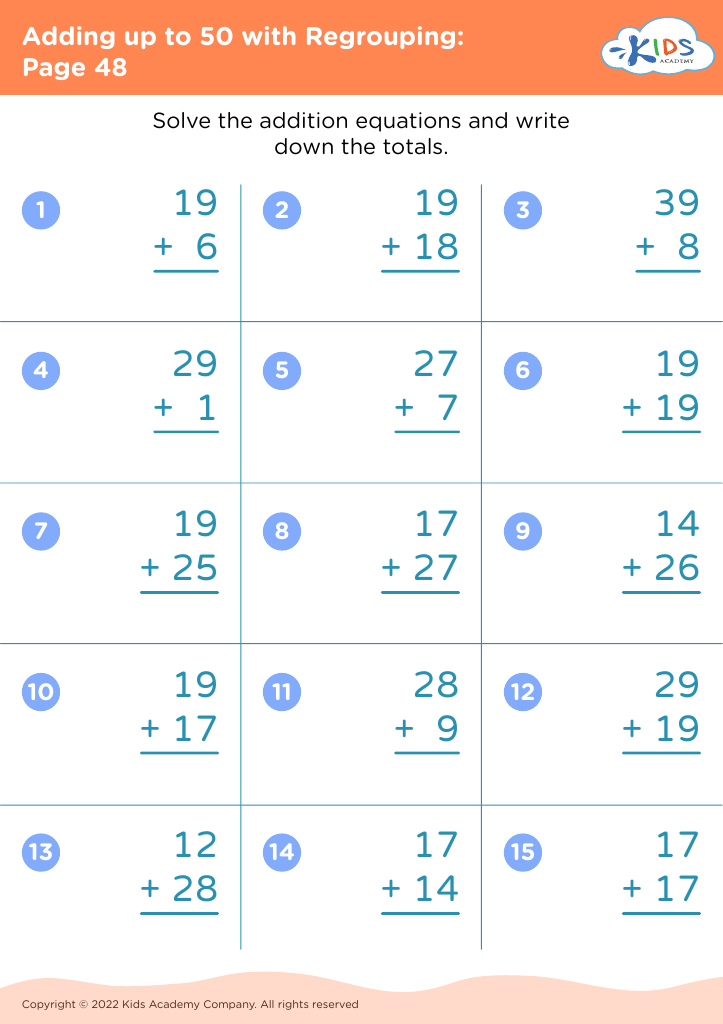
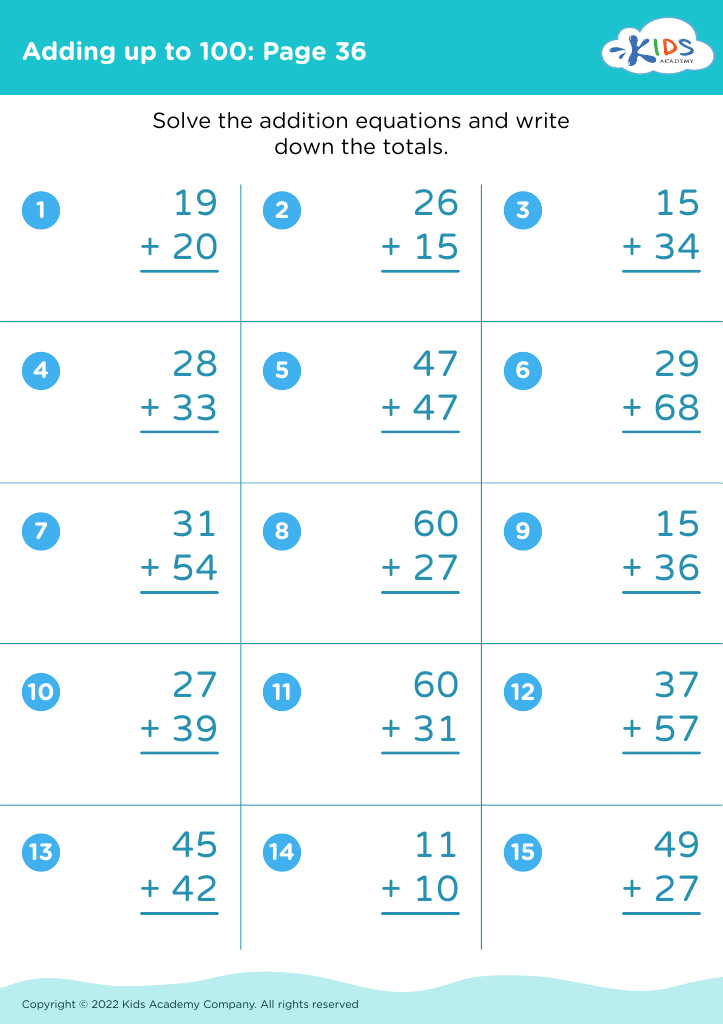
Discover our engaging Numerical Problem Solving Worksheets designed specifically for children ages 5-7! These worksheets foster essential math skills through fun and motivating activities. With a variety of problems that encourage critical thinking and creativity, young learners will enhance their ability to solve real-life numerical challenges. Each worksheet focuses on key concepts such as addition, subtraction, and basic problem-solving strategies, ensuring a solid foundation in mathematics. Perfect for home or classroom use, our resources cater to diverse learning styles and are aligned with early education standards. Watch your child's confidence soar as they master essential math skills in an enjoyable way!
Favorites
With answer key
Interactive
Join Kids Academy for Free
Who is primarily going to use this learning content?






Numerical problem solving is key for children aged 5-7 as it lays the foundation for essential mathematical skills that will be crucial throughout their education and daily lives. At this stage, children's cognitive abilities are rapidly developing, and engaging them in numerical problem solving fosters critical thinking and reasoning skills. By encouraging children to tackle mathematical challenges, parents and teachers help them understand concepts like addition, subtraction, and patterns in a practical context, making math more relatable and enjoyable.
Furthermore, numerical problem solving promotes perseverance and patience, as children learn to try different approaches to finding solutions. This encourages not only a growth mindset but also equips them with valuable problem-solving strategies they can apply to various situations.
Incorporating fun, interactive methods in teaching numerical concepts can make learning more engaging, inspiring a love for math early on. This positive initial experience with numbers helps to build confidence and reduces anxiety towards math, paving the way for more complex mathematical concepts in later years. Ultimately, nurturing numerical problem solving from a young age empowers children and better prepares them for academic and real-world challenges, making it essential for parents and teachers to prioritize this skill.








