Recognizing equivalent fractions Worksheets for Ages 5-7
5 filtered results
-
From - To
Help young learners grasp the concept of equivalent fractions with our engaging worksheets designed specifically for ages 5-7. Our carefully curated exercises blend colorful visuals and hands-on activities to make understanding fractions enjoyable. These worksheets are perfect for introducing the basics of fractions and comparing different fractional parts. Suitable for classroom or home learning, they foster both comprehension and confidence in early math skills. Encourage your child or students to explore fractions with ease and build a solid foundation for future math success with Kids Academy's Recognizing Equivalent Fractions Worksheets. Let's make math fun together!
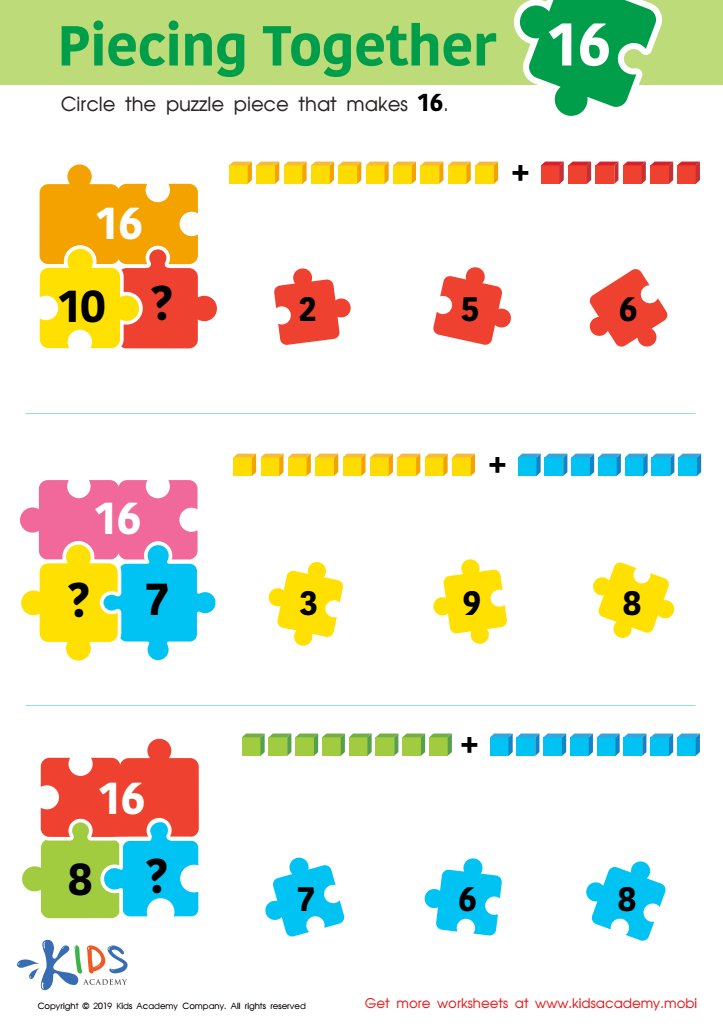
Piecing Together 16 Worksheet
 Assign to My Students







Recognizing equivalent fractions is a fundamental mathematical skill that lays the groundwork for future numeracy. For children ages 5-7, grasping the concept of equivalent fractions is crucial because it enhances their understanding of parts and wholes. When parents and teachers help young learners identify that 1/2 and 2/4 represent the same quantity, they cultivate a deeper comprehension of how fractions work, fostering numerical flexibility.
Developing this skill at an early age equips children with the foundational tools to excel in more complex mathematical tasks, such as comparing, adding, and subtracting fractions in later grades. Moreover, it enhances their problem-solving strategies and boosts their confidence in handling numbers, promoting a positive attitude toward math overall.
Early exposure to equivalent fractions also encourages logical thinking and pattern recognition—skills that are beneficial across various stages of education. By making fractions relatable and understandable, adults can demystify mathematics, turning challenges into engaging puzzles.
Incorporating practical examples, like cutting a pizza into different-sized slices but explaining how they comprise the same whole, makes learning relevant and fun. Therefore, focusing on this concept not only meets academic standards but also empowers children with skills applicable both inside and outside the classroom, setting them up for ongoing success in mathematics.








