Syllable identification Worksheets for Ages 5-7
4 filtered results
-
From - To
Unlock the joy of reading with our engaging Syllable Identification Worksheets for ages 5-7. Perfectly crafted for young learners, these activities help children recognize and count syllables in words, enhancing their phonemic awareness. Utilizing fun exercises, like clapping and matching, our worksheets promote hands-on learning. At Kids Academy, we focus on building essential language skills early on, fostering confidence and literacy. Dive into our curated collection and watch your child master the rhythm and flow of words, setting the foundation for successful reading and writing. Get started today and make learning an enjoyable adventure.
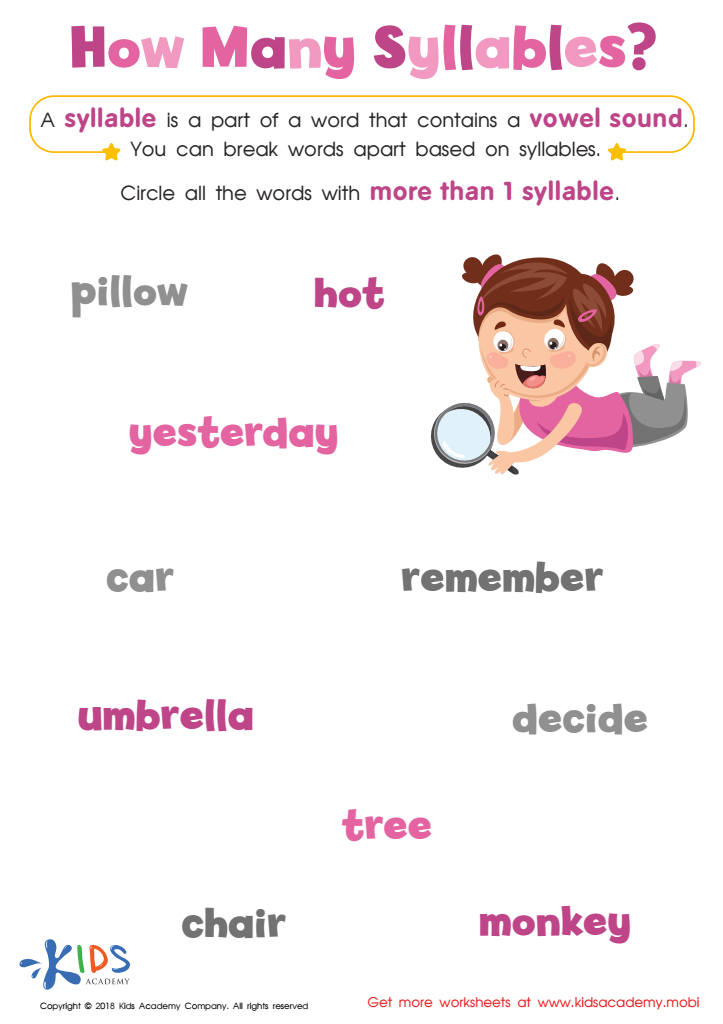
Reading: How Many Syllables Worksheet
 Assign to My Students
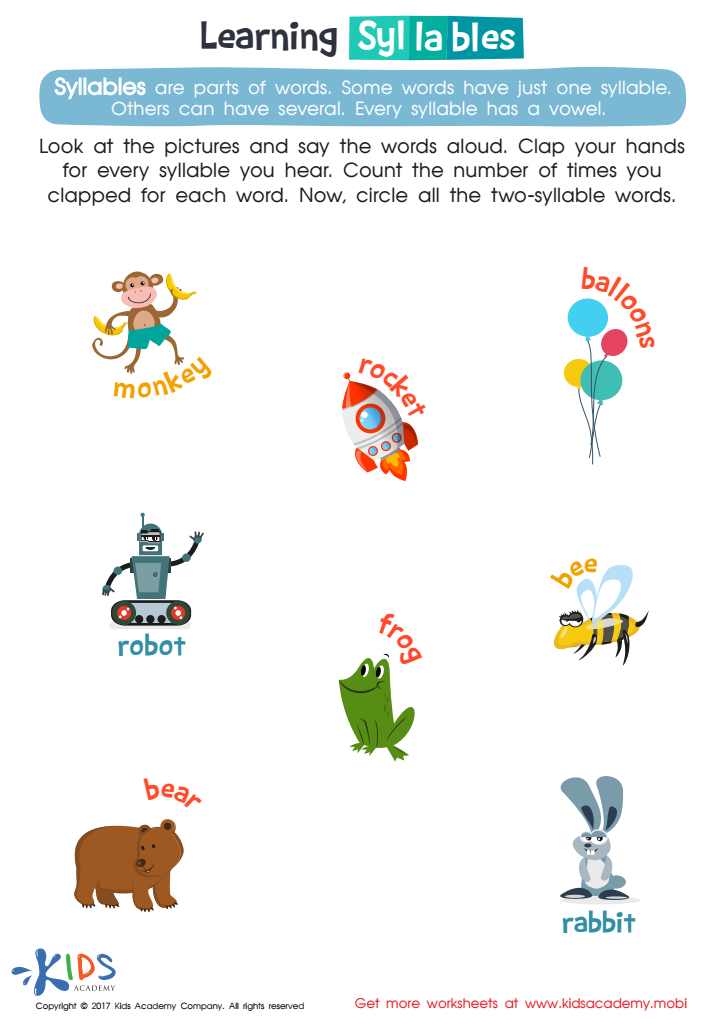
Learning Syllables Word Structure Worksheet
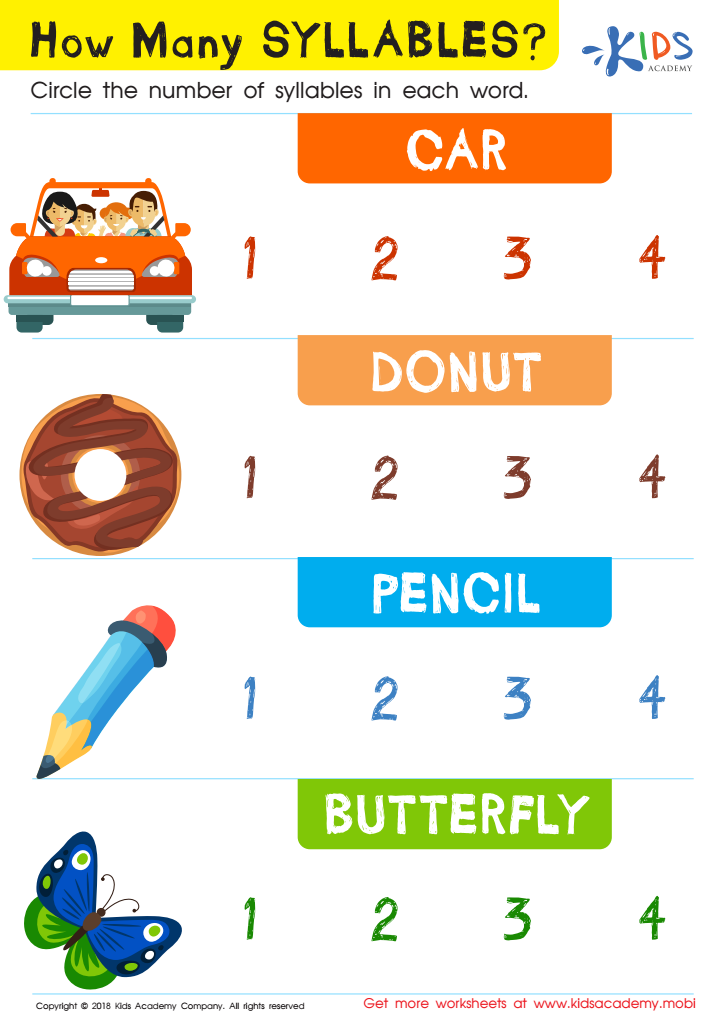
How Many Syllables? Worksheet
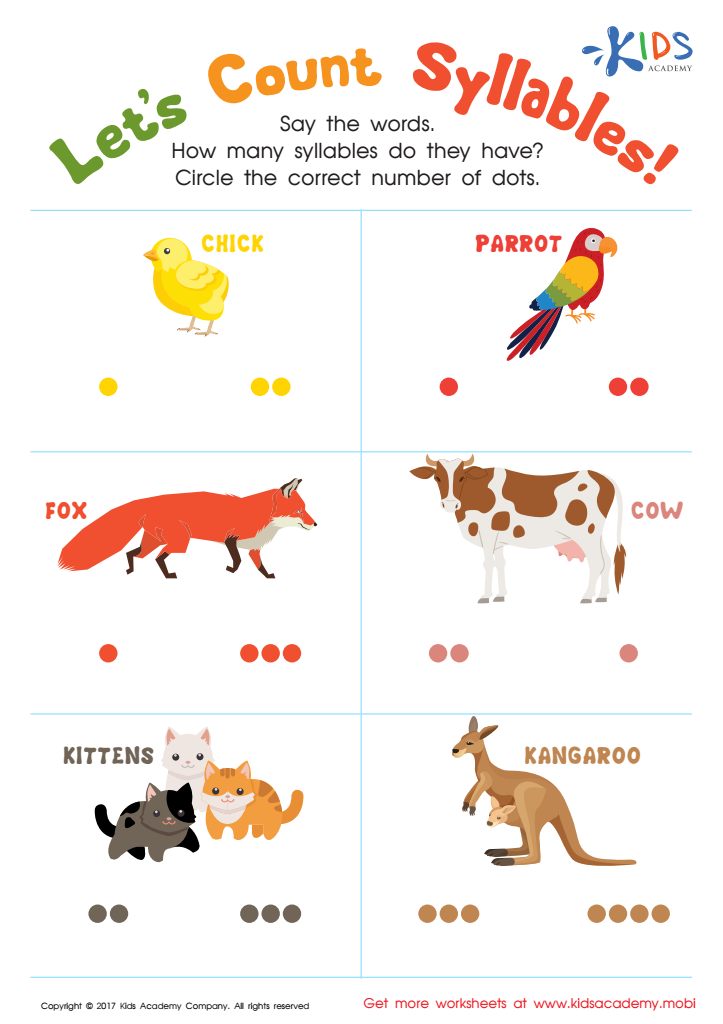
Lets Count Syllables Worksheet





%20(1).jpg)
Understanding and identifying syllables is crucial for young learners, especially those aged 5-7, as it forms the foundation of language development, reading proficiency, and spelling skills. Syllables are the building blocks of words, and an awareness of them helps children break down complex words into manageable parts. When children can identify and count syllables, they improve their phonemic awareness—a key component in developing strong reading skills.
When reading, children who understand syllables can better decode unfamiliar words by breaking them into smaller, more familiar chunks. This aids in smoother, more fluent reading, which enhances comprehension. Similarly, syllable identification supports spelling. By segmenting words into syllables, children learn manageable spelling units, making difficult words easier to remember and write correctly.
Furthermore, syllable awareness also enhances pronunciation skills. When children can break words down into their syllable components, they are better able to articulate words clearly, promoting better verbal communication. This skill is also vital for learning new vocabulary, as it helps in the understanding and retention of new terms.
Ultimately, syllable identification isn't just a technical skill but a pivotal element that influences overall literacy and academic success, making it something parents and teachers should prioritize during early childhood education.








