
Telling time Worksheets for Ages 5-7
4 filtered results
Difficulty Level
Grade
Age
-
From - To
Subject
Activity
Standards
Discover an engaging collection of "Telling Time Worksheets" specifically designed for ages 5-7 at Kids Academy. Our worksheets provide a fun and interactive way for young learners to grasp the concept of time. From identifying clock hands to practicing reading both analog and digital clocks, these resources help build essential time-telling skills. Ideal for classroom or home use, they accommodate various learning styles through visually appealing exercises and practical activities. With our worksheets, children will gain confidence in telling time, paving the way for their understanding of daily schedules and routines. Start your child's time-telling journey today!
Favorites
With answer key
Interactive
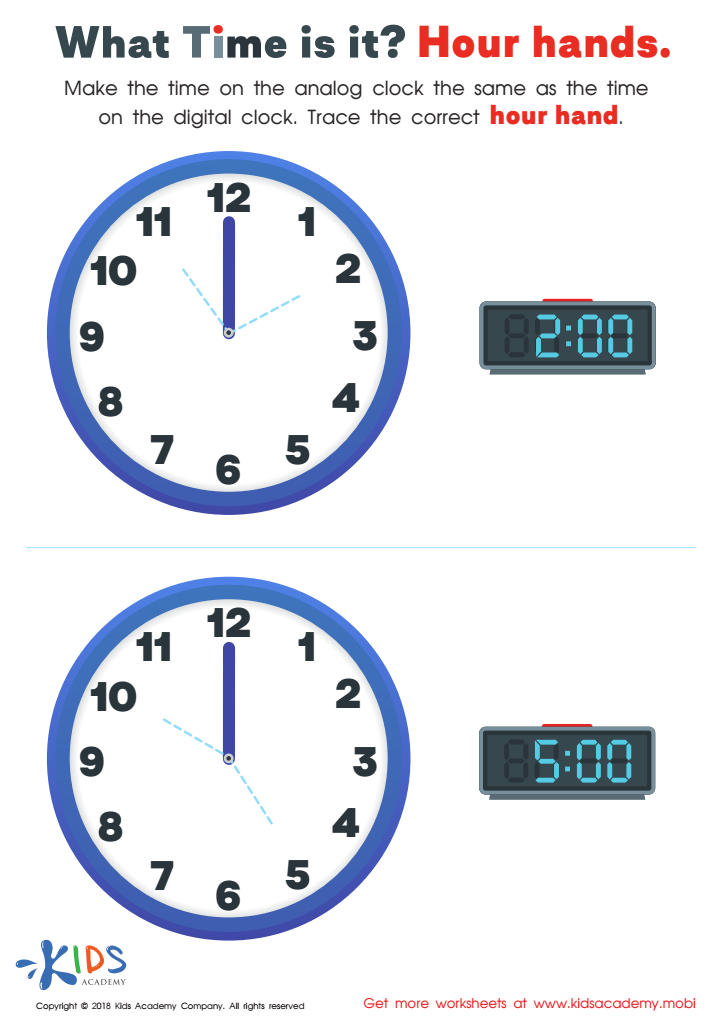
What Time Is it? Hour Hands Worksheet
Does your child know how to read analogue and digital clocks? This worksheet will help them learn. Trace the correct hour hand to match the time on a digital clock to the analogue clock. Help them read the time correctly, both on analogue and digital clocks.
 Assign to My Students
What Time Is it? Hour Hands Worksheet
Worksheet
Join Kids Academy for Free
Who is primarily going to use this learning content?







Teaching children to tell time is an essential life skill that impacts their day-to-day activities, routines, and interactions. For children aged 5-7, learning to tell time enhances their understanding of schedules, commitments, and the concept of time management. As they begin to navigate the world around them, being able to read a clock empowers them to grasp the difference between morning, afternoon, and evening, helping them establish a sense of order in their lives.
Moreover, the ability to tell time supports cognitive development by fostering critical thinking and problem-solving skills. This activity encourages number recognition and basic math skills, as children learn to apply concepts of counting and increments. Whether it’s determining how long before a favorite show starts or coordinating playdates, telling time helps children gain independence, build confidence, and develop responsibility.
For parents and teachers, nurturing this skill creates opportunities for enriching conversations and interactive learning experiences. Engaging children in practical scenarios, such as counting down to an event or setting timers for tasks, solidifies their understanding of time in a relatable way. Ultimately, teaching children to tell time is a stepping stone towards their overall development and preparedness for the complexities of everyday life.








