Time recognition Worksheets for Ages 5-7
6 filtered results
-
From - To
Discover our engaging Time Recognition Worksheets designed specifically for children aged 5-7! These worksheets provide fun and interactive activities that help young learners develop their understanding of time, including reading clocks, identifying hours and half-hours, and differentiating between AM and PM. Each worksheet is crafted to enhance critical thinking skills while making learning enjoyable through colorful illustrations and relatable scenarios. Perfect for home or classroom use, our Time Recognition Worksheets encourage kids to practice at their own pace, fostering independence and confidence in their time-telling abilities. Unlock the joy of learning about time today with our thoughtfully designed resources!
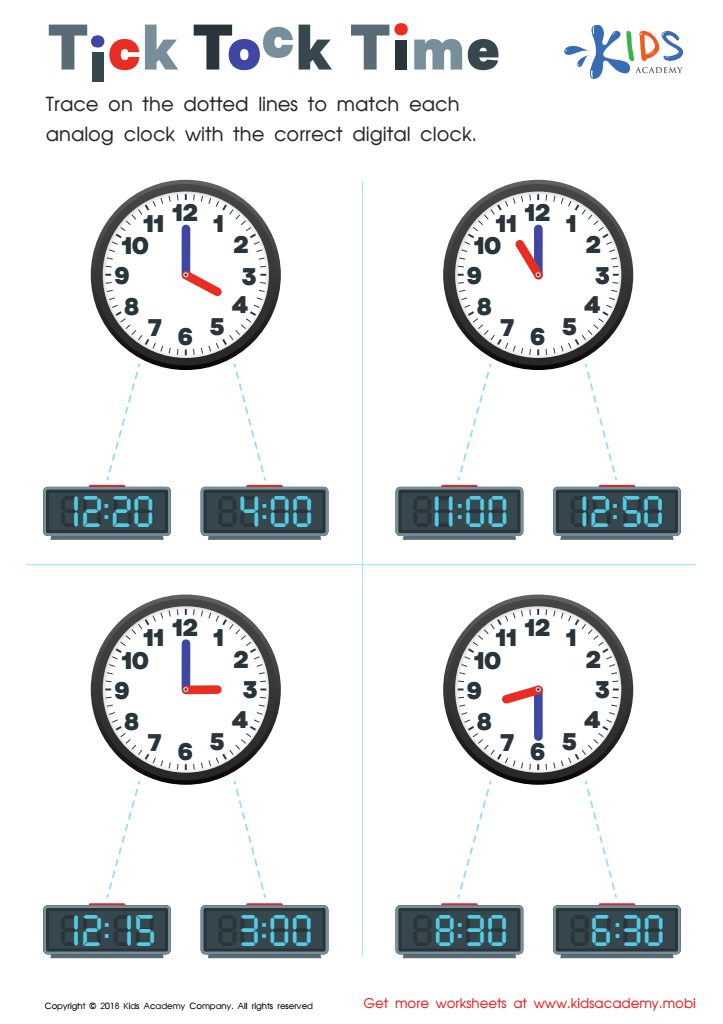
Tick Tock Time Worksheet
 Assign to My Students
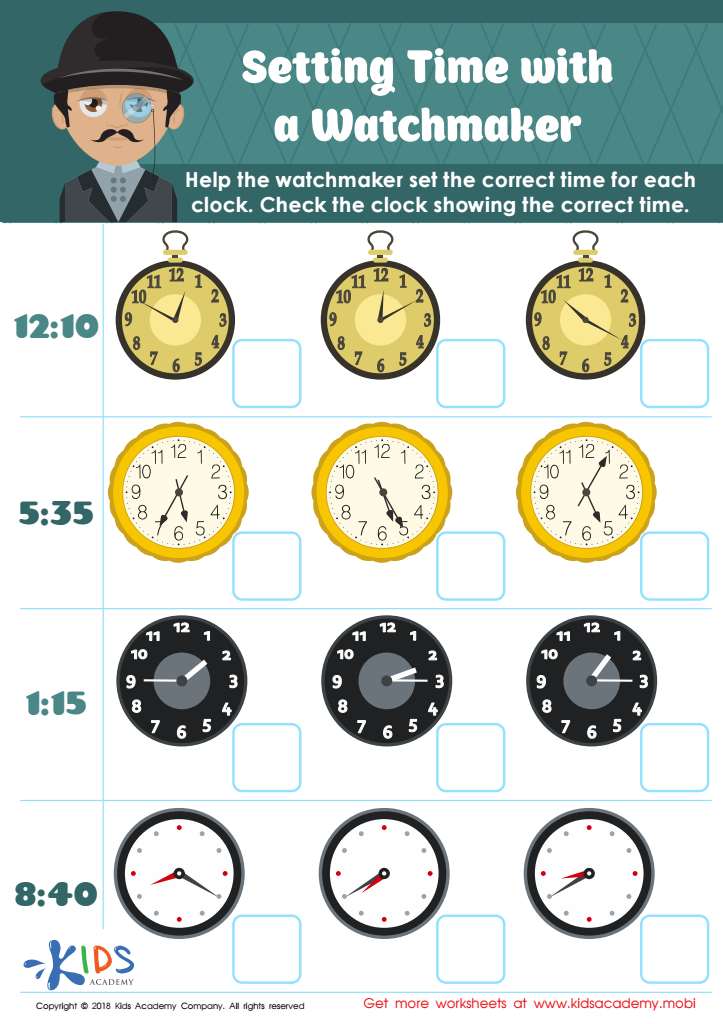
Setting Time with Watchmaker Worksheet
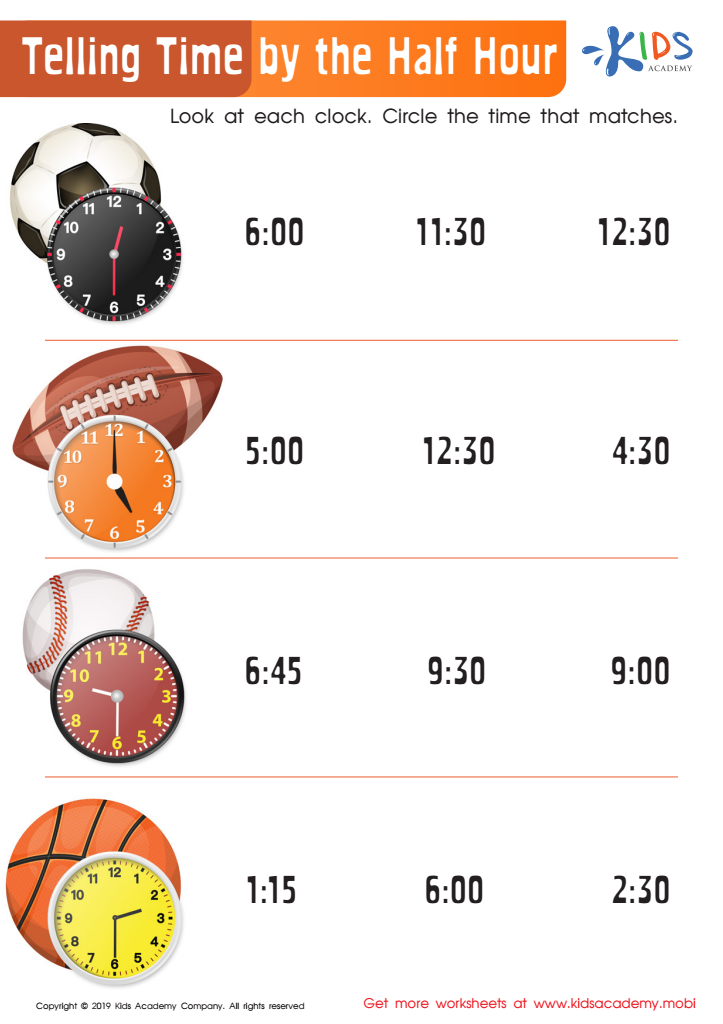
Telling Time by the Half Hour Worksheet
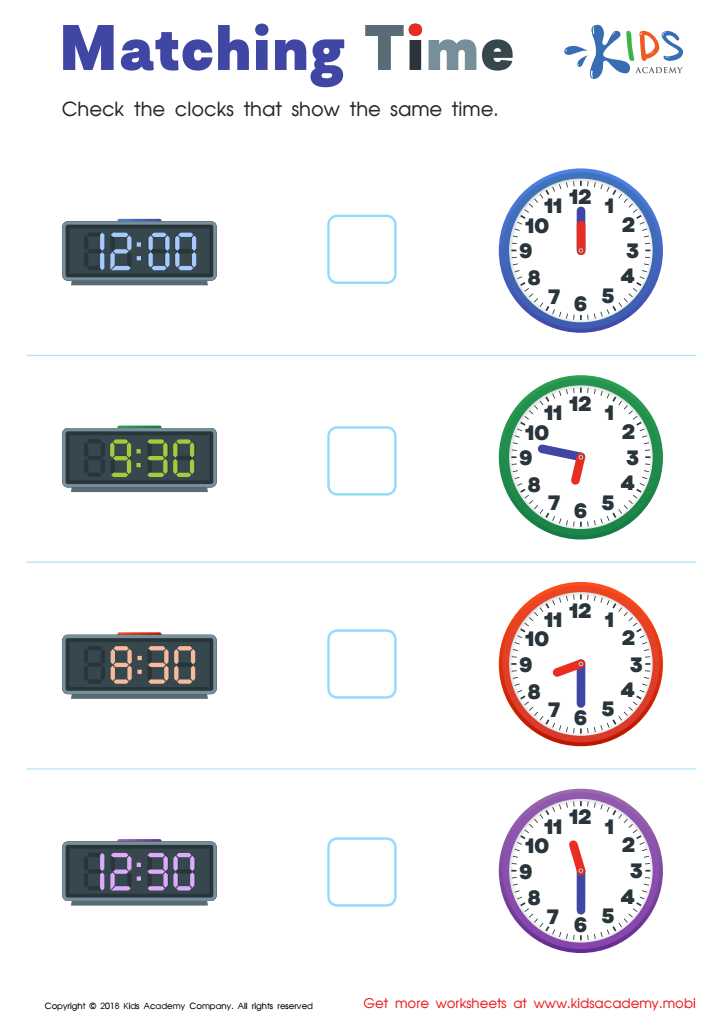
Matching Time Worksheet
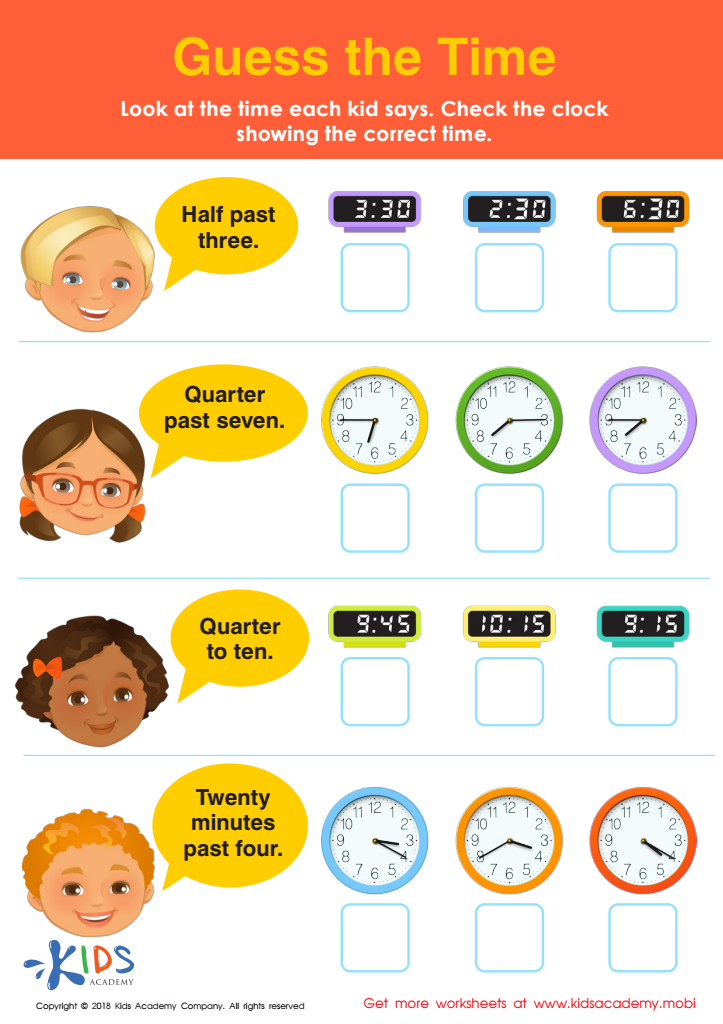
Guess the Time Worksheet
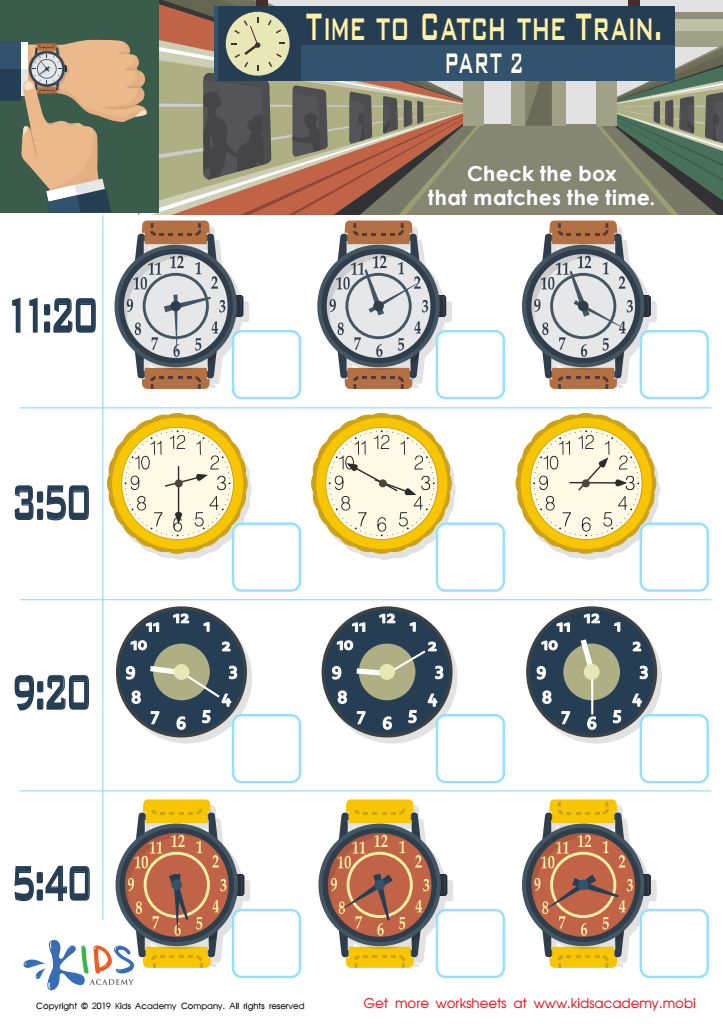
Time to Catch the Train Part 2 Worksheet








Time recognition is a crucial skill for children aged 5-7 as it establishes the foundation for their daily routines, responsibilities, and social interactions. At this age, children transition from preschool to formal schooling, where understanding time helps them grasp new concepts and stay organized.
First, recognizing time aids in developing a sense of responsibility. Children learn to adhere to schedules—for instance, knowing when to start homework or join family activities, which in turn fosters accountability and independence.
Second, mastering time helps enhance academic skills. For instance, time concepts are integral in subjects like math, where they learn about counting minutes and understanding intervals. It also supports their reading skills, as they follow along with story sequences that involve time elements.
Moreover, time recognition is vital for social development. Children engage better in activities with peers when they can coordinate timings, from playtime to birthday celebrations. Additionally, it aids emotional regulation by helping them distinguish between “waiting times,” understanding that not all activities take place immediately.
In conclusion, prioritizing time recognition in early education empowers children with essential life skills, facilitates academic success, and aids social interactions, laying the groundwork for their overall development.








