Understanding clocks Worksheets for Ages 5-7
6 filtered results
-
From - To
Discover our engaging "Understanding Clocks Worksheets" designed specifically for children aged 5-7. These interactive resources help young learners grasp the concepts of telling time, both on digital and analog clocks. With colorful visuals and age-appropriate activities, children will practice reading the hour and minute hands as they solve fun problems. Our worksheets incorporate a variety of engaging exercises, including matching, drawing clock hands, and answering questions, making learning about time enjoyable. Perfect for home or classroom settings, these worksheets foster essential early math skills while promoting confidence in time management. Unlock your child's understanding of time today!
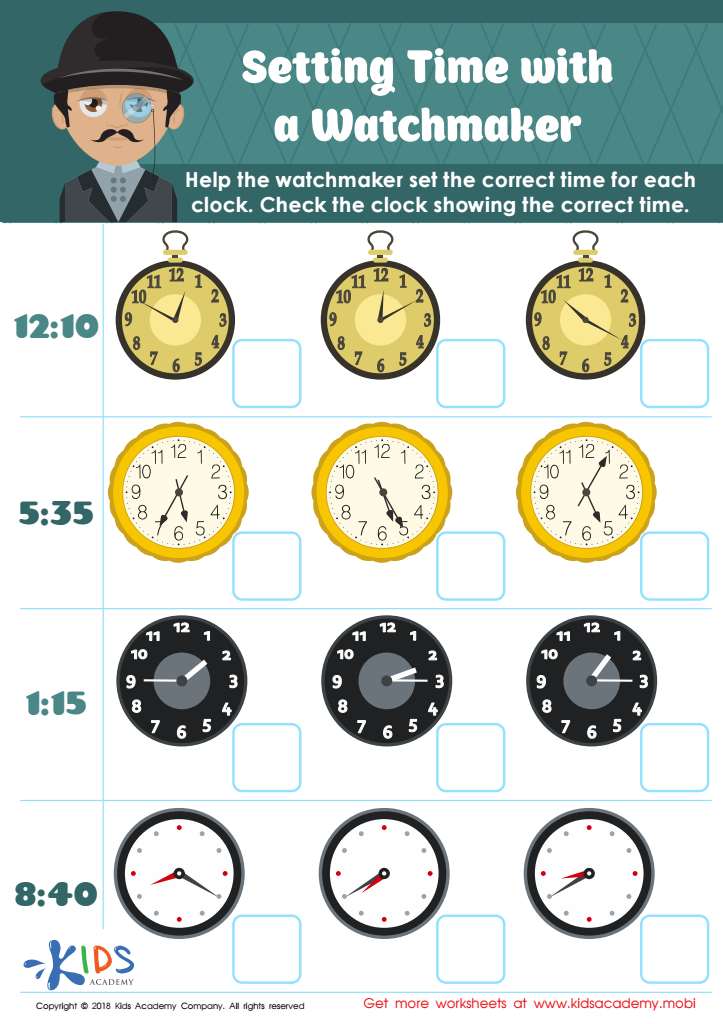
Setting Time with Watchmaker Worksheet
 Assign to My Students
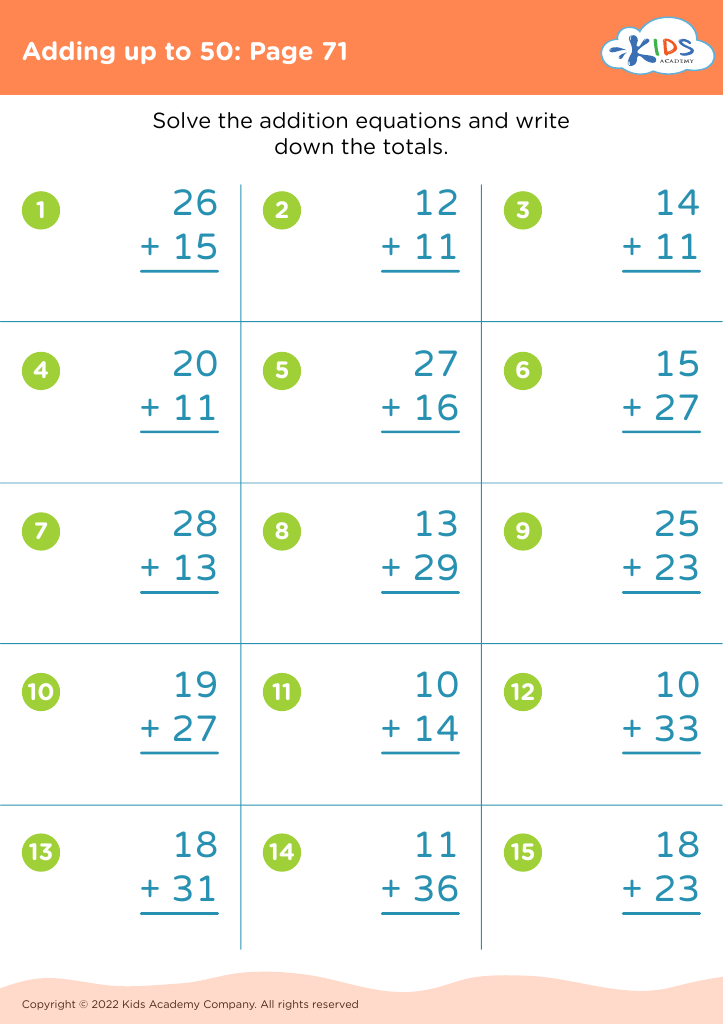
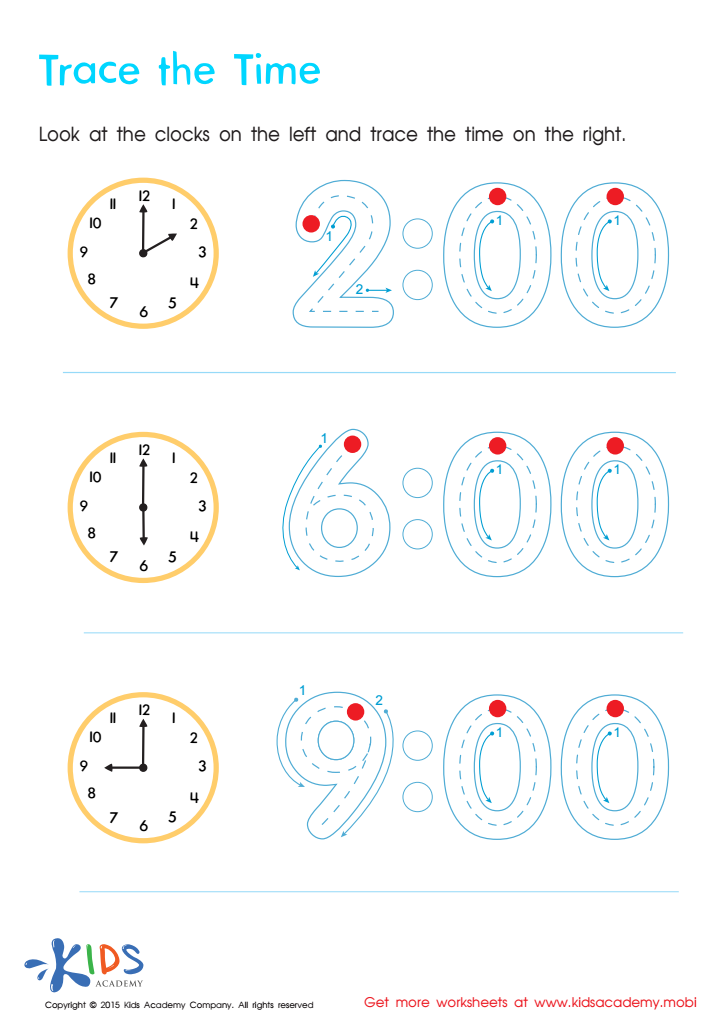
Telling The Time Worksheet: Part 2
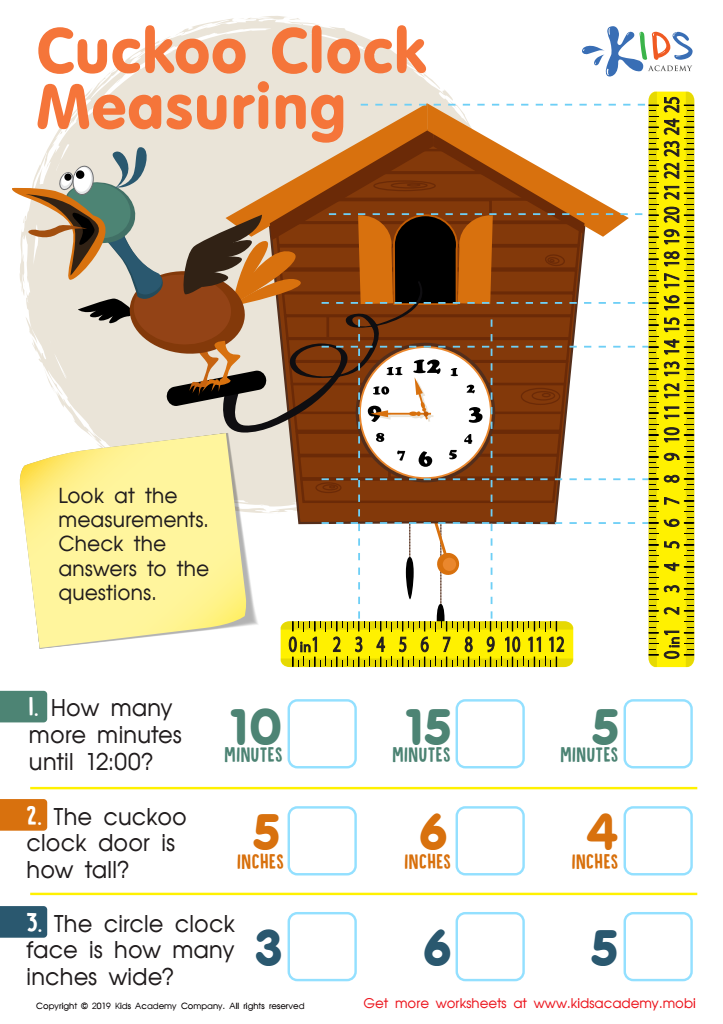
Cuckoo Clock Measuring Worksheet
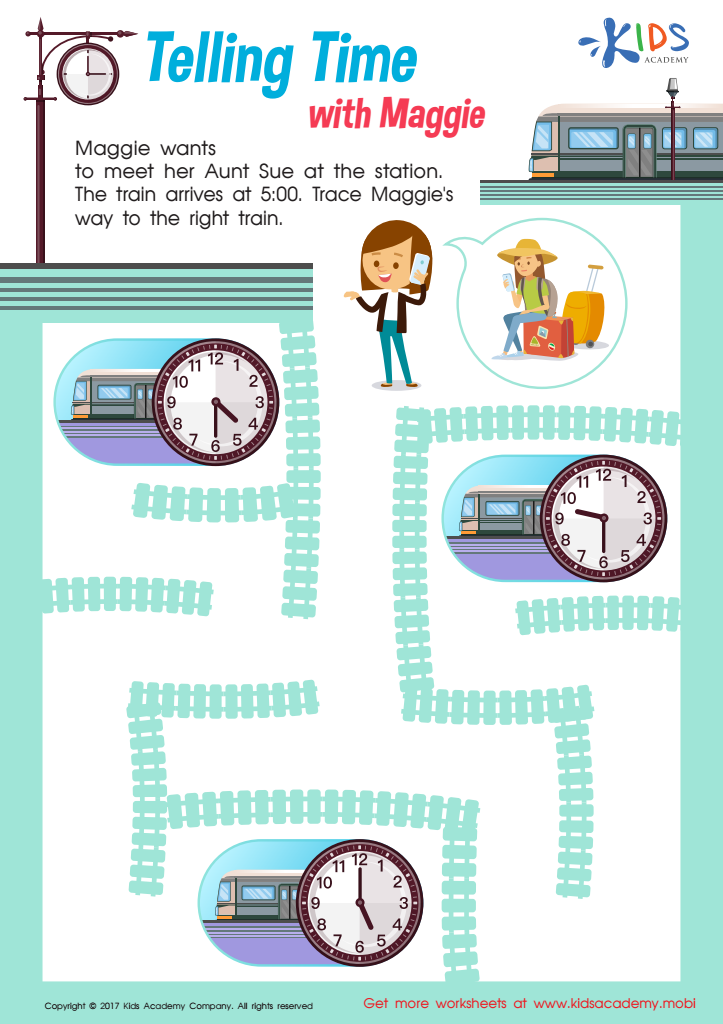
Telling Time With Maggie Time Worksheet
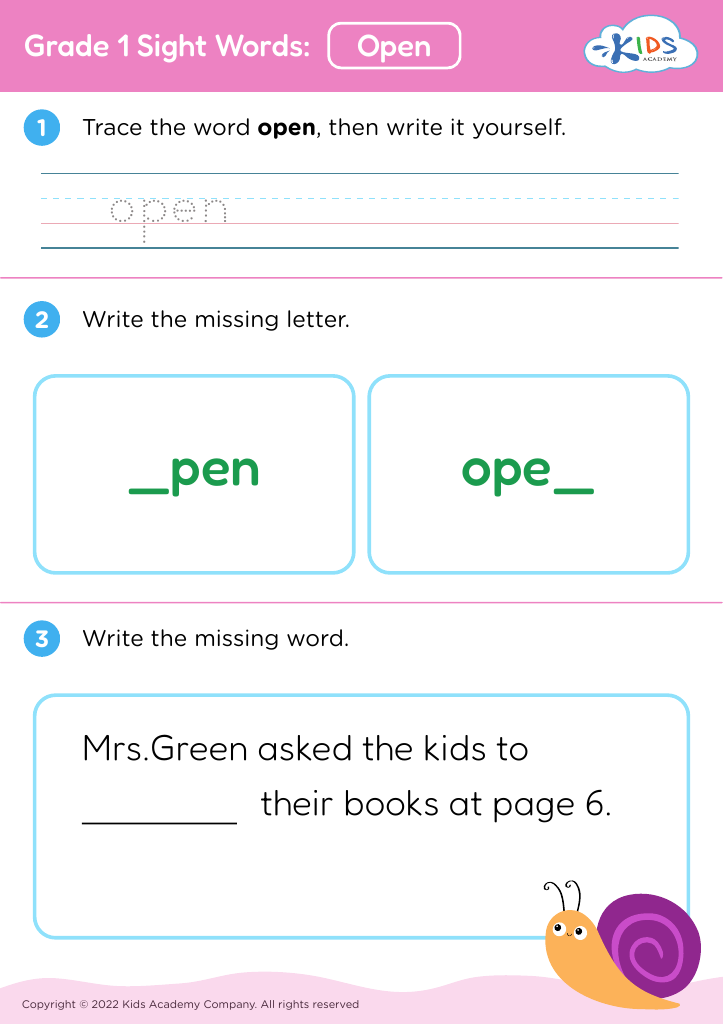








Understanding clocks is a vital skill for children ages 5-7, as it lays the foundation for their time management and organizational abilities later in life. Teaching young learners to read clocks nurtures critical cognitive skills such as counting, number recognition, and the concept of time itself. These skills enhance their mathematical literacy and problem-solving capabilities.
Furthermore, grasping how to tell time fosters independence and responsibility. Children learn to manage their daily routines more effectively by understanding when activities start and stop, helping prepare them for school schedules and daily life tasks. This empowers them to make sense of the world around them and reinforces the importance of punctuality.
For parents and teachers, teaching clock reading promotes positive interactions and bonding opportunities. Engaging in activities involving clocks, such as games or rhymes, can make learning enjoyable and memorable. This collaborative approach enriches the educational experience and helps children associate time management with fun.
Lastly, in our fast-paced world, being able to read a clock supports children's ability to interact confidently with their environment, preparing them for social situations and academic success. For all these reasons, understanding clocks is an essential skill that should be prioritized in early education.








