Understanding communities Worksheets for Ages 5-7
6 filtered results
-
From - To
Our "Understanding Communities Worksheets for Ages 5-7" introduce young learners to the basics of how communities function. Through engaging and age-appropriate activities, children explore the roles of community helpers, the importance of different jobs, and the interconnections that make communities thrive. These worksheets foster critical thinking and understanding of social structures while enhancing reading comprehension and vocabulary. Perfect for both classroom use and at-home learning, our worksheets provide a fun and effective way to teach early learners about the world around them. Equip your students with the essential skills to appreciate and contribute to their communities.
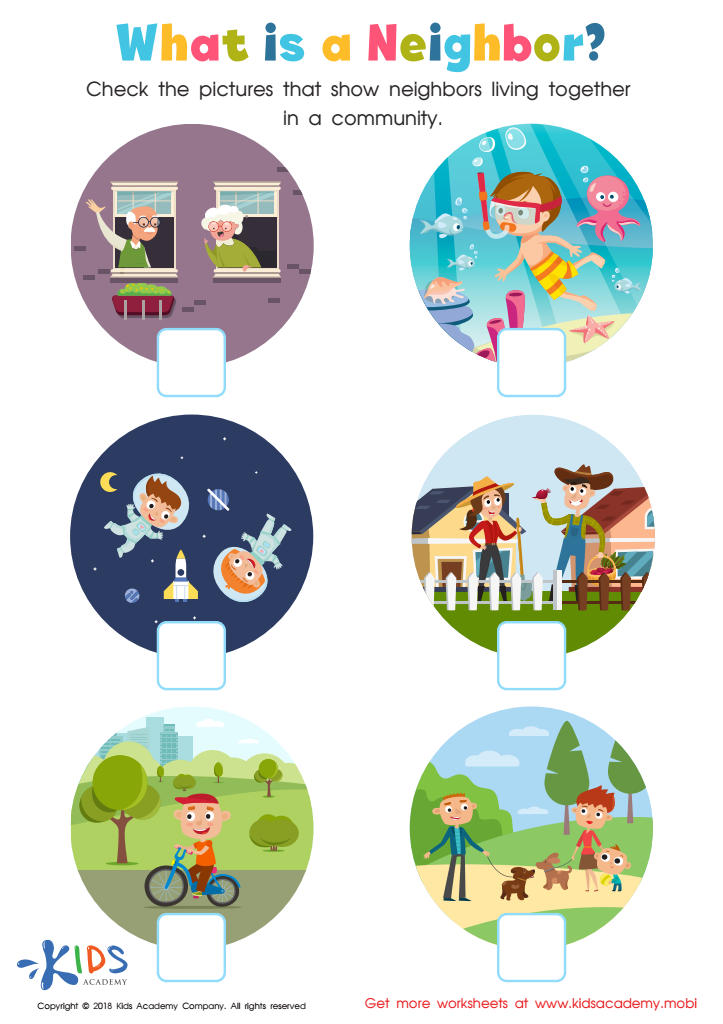
What is a neighbor Worksheet
 Assign to My Students
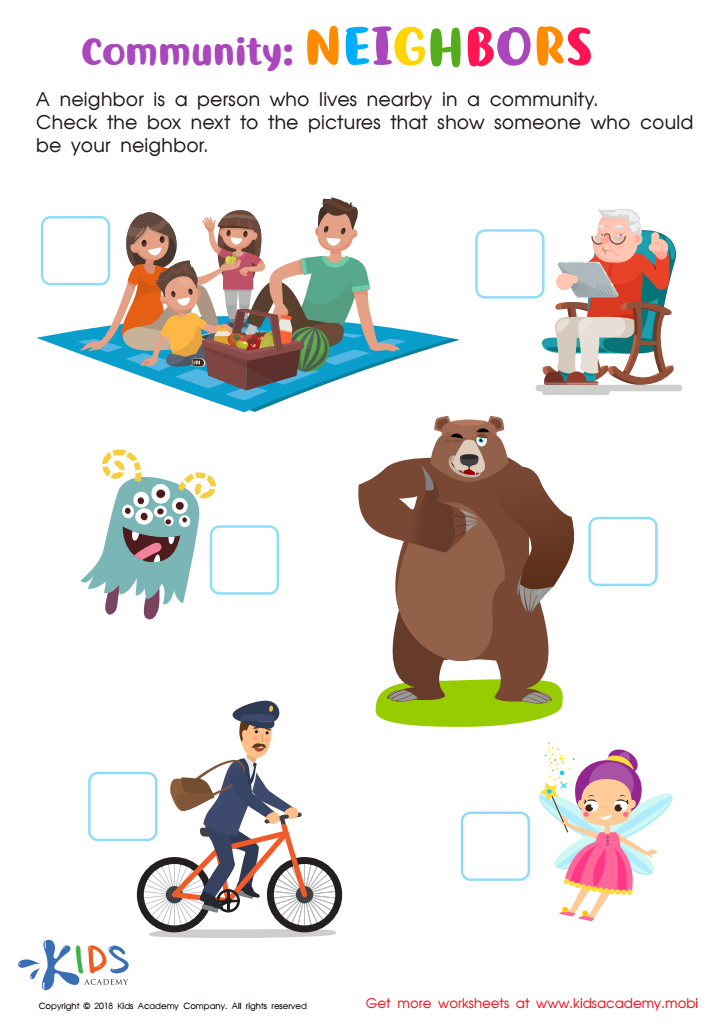
Community: Neighbors Worksheet
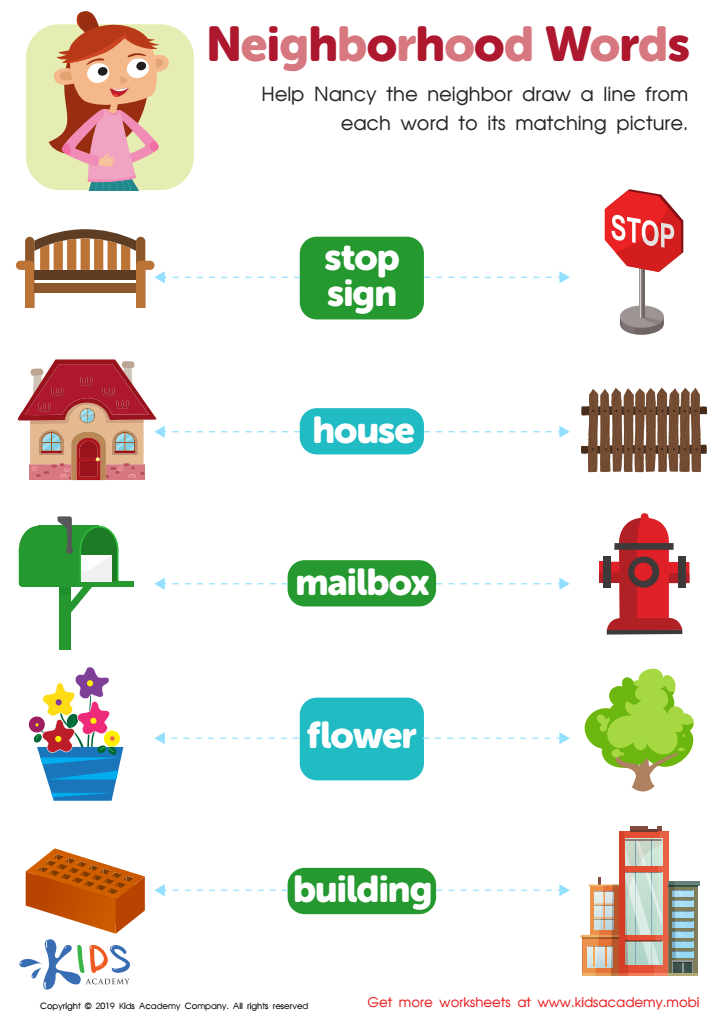
Neighborhood Words Worksheet
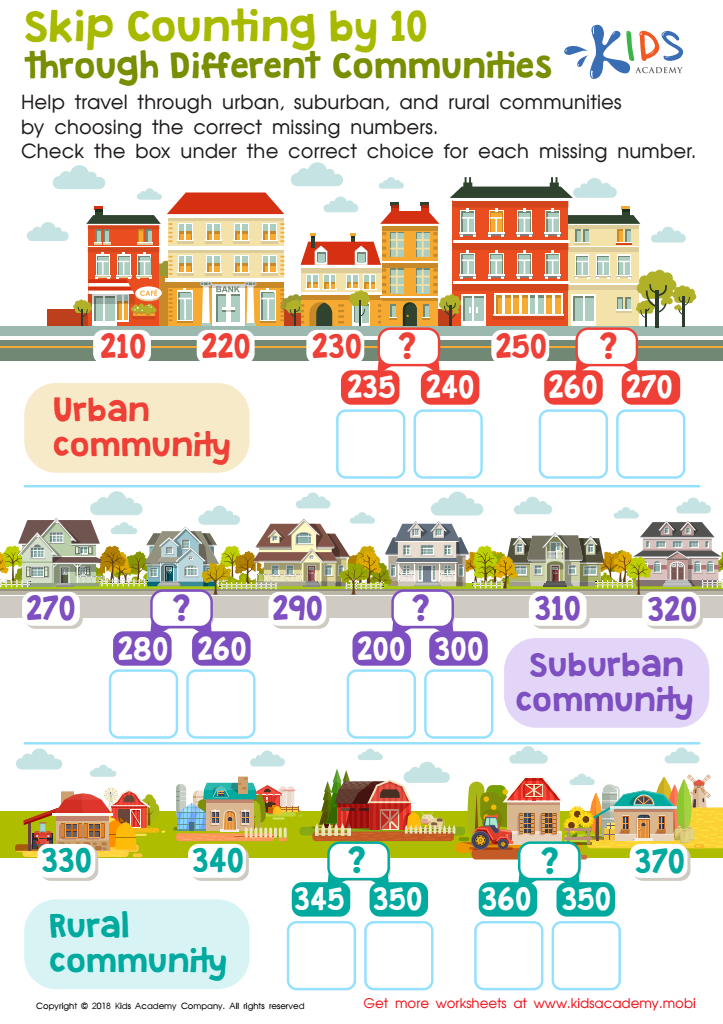
Skip Counting by 10 through Different Communities Worksheet
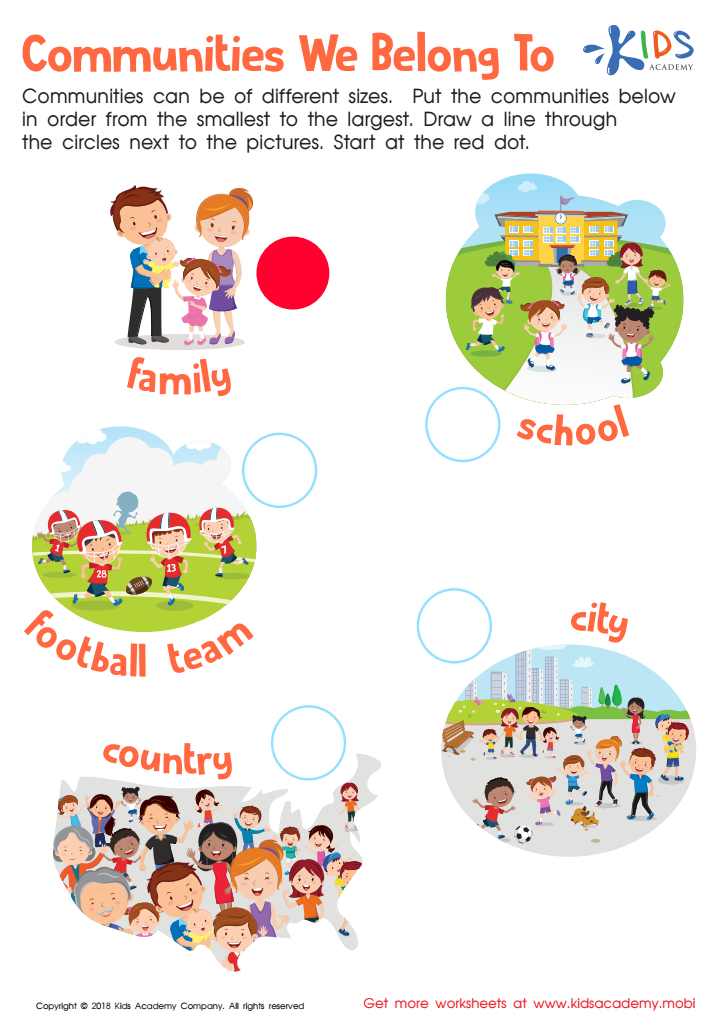
Communities We Belong to Worksheet
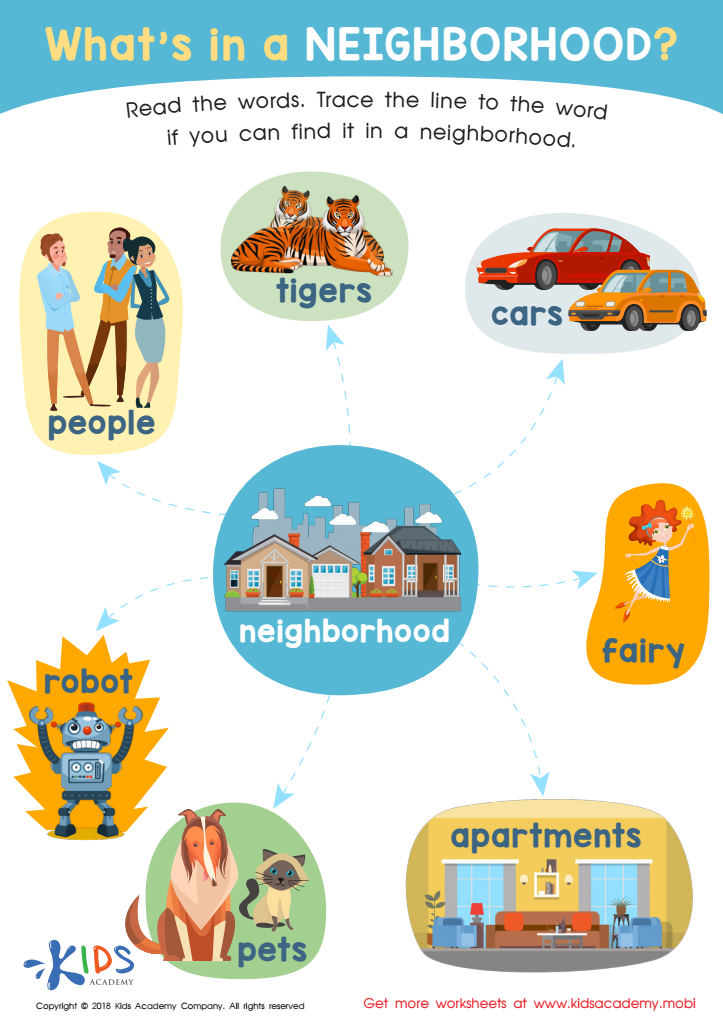
What's in a Neighborhood? Worksheet






Understanding communities for ages 5-7 is crucial as it fosters a child’s social, emotional, and cognitive development. At this tender age, children are naturally curious and begin to expand their worldview beyond their immediate family. Introducing them to the concept of communities helps build a strong foundation of empathy, cooperation, and a sense of belonging.
Firstly, learning about communities helps children develop social skills. By understanding different roles within a community, such as firefighters, teachers, and doctors, children learn about interdependence and collaboration. This awareness encourages them to appreciate diversity and understand the value of teamwork.
Secondly, knowledge of communities aids in emotional development. When children see themselves as part of a larger group, they feel a sense of security and belonging. This self-awareness can promote confidence and reduce feelings of isolation.
Lastly, understanding communities enhances cognitive skills. Children who learn about different community roles and functions engage in critical thinking and problem-solving. They start to grasp more complex concepts like civic responsibility and the impact of collective actions.
In conclusion, understanding communities is not just an academic exercise; it's a vital part of early childhood education that equips children with the tools they need to navigate social intricacies and fosters well-rounded development.








