Understanding graphs Worksheets for Ages 5-7
4 filtered results
-
From - To
Introduce young learners to the fundamentals of data interpretation with our "Understanding Graphs Worksheets for Ages 5-7." These engaging and carefully designed worksheets will help kids decipher information presented in various types of graphs, such as bar and pictographs. Utilize colorful visuals and age-appropriate language to guide children in identifying key elements, comparing quantities, and drawing simple conclusions. Perfect for budding analysts, these worksheets not only enhance math and analytical skills but also make learning an interactive and fun experience. Transform data into a delightful adventure and inspire your little ones to embrace the exciting world of graphs!
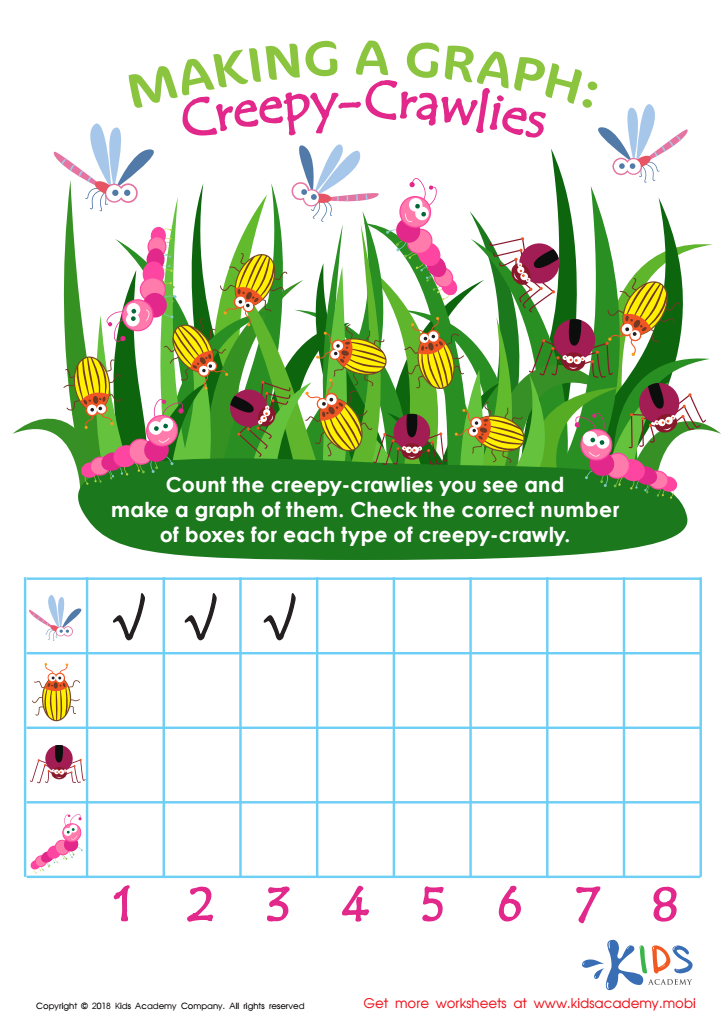
Making a Graph: Creepy Crawlies Worksheet
 Assign to My Students
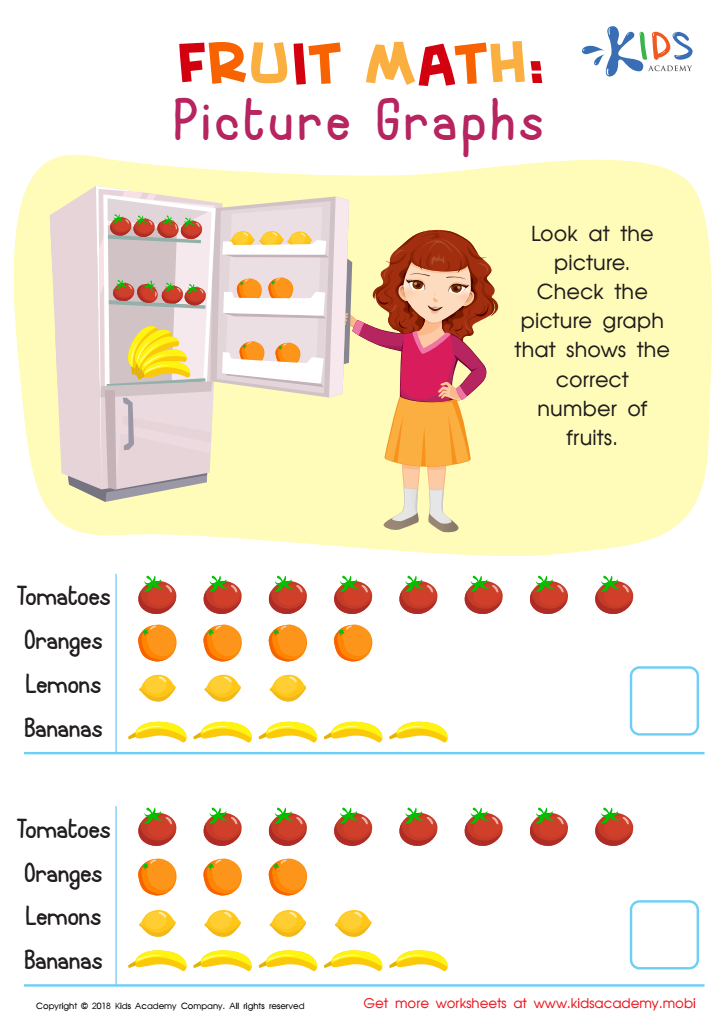
Fruit Math: Picture Graphs Worksheet
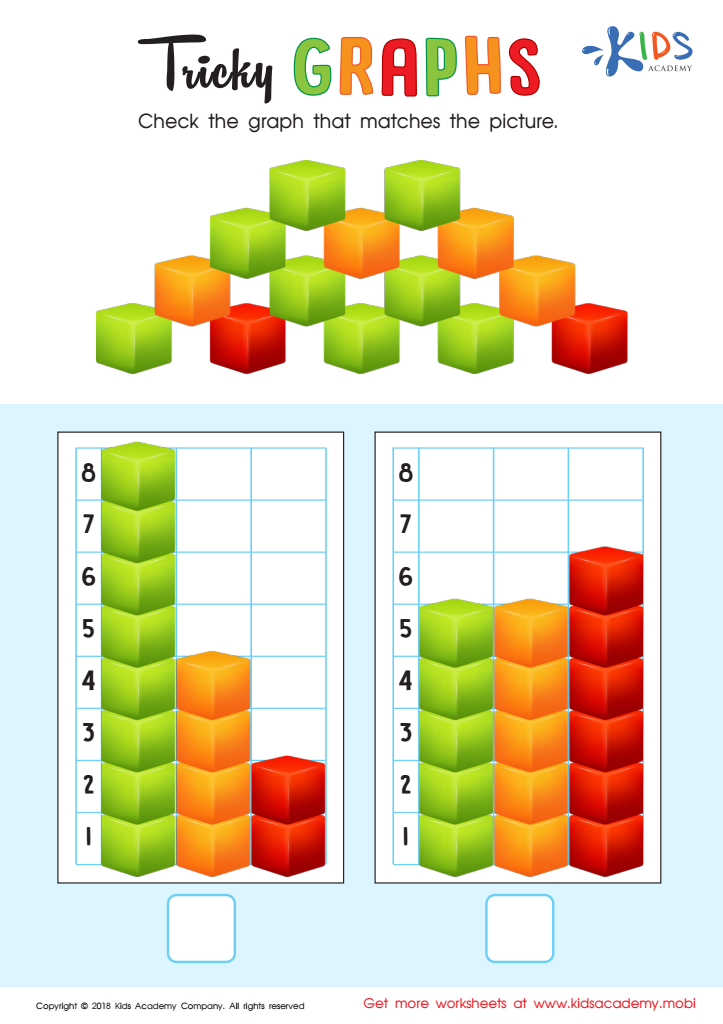
Tricky Graphs Worksheet
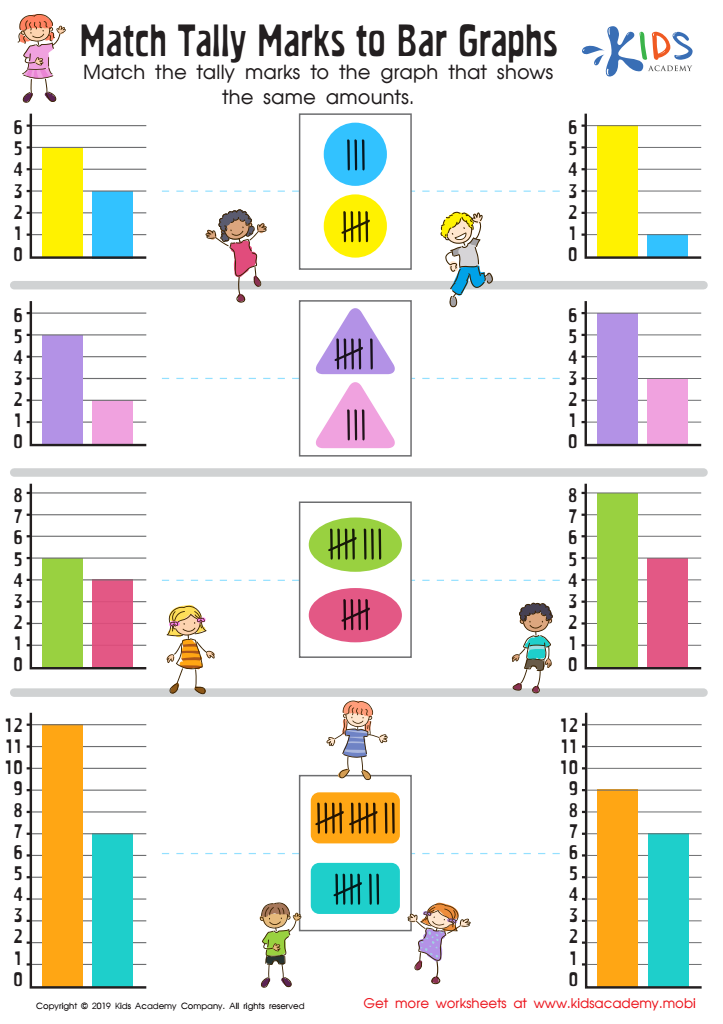
Match Tally Marks to Bar Graphs Worksheet








Understanding graphs is crucial for young children, typically aged 5-7, due to several benefits it offers for their cognitive and analytical development. First, graphs introduce children to one of the foundational concepts of data interpretation. This early exposure helps them comprehend how information can be organized graphically, making complex data easier to understand and use. For example, pictographs and bar graphs can visually represent countable items, aiding in early math skills like counting and comparison.
Additionally, learning about graphs enhances critical thinking. Kids start to ask questions about the data: "Which group has more?" or "What does this graph tell us about our favorite fruits?" Such inquiries promote logical reasoning and problem-solving abilities. Moreover, understanding graphs aligns with Common Core standards that emphasize mathematical practices, including interpreting data and considering different variables.
Furthermore, graphs enhance communication skills. When kids present data visually, they learn to explain their findings to others, building both their verbal and social abilities. Lastly, these skills are interdisciplinary, supporting learning in subjects like science, math, and social studies. Thus, early graphing education not only nurtures essential analytical skills but also supports overall academic growth, making it a critical element of early childhood education.








