Understanding number relationships Worksheets for Ages 5-7
9 filtered results
-
From - To
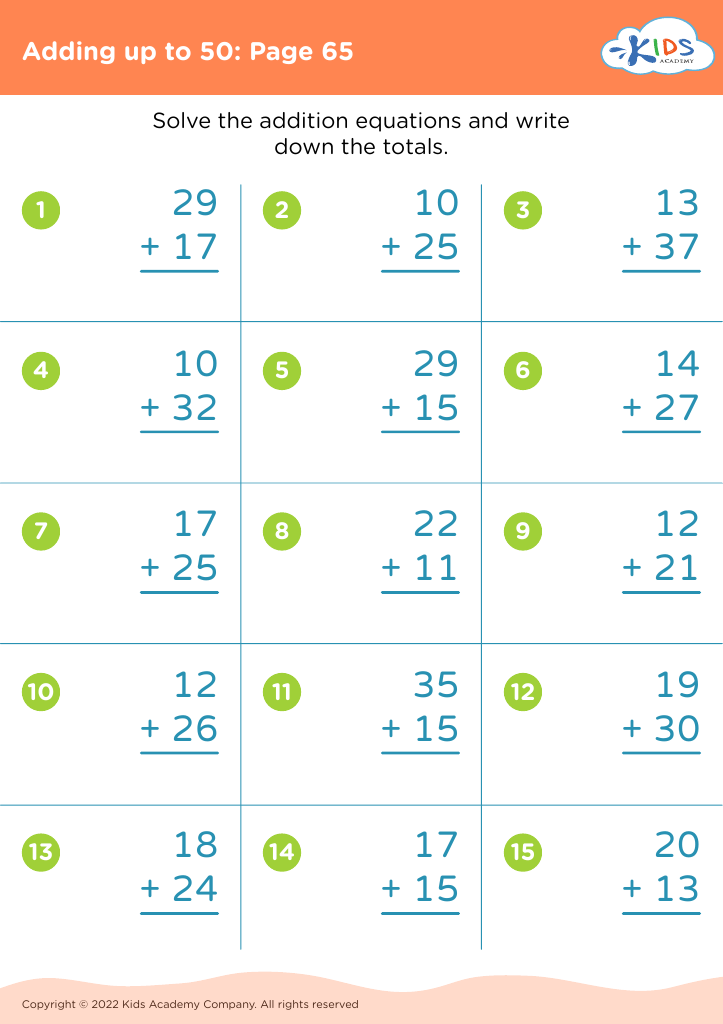
Discover our engaging "Understanding Number Relationships Worksheets" designed specifically for children aged 5-7! These thoughtfully crafted worksheets help young learners explore essential concepts like addition, subtraction, and number comparisons through interactive and fun activities. By utilizing visual aids and relatable examples, these resources encourage children to develop a strong foundation in number relationships. Ideal for both classroom and home use, each worksheet aims to enhance mathematical understanding while fostering critical thinking skills. Watch your child build confidence in math as they connect numbers and understand their relationships in a playful, supportive environment. Get started today for an enriching learning experience!
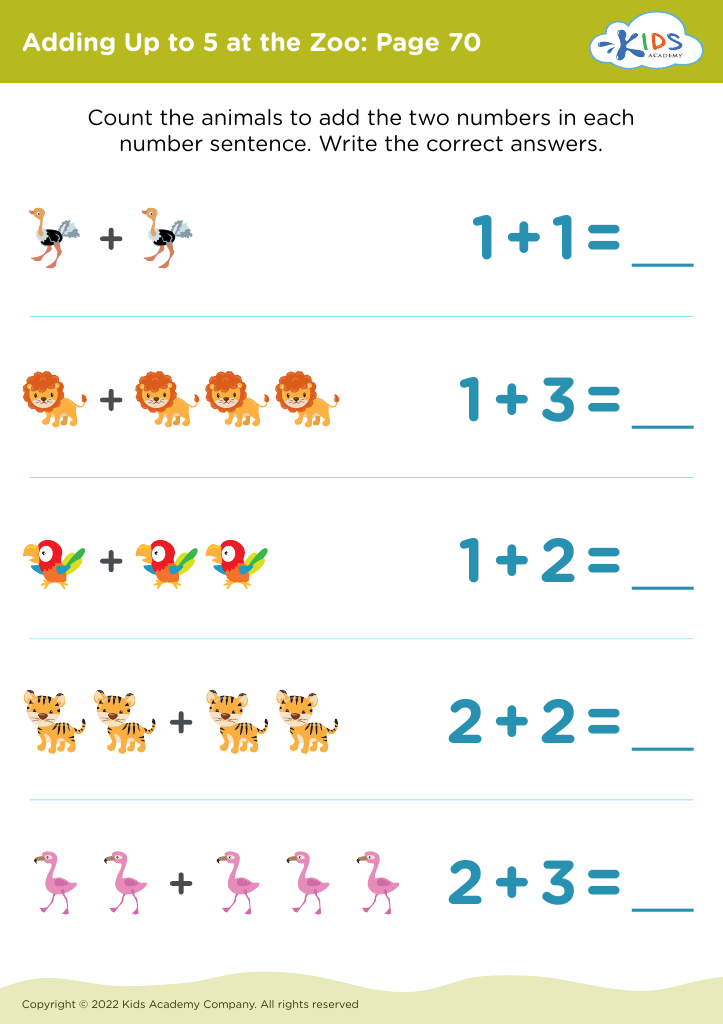
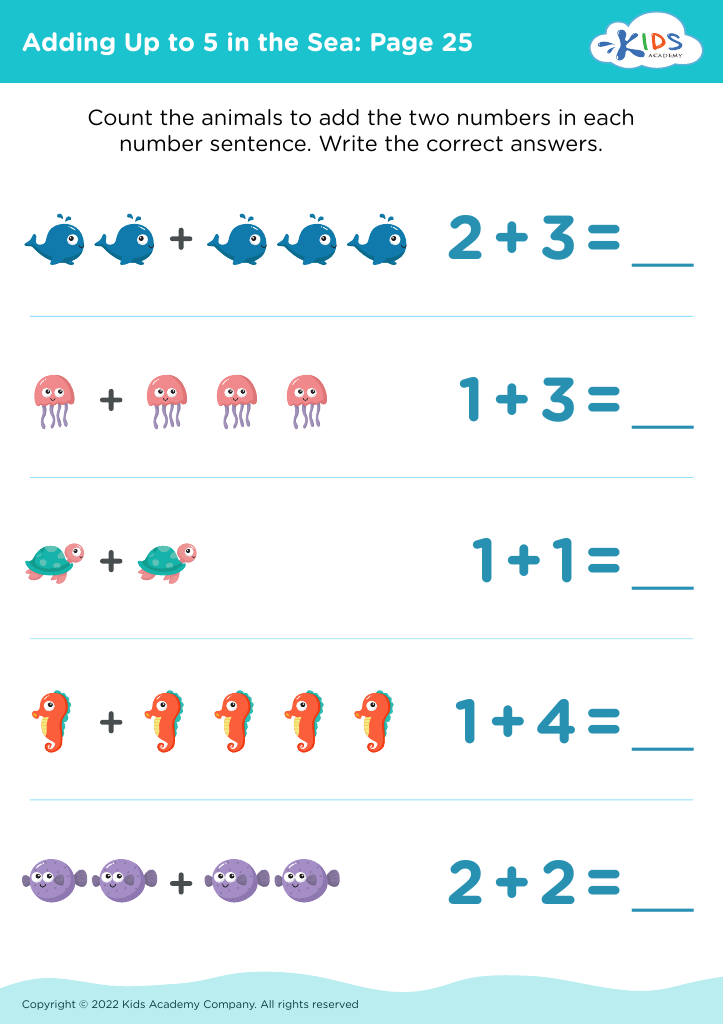
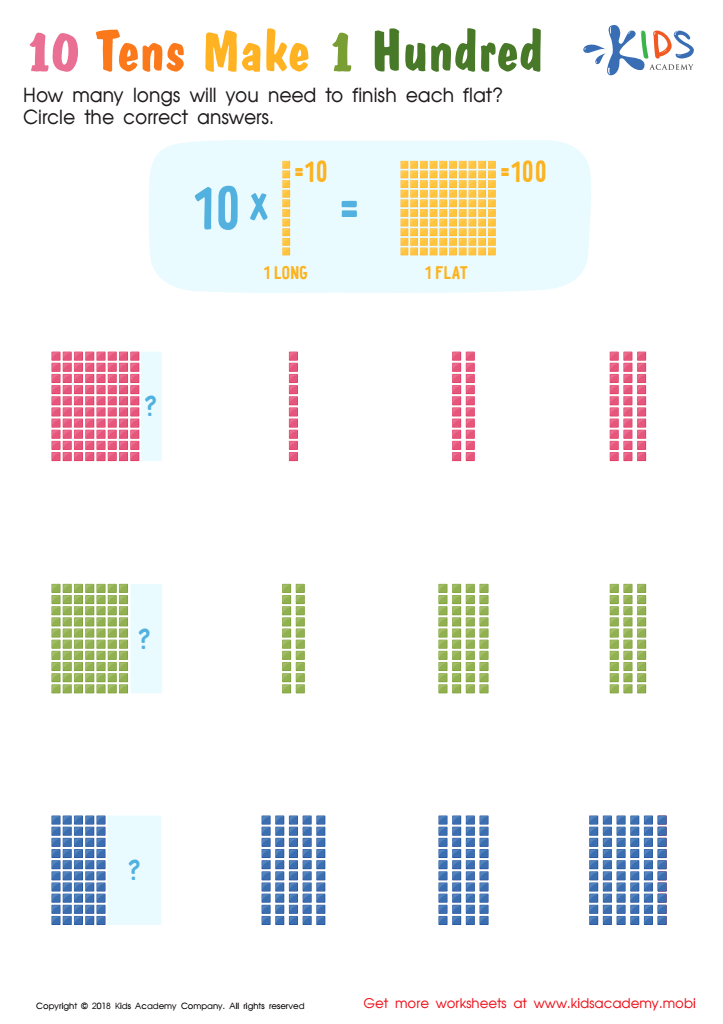
10 Tens Make 1 Hundred Worksheet
 Assign to My Students
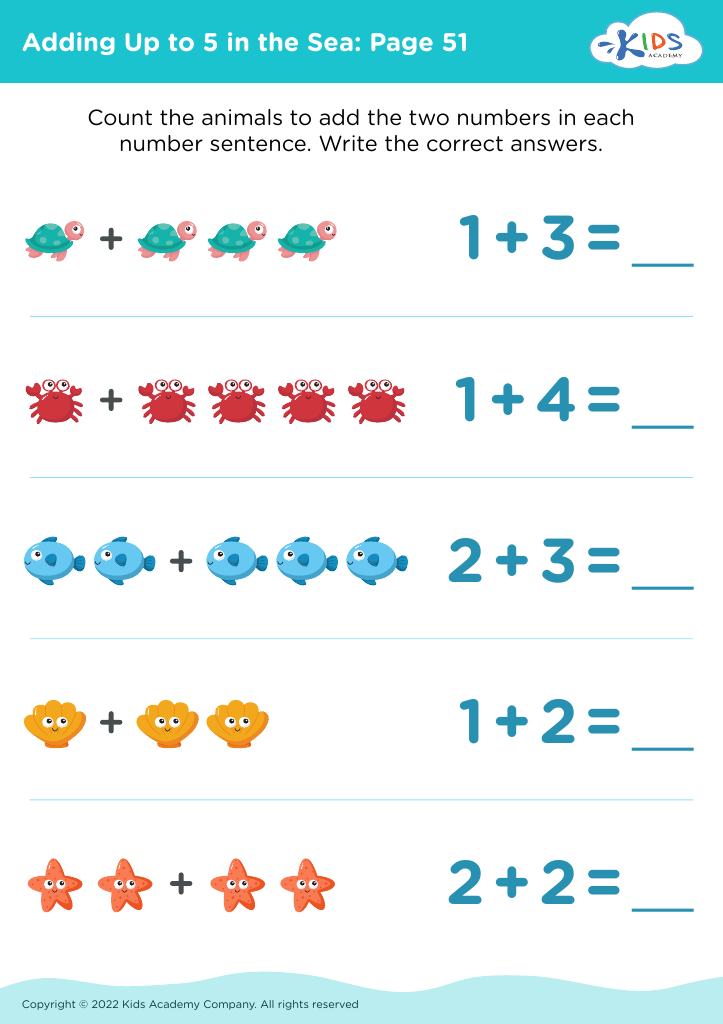
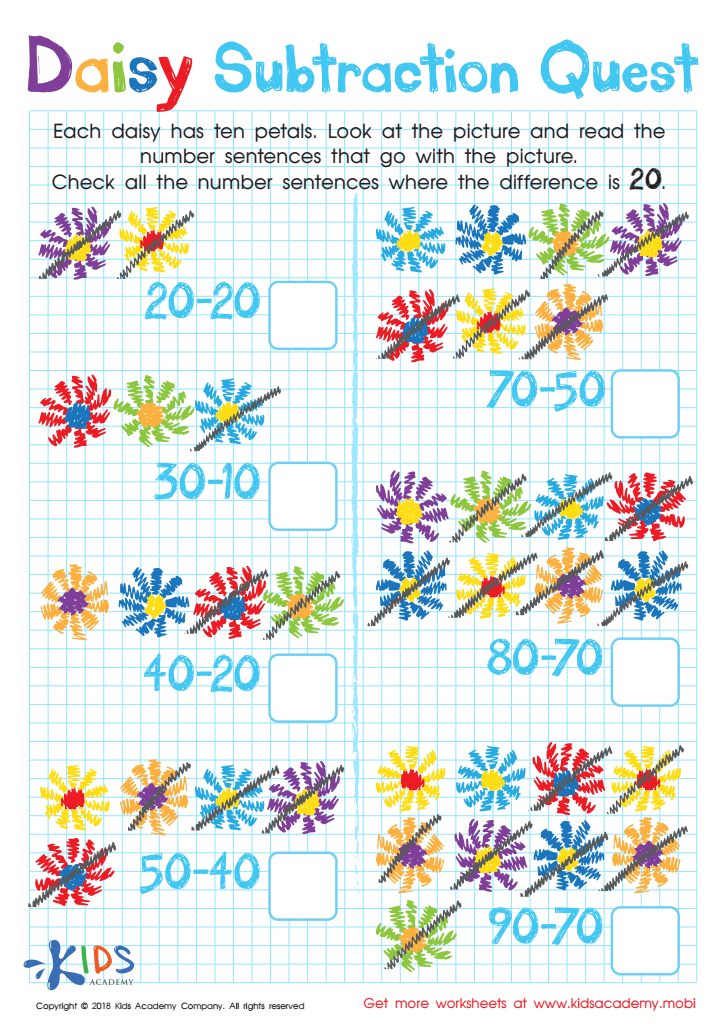
Daisy Subtraction Quest Worksheet
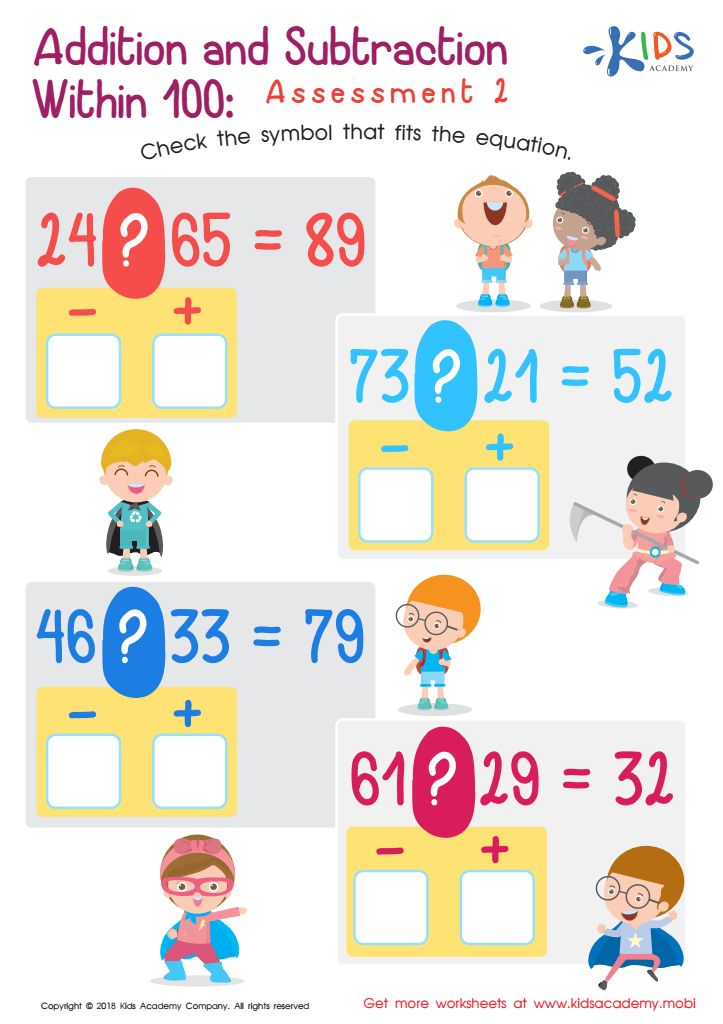
Addition and Subtraction Within 1: Assessment 2 Worksheet
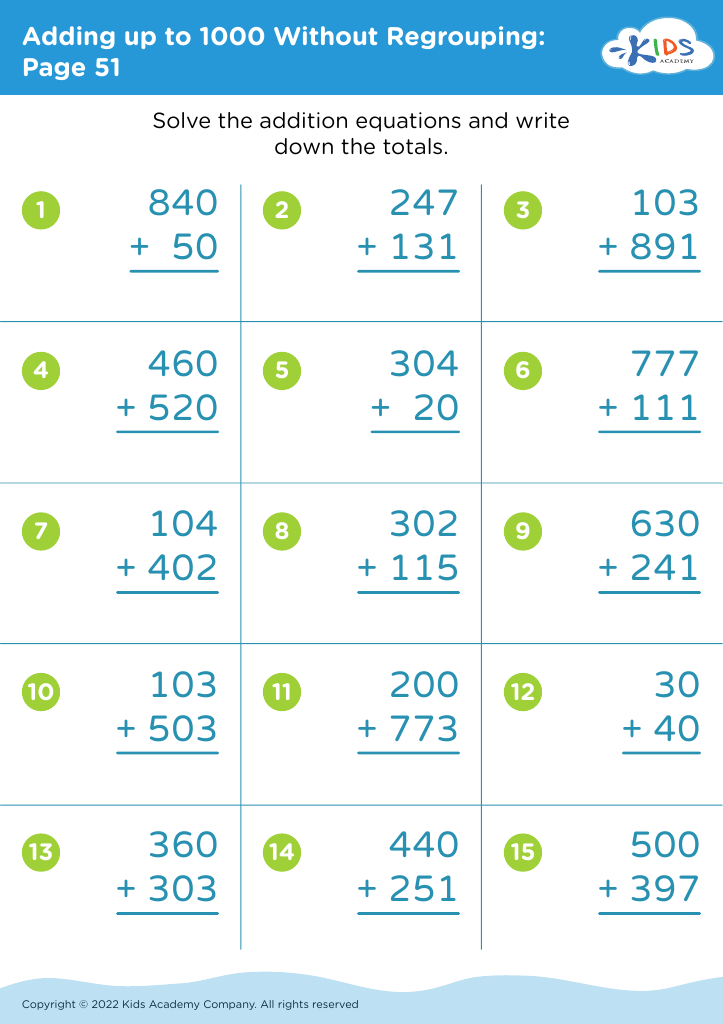
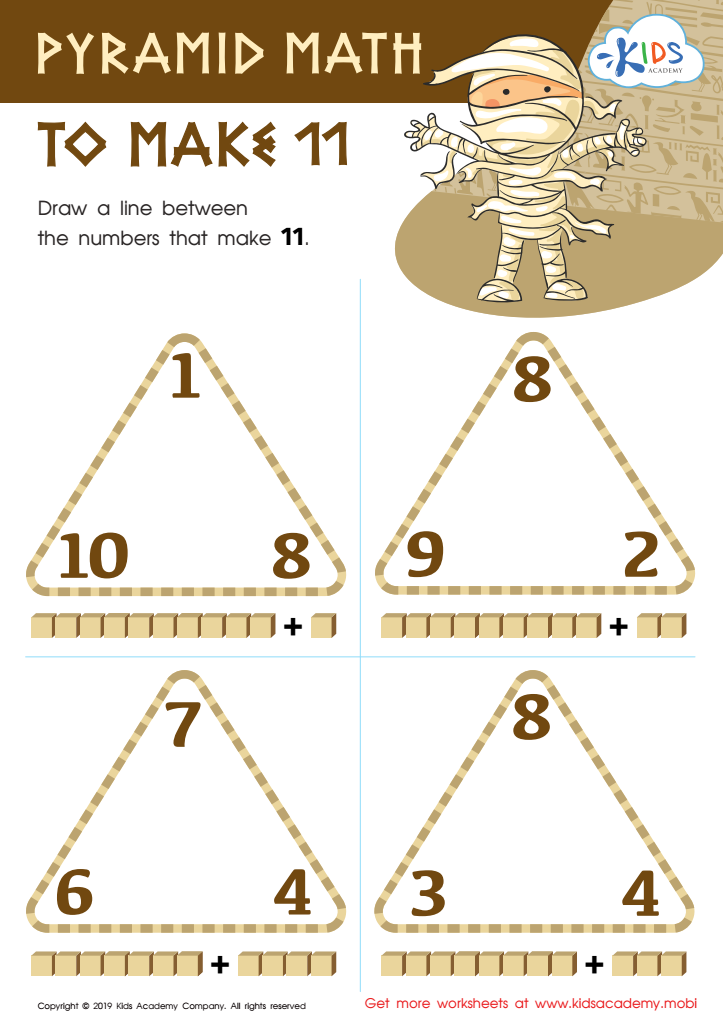
Pyramid Math to Make 11 Worksheet






Understanding number relationships is crucial for children aged 5-7 as it forms the foundation for their mathematical learning and cognitive development. At this age, children begin to grasp how numbers interact with one another, learning concepts such as greater than, less than, and equal to. This foundational knowledge is essential not only for arithmetic but for logical reasoning and problem-solving skills that they will use throughout their education and daily lives.
Parents and teachers should care about this aspect of math education because it enhances children's numeracy skills, builds confidence, and fosters a positive attitude towards mathematics. When children understand how numbers relate, they can easily approach more complex concepts in the future, such as addition, subtraction, and eventually multiplication and division.
Furthermore, by encouraging an early understanding of number relationships, adults can help identify areas where children may struggle, allowing for timely intervention and support. Activities can be designed to make learning fun and interactive, incorporating games and real-life situations that apply these concepts. This not only promotes a deeper understanding but also ignites a passion for mathematics, setting the stage for a successful academic journey.








