Understanding plurals Worksheets for Ages 5-7
7 filtered results
-
From - To
Discover our "Understanding Plurals Worksheets" designed specifically for children aged 5-7. These engaging resources help young learners grasp the essential concept of plurals through fun activities and exercises. Our worksheets use vibrant illustrations and relatable examples, making learning about plural forms enjoyable and effective. From transforming singular nouns to their plural counterparts, kids will develop their vocabulary skills seamlessly. Perfect for classroom use or at-home learning, these worksheets promote both comprehension and creativity. Empower your child’s language development today with our comprehensive, kid-friendly materials that make mastering plurals an exciting adventure!
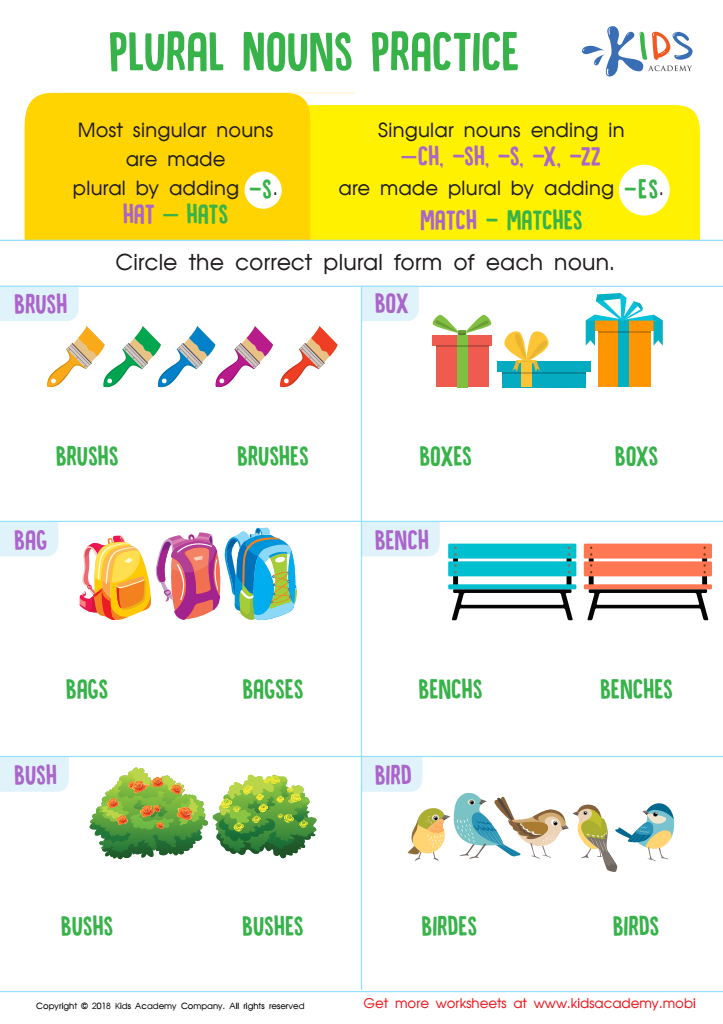
Plural Nouns Practice Worksheet
 Assign to My Students
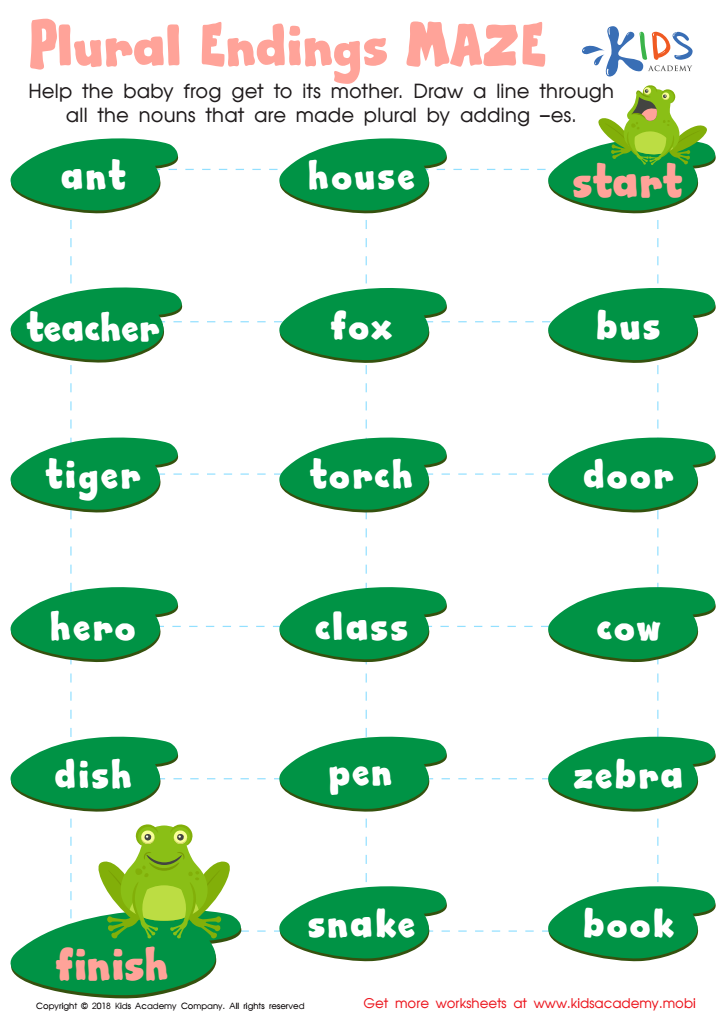
Plural Endings Maze Worksheet
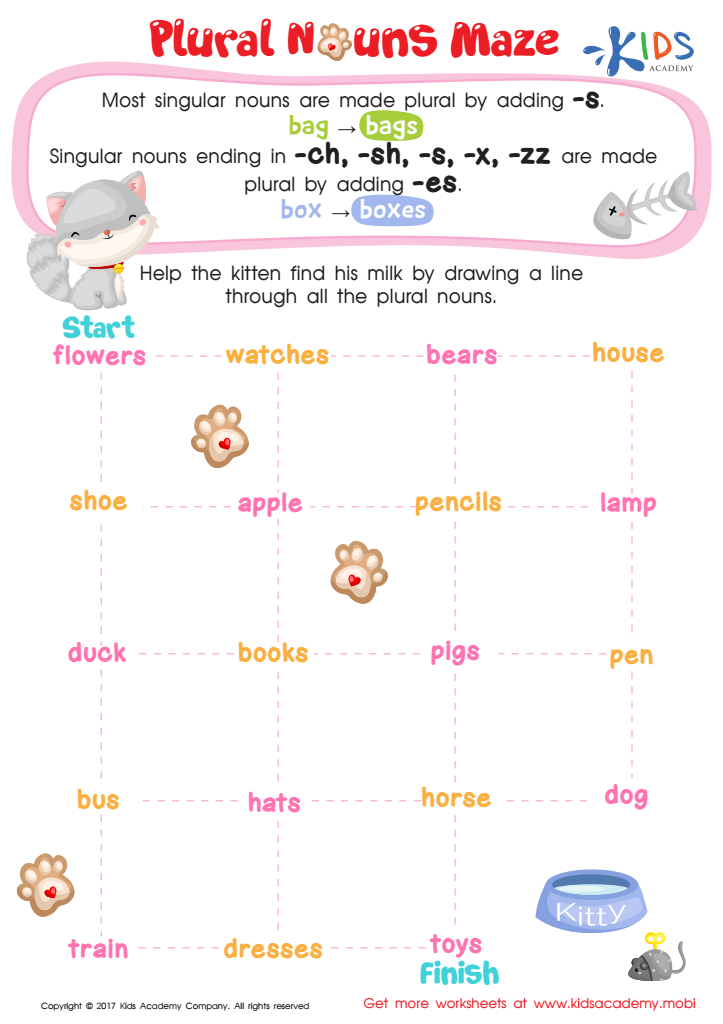
Plural Nouns Maze Worksheet
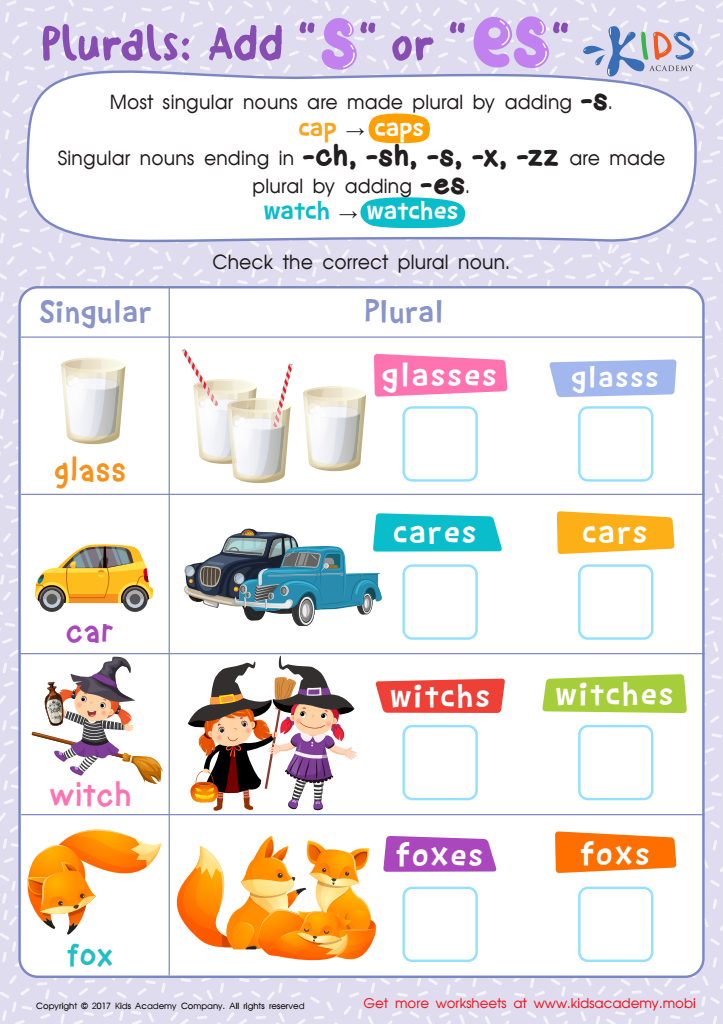
Plurals: "–es" or "–es"? Worksheet
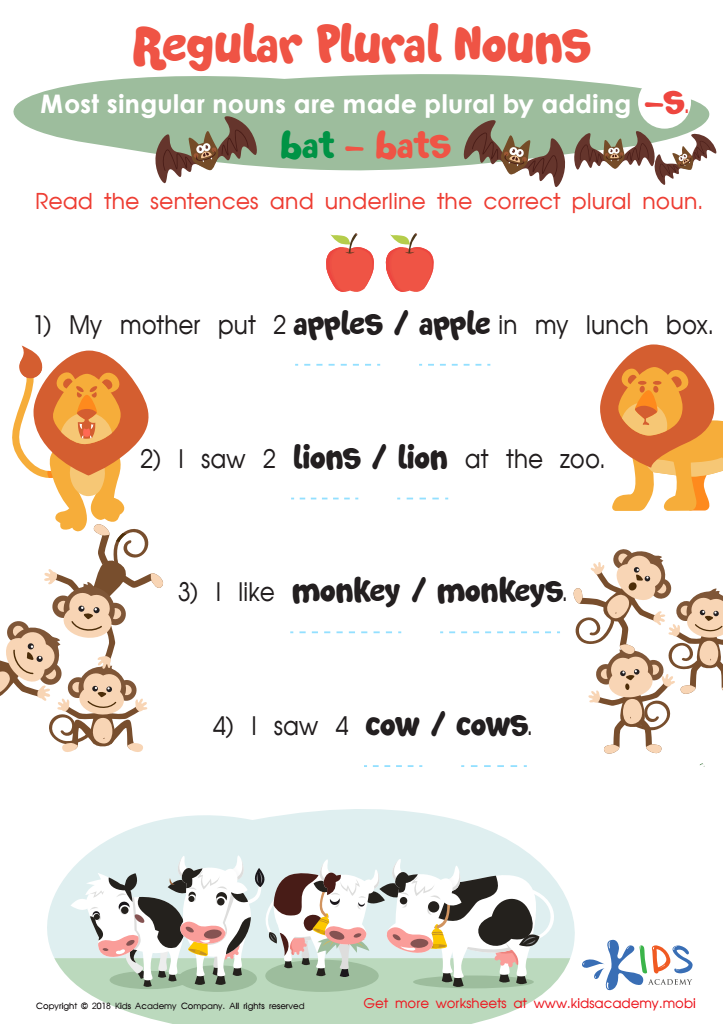
Regular Plural Nouns Worksheet
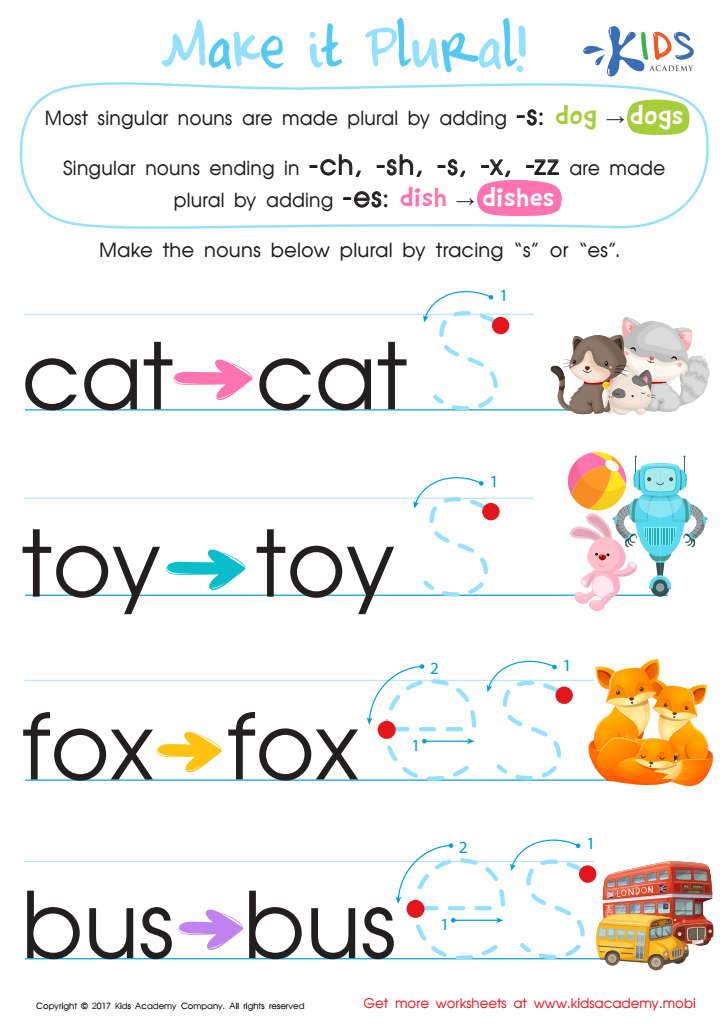
Make it Plural Worksheet





.jpg)


Understanding plurals is crucial for children aged 5 to 7 as it lays the foundation for effective communication and literacy skills. At this age, children are expanding their vocabulary and starting to formulate sentences. Learning how to properly use plurals helps them convey their thoughts more accurately and understand the world around them.
When children grasp plurals, they learn to describe quantities, which enhances their mathematical skills—an essential part of early learning. For instance, recognizing the difference between "cat" and "cats" helps them understand simple math concepts like addition and subtraction through counting.
Moreover, understanding plurals promotes reading comprehension. As children encounter texts, being familiar with singular and plural forms aids their ability to interpret sentences and grasp meanings. This awareness strengthens their overall literacy, helping them become confident readers and writers.
Additionally, cultivating this understanding fosters a love for language. As children experiment with words and discover the rules of plurals, they engage creatively with language, sparking their curiosity. For parents and teachers, prioritizing plural comprehension isn't just about grammar; it's about nurturing well-rounded, communicative, and literate children who are better prepared for future academic success.








