Understanding Simple Machines Worksheets for Ages 5-7
4 filtered results
-
From - To
Explore our engaging "Understanding Simple Machines Worksheets" designed specifically for ages 5-7. These playful resources introduce young learners to fundamental concepts of simple machines such as levers, pulleys, and inclined planes. Through colorful illustrations and interactive activities, children will enhance their problem-solving skills while having fun. Each worksheet aligns with educational standards and promotes critical thinking, helping kids grasp the mechanics behind everyday tools and devices. Ideal for classrooms and homeschooling, our worksheets foster curiosity and build confidence in young learners. Equip your child with the foundational knowledge of simple machines that will spark their interest in science and engineering!
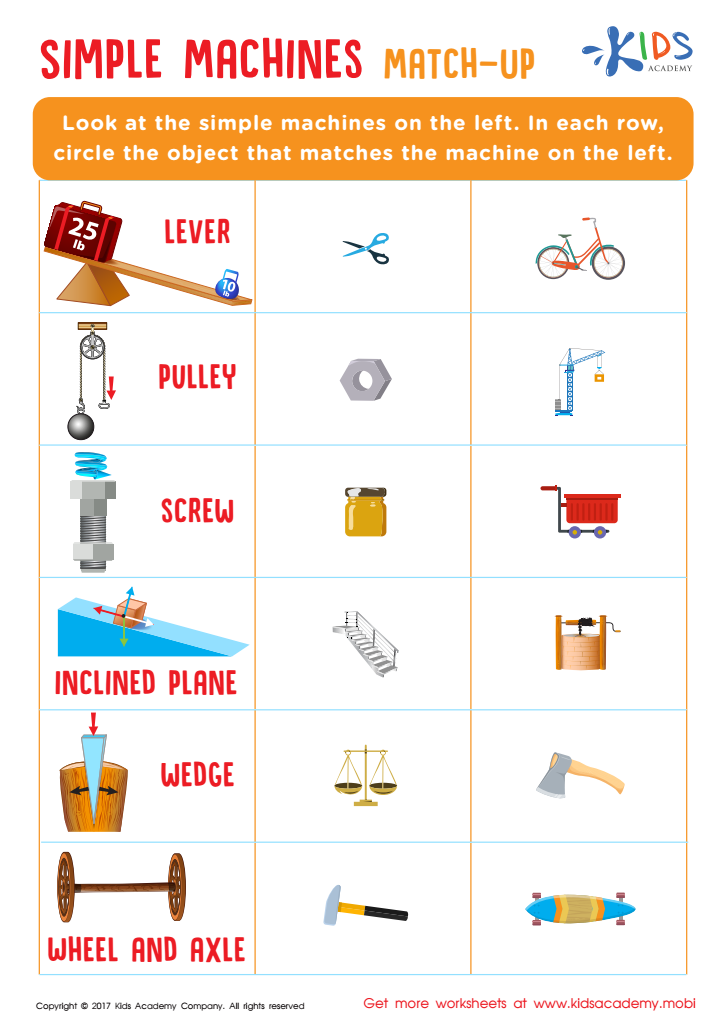
Simple Machines Worksheet
 Assign to My Students
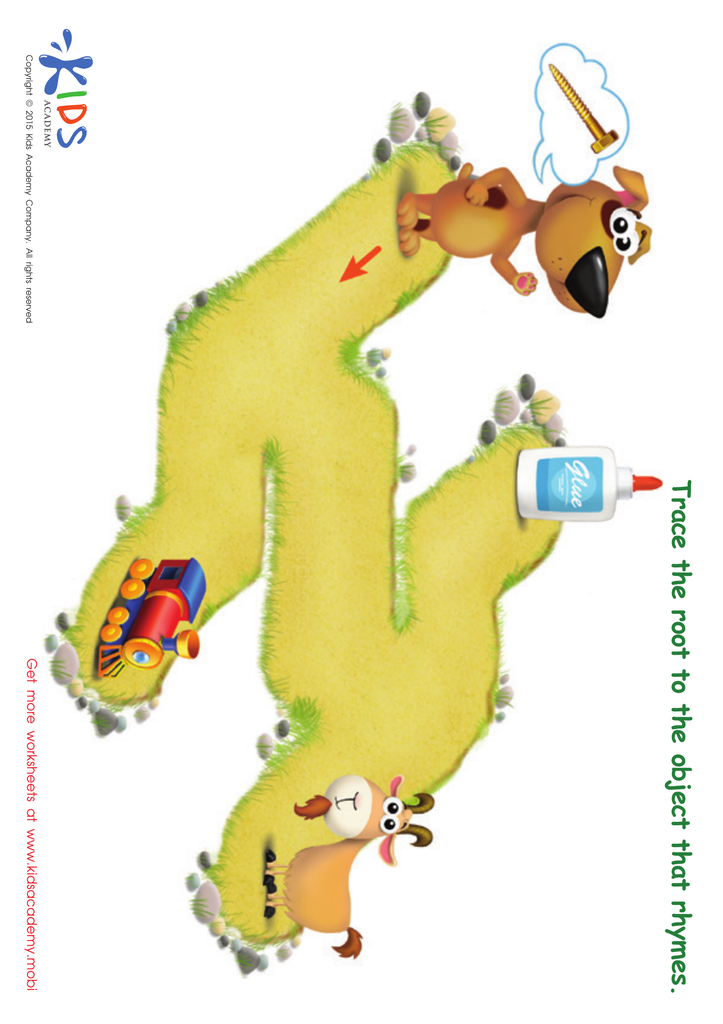
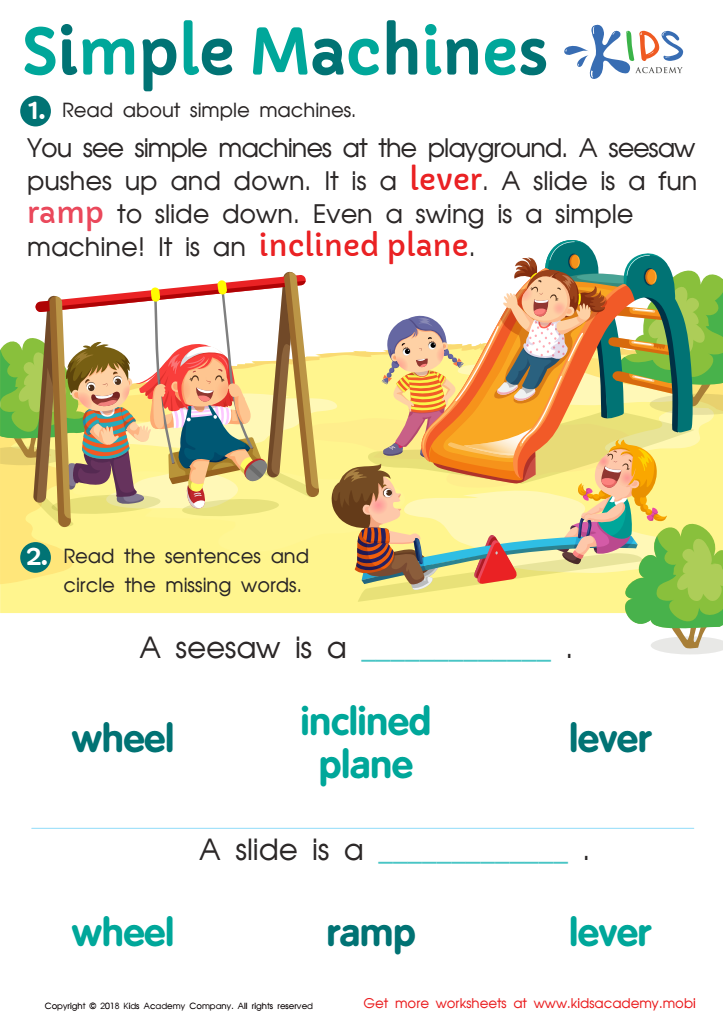
Simple Machines Worksheet
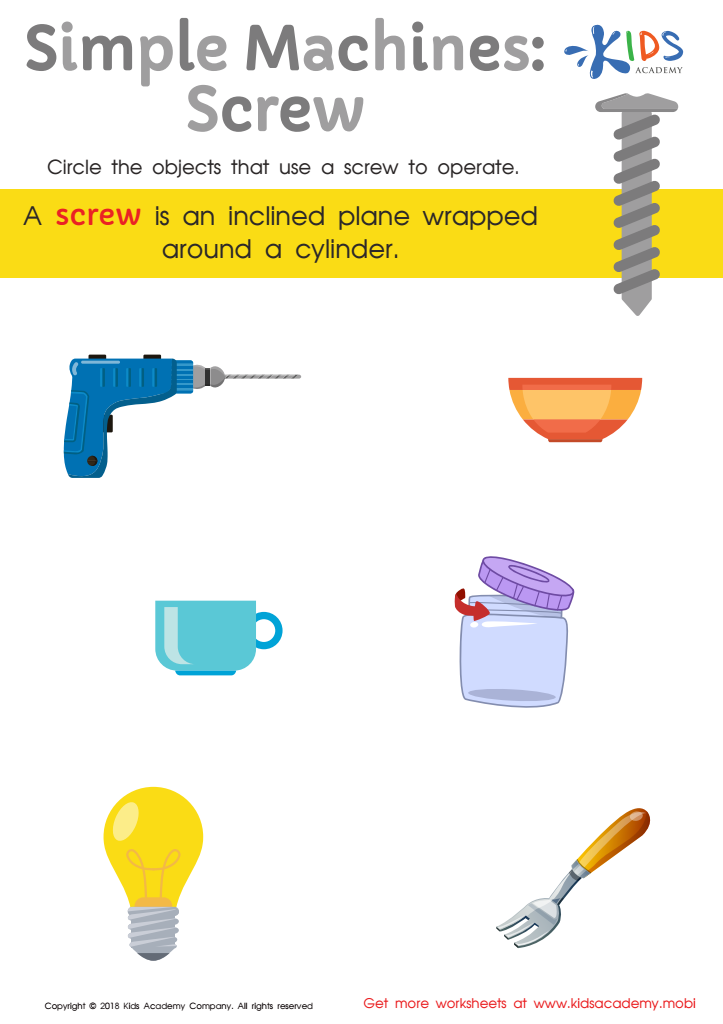
Simple Machines: Screw Worksheet








Understanding simple machines is an essential aspect of early education for children aged 5-7, as it lays the groundwork for scientific thinking and problem-solving. Simple machines—such as levers, pulleys, wedges, screws, ramps, and wheels—introduce fundamental concepts of physics in a hands-on, easily digestible manner. When parents and teachers engage with these concepts, they aid children in recognizing the workings of the world around them, fostering curiosity and creativity.
Learning about simple machines encourages critical thinking skills. For instance, as kids explore how a lever makes lifting easier, they develop an understanding of mechanical advantage, promoting logic and reasoning. Additionally, these lessons can be linked to everyday experiences, such as using a swing (pendulum) or pushing a cart. This connection to real-life applications makes learning both relevant and enjoyable.
Moreover, integrating simple machines into the curriculum enhances STEM (Science, Technology, Engineering, and Math) education, which is crucial for future academic success. As children experiment with and manipulate these concepts, they gain confidence in their abilities and learn the importance of teamwork and collaboration. Ultimately, fostering an early understanding of simple machines equips children with skills that are vital for their intellectual growth and development.








