Enhance your child's development with our Visual Discrimination Skills Worksheets for Ages 5-7. These engaging and educational worksheets are designed to help young learners differentiate between shapes, colors, sizes, and patterns, ultimately improving their observational skills and attention to detail. Perfect for early grade students, these activities make learning fun and interactive while building a crucial foundation for reading, writing, and problem-solving skills. Allow your 5-7-year-old to explore, compare, and match with vibrant, age-appropriate exercises that make learning feel like play. Help your child thrive with Kids Academy’s expertly crafted visual discrimination tools!

Check out this FREE "Visual discrimination skills" Trial Lesson for age 5-7!

L

Favorites
With answer key
Interactive
  • 5-7
  • Visual discrimination skills
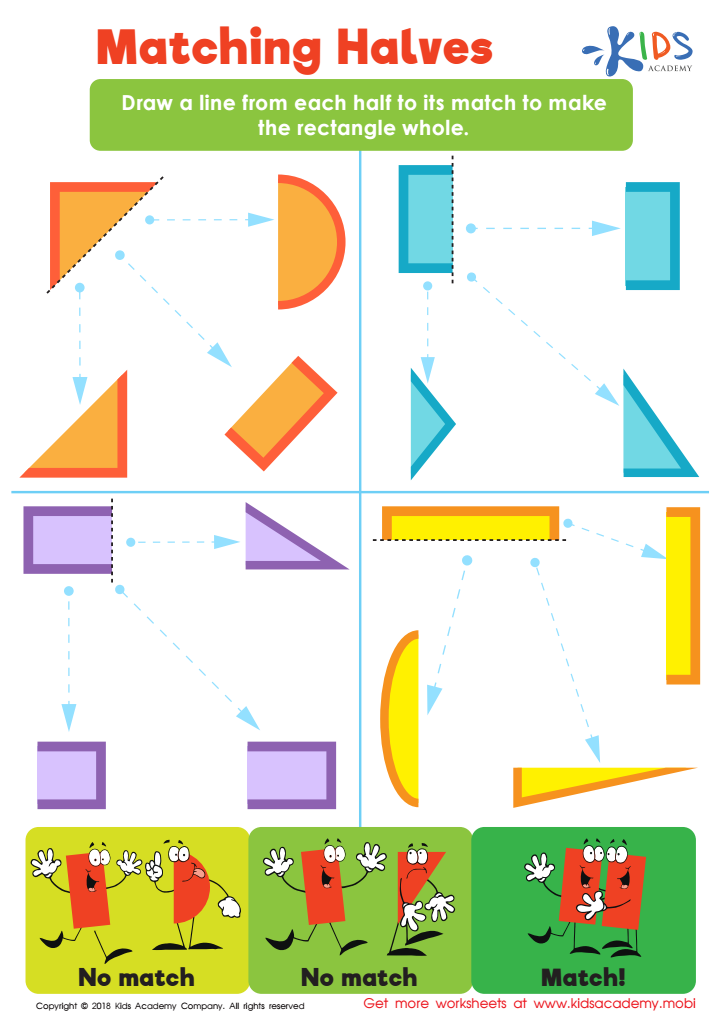
Matching Halves Worksheet

Matching Halves Worksheet

See how your child fares in matching two halves to form a complete rectangle. Provide them with four options, and ask them to draw a line connecting the two correct halves. Put their shape knowledge to the test with this simple worksheet!
Matching Halves Worksheet
Worksheet
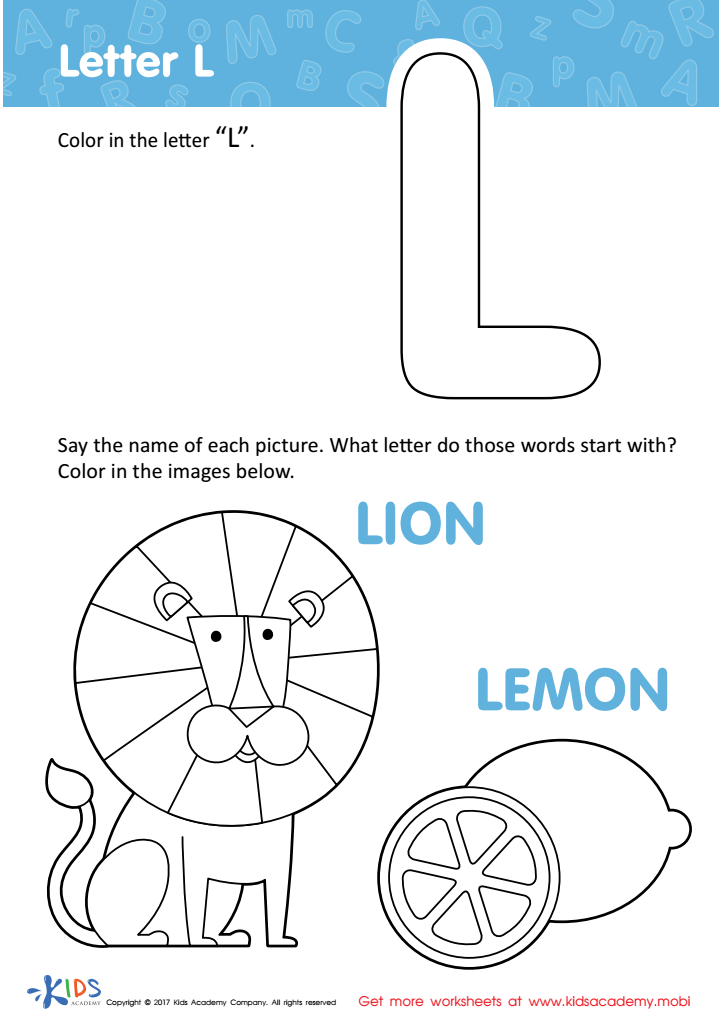
Letter L Coloring Page

Letter L Coloring Sheet

Kids often struggle to say "L" and love it because so many things they love start with it! This coloring page combines the letter and fun images like a lemon and lion to teach and entertain!
Download (PDF)
Assign to My Students
Letter L Coloring Sheet
Worksheet
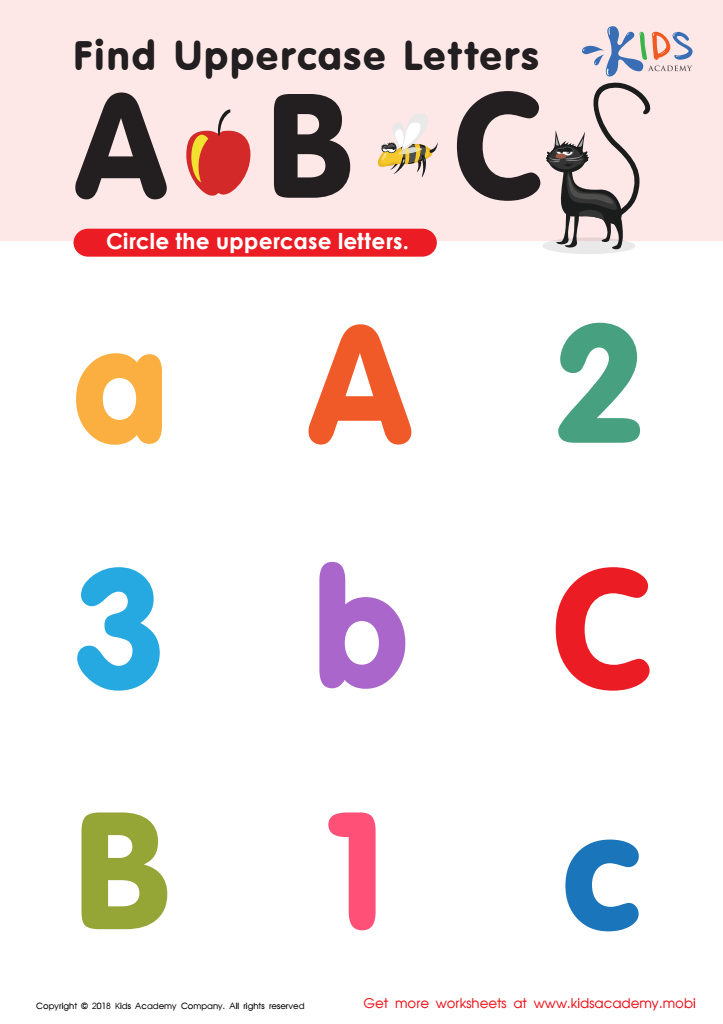
Find Uppercase Letters A, B, and C Worksheet Preview
Find Uppercase Letters A, B, and C Worksheet

Check out this PDF worksheet and spot all the capital letters! Arranged as a puzzle, this exercise will test little learners to read and recognize uppercase letters and tell the difference between letters and numbers. To help them, use the pictures on top of the page to practice the sounds A, B and C make! 80 words.
Find Uppercase Letters A, B, and C Worksheet
Worksheet
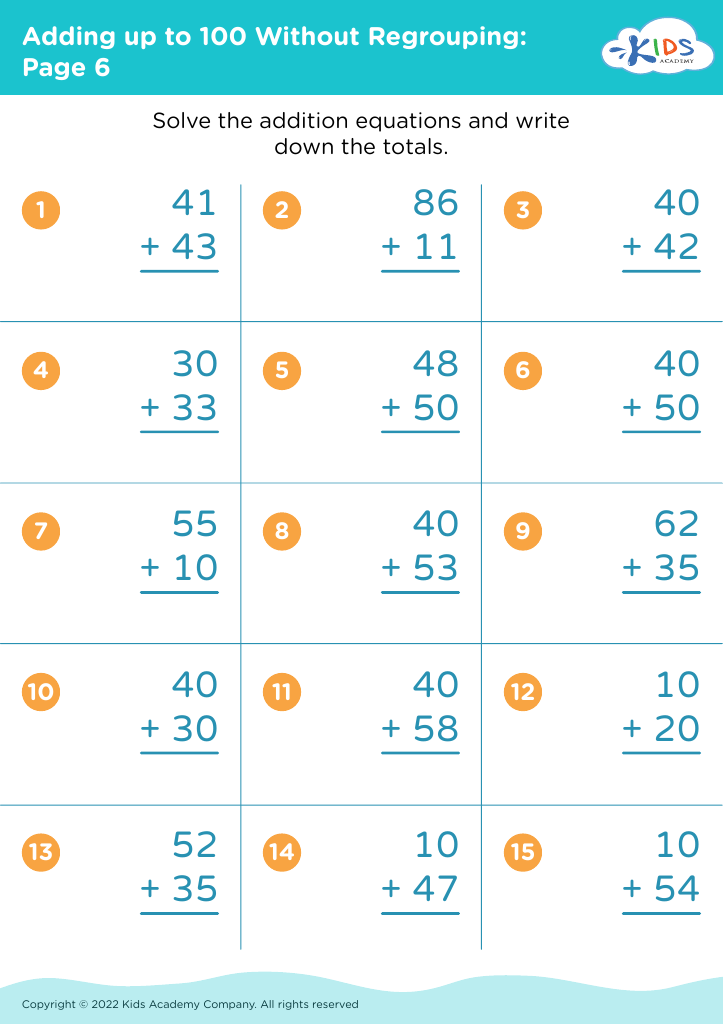
Adding up to 100 Without Regrouping: Page 6
Worksheet
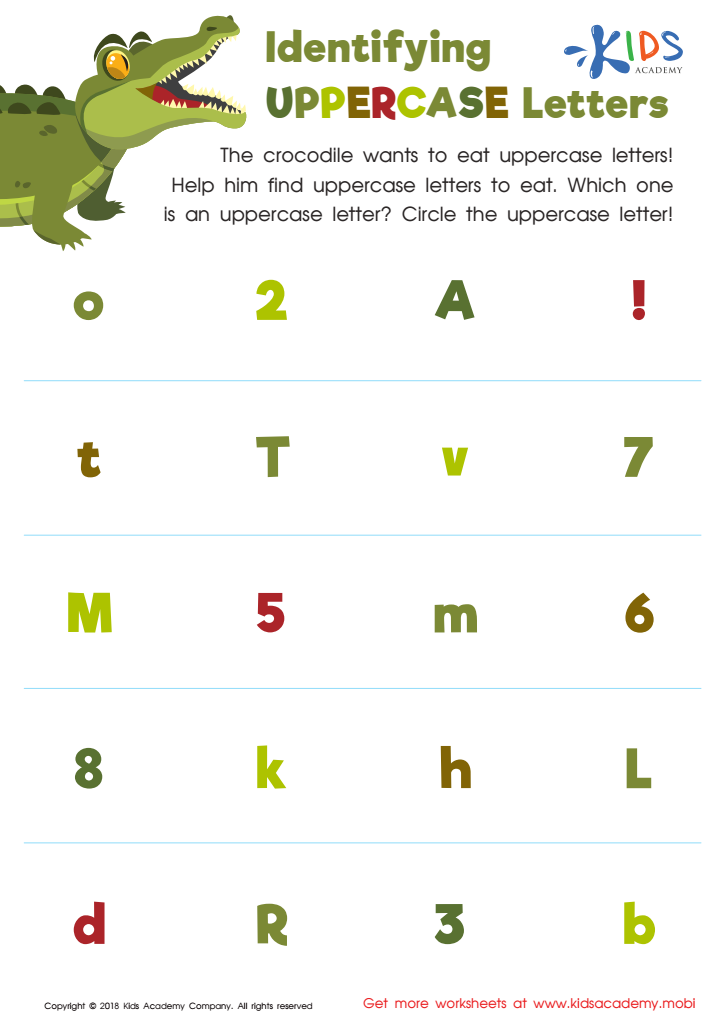
Identifying Uppercase Letters Worksheet Preview


Identifying Uppercase Letters Worksheet

It's essential for kindergarteners to know the distinction between uppercase and lowercase letters. This skill will aid them when starting to write. They can practice by selecting the uppercase letters among a mix of lowercase, uppercase letters and numbers. Whatever their level of learning, give your child confidence with this PDF!
Identifying Uppercase Letters Worksheet
Worksheet
Find lowercase letters a b c Worksheet

Find lowercase letters a b c Worksheet

Help your child identify lowercase letters with this worksheet. Carefully look at each letter and have your child circle the lowercase ones. This exercise is vital in helping them understand the alphabet and the difference between lower and uppercase letters.
Find lowercase letters a b c Worksheet
Worksheet
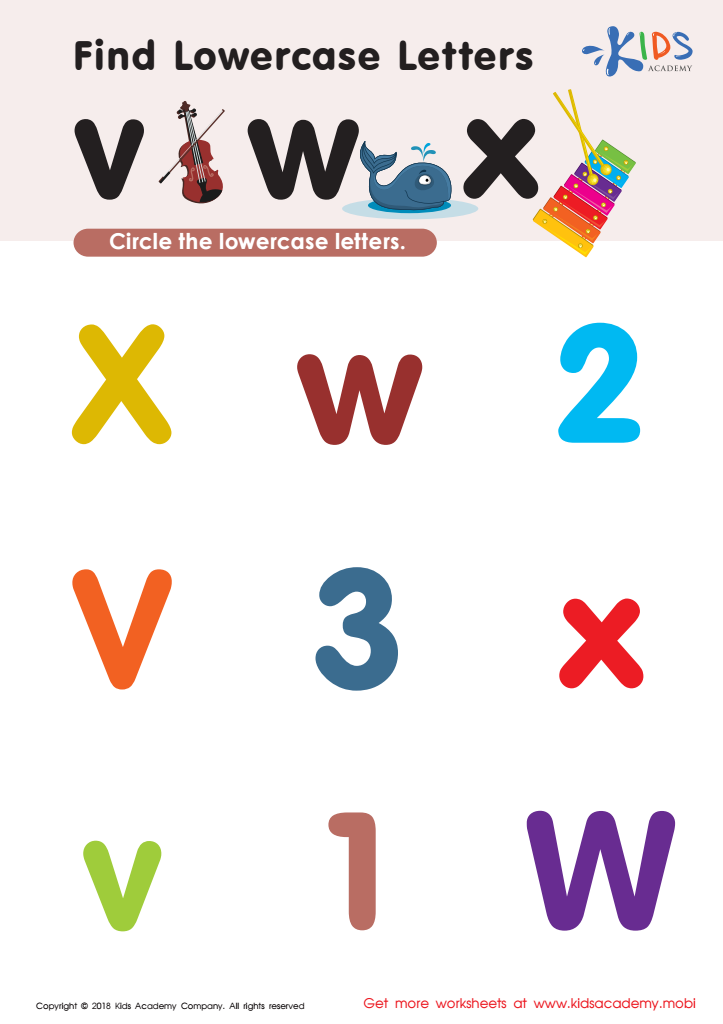
Find Lowercase Letters v w x Worksheet

Find Lowercase Letters v w x Worksheet

If your child doesn't know the alphabet, get them this helpful worksheet. It's an easy exercise to build their understanding of the alphabet and lowercase letters. Find the letters v, w, and x among other uppercase letters and numbers in the downloadable PDF.
Find Lowercase Letters v w x Worksheet
Worksheet
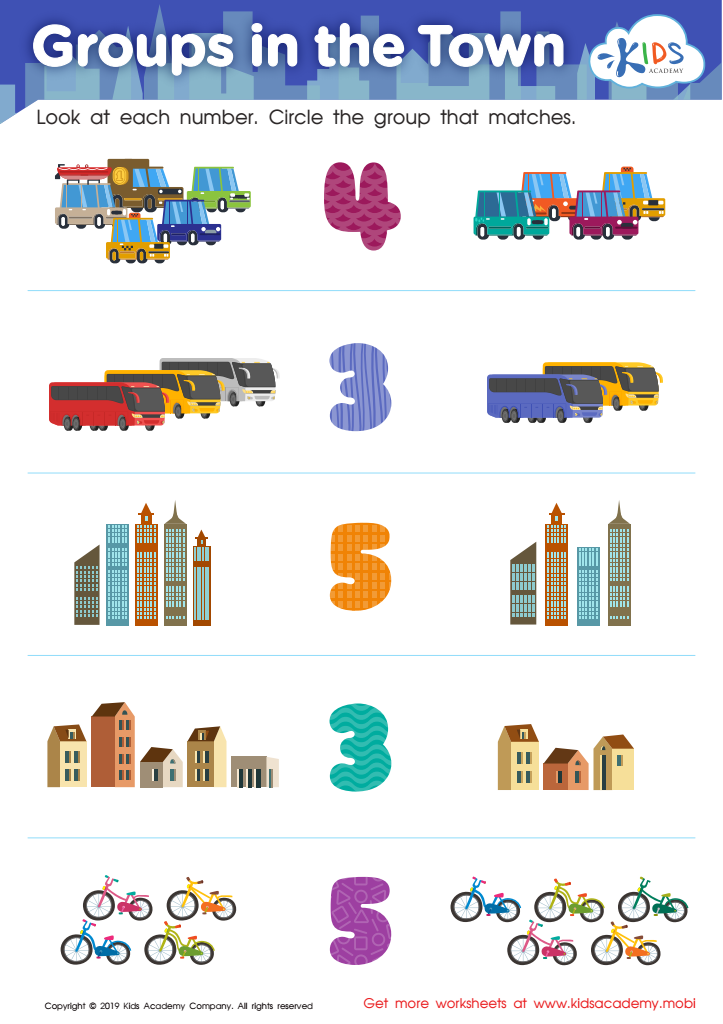
Groups in the Town Worksheet

Groups in the Town Worksheet

Help your kids learn to count with this worksheet! Look at each number of objects and circle the group that matches. This simple activity can give them extra practice to support what they learn in school. Learning doesn't have to be a struggle; make it fun and interactive with this worksheet.
Groups in the Town Worksheet
Worksheet
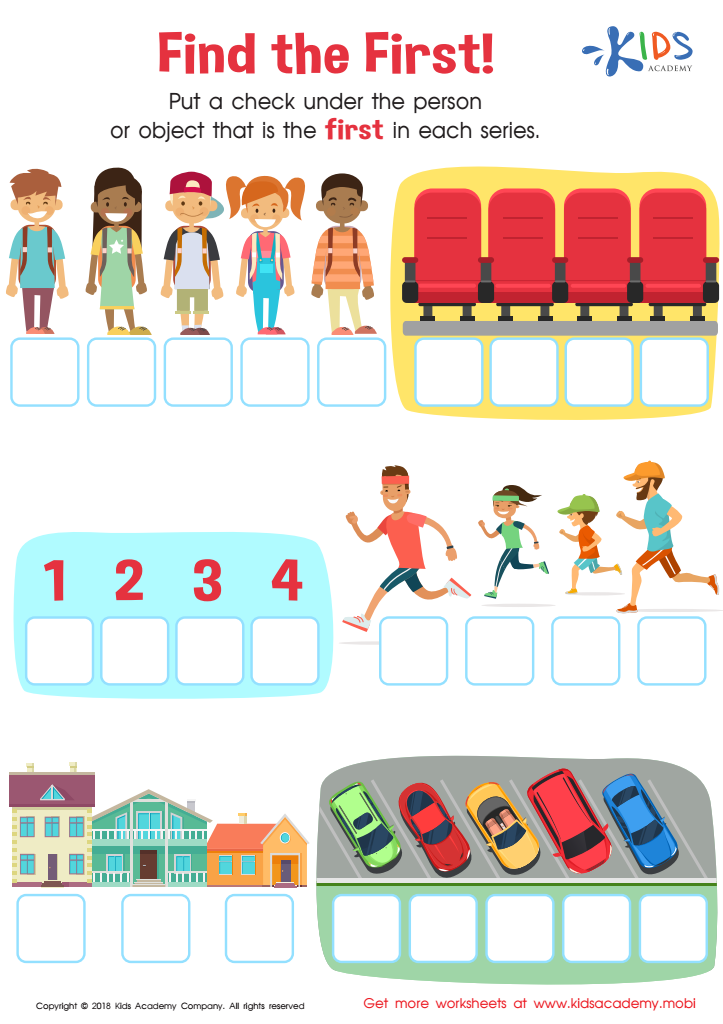
Find the First! Worksheet


Find the First! Worksheet

Have your young students discuss what it means to be first in line, row, or a race. This free worksheet helps clarify their understanding of "first". View each group of people/objects and choose the first one. Follow up with hands-on activities like lining up students/toys or acting out a sequence of movements. Students can tell what happened first. Enjoy this printout for a fun math lesson!
Find the First! Worksheet
Worksheet


Visual discrimination skills are vital for children ages 5-7 because they lay the groundwork for essential academic and everyday tasks. For starters, these skills involve the ability to notice differences and similarities between shapes, sizes, colors, and patterns. This foundational ability directly influences a child's success in reading and writing. Being able to distinguish between different letters, like 'b' and 'd' or 'p' and 'q', is crucial for early literacy. Strong visual discrimination skills help children match sounds to symbols, aiding in word recognition and fluent reading.

Furthermore, these skills contribute significantly to mathematics. Recognizing numbers, understanding mathematical symbols, and discriminating between geometric shapes are all built on visual discrimination abilities. In real-life scenarios, these skills support tasks like recognizing faces, identifying obstacles, and navigating spaces, making them fundamental to personal safety and social interactions.

Additionally, underdeveloped visual discrimination skills can lead to challenges in following classroom instructions, organizing school materials, and completing puzzles or pattern-based activities. This can cause frustration and impact self-esteem. Parents and teachers who focus on nurturing these skills can provide activities like matching games, puzzles, and drawing exercises that not only support academic achievement but also shape confident, capable learners. Investing in these skills creates a strong visual foundation critical for their lifelong learning journey.