Discover our engaging Visual Learning Enhancement Worksheets designed specifically for children aged 5-7. Each printable sheet combines vibrant illustrations and interactive activities to strengthen young minds. Focusing on visual cues, our worksheets aid in developing critical thinking, problem-solving skills, and memory retention. Tailored to support children's natural learning inclinations, these resources cover a range of subjects, fostering an enjoyable educational experience. Encourage your child's cognitive growth with fun mazes, spot the differences, and more. Perfect for home or classroom use, our worksheets are your ideal partner in nurturing visual learning in young learners. Explore to unlock endless learning possibilities!

Check out this FREE "Visual learning enhancement" Trial Lesson for age 5-7!

Relate Place Value (base 10 block) addition to standard algorithm addition

Favorites
With answer key
Interactive
  • 5-7
  • Visual learning enhancement
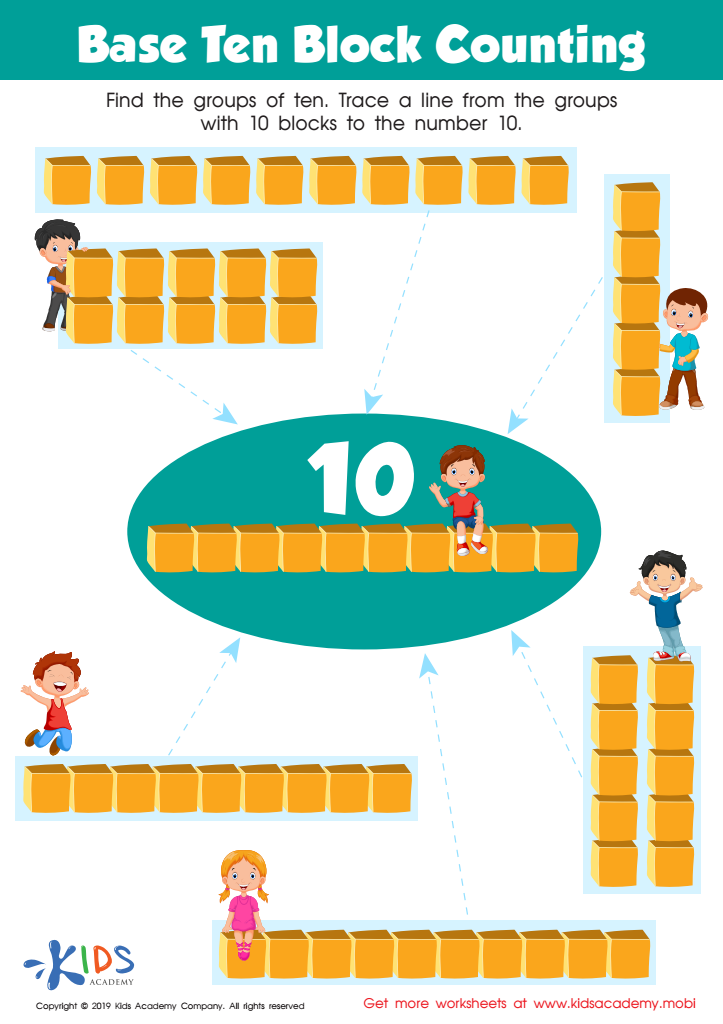
Base Ten Block Counting Worksheet

Base Ten Block Counting Worksheet

Introduce your kids to counting with educational DVDs and video games. Then use this worksheet: look at the picture and help them find the groups of ten; trace a line from the groups with 10 blocks to the number 10. This will help them practice and gain a better understanding of counting.
Base Ten Block Counting Worksheet
Worksheet
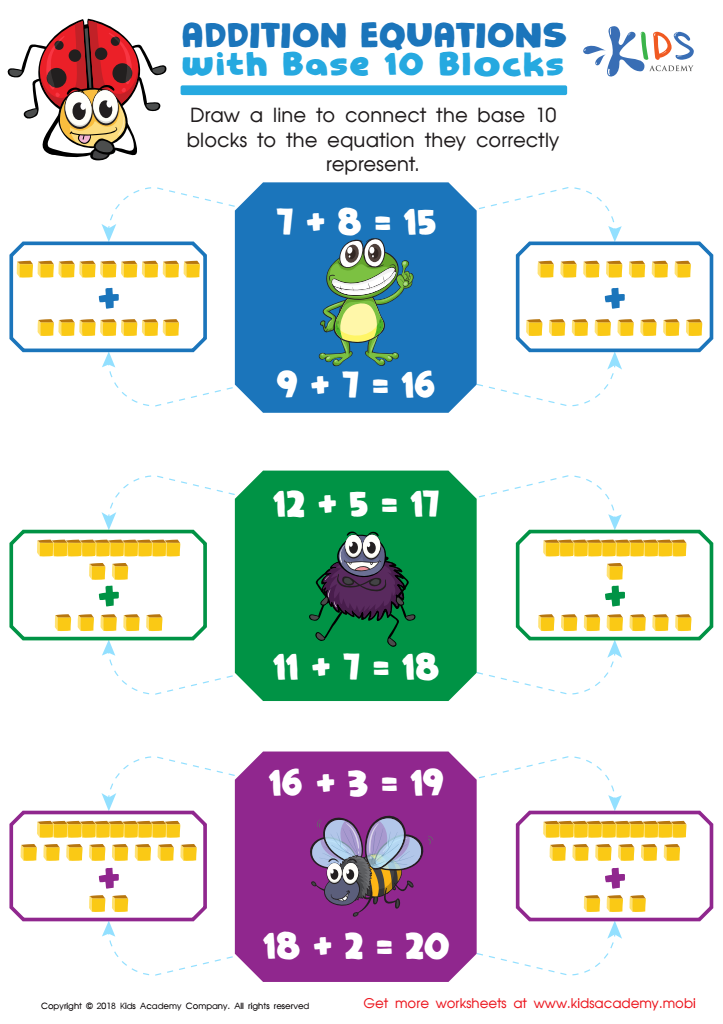
Addition Equations With Base 10 Blocks Worksheet
Addition Equations With Base 10 Blocks Worksheet
If your students are struggling with base 10 addition, this worksheet is here to help. Guide them with connecting the blocks to the equation with a line. It's a fun and colourful way to encourage learning.
Addition Equations With Base 10 Blocks Worksheet
Worksheet
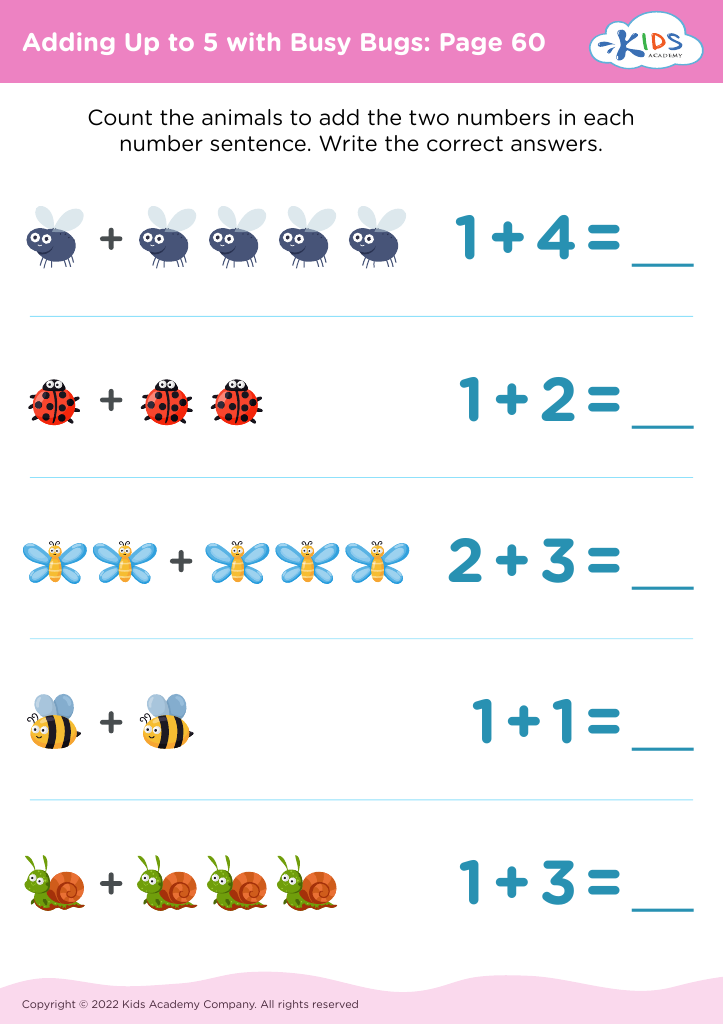
Adding Up to 5 with Busy Bugs: Page 60
Worksheet
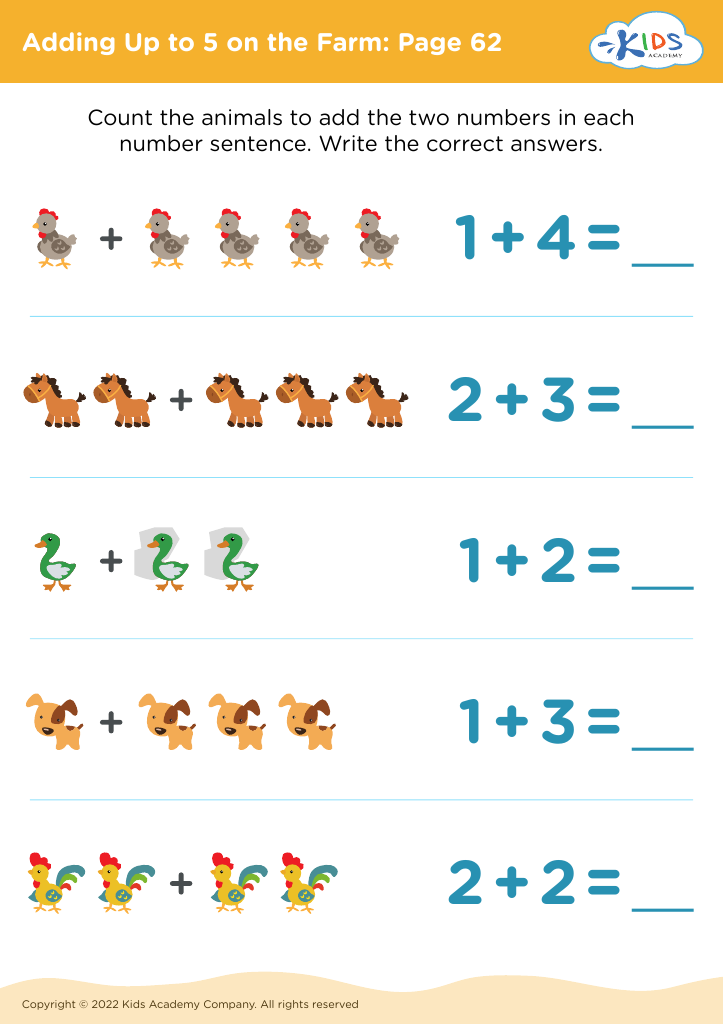
Adding Up to 5 on the Farm: Page 62
Worksheet
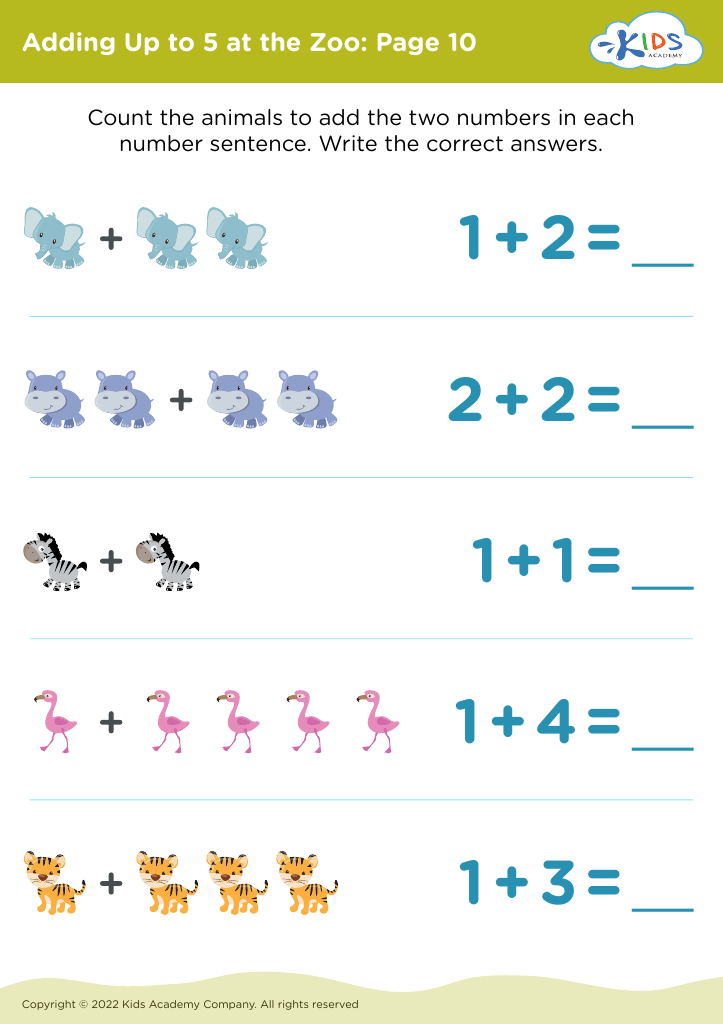
Adding Up to 5 at the Zoo: Page 10
Worksheet
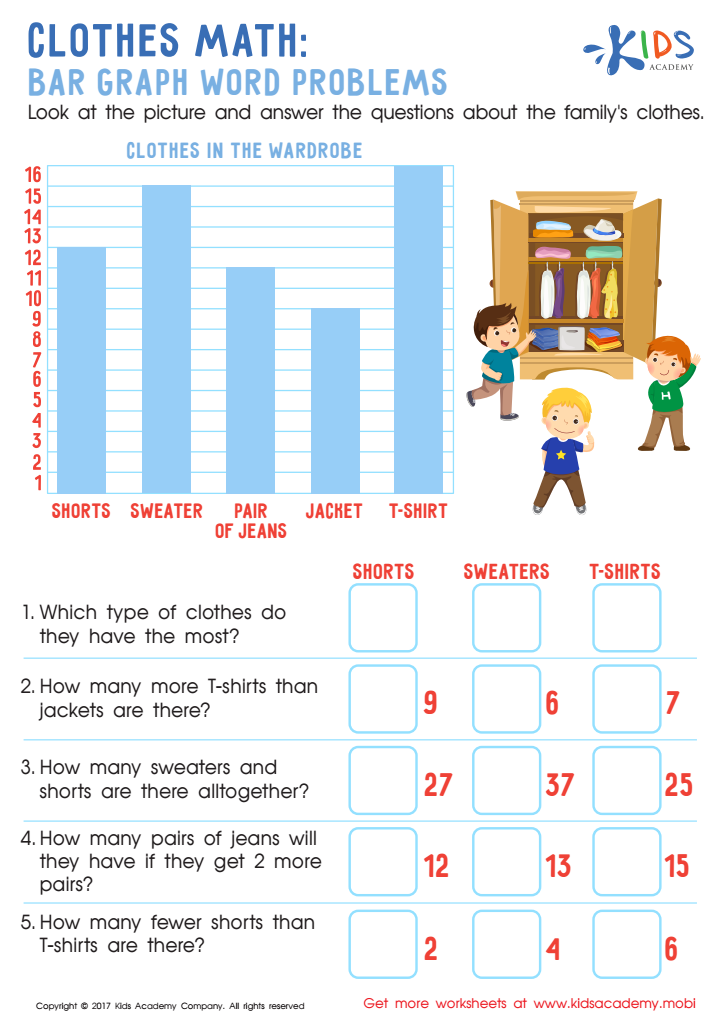
Clothes Math: Bar Graph Word Problems Worksheet

Clothes Math: Bar Graph Word Problems Worksheet

Introduce your kids to a family like theirs with this worksheet. They'll look at the picture of three children in front of a wardrobe and the graph of clothes inside. Ask them questions about the number of items like jeans, sweaters, shorts, jackets, and t-shirts. Let them explore their understanding of counting and family similarity.
Clothes Math: Bar Graph Word Problems Worksheet
Worksheet
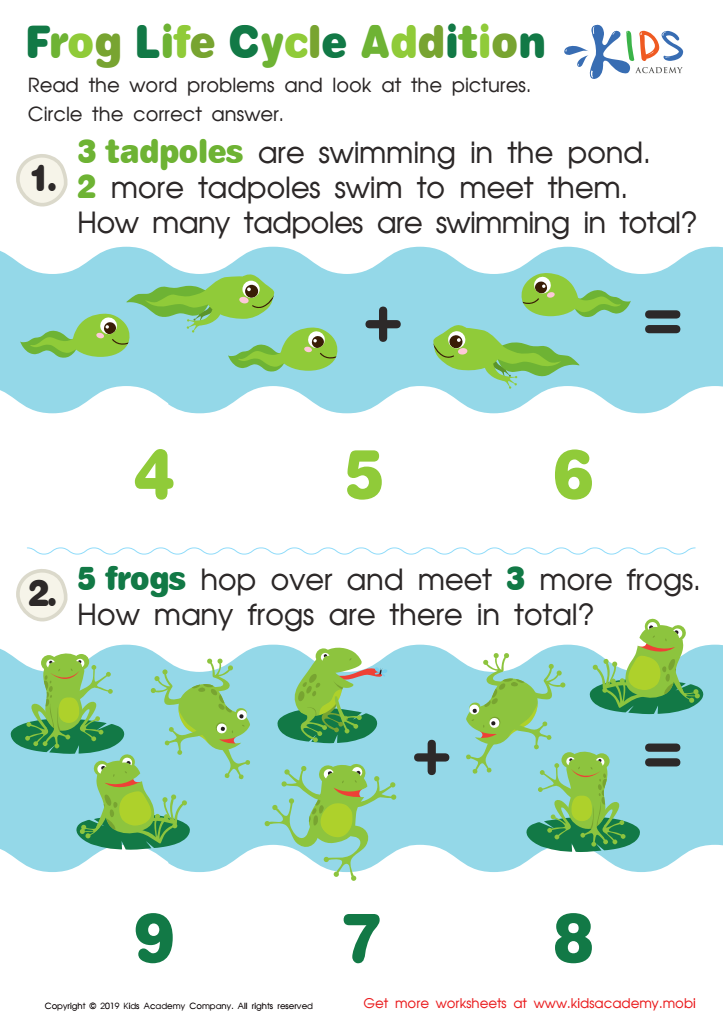
Frog Life Cycle Addition Worksheet

Frog Life Cycle Addition Worksheet

Look at this worksheet with your kids. Read the two word problems aloud, pointing at the pictures showing the frog's life cycle. Help your kids add simple equations and circle the correct answer. Fascinating creatures, frogs go through a cycle before becoming an adult.
Frog Life Cycle Addition Worksheet
Worksheet
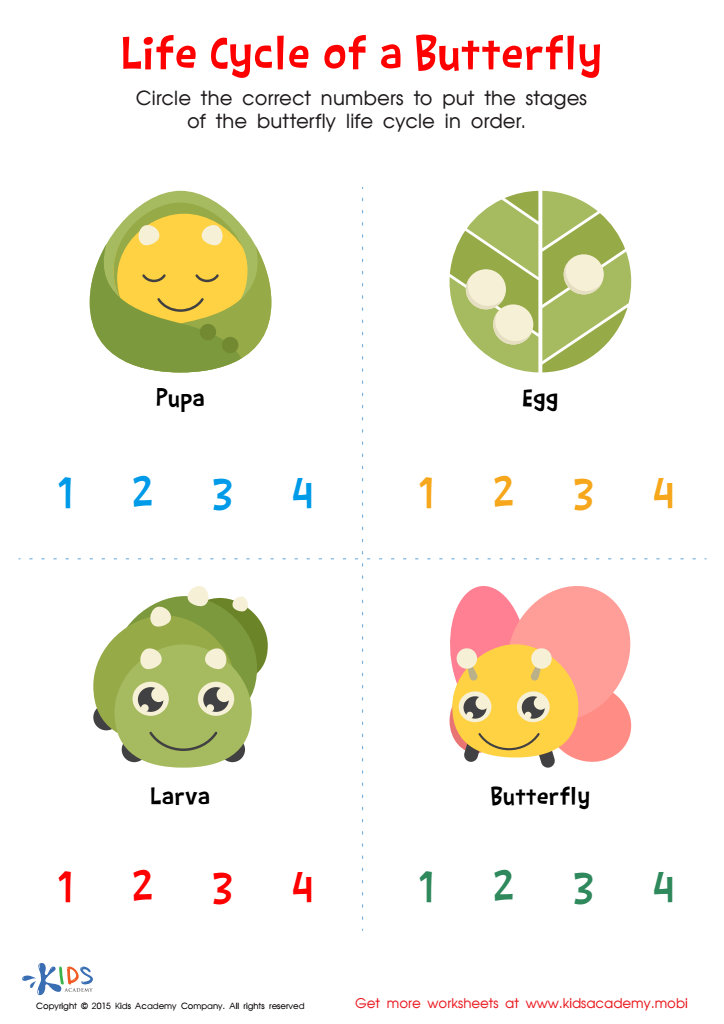
Butterfly Life Cycle Printable Worksheet

Life Cycle of Butterfly Printable
Kids and grownups alike marvel at the beauty of butterflies. With this printable worksheet, kids can review the life cycle of these favorite insects and strengthen cognitive and problem solving skills. From egg to butterfly, kids will order the stages and use the best strategy to solve it. Guide them as they work and they'll learn multiple skills.
Life Cycle of Butterfly Printable

Worksheet
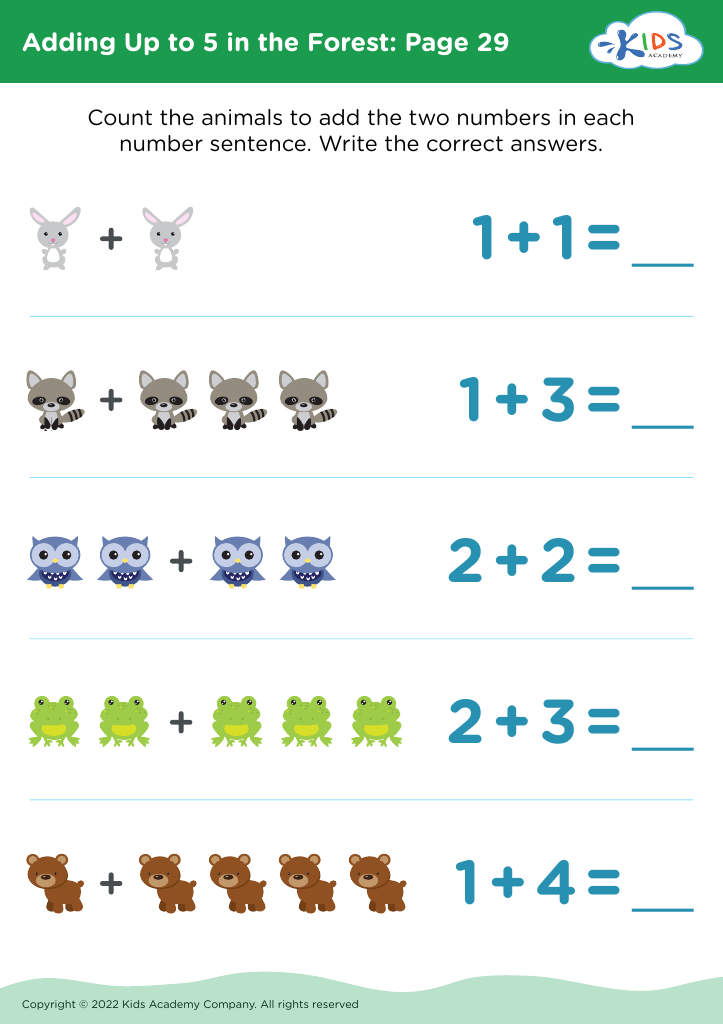
Adding Up to 5 in the Forest: Page 29
Worksheet


Visual learning enhancement is essential for children aged 5-7 because this is a critical period for cognitive development and the acquisition of foundational skills. Visual learning aids, such as pictures, charts, videos, and other graphical tools, leverage the inherent strengths of a young child's visual and spatial reasoning abilities. At these ages, children are typically more receptive to learning through images and actions than through written or verbal instructions alone.

Parents and teachers should care about visual learning because it can make abstract concepts more concrete, thereby enhancing comprehension and retention. For example, visual aids can simplify complex ideas, aiding in the understanding of subjects like math, science, and literacy. Visuals also cater to different learning styles, ensuring that all students, including visual and kinesthetic learners, have the opportunity to grasp and engage with the material.

Moreover, integrating visual learning strategies helps in fostering creativity, critical thinking, and problem-solving skills. When children interact with visual materials, they often ask questions and develop their own interpretations, which can enhance their overall intellectual curiosity and desire to learn.

In conclusion, by incorporating visual learning enhancements, parents and teachers can provide a more inclusive, effective, and stimulating learning environment that meets the developmental needs of children during these formative years.