Check out this FREE "Visual Learning" Trial Lesson for age 5-7!

Adding more than 2 numbers- Making a Ten

Favorites
With answer key
Interactive
  • 5-7
  • Visual Learning
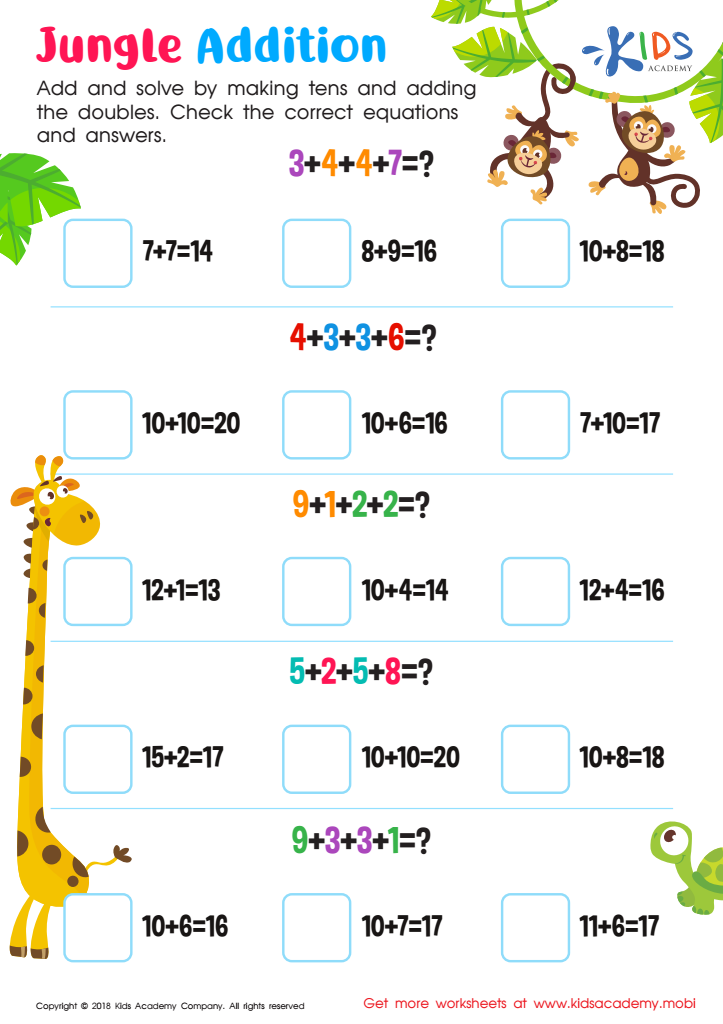
Jungle Addition Worksheet

Jungle Addition Worksheet

With this worksheet, kids can use the strategies of making tens and adding doubles to add numbers with more than three addends. They'll practice choosing the right method and become more confident in their calculations, enabling quicker, more efficient computation.
Jungle Addition Worksheet
Worksheet
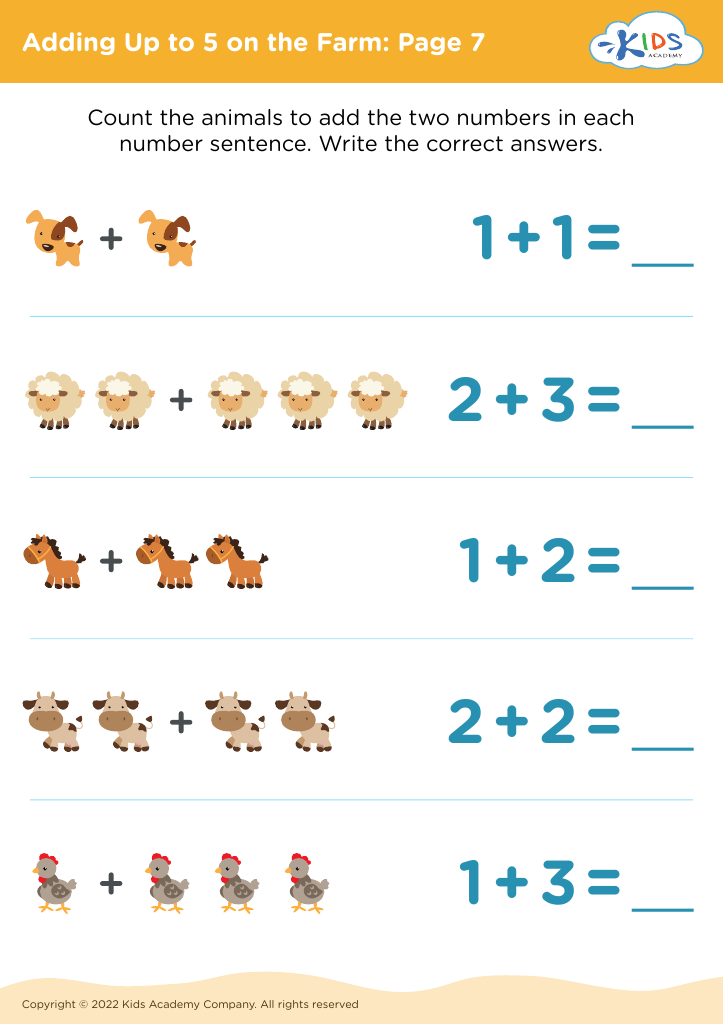
Adding Up to 5 on the Farm: Page 7
Worksheet
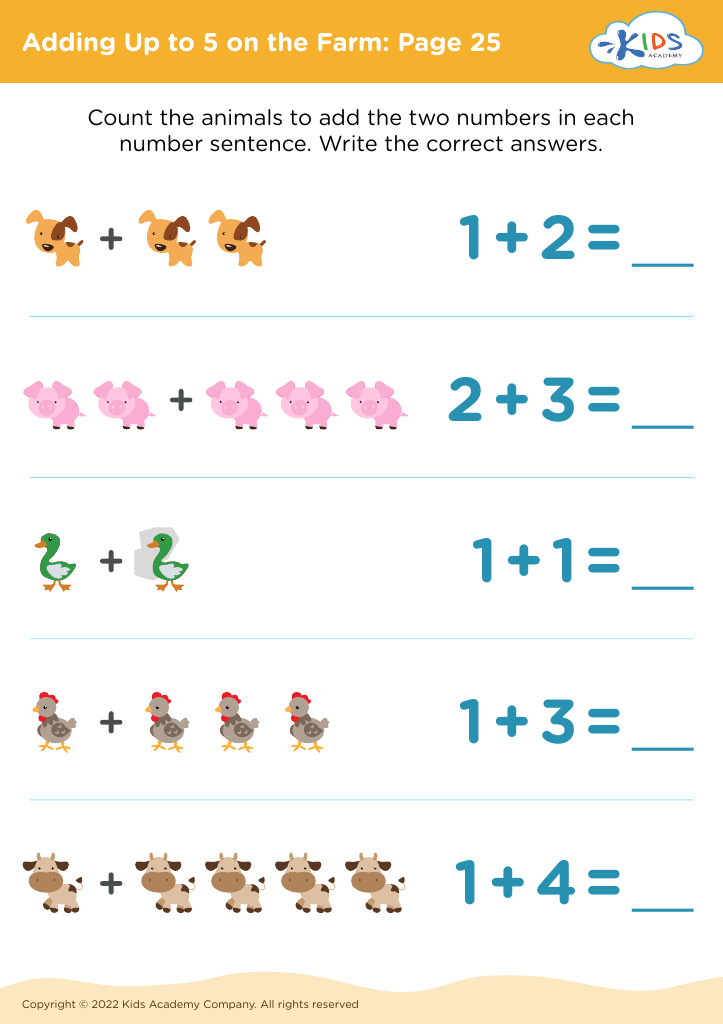
Adding Up to 5 on the Farm: Page 25
Worksheet
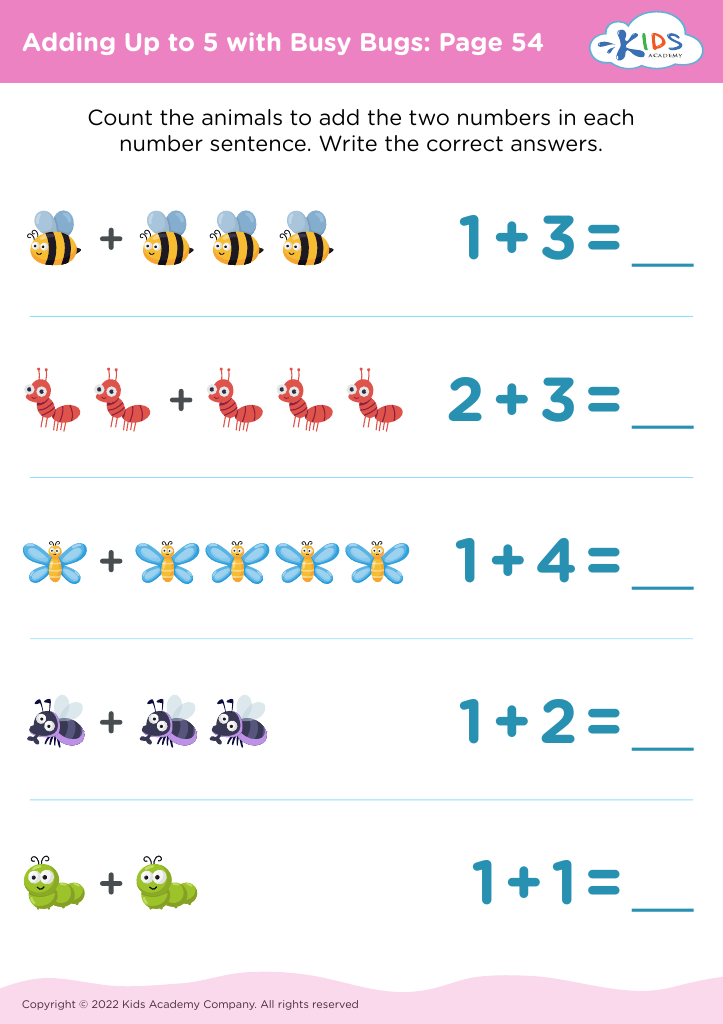
Adding Up to 5 with Busy Bugs: Page 54
Worksheet
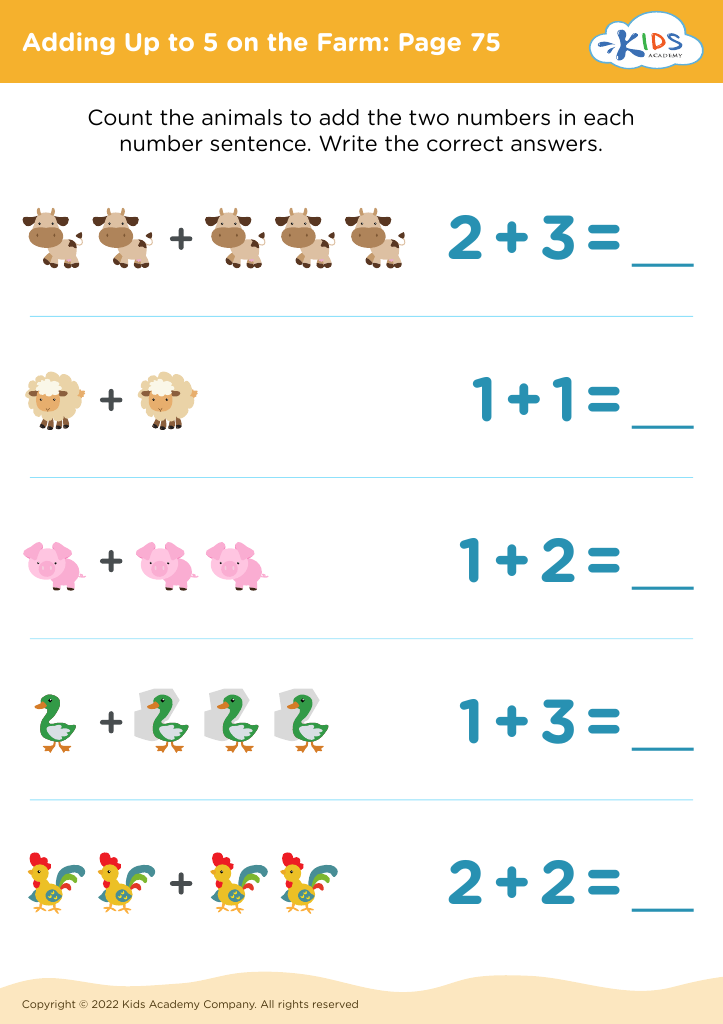
Adding Up to 5 on the Farm: Page 75
Worksheet
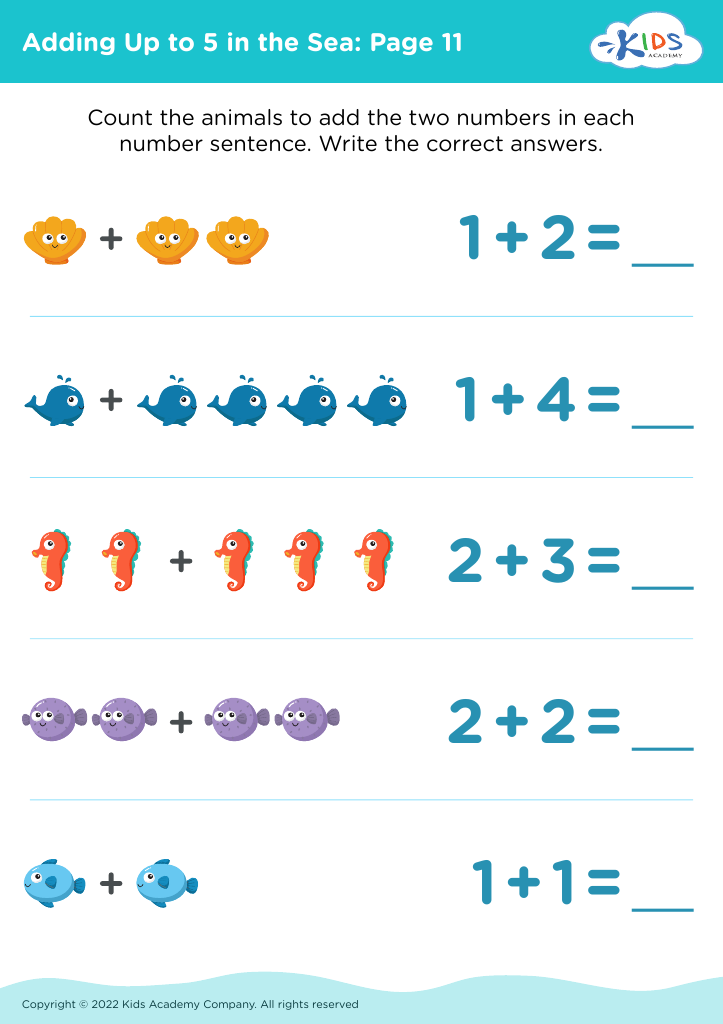
Adding Up to 5 in the Sea: Page 11
Worksheet
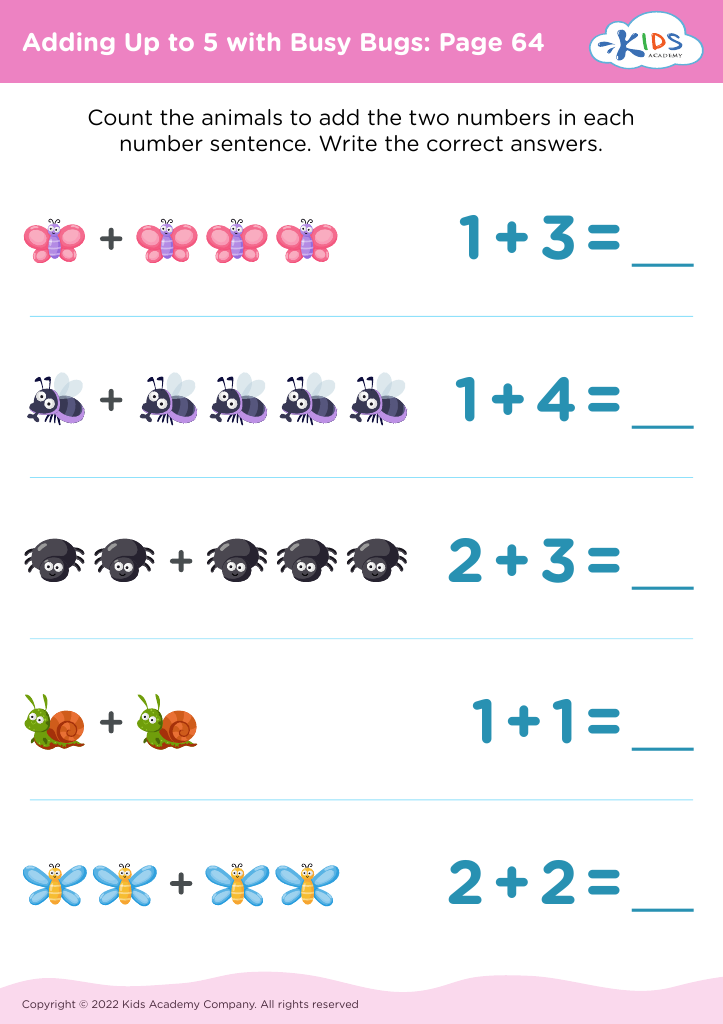
Adding Up to 5 with Busy Bugs: Page 64
Worksheet
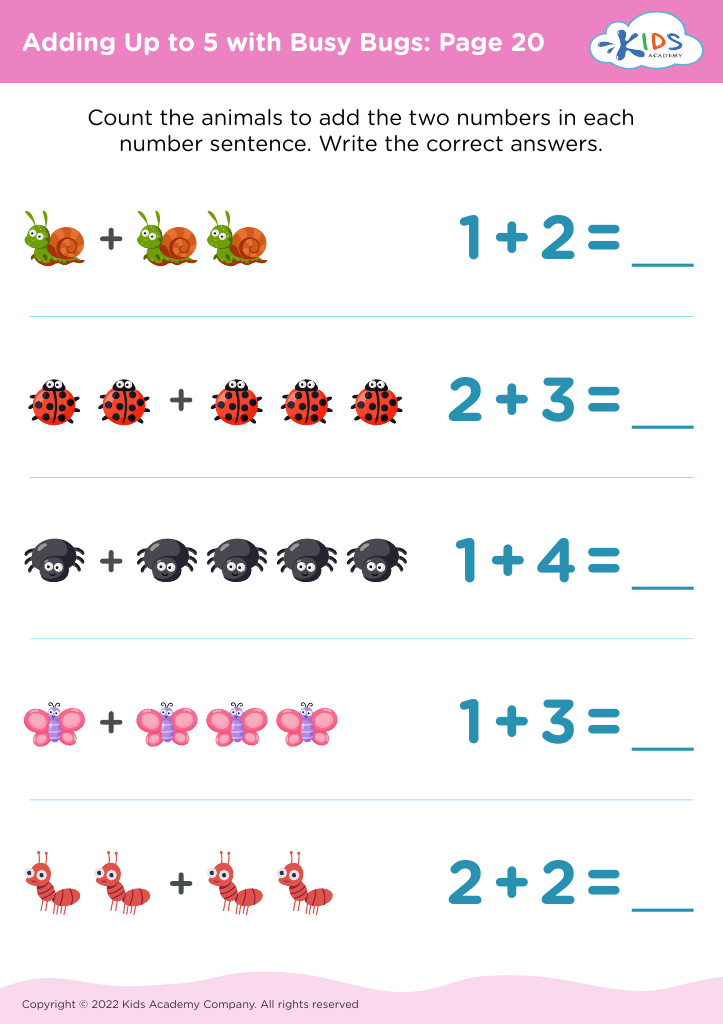
Adding Up to 5 with Busy Bugs: Page 20
Worksheet
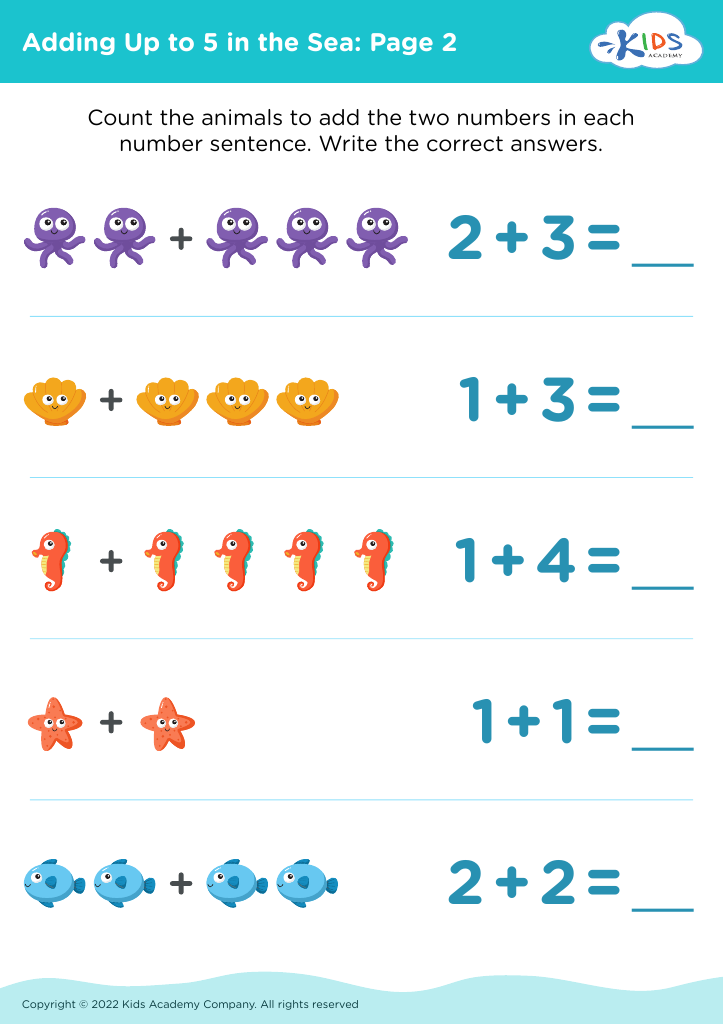
Adding Up to 5 in the Sea: Page 2

Adding Up to 5 in the Sea: Page 2

Adding Up to 5 in the Sea: Page 2
Worksheet
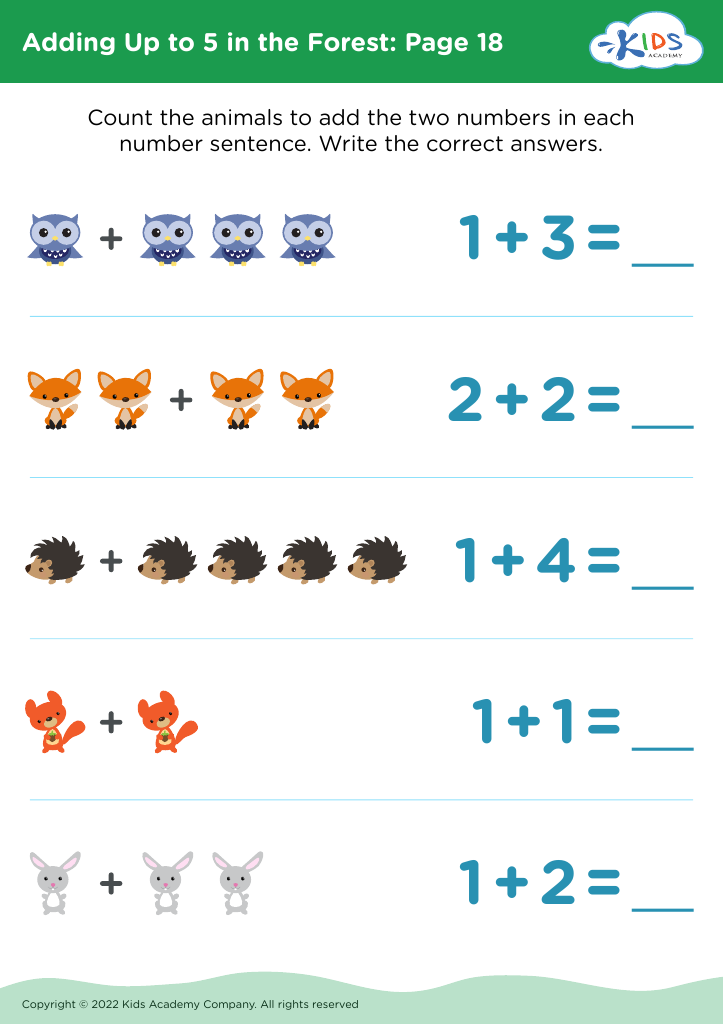
Adding Up to 5 in the Forest: Page 18
Worksheet
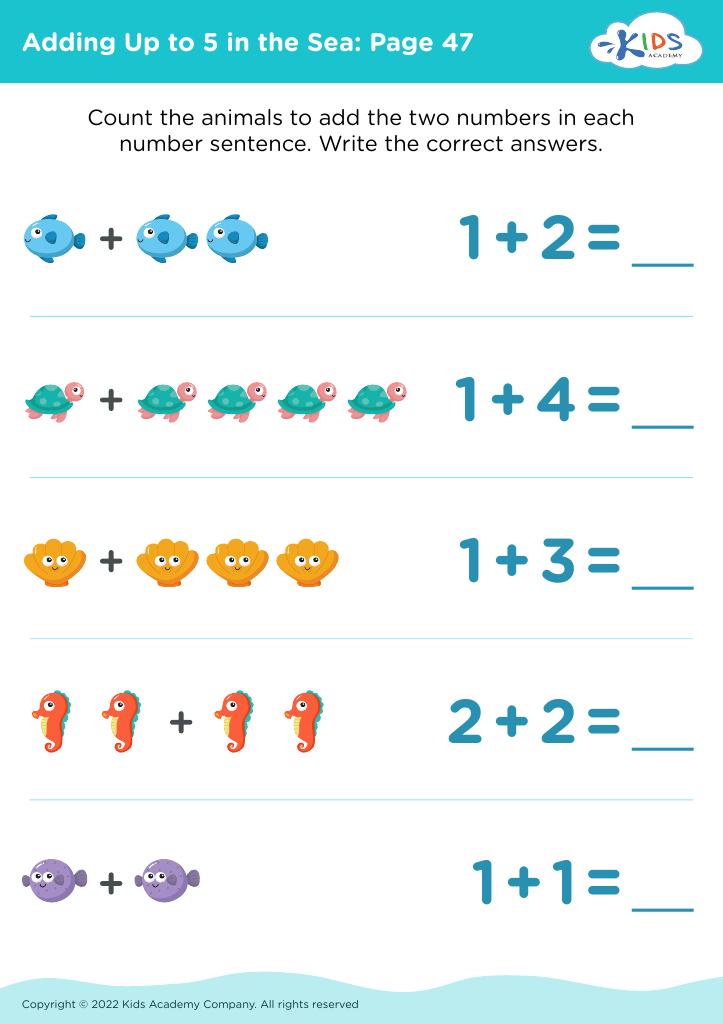
Adding Up to 5 in the Sea: Page 47
Worksheet
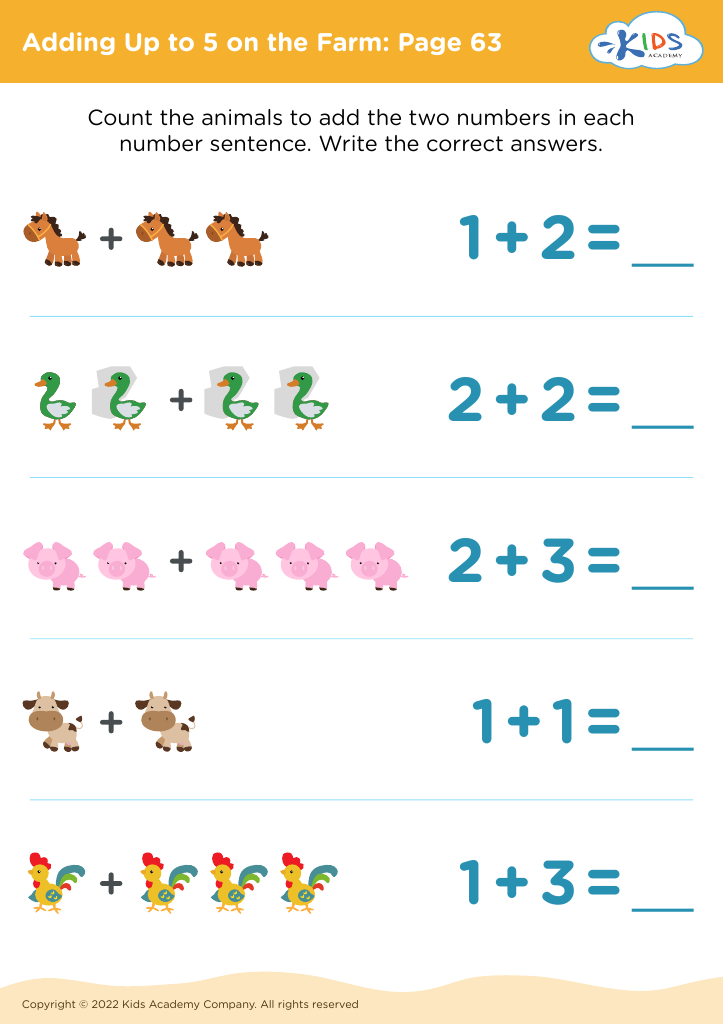
Adding Up to 5 on the Farm: Page 63
Worksheet
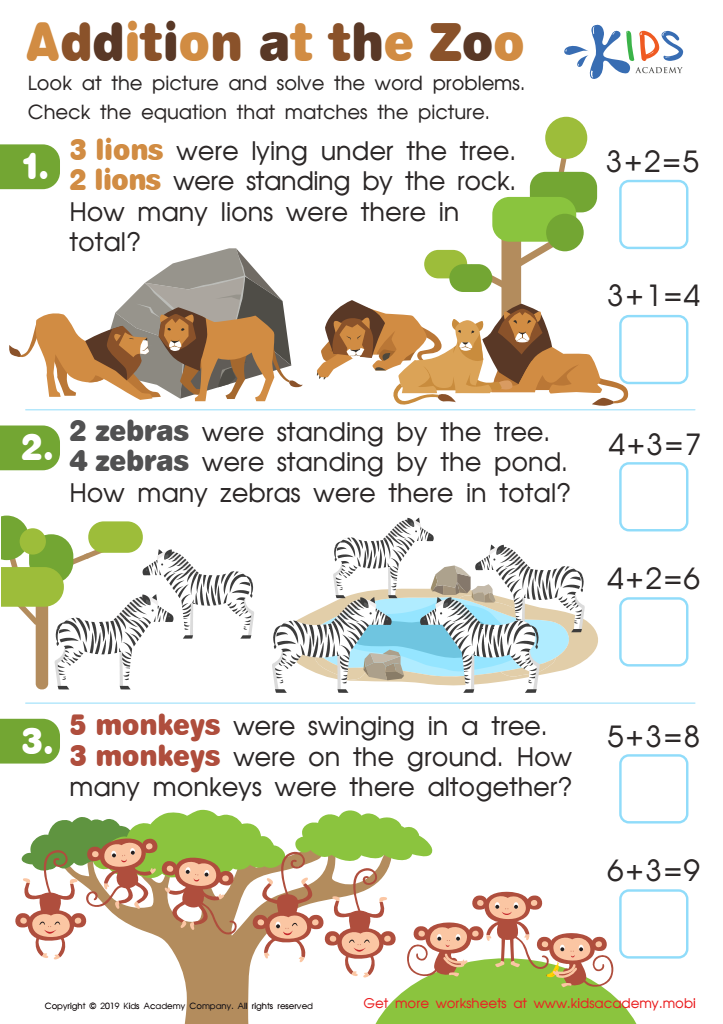
Addition at the Zoo Worksheet
Addition at the Zoo Worksheet
Visit the zoo with your kids and point out all the different animals. Ask them to name their favorites and identify animals on a worksheet. Challenge them to solve word problems related to the pictures. Ask them for the equation that fits the picture and check the answer.
Addition at the Zoo Worksheet
Worksheet
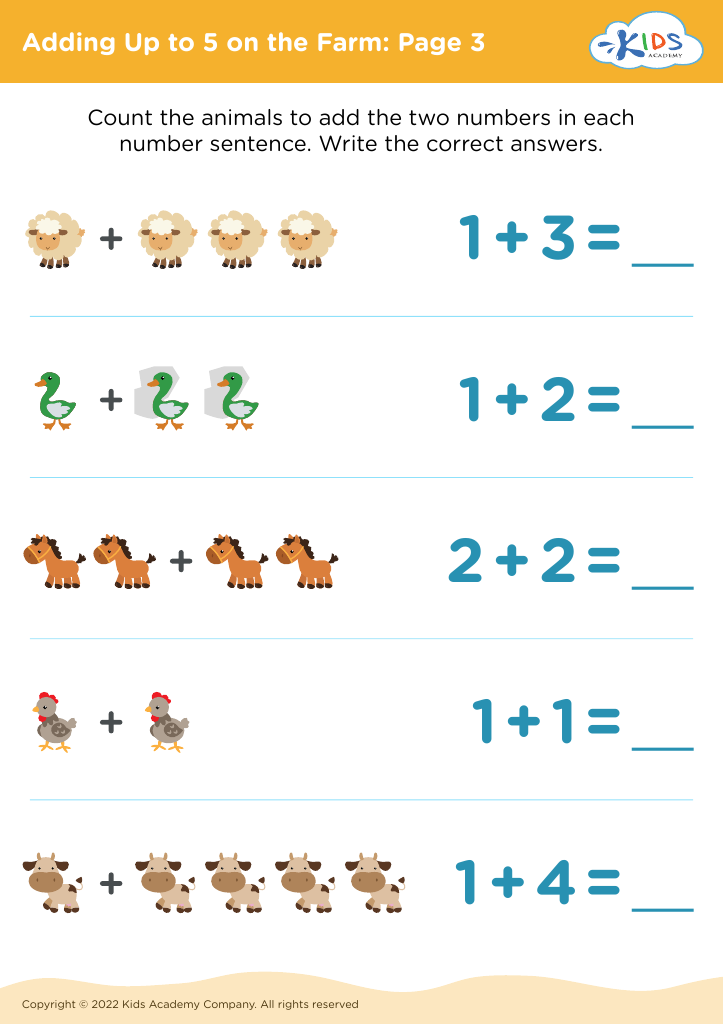
Adding Up to 5 on the Farm: Page 3
Worksheet
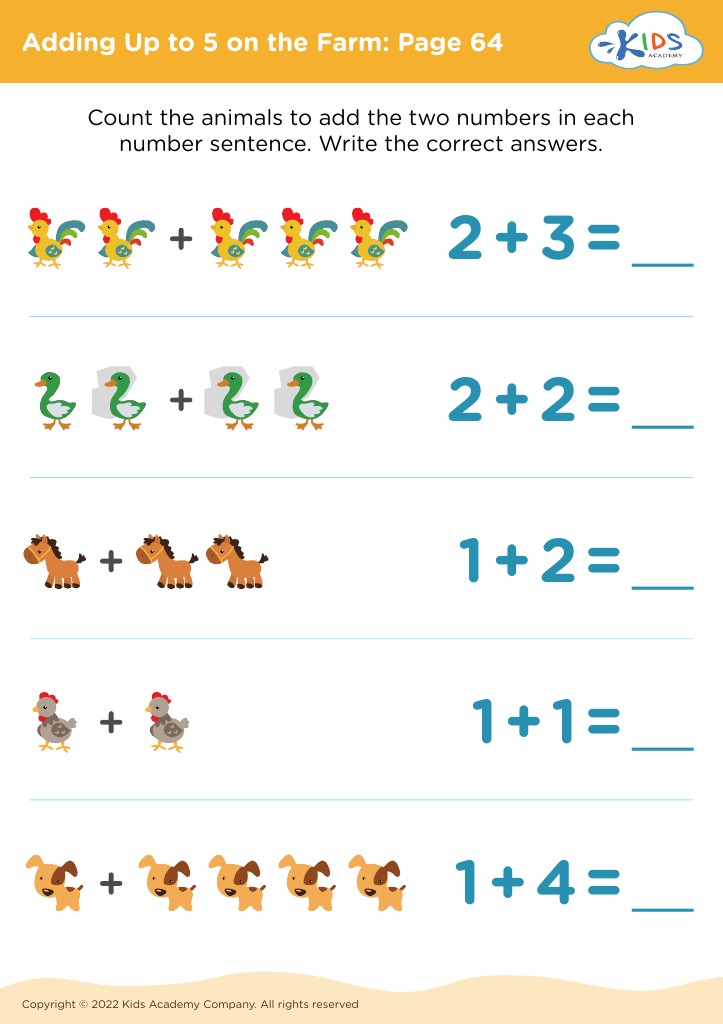
Adding Up to 5 on the Farm: Page 64
Worksheet
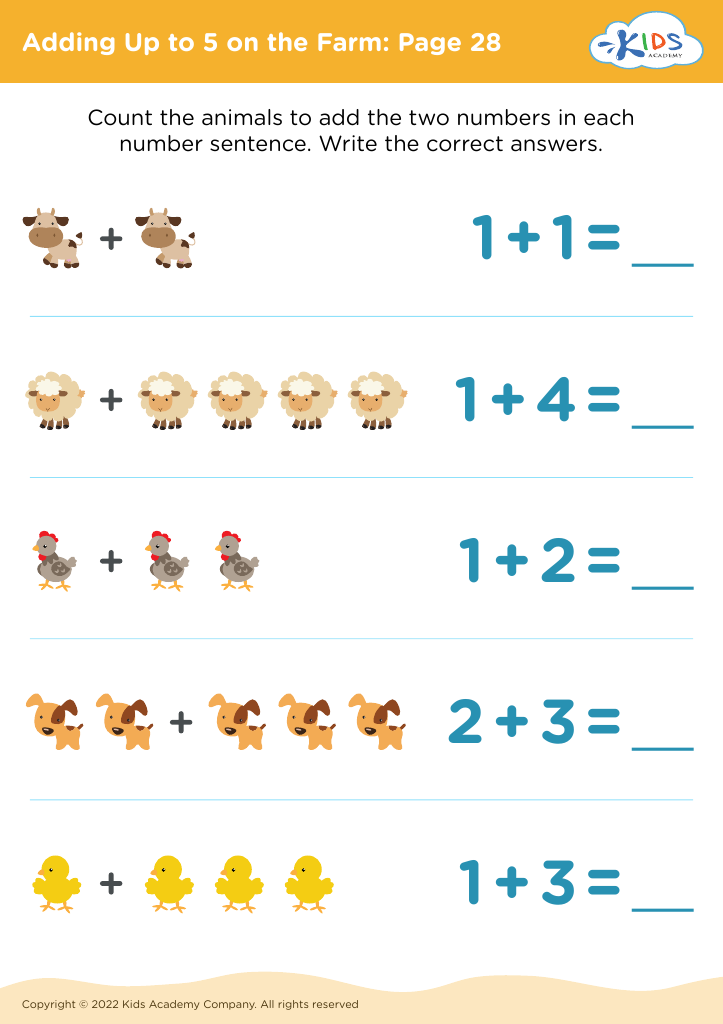
Adding Up to 5 on the Farm: Page 28
Worksheet
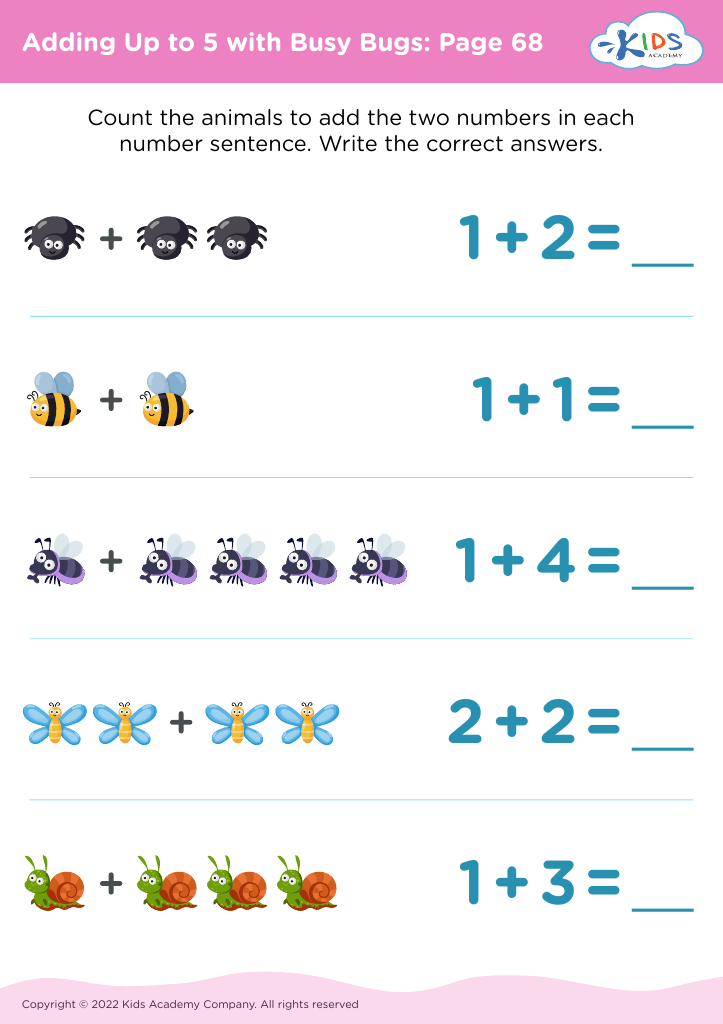
Adding Up to 5 with Busy Bugs: Page 68
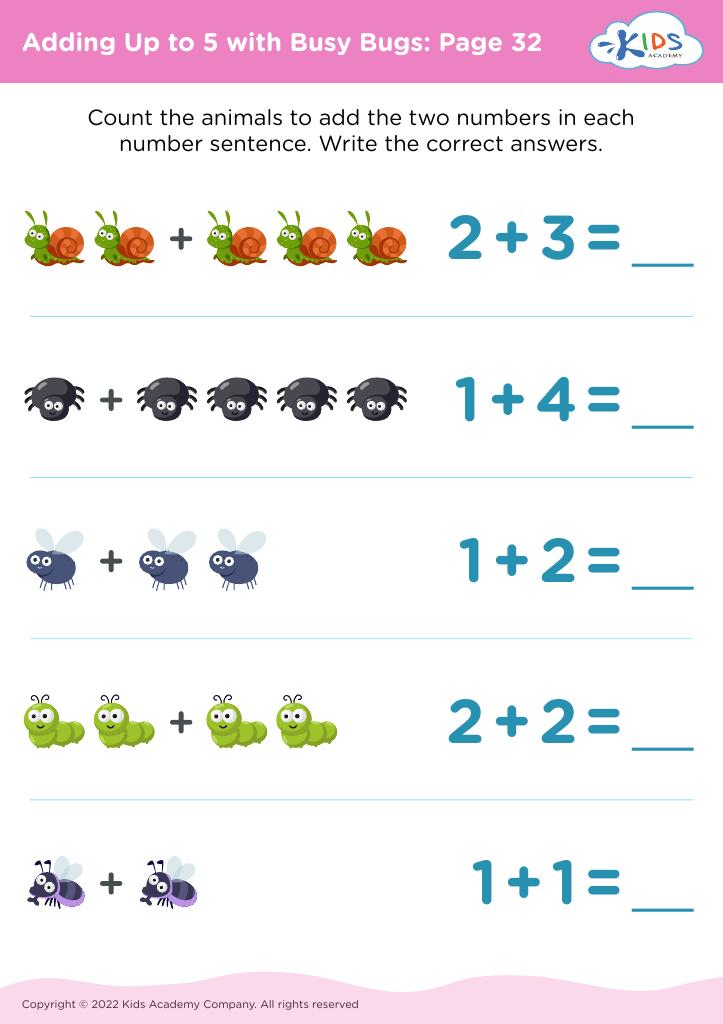
Worksheet
Adding Up to 5 with Busy Bugs: Page 32
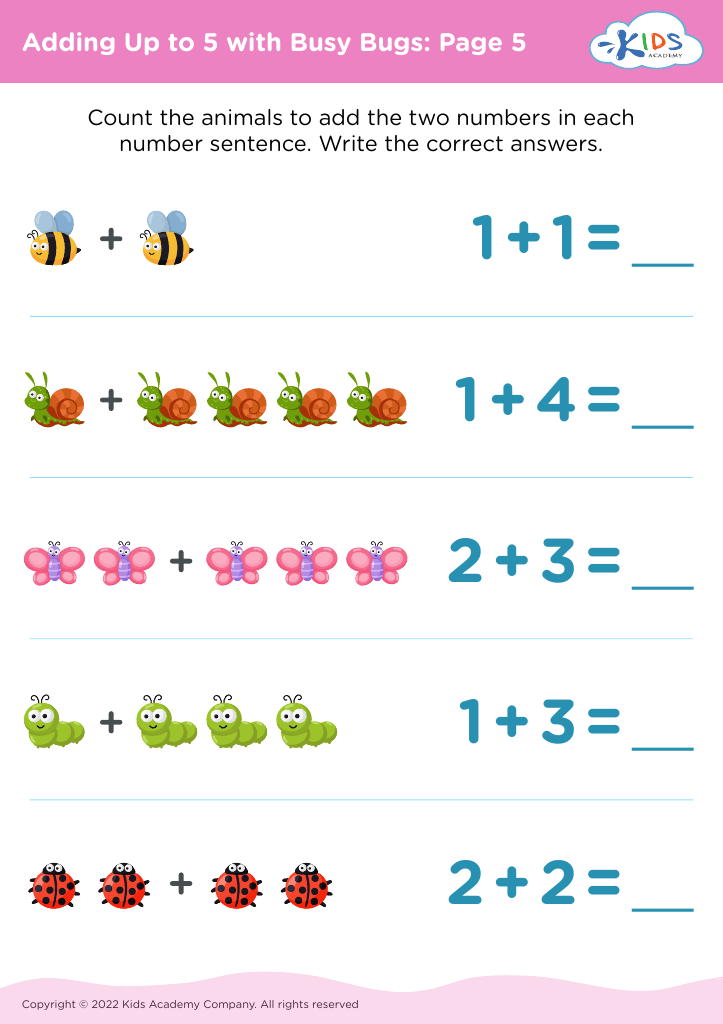
Worksheet
Adding Up to 5 with Busy Bugs: Page 5
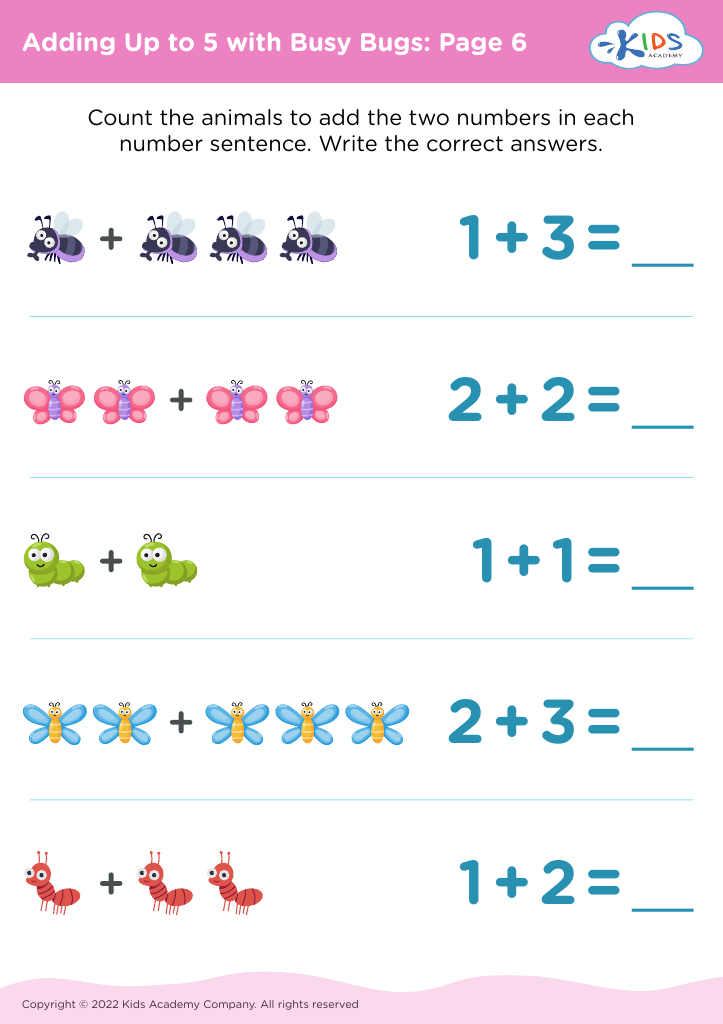
Worksheet
Adding Up to 5 with Busy Bugs: Page 6
Worksheet
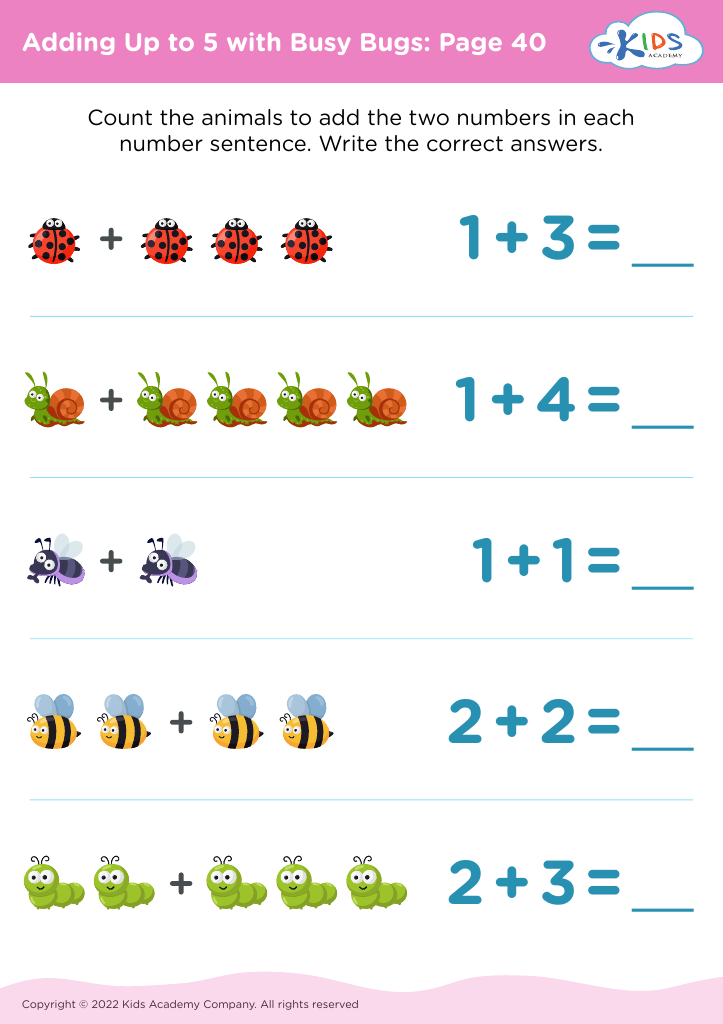
Adding Up to 5 with Busy Bugs: Page 40
Worksheet
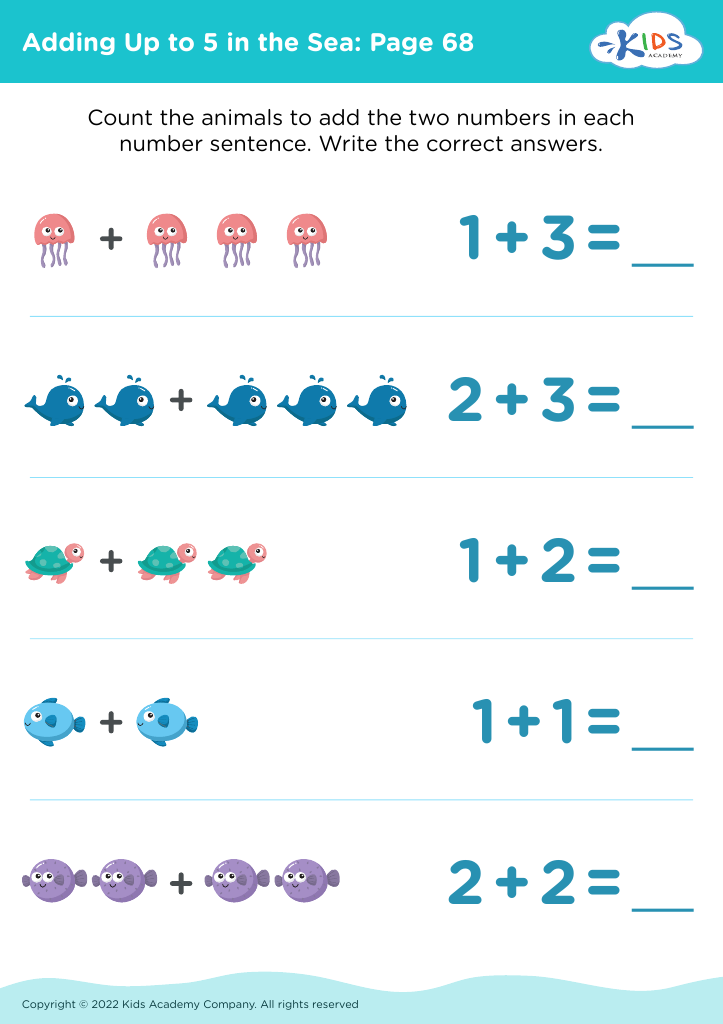
Adding Up to 5 in the Sea: Page 68
Worksheet
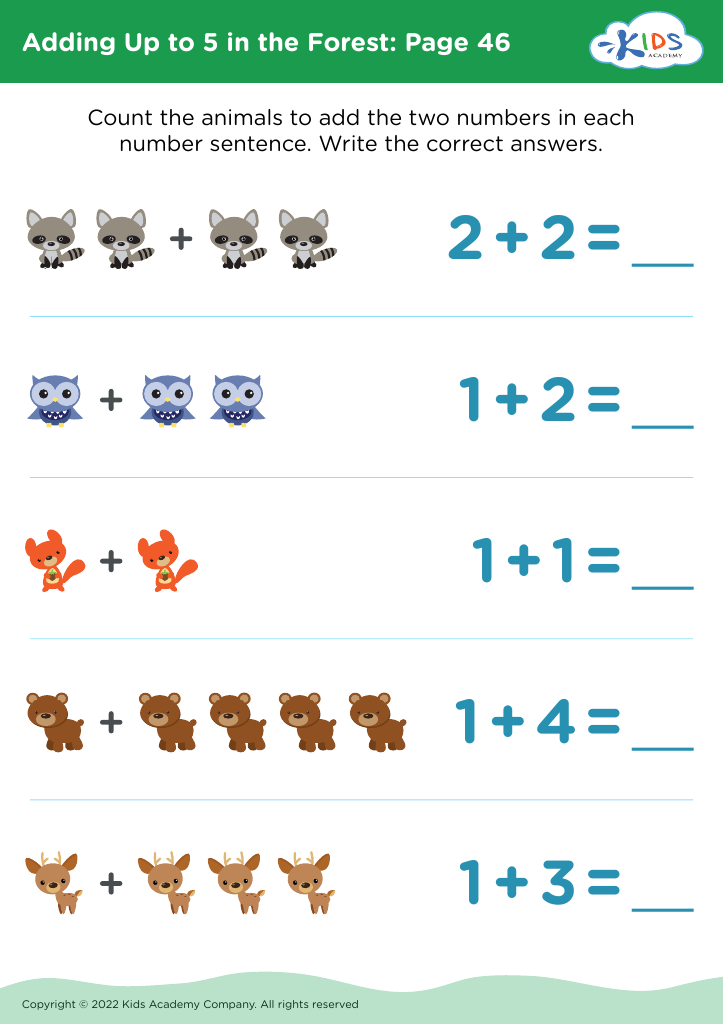
Adding Up to 5 in the Forest: Page 46
Worksheet
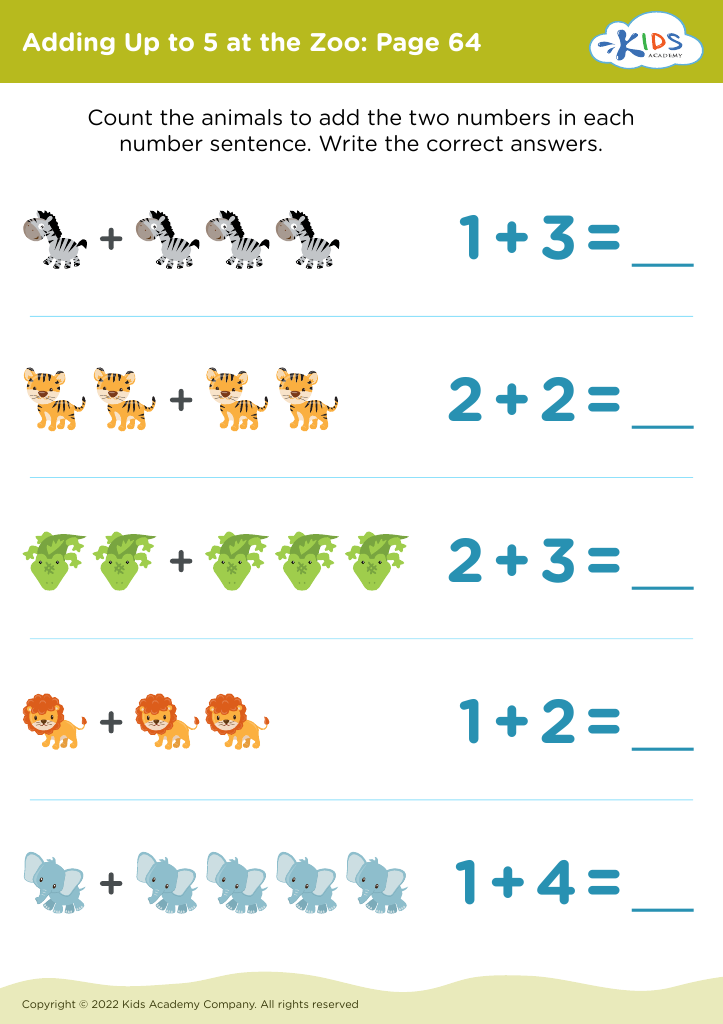
Adding Up to 5 at the Zoo: Page 64
Worksheet


Visual learning is a crucial aspect of education for children aged 5-7, and parents and teachers should prioritize its incorporation into daily learning experiences. At this developmental stage, children are naturally curious and increasingly capable of complex thought processes. Visual learning utilizes images, diagrams, charts, and videos to present information in an engaging and comprehensible way, which can significantly enhance children's understanding and retention.

Research shows that children in this age group respond positively to visual stimuli, as their brains are wired to process images more quickly than text. This approach supports diverse learning styles, ensuring that visual learners thrive while also benefitting kinesthetic and auditory learners. Additionally, visual learning facilitates critical thinking and problem-solving skills as students learn to connect concepts and ideas through visual associations.

When parents and teachers incorporate visual aids, such as story maps or educational games, they create a richer educational environment that fosters creativity, collaboration, and engagement. This strategy not only makes learning enjoyable but also helps build a strong foundation for future academic success. Ultimately, prioritizing visual learning enables children to become active participants in their education, laying the groundwork for lifelong learning habits.