Reading comprehension 2D Shapes Worksheets for Ages 5-7
4 filtered results
Difficulty Level
Grade
Age
-
From - To
Subject
Activity
Standards
Our "Reading Comprehension 2D Shapes Worksheets for Ages 5-7" combine fun with foundational math and literacy skills. Tailored for young learners, these engaging activities help children recognize, name, and differentiate various 2D shapes while practicing reading comprehension. Each worksheet presents colorful illustrations and simple stories about shapes, encouraging kids to read, understand, and answer related questions. By integrating essential math concepts with reading tasks, these worksheets support holistic learning and build confidence. Ideal for both classroom and home use, they foster critical thinking and problem-solving in early childhood education. Unlock the joy of learning through shapes and stories!
Favorites
With answer key
Interactive
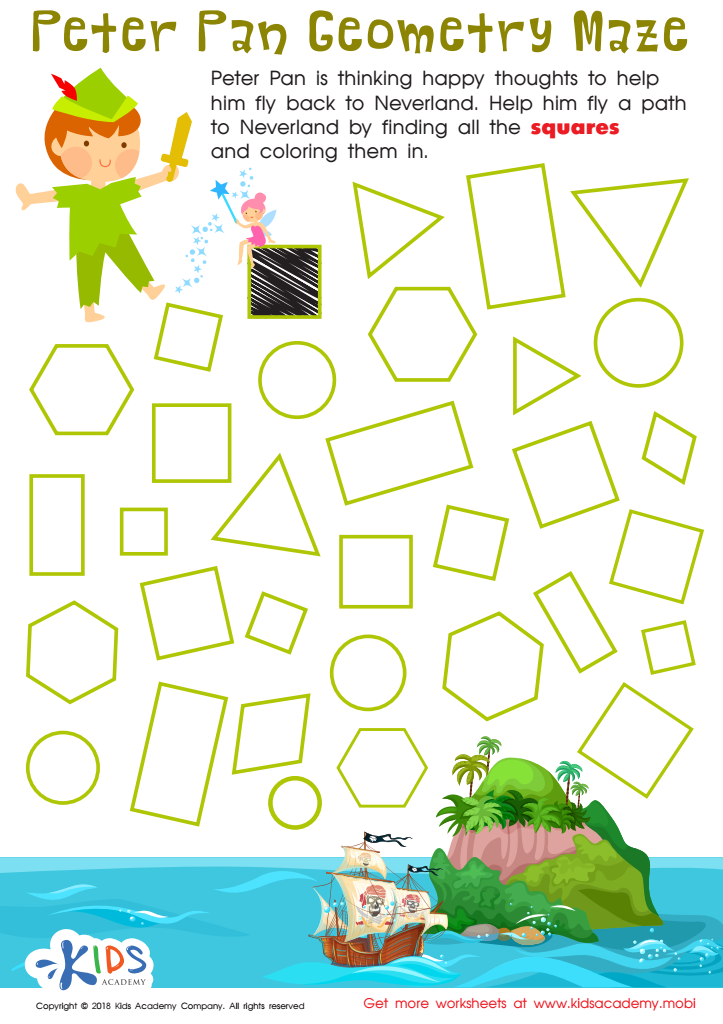
Peter Pan Worksheet
Kindergarteners can join Peter Pan on an adventure to Neverland! They can help him by coloring squares to create a path, strengthening their shape identification skills in a fun maze. Let the journey begin!
 Assign to My Students
Peter Pan Worksheet
Worksheet


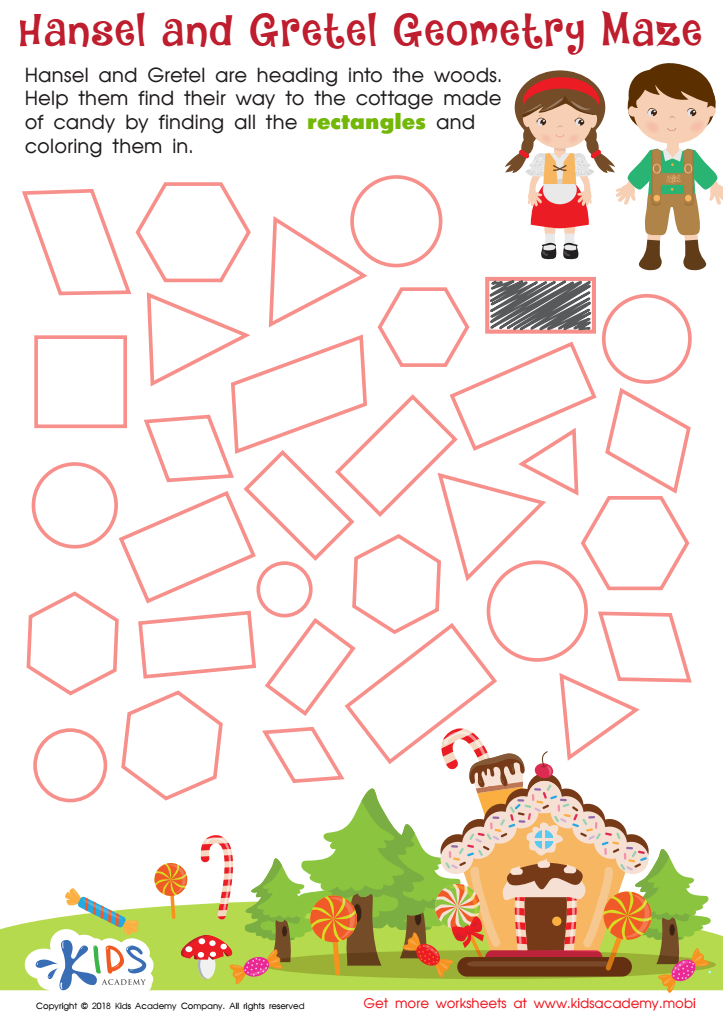
Hansel and Gretel Geometry Maze Worksheet
Your kids will have fun helping Hansel and Gretel get through a colorful forest of shapes! This free PDF reinforces the properties of rectangles, building skills in visual discernment and laying the foundations for geometry. They'll be too busy enjoying the story to realize they're learning!
Hansel and Gretel Geometry Maze Worksheet
Worksheet
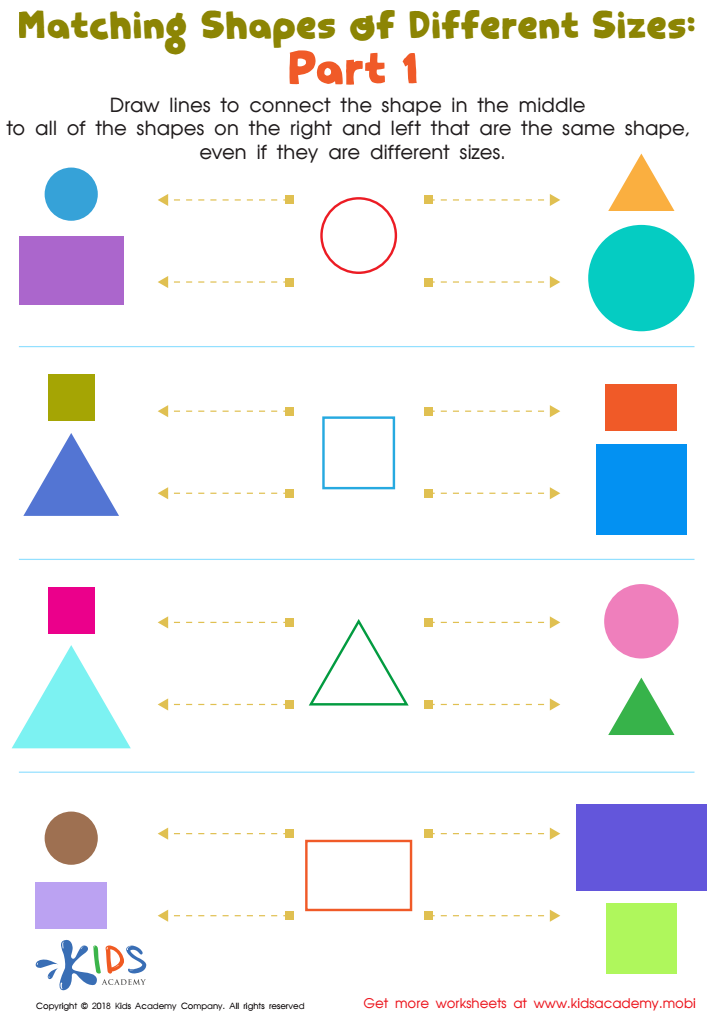
Geometry: part 1 Worksheet
Test your student's shape knowledge with this beginner-level geometry worksheet. This fun, challenging printable PDF will sharpen spacial recognition skills as they match shapes of different sizes. Get started now!
Geometry: part 1 Worksheet
Worksheet
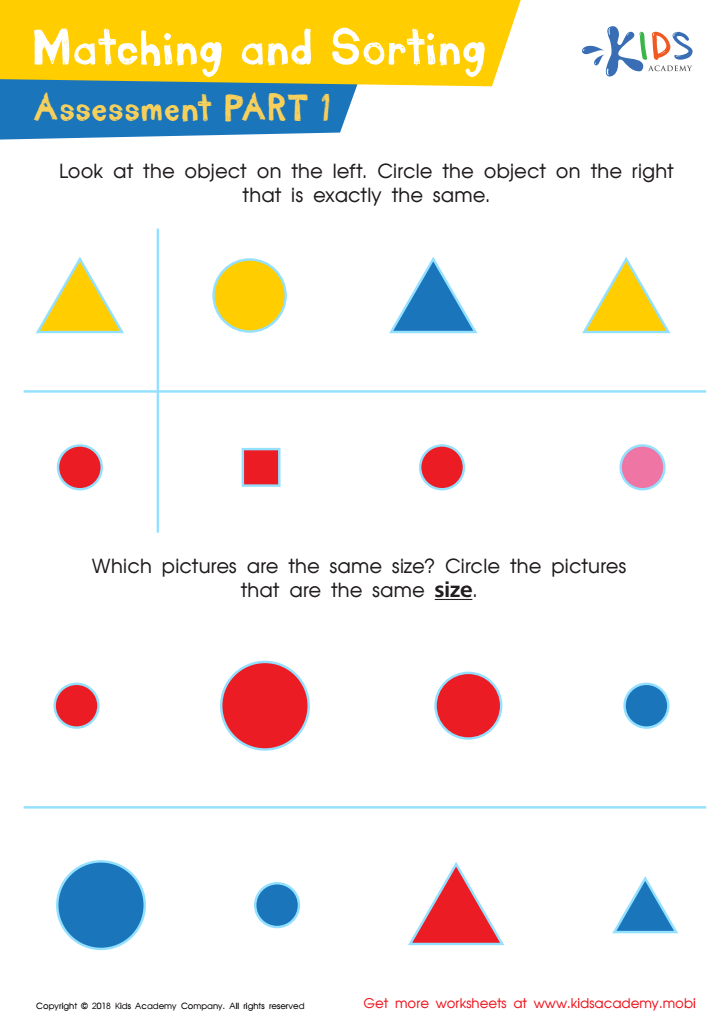
Matching and Sorting for Kindergarten: Assessment 1 Worksheet
Kids can sharpen their visual discrimination skills and analyze properties of shapes with this free downloadable worksheet. They'll identify color, size, shape, and symmetry, working with bright primary colors. This helps build a strong geometric foundation, learning to identify shape attributes.
Matching and Sorting for Kindergarten: Assessment 1 Worksheet
Worksheet
Join Kids Academy for Free
Who is primarily going to use this learning content?








Reading comprehension and understanding 2D shapes are foundational skills that greatly benefit children ages 5-7 and should be emphasized by both parents and teachers.
Firstly, reading comprehension lays the groundwork for all future learning. It not only entails decoding words and sentences but also understanding and making sense of the text. This skill is crucial as it improves vocabulary, enhances critical thinking, and fosters a lifelong love for reading. Additionally, strong reading comprehension abilities help children follow written instructions, understand assignments, and engage with learning materials effectively.
Similarly, understanding 2D shapes plays a vital role in a young child’s cognitive development. Recognizing and differentiating between shapes such as circles, squares, and triangles enhance spatial awareness and problem-solving skills. This knowledge is also fundamental in STEM education, as it intersects with math and geometry concepts introduced in higher grades. Moreover, familiarizing children with shapes helps in developing fine motor skills through activities like drawing, cutting, and assembling.
Integrating these skills in early education supports the holistic development of young learners. It prepares them for more complex academic challenges while fostering essential life skills like observation, analysis, and interpretation. Therefore, prioritizing reading comprehension and 2D shapes can set a strong educational foundation for children’s future success.