Cognitive Development Adding up to 100 Worksheets for Ages 5-7
4 filtered results
-
From - To
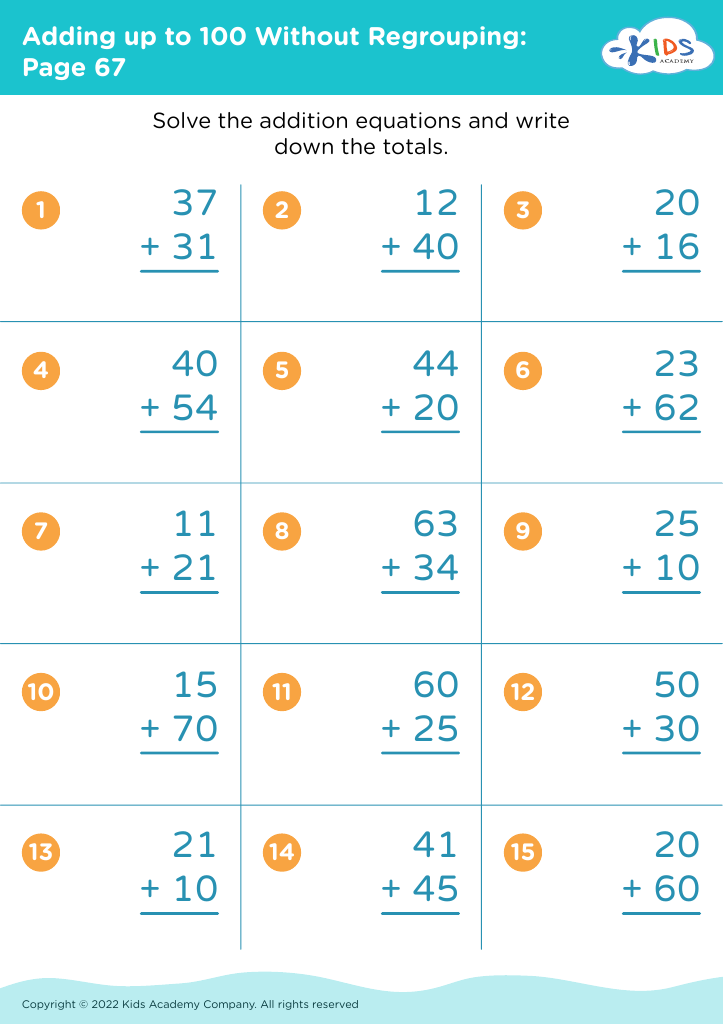
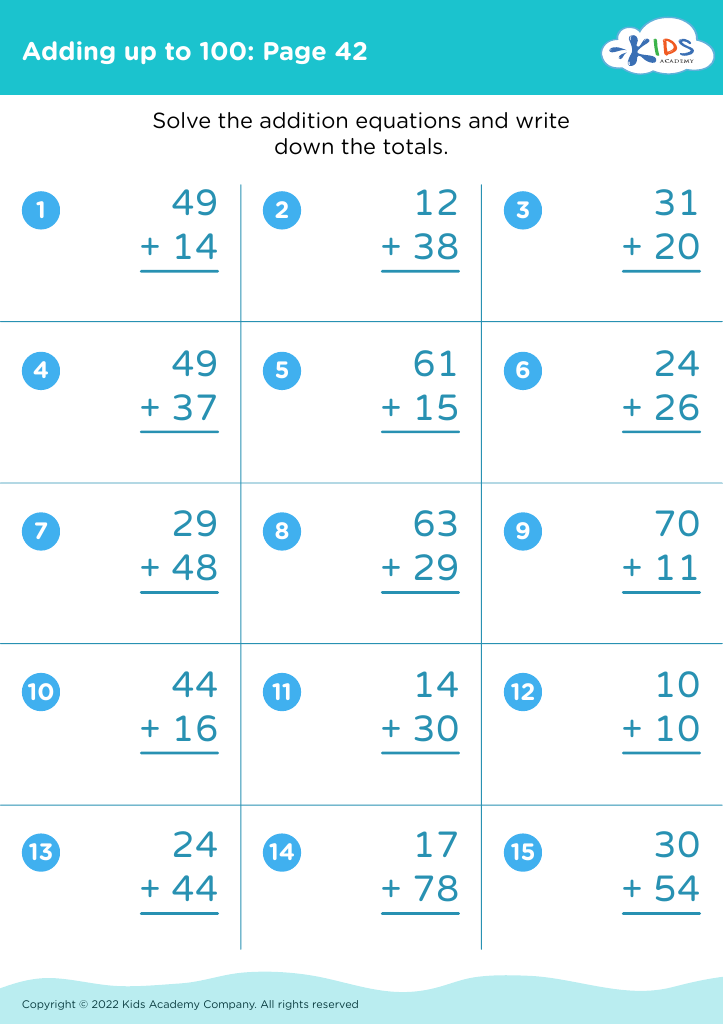
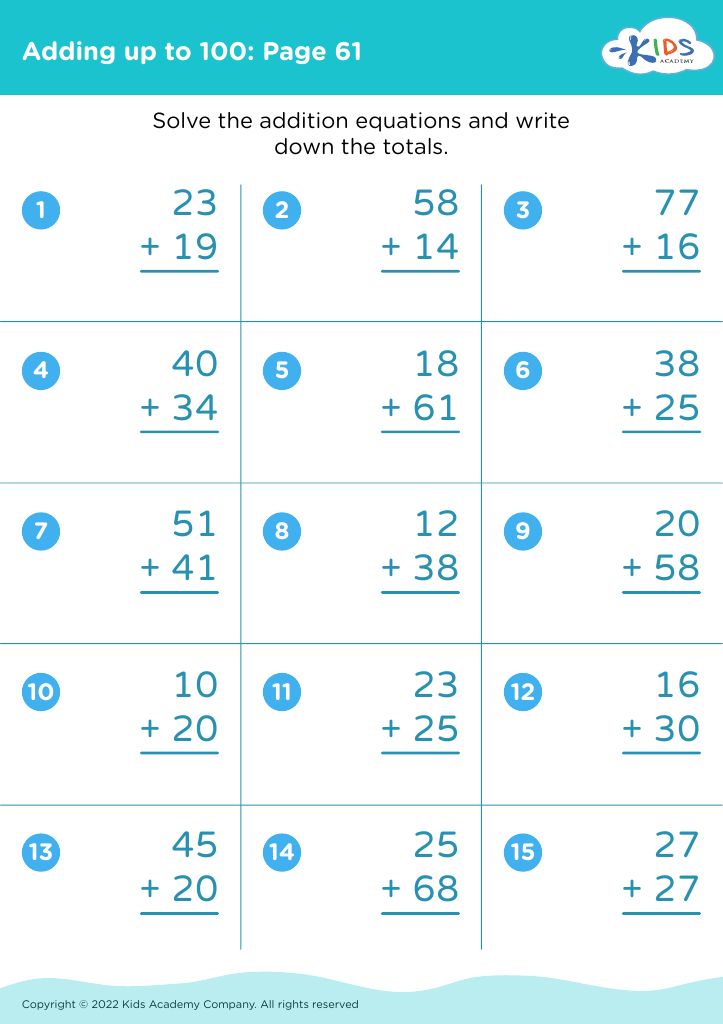
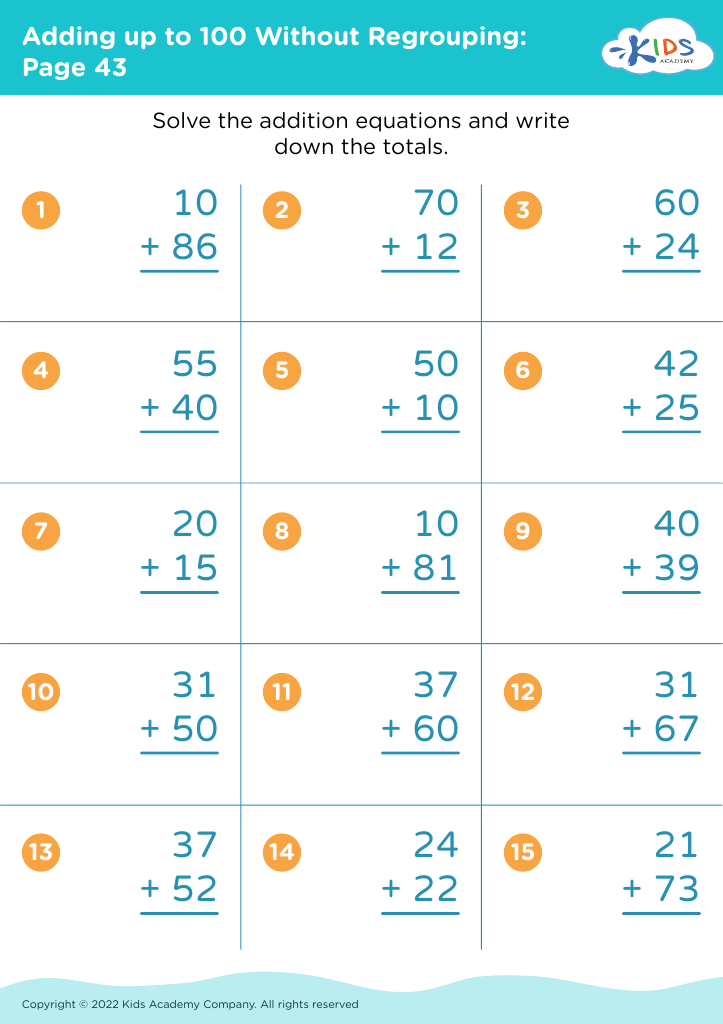
Enhance your child’s cognitive development with our “Adding Up to 100 Worksheets” tailored for ages 5-7. These engaging worksheets encourage essential math skills while boosting critical thinking and problem-solving abilities. Each activity is designed to promote numerical fluency and ensure a solid understanding of addition concepts. As children explore fun exercises, they’ll gain confidence in their math proficiency. Our worksheets incorporate vibrant illustrations and interactive challenges to keep young minds engaged and eager to learn. Perfect for parents and educators, these resources will help children not only master adding, but also develop foundational cognitive skills necessary for future success.



%20(1).jpg)



Cognitive development in children aged 5-7 is crucial, as this is a critical period when foundational skills for learning are established. Parents and teachers should care about cognitive milestones such as counting and basic arithmetic, as these skills form the groundwork for more complex mathematical concepts in the future. When children learn to add up to 100, they not only develop numerical skills but also enhance logical thinking, problem-solving abilities, and reasoning skills.
Additionally, engaging with cognitive development encourages children to think critically and fosters a love for learning. These early skills translate into better performance in school, leading to greater academic achievements and confidence in their abilities. Moreover, reinforcement of cognitive skills at this stage aids in social interactions, as children begin to understand rules, share, and collaborate during games and group activities.
Finally, attention from parents and teachers in cognitive development helps identify any potential learning difficulties early on, allowing for timely intervention and support. By fostering these early cognitive skills, caregivers contribute to a well-rounded education, ultimately supporting children to succeed not just academically but also socially and emotionally in their formative years.








