Develop fine motor skills Adding up to 100 Worksheets for Ages 5-7
5 filtered results
-
From - To
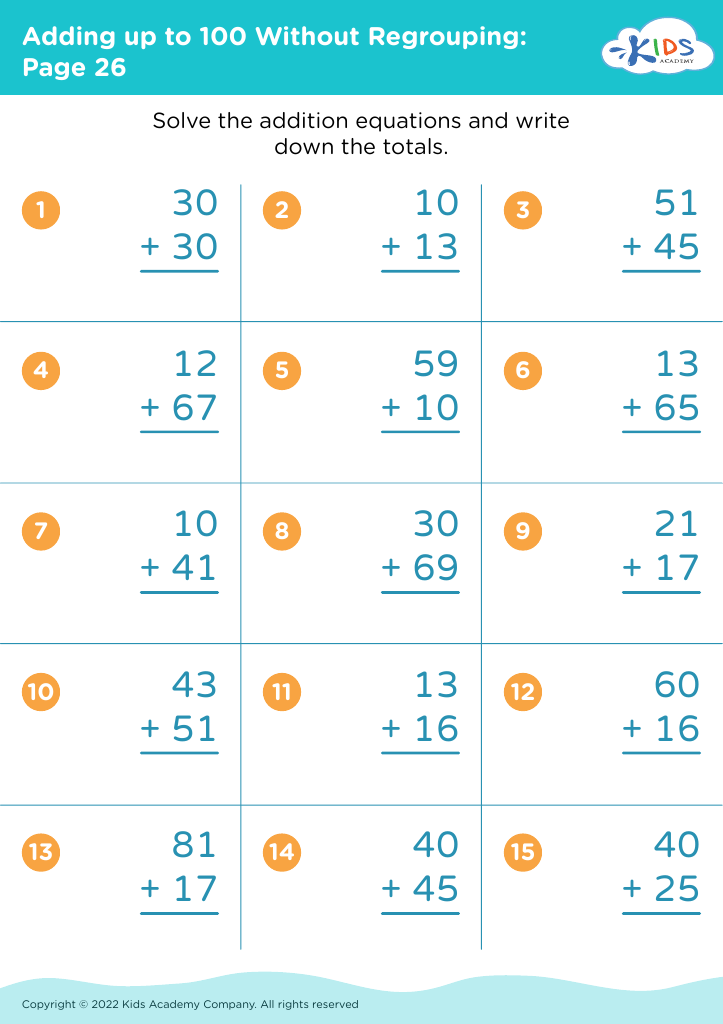
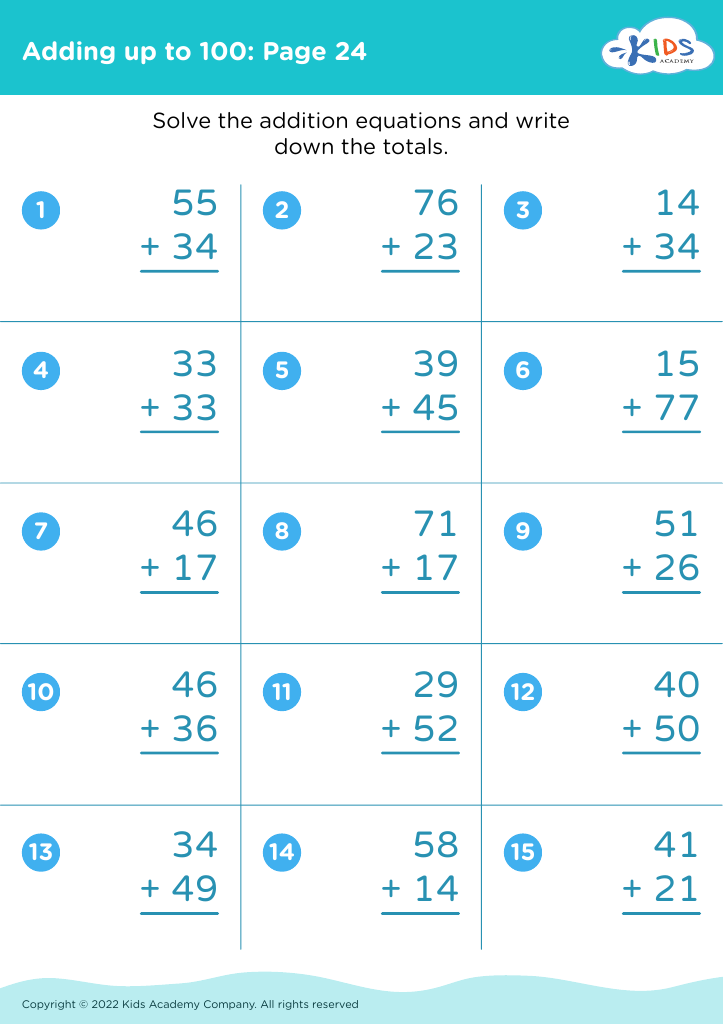
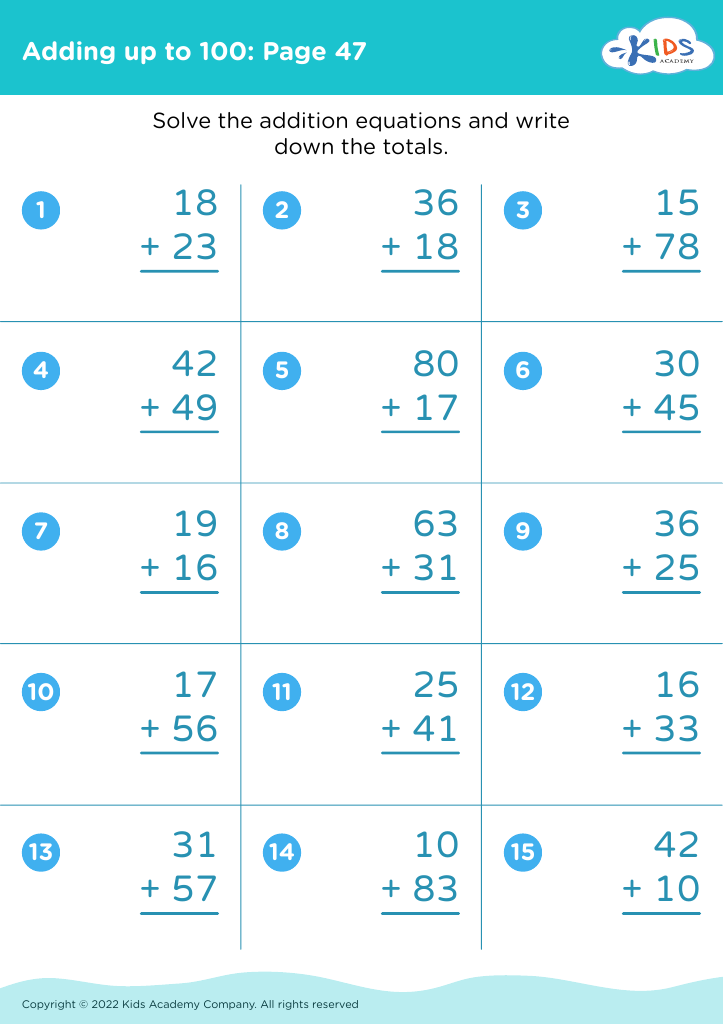
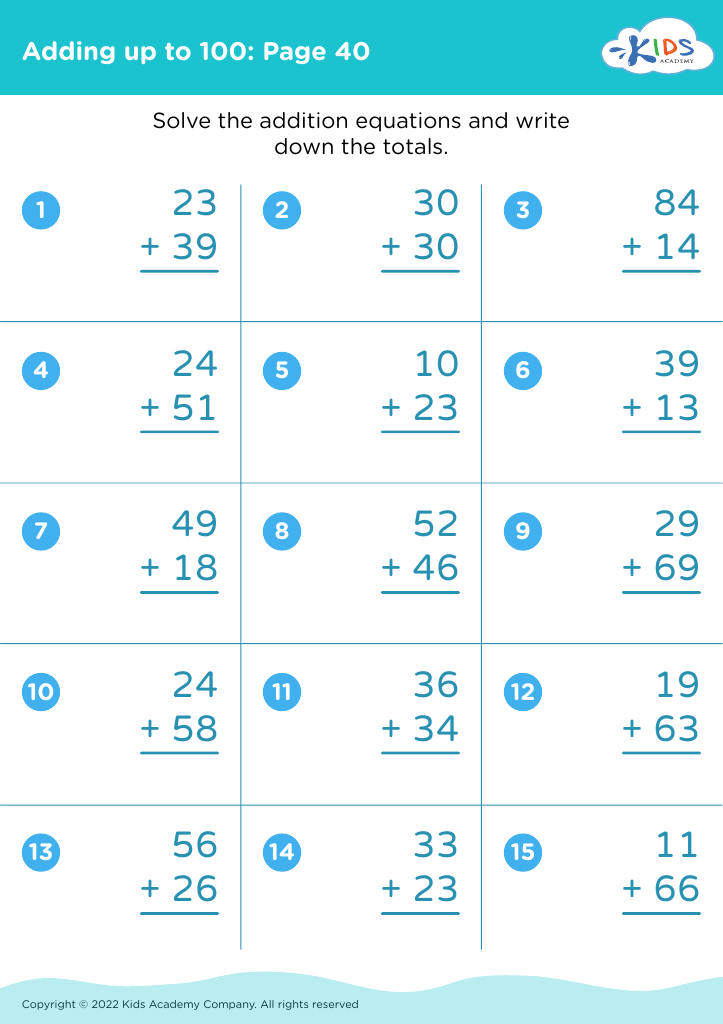
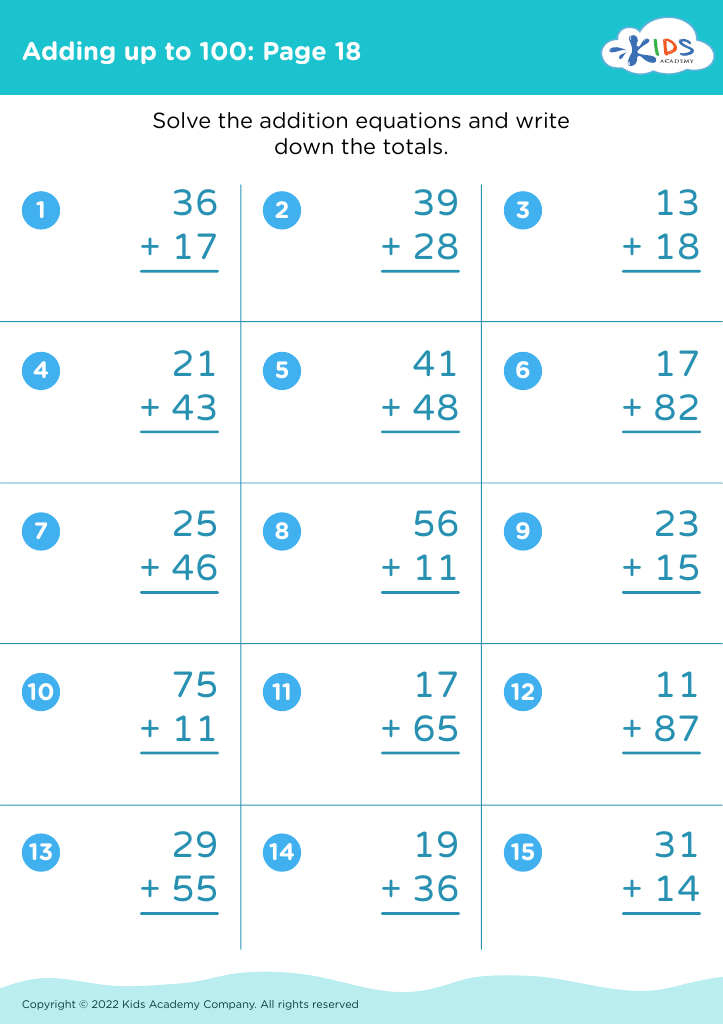
Enhance your child's fine motor skills with our engaging "Adding Up to 100 Worksheets" for ages 5-7! These thoughtfully designed printables combine mathematics and hands-on activities, allowing children to practice addition while improving hand-eye coordination and dexterity. Each worksheet encourages children to trace, color, and manipulate numbers, making learning fun and interactive. Perfect for home or classroom use, our resources support early math skills development while fostering creativity and concentration. Let your young learners explore the world of numbers while building essential motor abilities, setting a strong foundation for their academic journey. Download our worksheets today and watch them thrive!



%20(1).jpg)



Developing fine motor skills in children aged 5-7 is crucial for several reasons, making it a priority for both parents and teachers. Fine motor skills refer to the ability to use small muscles in hands and fingers for tasks such as writing, drawing, and buttoning clothes. At this age, children are rapidly gaining independence, and strong fine motor skills are foundational for their self-care and learning.
Firstly, fine motor development enhances academic performance. As children learn to write, manipulate scissors, and engage in arts and crafts, their hand-eye coordination and precision improve, laying the groundwork for future literacy and numeracy skills. Secondly, these skills contribute to social interactions; children often benefit from participating in group activities that require sharing tools and collaborating on projects.
Moreover, fostering fine motor abilities boosts children's confidence. Mastering these skills allows them to take pride in their accomplishments, encouraging a growth mindset. Parents and teachers can support this development through games, puzzles, and hands-on activities that are both engaging and educational. Ultimately, nurturing fine motor skills enriches a child's overall growth, supporting their cognitive, physical, and social-emotional development during a critical period in their lives.








