Fine Motor Skills Adding up to 100 Worksheets for Ages 5-7
12 filtered results
-
From - To
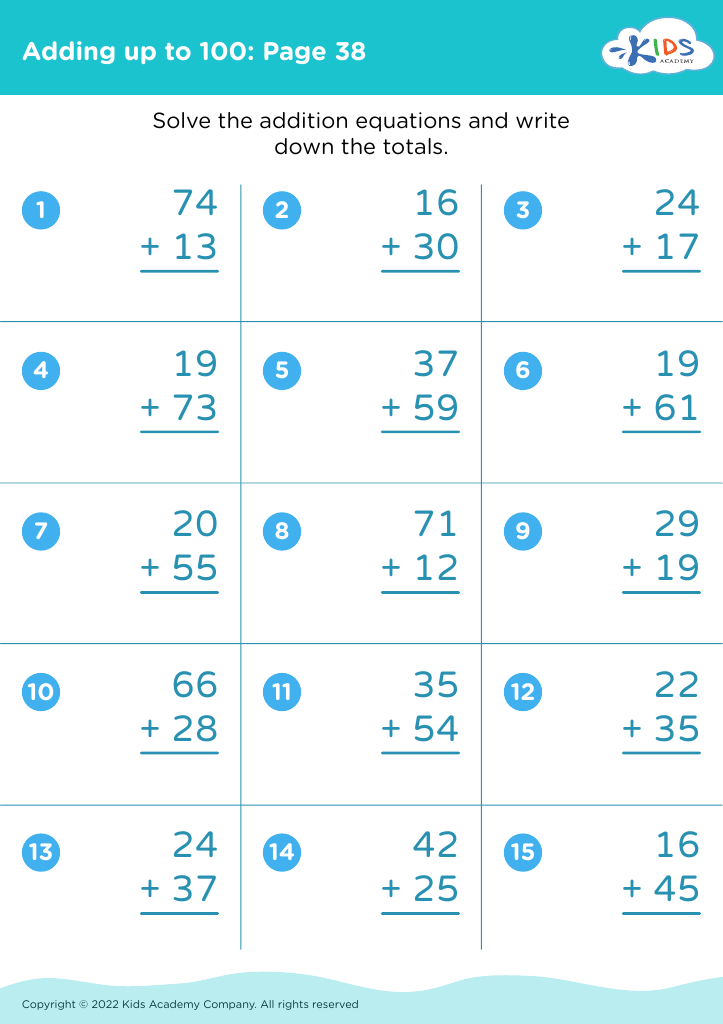
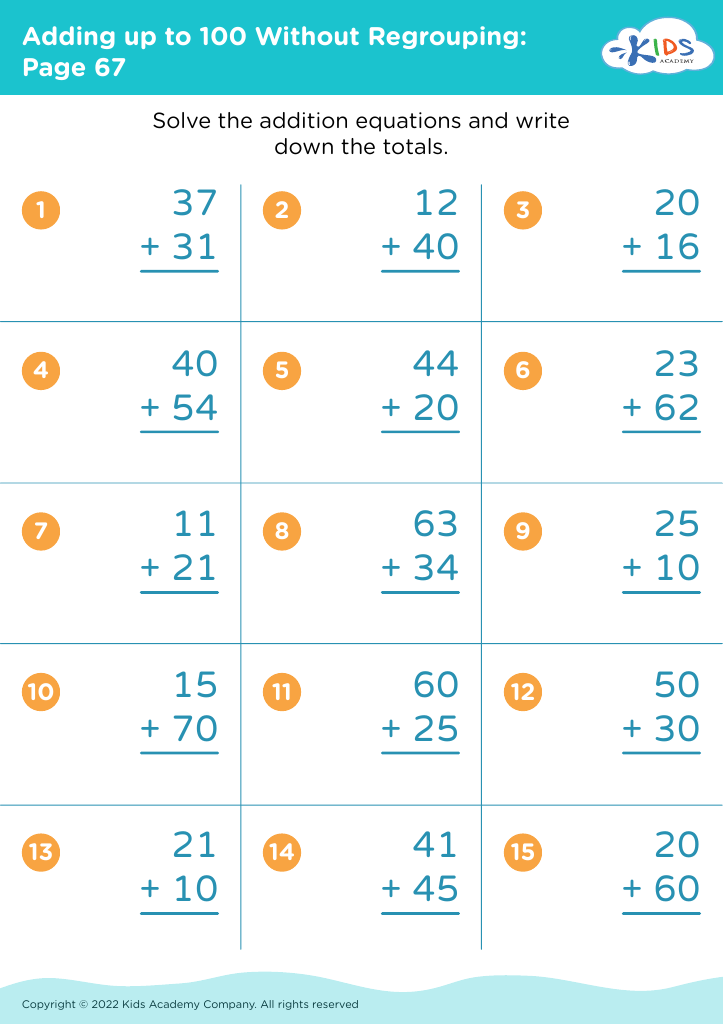
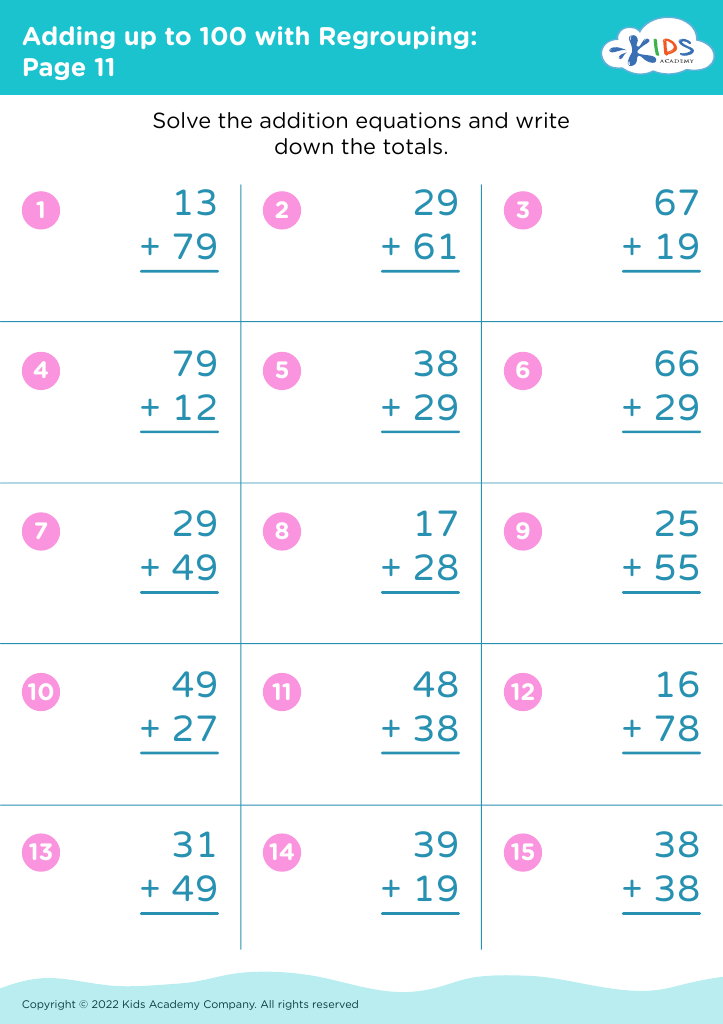
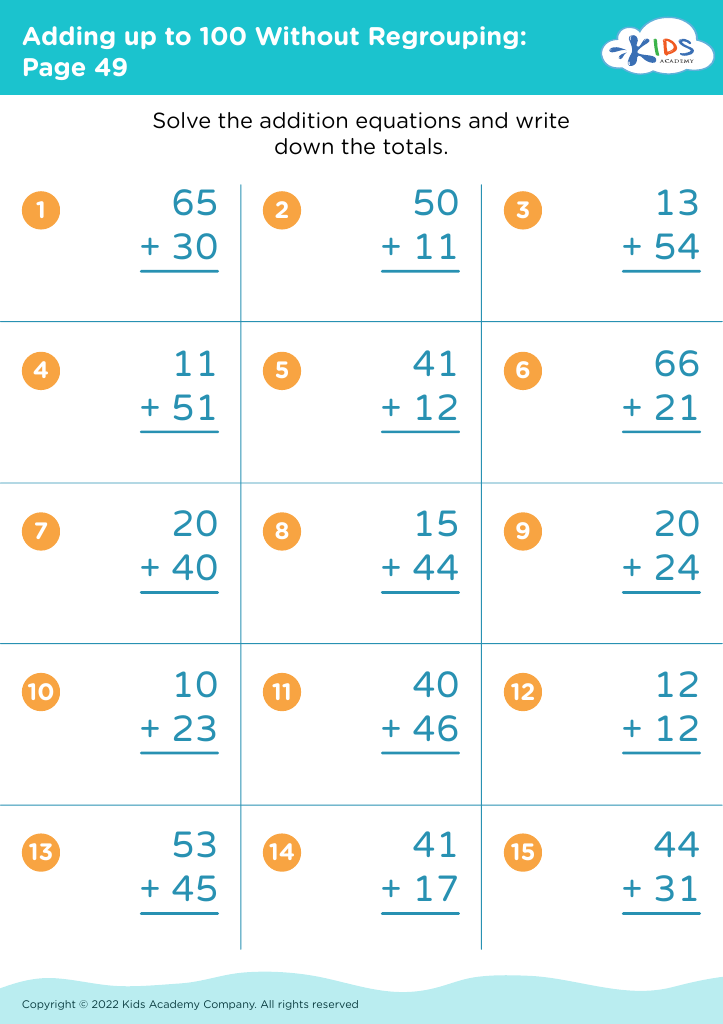
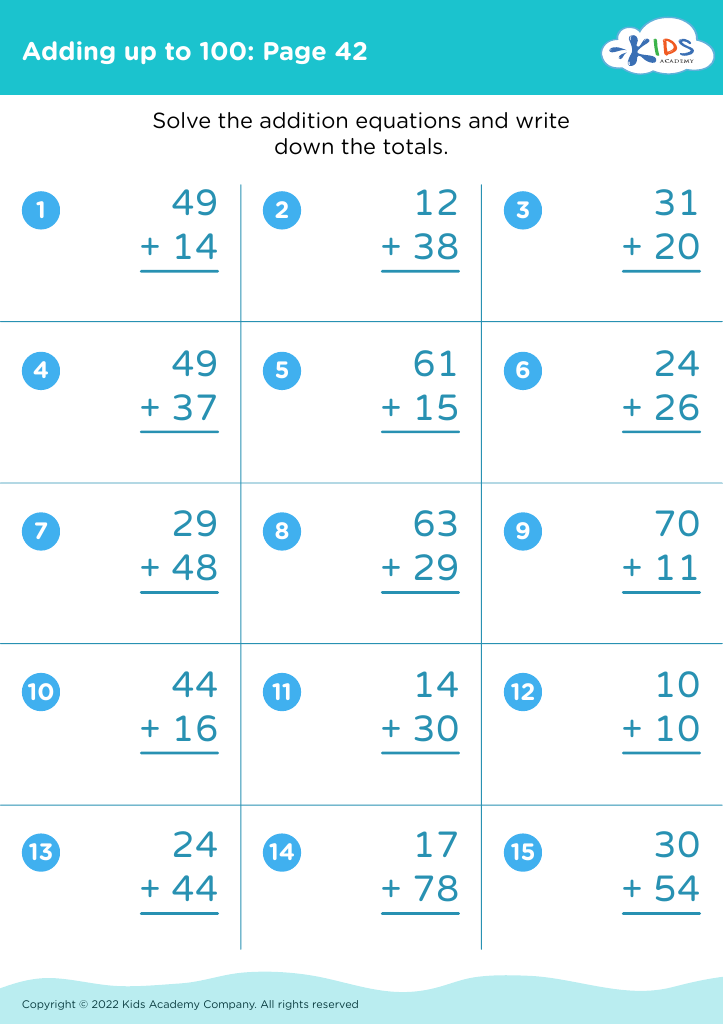
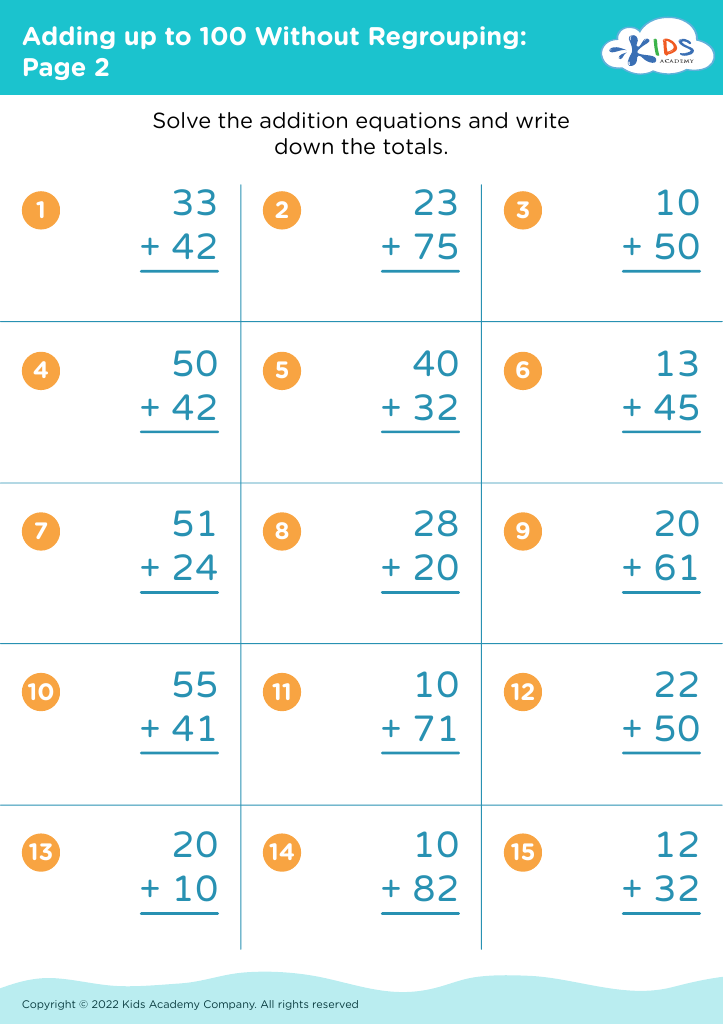
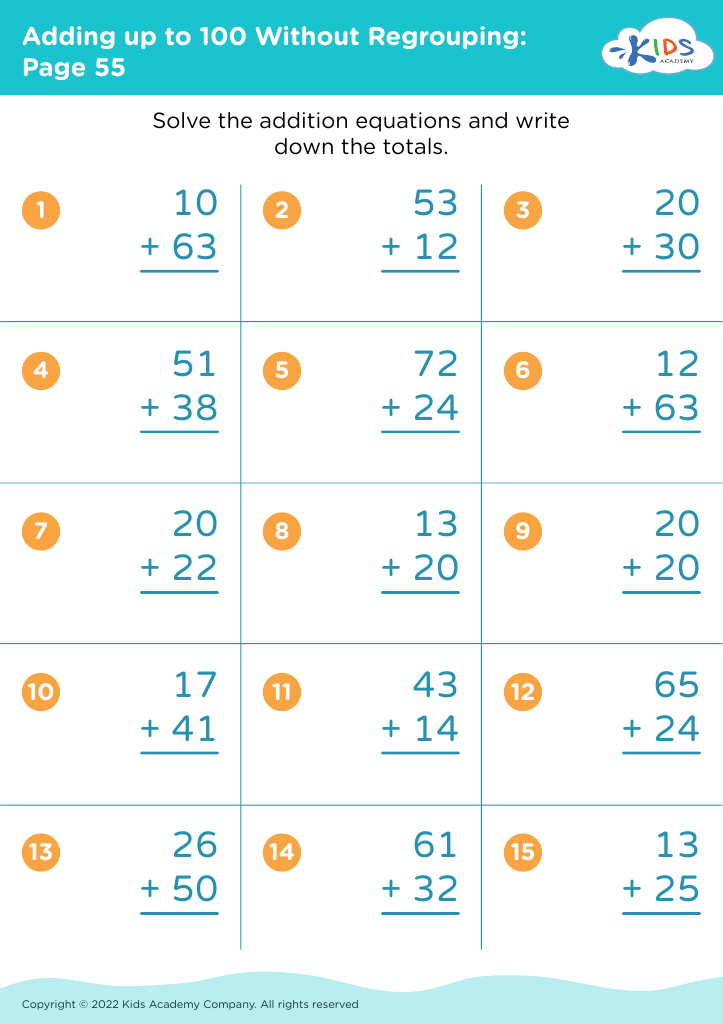
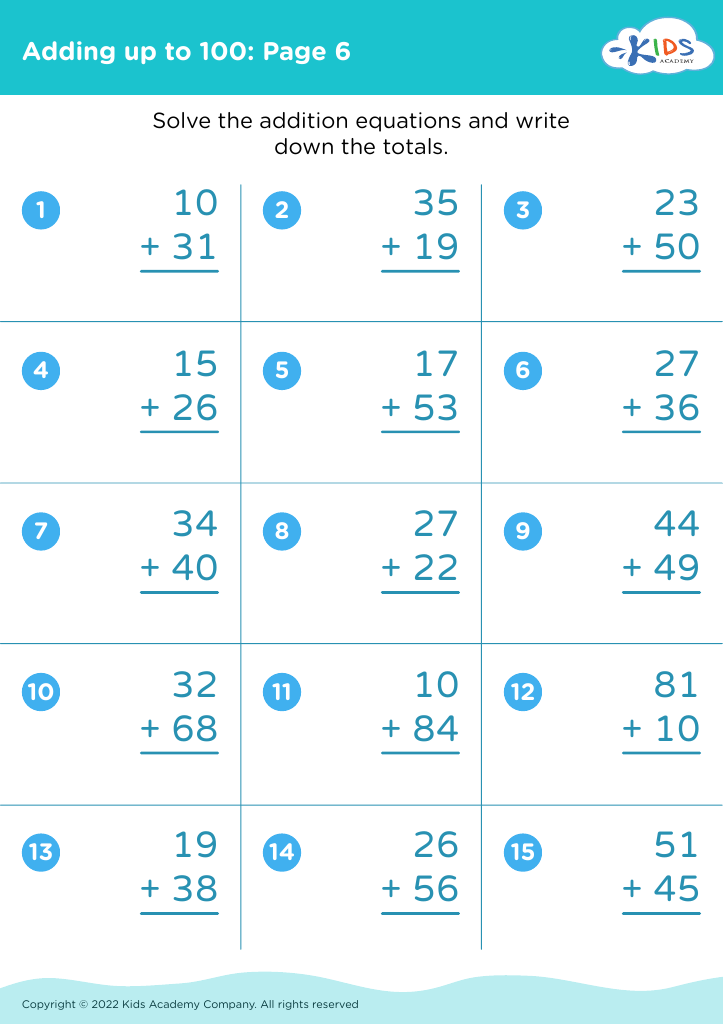
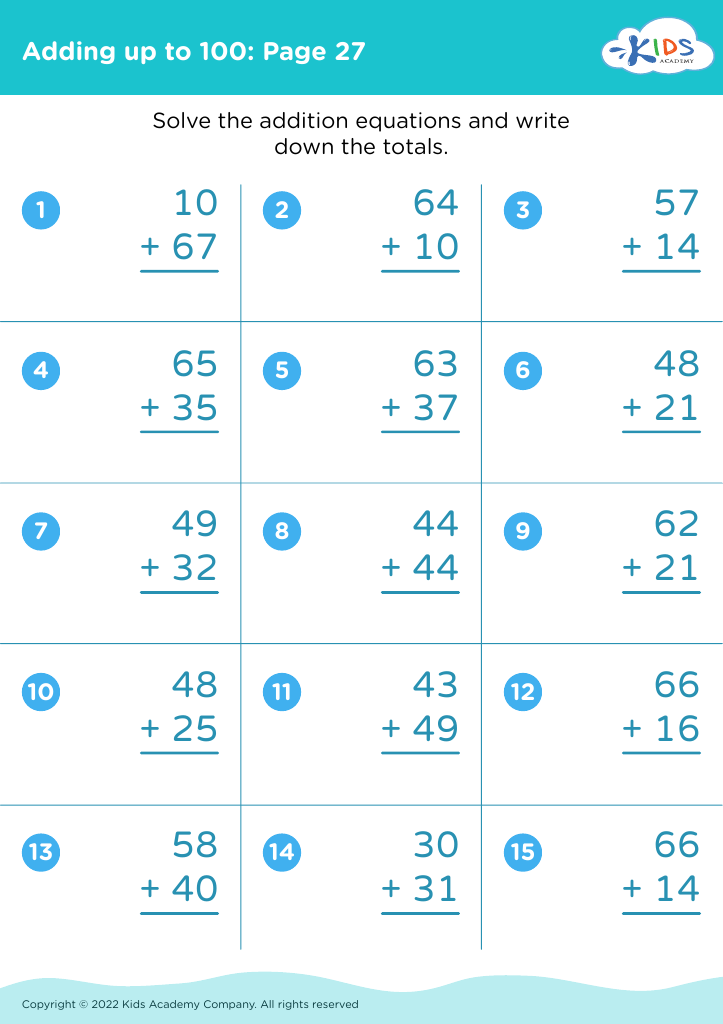
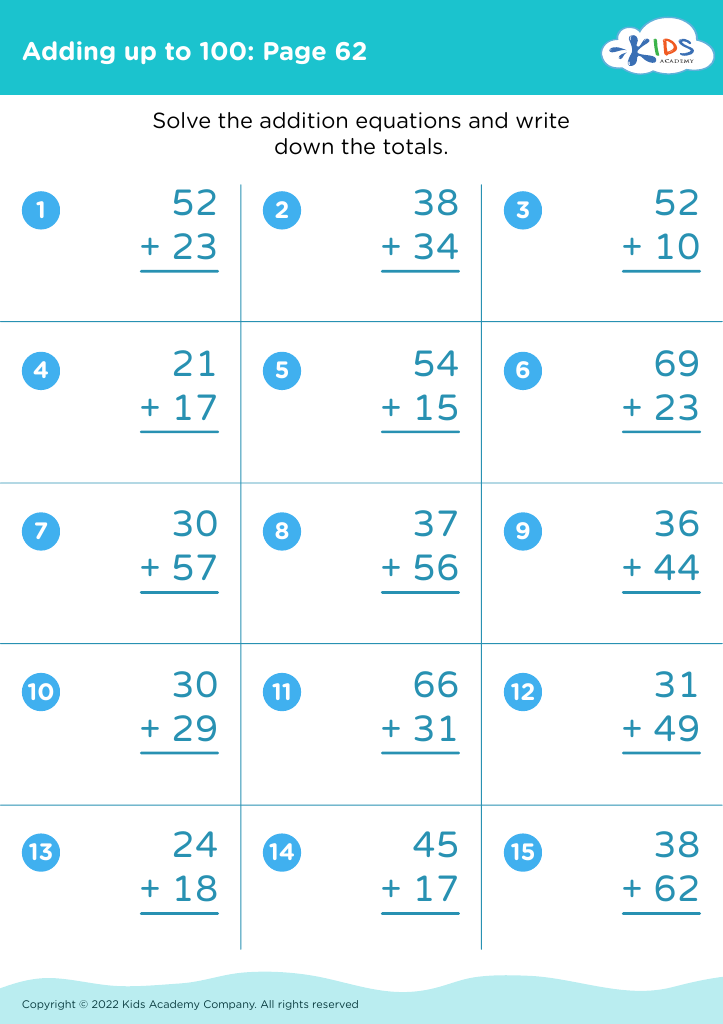
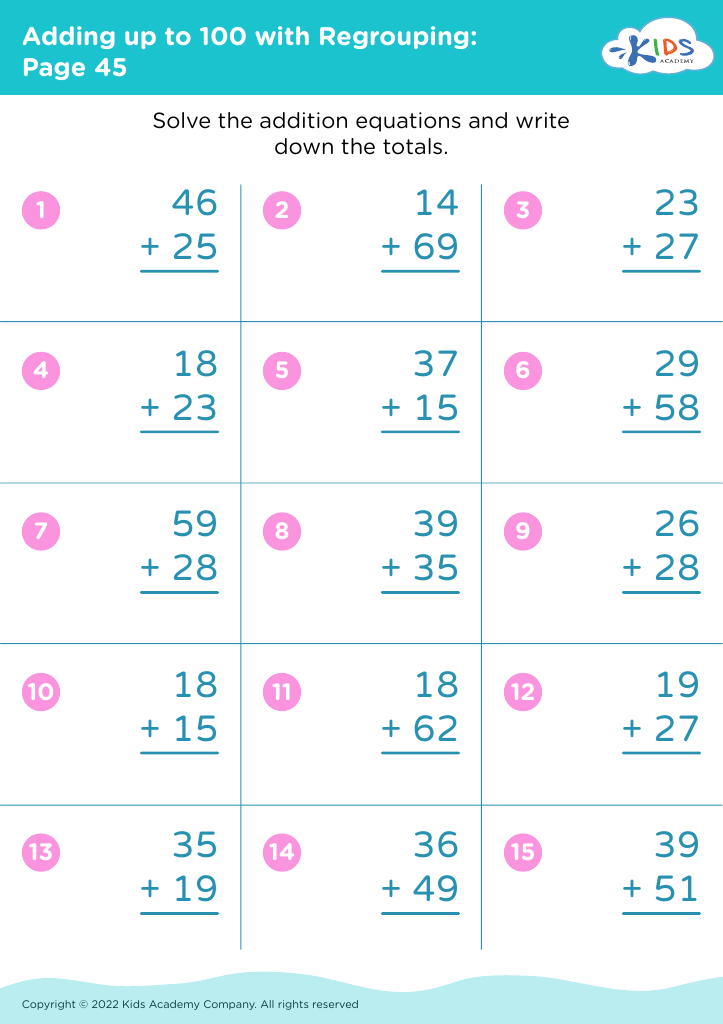
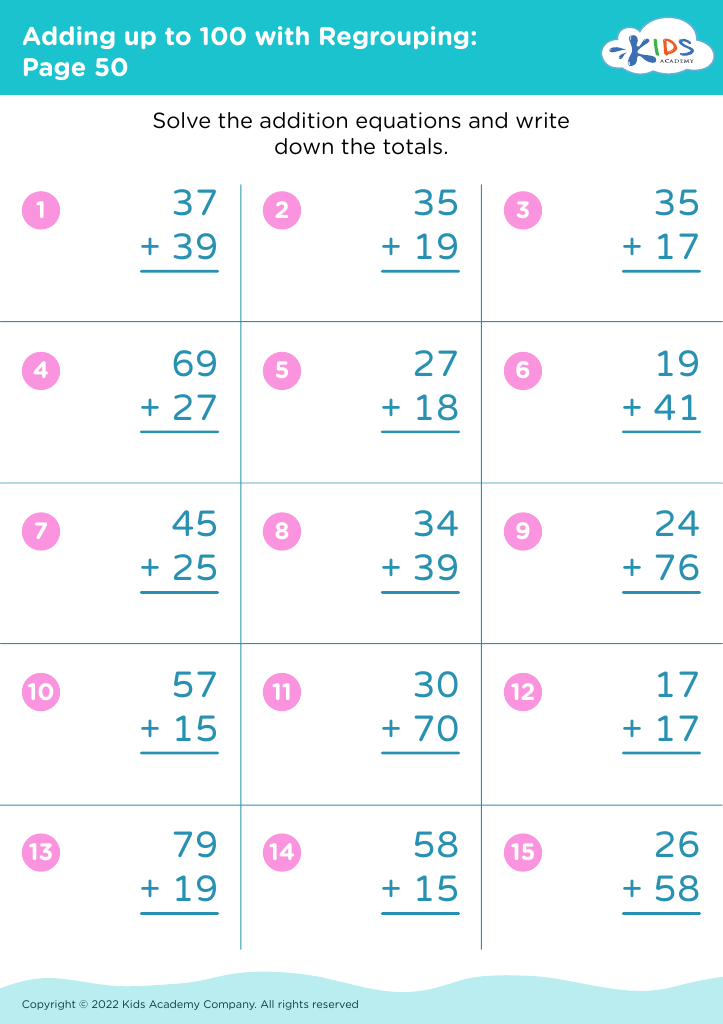
Enhance your child's fine motor skills while introducing essential math concepts with our "Adding Up to 100" worksheets designed for ages 5-7. These engaging activities combine learning addition with fun, intricate tasks that help develop hand-eye coordination and dexterity. From connecting dots to tracing numbers, each worksheet encourages kids to explore their creativity while mastering number relations and calculations. As they practice adding up to 100, children will build confidence in their math abilities and refine their motor skills simultaneously. Perfect for classroom use or at-home learning, these worksheets provide a comprehensive and enjoyable educational experience for young learners.




%20(1).jpg)


Fine motor skills are crucial for children aged 5 to 7, as they serve as the foundation for many essential tasks and activities. Developing these skills helps children gain control over their hand movements, which is necessary for writing, drawing, and manipulating small objects. As parents and teachers, nurturing fine motor skills can lead to increased confidence in school and daily life.
Additionally, fine motor skills influence academic performance; tasks such as using scissors, buttoning clothes, and tying shoelaces require precise hand-eye coordination. When children struggle with these activities, it can impact their self-esteem and interest in learning.
Beyond academics, fine motor skills are linked to cognitive development, as they promote problem-solving and critical thinking through hands-on experiences. Activities like building with blocks, threading beads, or engaging in arts and crafts not only enhance dexterity but also foster creativity and innovation.
Furthermore, strong fine motor skills contribute to future independence, as they empower children to take care of personal needs and engage in enjoyable hobbies. Therefore, monitoring and supporting the development of fine motor skills in children aged 5 to 7 is essential for their overall growth, self-confidence, and success in school and beyond.








