Identify shapes Adding up to 100 Worksheets for Ages 5-7
4 filtered results
-
From - To
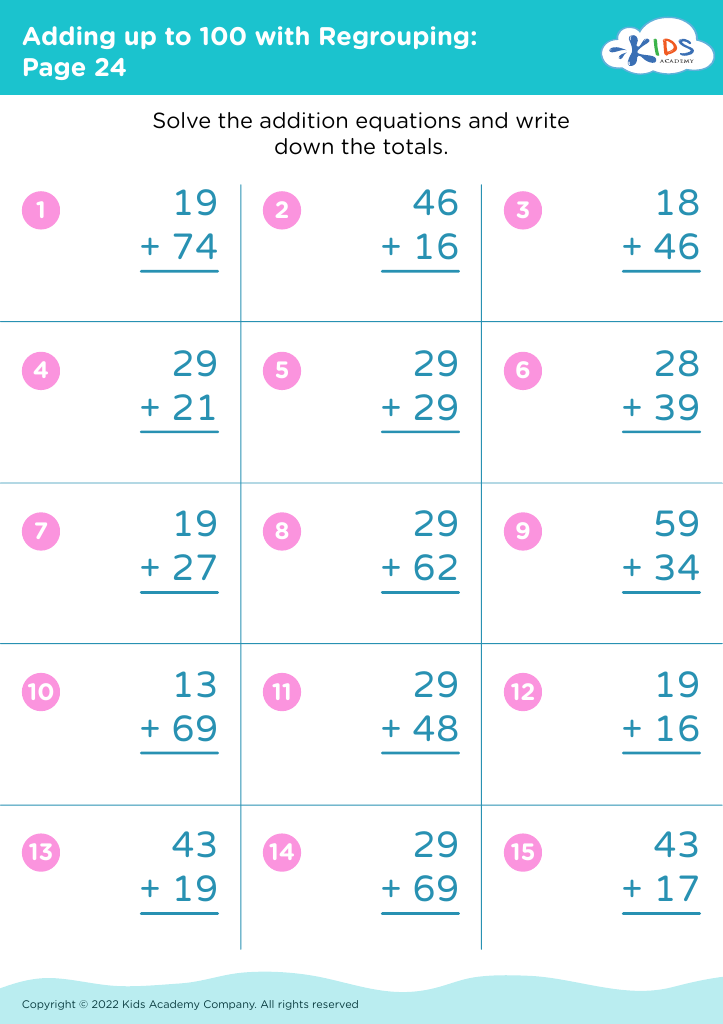
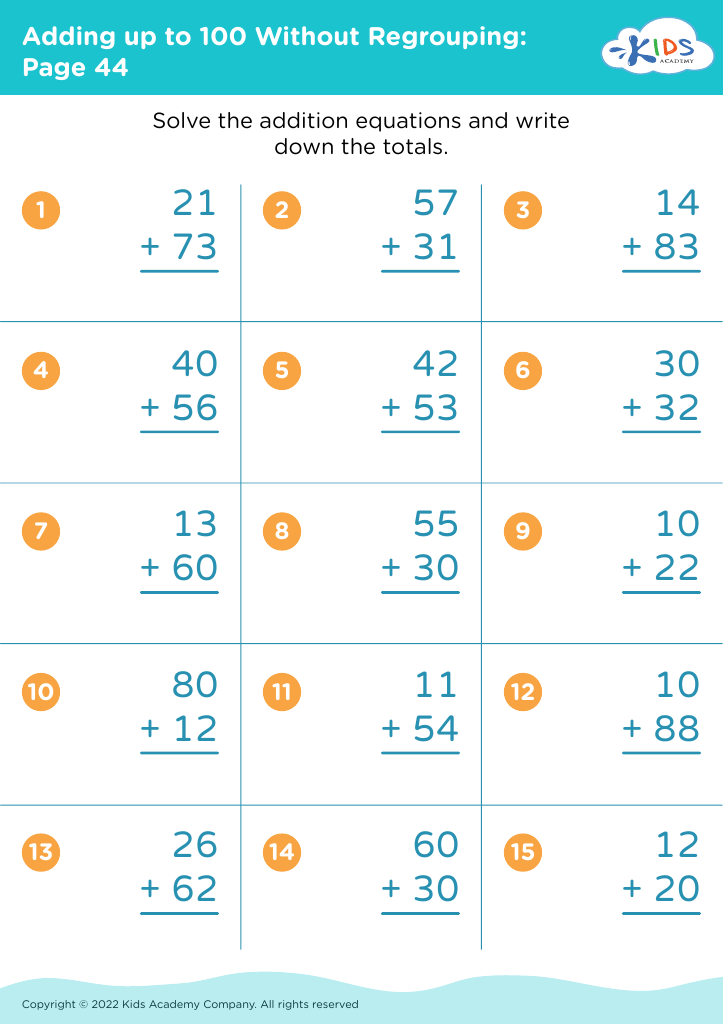
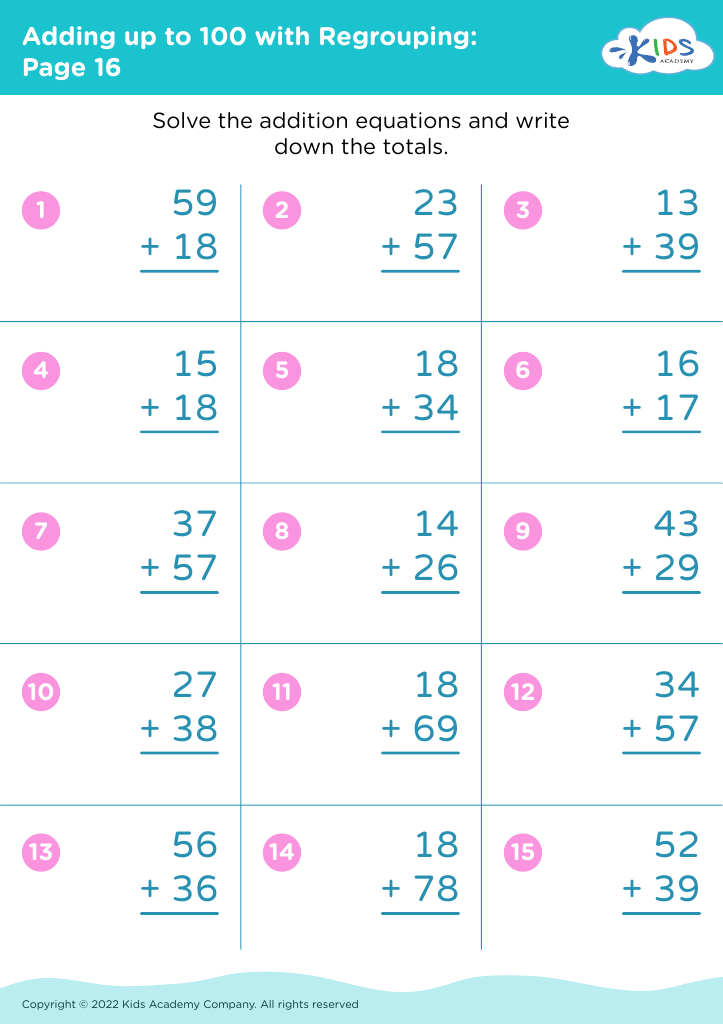
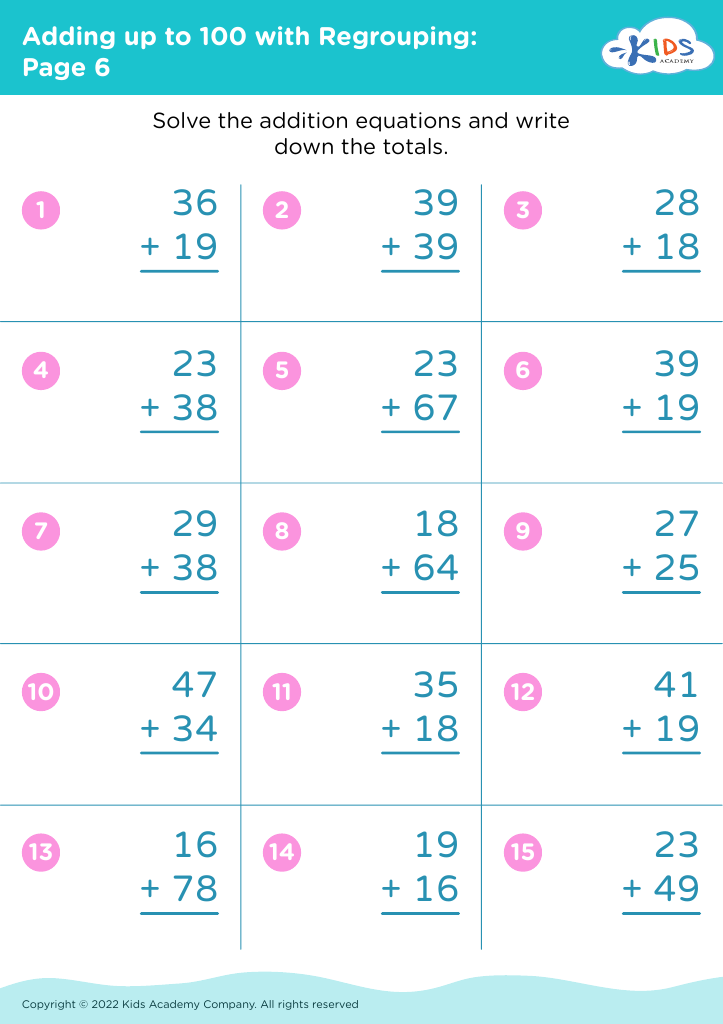
Introduce young learners to the world of geometry and arithmetic with our "Identify Shapes Adding Up to 100 Worksheets" specially designed for children aged 5-7. These engaging worksheets help kids recognize and identify different shapes while simultaneously enhancing their addition skills up to 100. A perfect blend of fun and learning, our worksheets encourage critical thinking and problem-solving abilities. The visually appealing exercises are an excellent resource for both classroom and homeschool settings, supporting budding mathematicians in mastering essential early math concepts. Let your child's confidence in math grow with our expertly crafted educational tools.






%20(1).jpg)
Understanding basic shapes and the concept of counting and adding up to 100 is foundational for children aged 5-7 for several reasons. Firstly, recognizing and differentiating shapes helps in developing spatial awareness and cognitive skills. When children learn about various shapes, they also begin to recognize these shapes in their environment, aiding their observational and analytical abilities.
Secondly, the activity of counting and adding up to 100 builds strong number sense, which is critical in the early mathematical development of a child. Number sense is the ability to understand, relate, and connect numbers, which lays the groundwork for more complex mathematical concepts they will encounter later. By learning to count to 100, children gain confidence in handling larger numbers and it prepares them for arithmetic operations such as addition and subtraction.
These skills also promote logical thinking, problem-solving, and persistence. Engaging in these activities in a classroom or at home helps children develop fine motor skills as they manipulate objects, draw shapes, and write numbers. For parents and teachers, investing time in these fundamental areas ensures that children have a solid educational foundation, contributes to their overall cognitive development, and enhances their readiness for future educational challenges.








