Recognize patterns Adding up to 100 Worksheets for Ages 5-7
4 filtered results
-
From - To
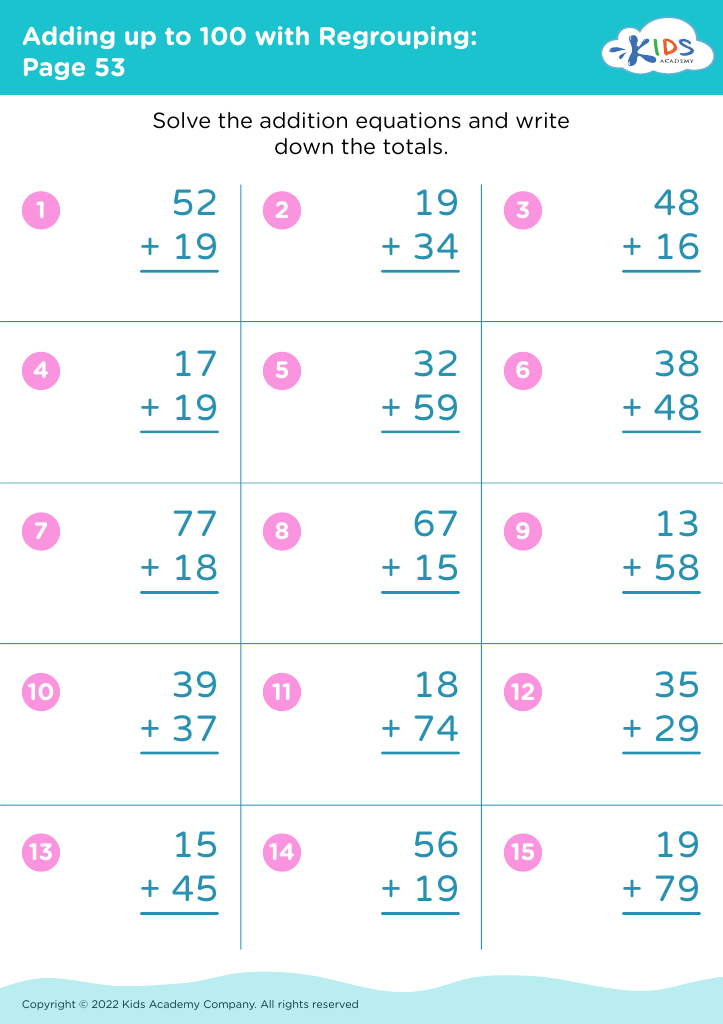
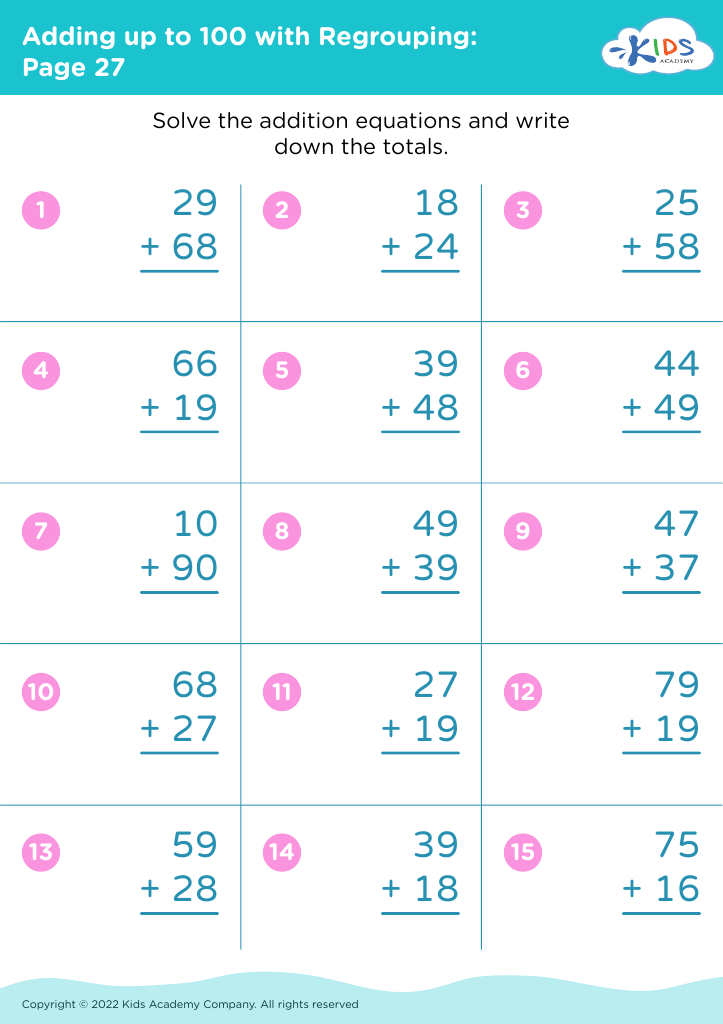
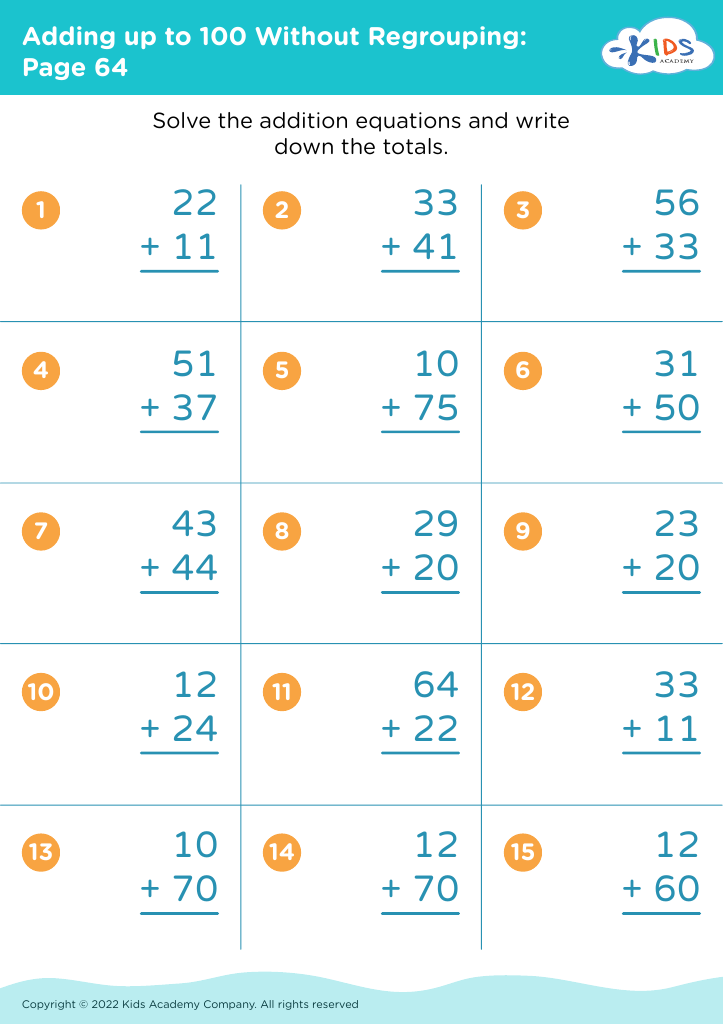
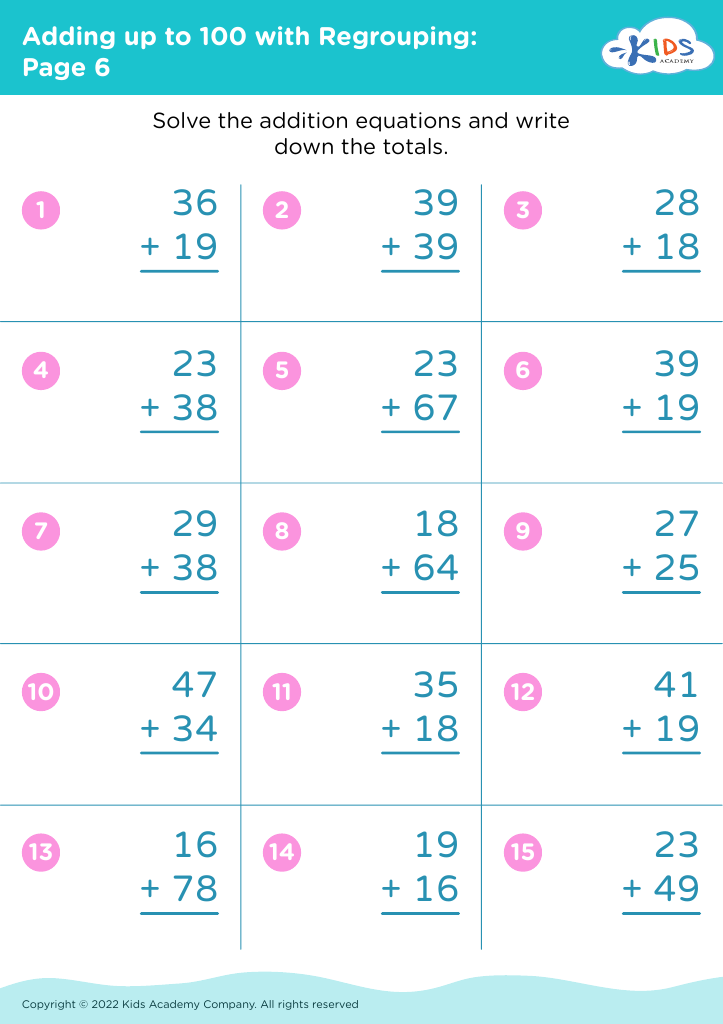
Discover the joy of learning with our "Recognize Patterns: Adding Up to 100 Worksheets" for ages 5-7! These engaging and educational worksheets help young learners enhance their math skills by recognizing patterns in addition problems up to 100. Perfect for early grade students, each worksheet is designed to foster critical thinking and promote a solid understanding of addition through fun, interactive activities. Parents and teachers will find these resources valuable for reinforcing classroom learning at home. Visit us today to download and start your child on a path to math mastery with these delightful and effective worksheets!




%20(1).jpg)


Helping young children, ages 5-7, recognize patterns adding up to 100 is essential for several reasons. It lays a foundation for critical thinking and problem-solving skills, as recognizing patterns improves logical reasoning. When children learn to identify and predict number sequences, they aren't just learning numbers—they're developing the ability to see relationships and structures in various contexts.
Familiarity with numerical patterns up to 100 also enhances math proficiency, making arithmetic operations like addition, subtraction, and multiplication easier as they progress to higher grades. It supports their overall number sense, enabling them to understand that numbers can be broken down and rearranged, which is crucial for their future studies in mathematics.
Moreover, these skills are transferable beyond math. Pattern recognition is used in reading (predicting text sequences), science (observing cycles and behaviors), and daily life (recognizing routines). It promotes cognitive development, enabling children to analyze, categorize, and process information effectively.
Therefore, parents and teachers should care about this aspect of early education, shaping a robust mental framework in children for diverse academic subjects and everyday tasks, fostering both their analytical skills and their innate curiosity about how the world works.








