Simplifying Fractions Adding up to 100 Worksheets for Ages 5-7
3 filtered results
-
From - To
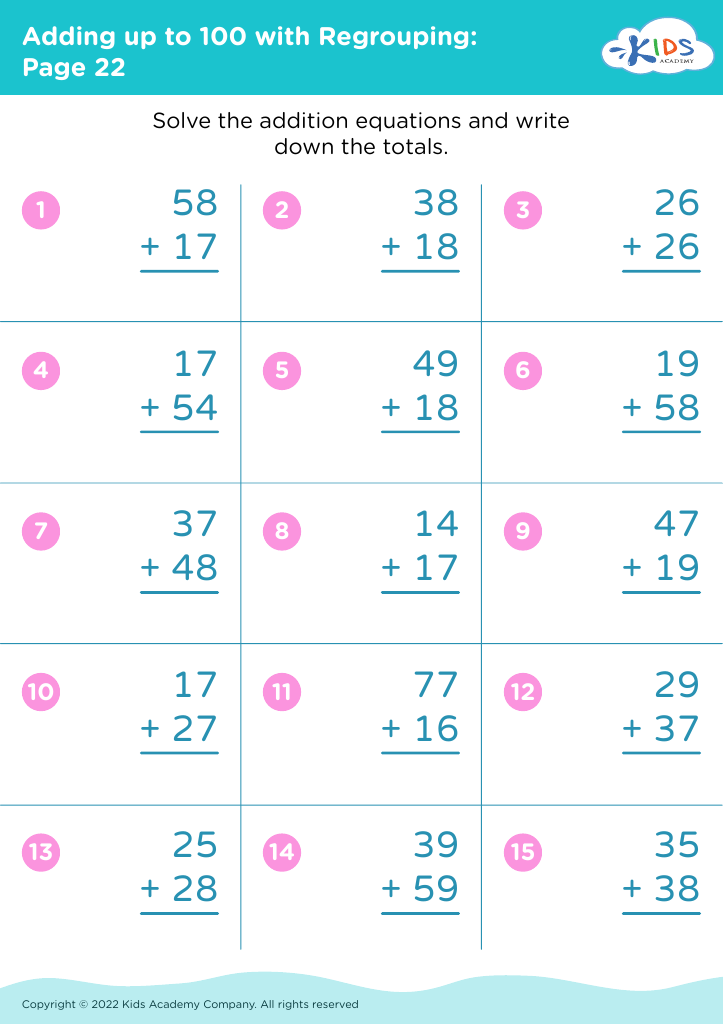
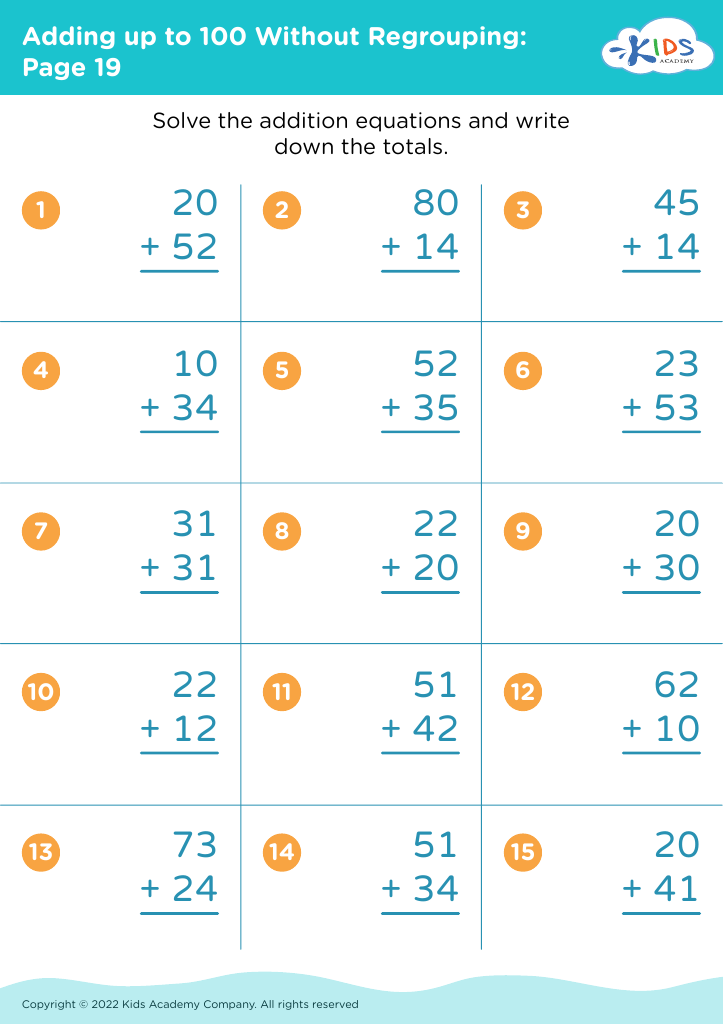
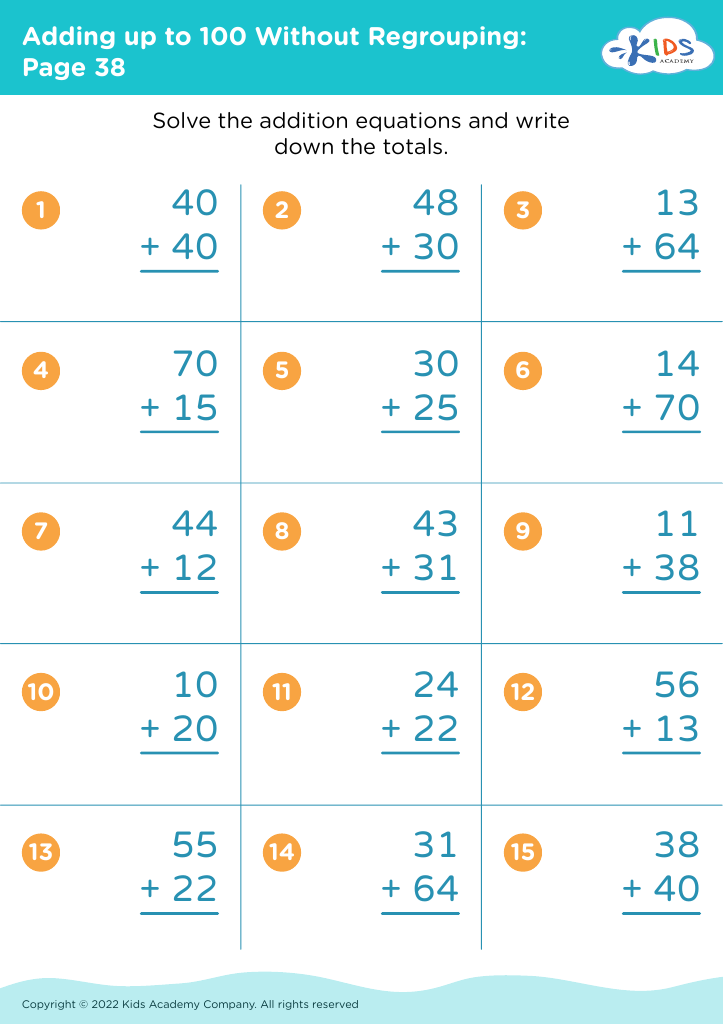
Introducing our "Simplifying Fractions Adding up to 100 Worksheets" designed for ages 5-7! These engaging worksheets help young learners master the basics of simplifying fractions in a fun and interactive way. Each exercise focuses on breaking down fractions that add up to 100, enhancing their understanding of numerators, denominators, and equivalent fractions. Our kid-friendly activities are perfect for building strong foundational math skills. Boost your child's confidence in math with colorful, easy-to-follow problems that make learning fractions a breeze. Ideal for parents and educators aiming to support early math proficiency in a structured, enjoyable format.



%20(1).jpg)



Parents and teachers should prioritize teaching children aged 5-7 the concept of simplifying fractions and understanding sums that equal 100 because this foundational math skill is crucial for their future mathematical development. Young children’s brains are at a prime stage for absorbing new information and learning basic arithmetic, including addition, subtraction, multiplication, and division.
Simplifying fractions helps children recognize patterns and relations between numbers, which fosters a more intuitive understanding of math concepts. This knowledge makes it easier for them to tackle more complex math problems in the future, such as algebra or calculus. Furthermore, exercises involving sums that add up to 100 introduce children to the fundamental principle of parts making a whole, enhancing both their numerical literacy and cognitive abilities.
Additionally, these activities prepare students for real-life applications, such as measuring ingredients in cooking or understanding there can be different ways to make 100% in various contexts. Teachers who introduce these concepts in early grades create a strong numeracy foundation that boosts students' confidence and can lead to greater academic success. For parents, reinforcing these skills at home supports the learning process, ensures consistency, and strengthens the child’s overall mathematical understanding.
Ultimately, investing time in simplifying fractions and sums up to 100 equips children with invaluable problem-solving skills and an analytical mindset essential for lifelong learning.








