Basic Arithmetic Adding Up to 5 Worksheets for Ages 5-7 - Page 2
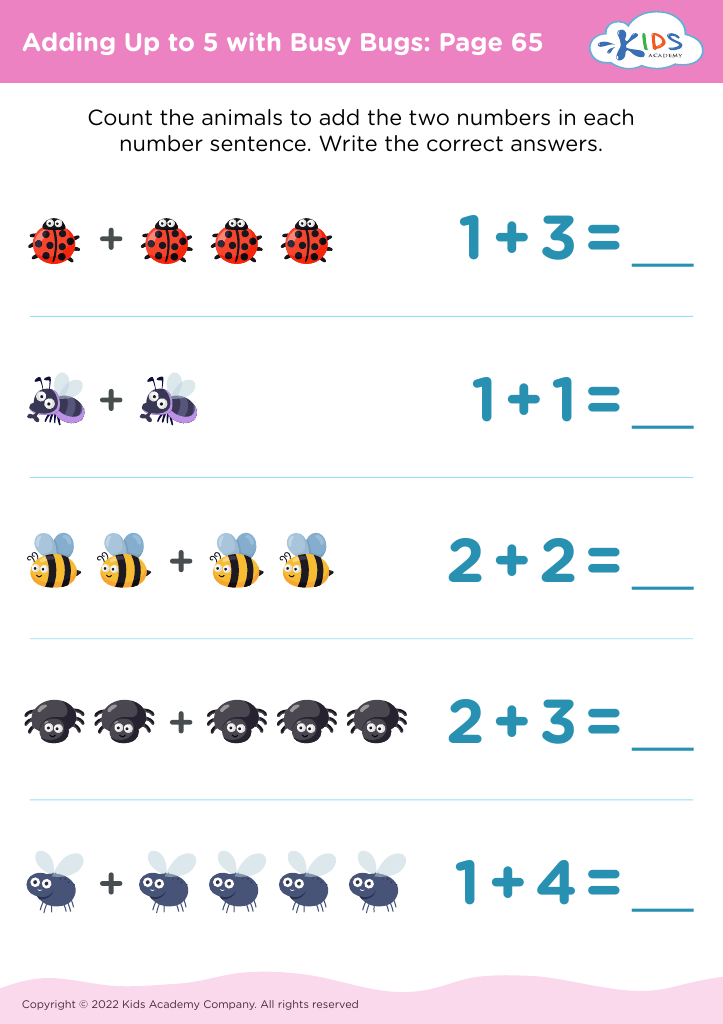
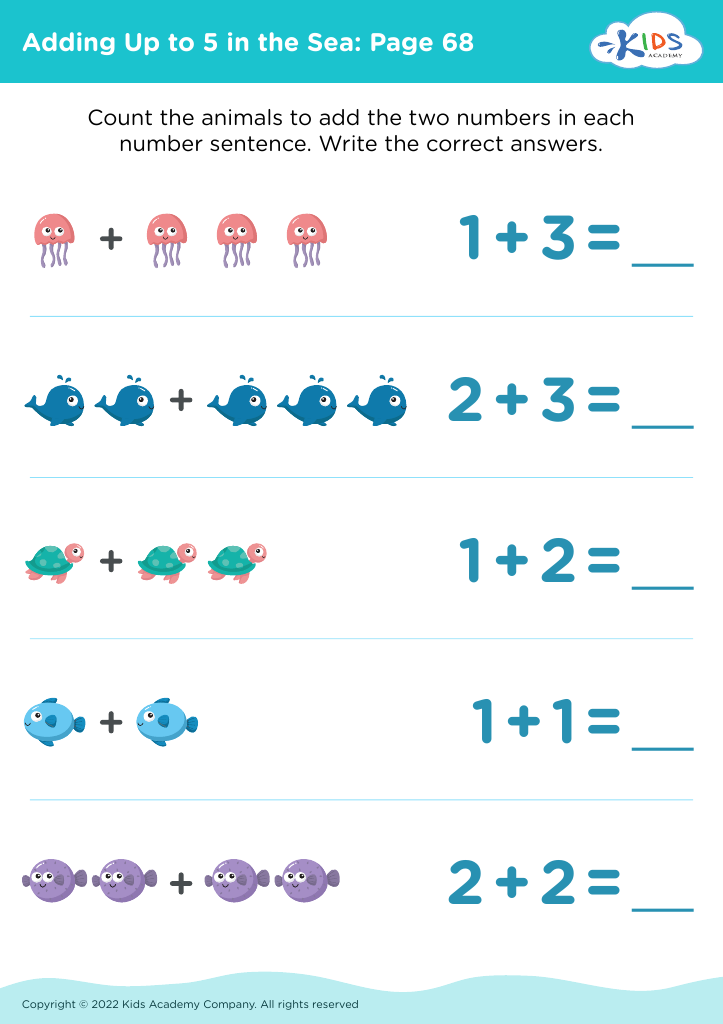
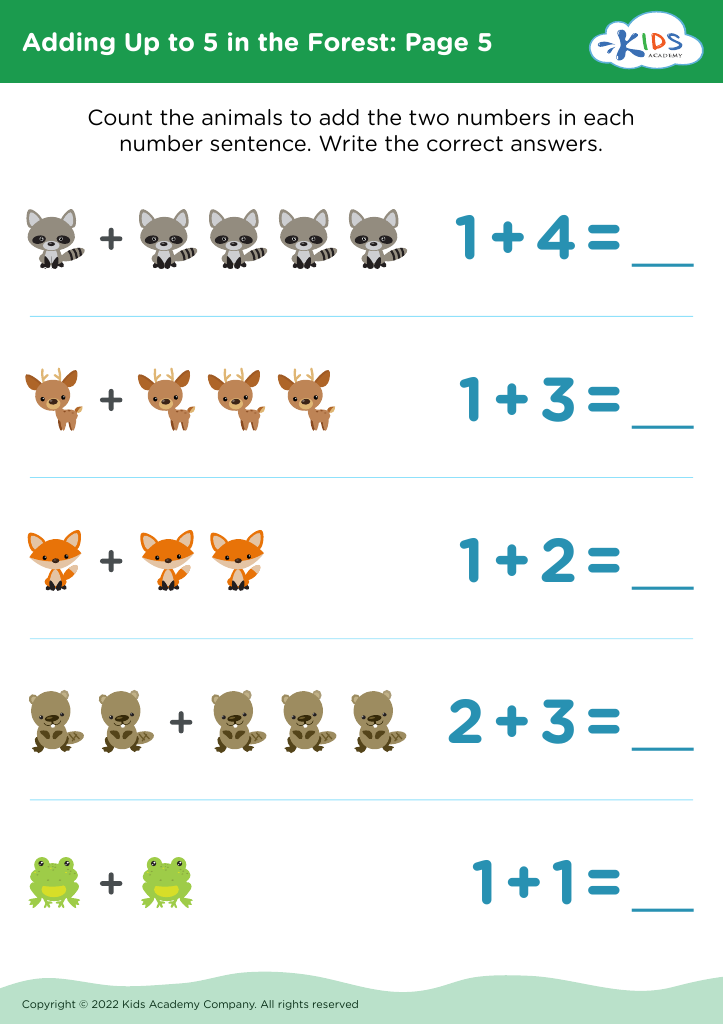
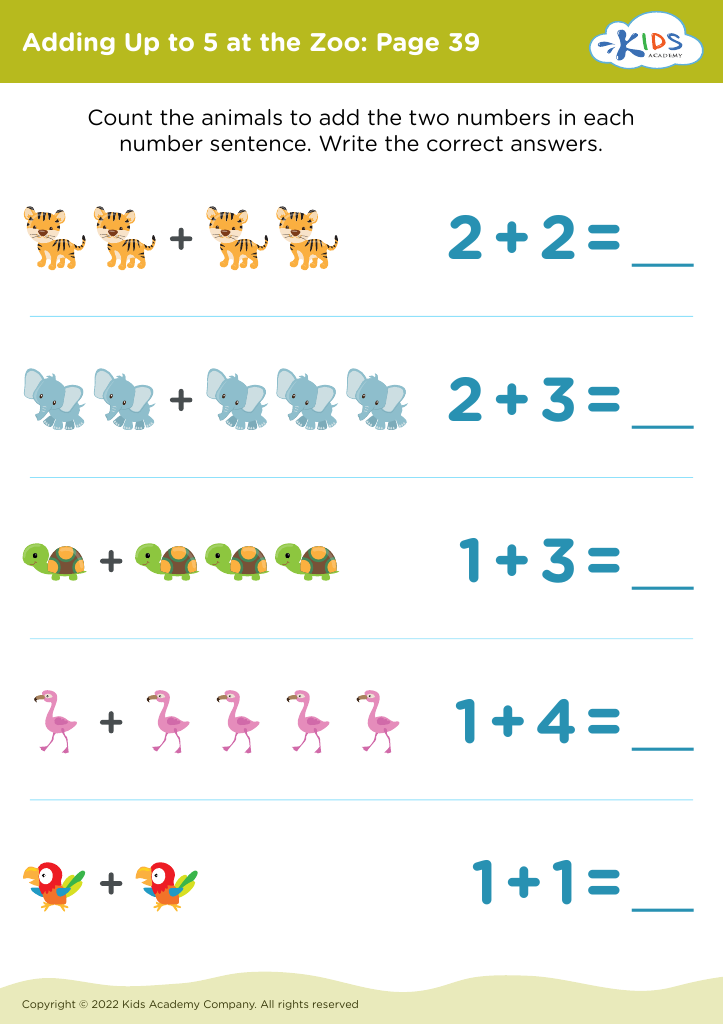



%20(1).jpg)




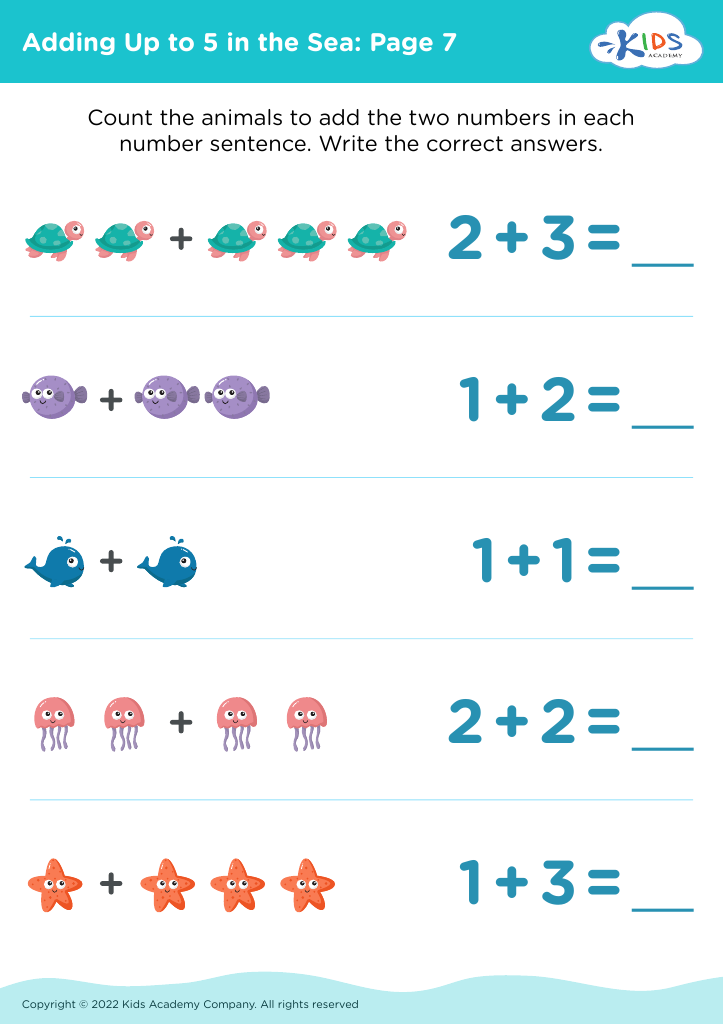
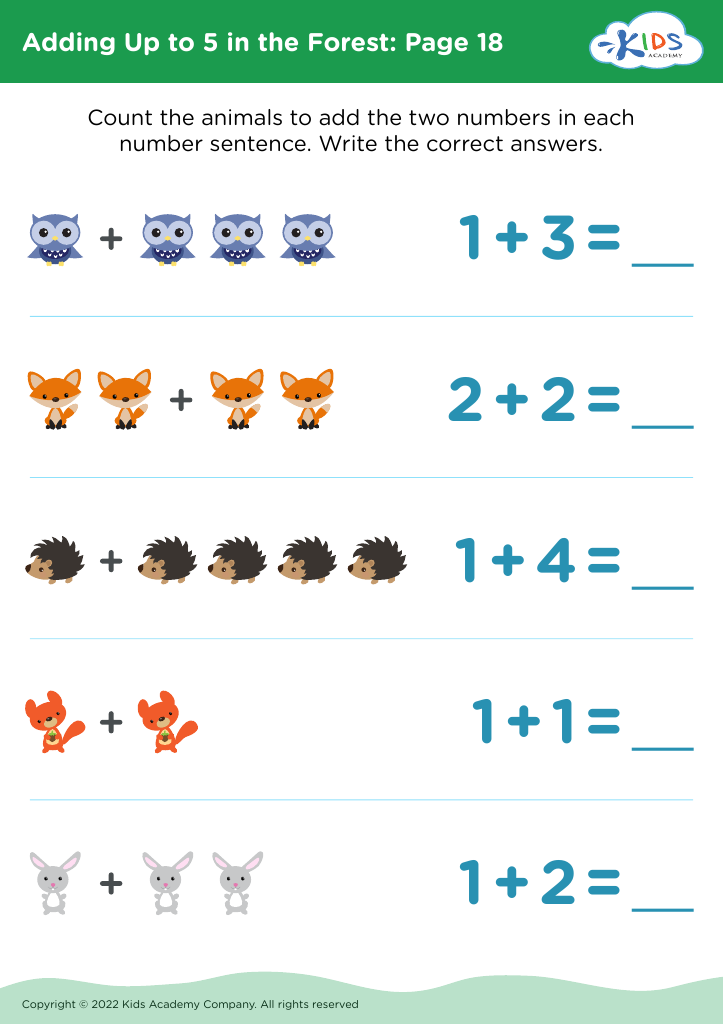
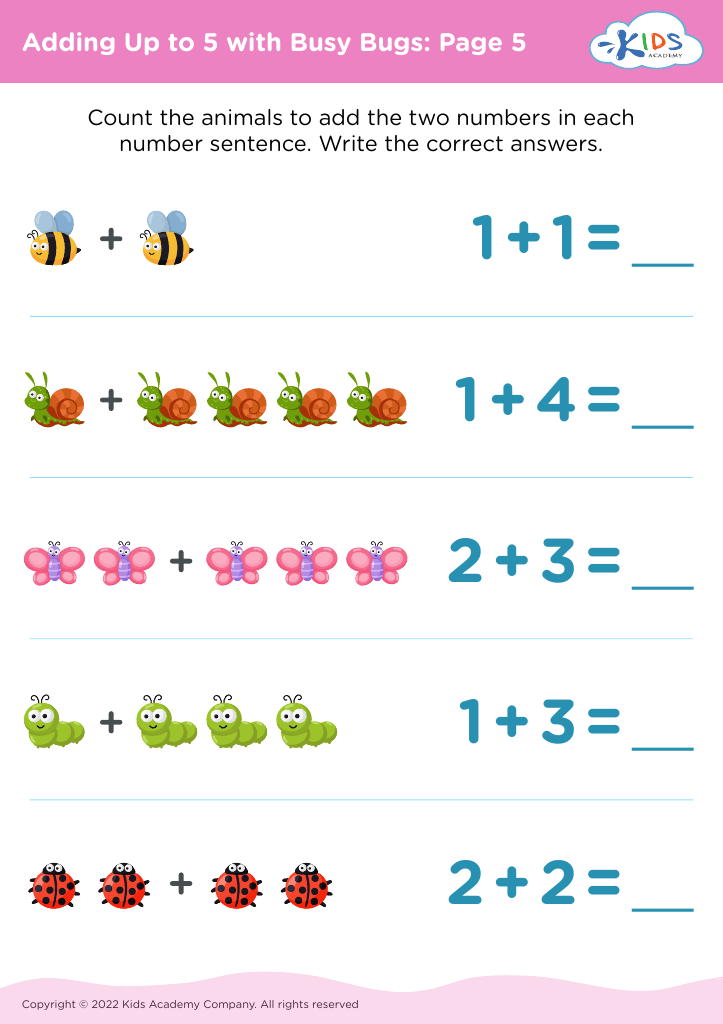
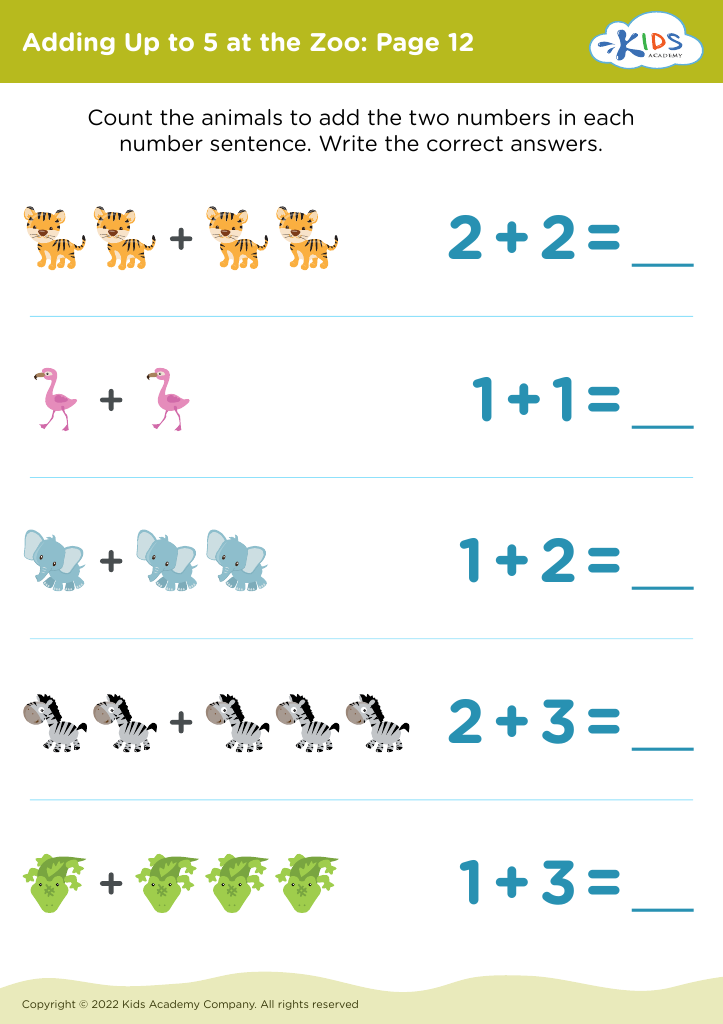
Basic arithmetic skills, such as adding up to 5, are crucial for children aged 5-7 as they lay the foundation for future mathematical understanding. Incorporating simple addition in early education fosters not only cognitive development but also builds confidence in their abilities. Understanding how to combine numbers helps children grasp the concept of quantity, paving the way for more complex mathematics as they progress in school.
For parents and teachers, nurturing these skills supports critical thinking and problem-solving capabilities. Engaging children in activities like counting objects, using fingers, or utilizing visual aids can make learning fun and interactive. This hands-on approach enhances retention and turn-learning into a playful experience, encouraging a positive attitude towards numbers. Additionally, mastering basic addition concepts promotes social skills as children learn to collaborate with others in group activities.
Lastly, skills gained during these formative years are not just academic; they also have real-world applications. Whether counting toys, sharing snacks, or solving puzzles, basic arithmetic aids daily life. In summary, fostering basic arithmetic skills during this developmental stage is essential for academic success and practical life experiences, making it a priority for parents and educators alike.








