Filters

102 filtered results

Clear all filters
Favorites
With answer key
Interactive

102 filtered results

Difficulty Level

Grade


Subject

Check out this FREE Trial Lesson on Adding Up to 5 for age 5-7!

Exactly the Same, or Not

Favorites
With answer key
Interactive
  • 5-7
  • Counting skills
  • Adding Up to 5
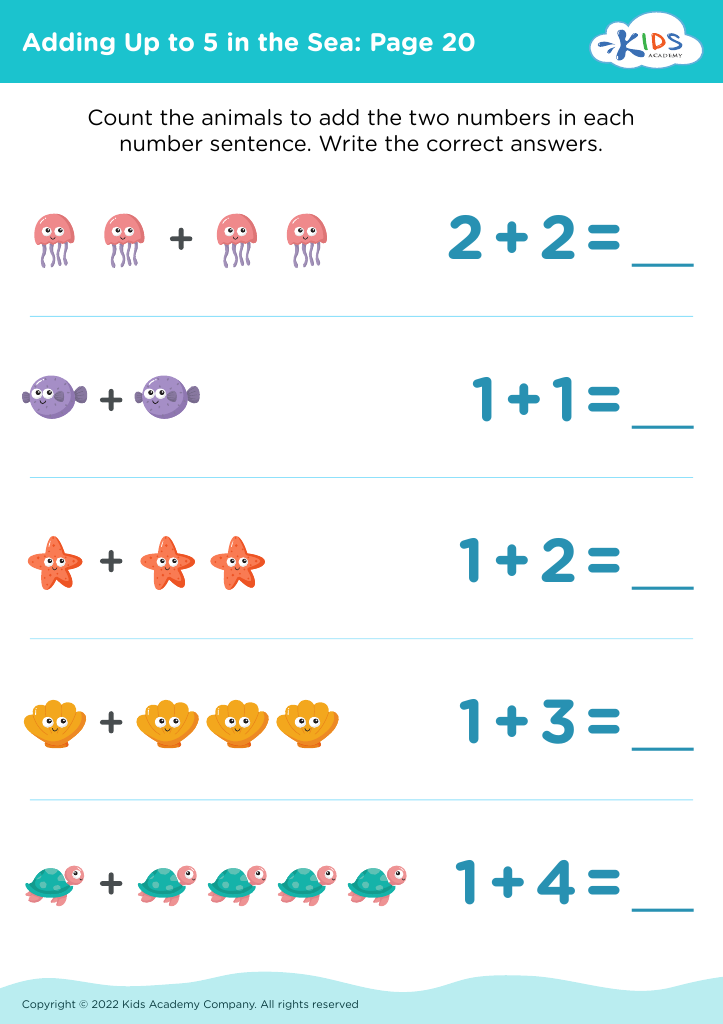
Adding Up to 5 in the Sea: Page 20
Worksheet
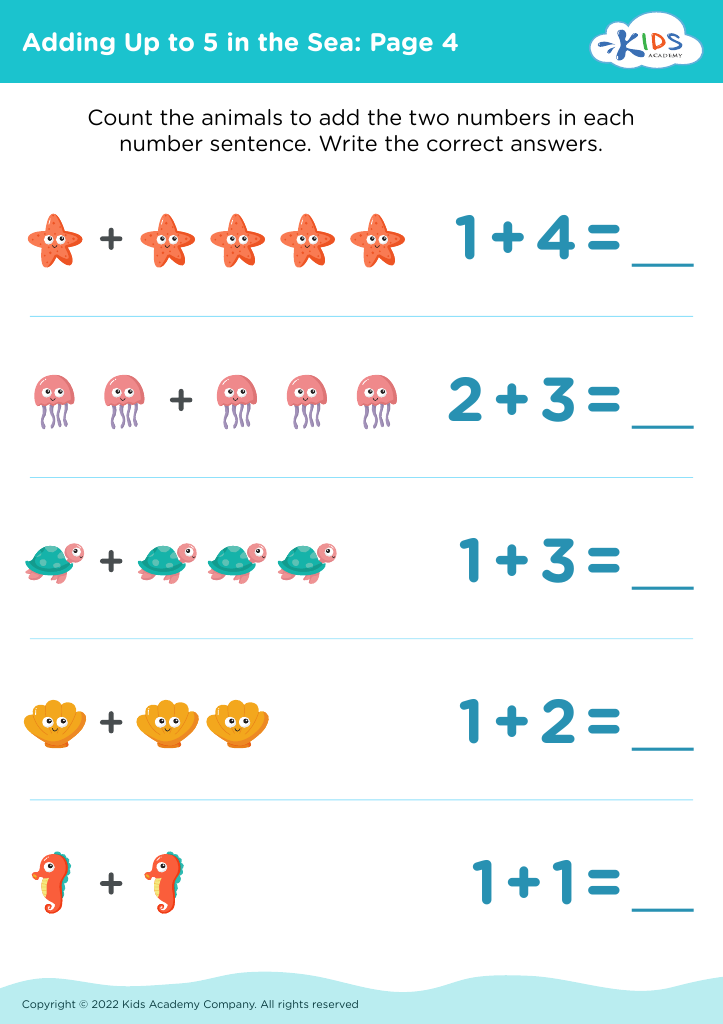
Adding Up to 5 in the Sea: Page 4

Adding Up to 5 in the Sea: Page 4

Adding Up to 5 in the Sea: Page 4
Worksheet
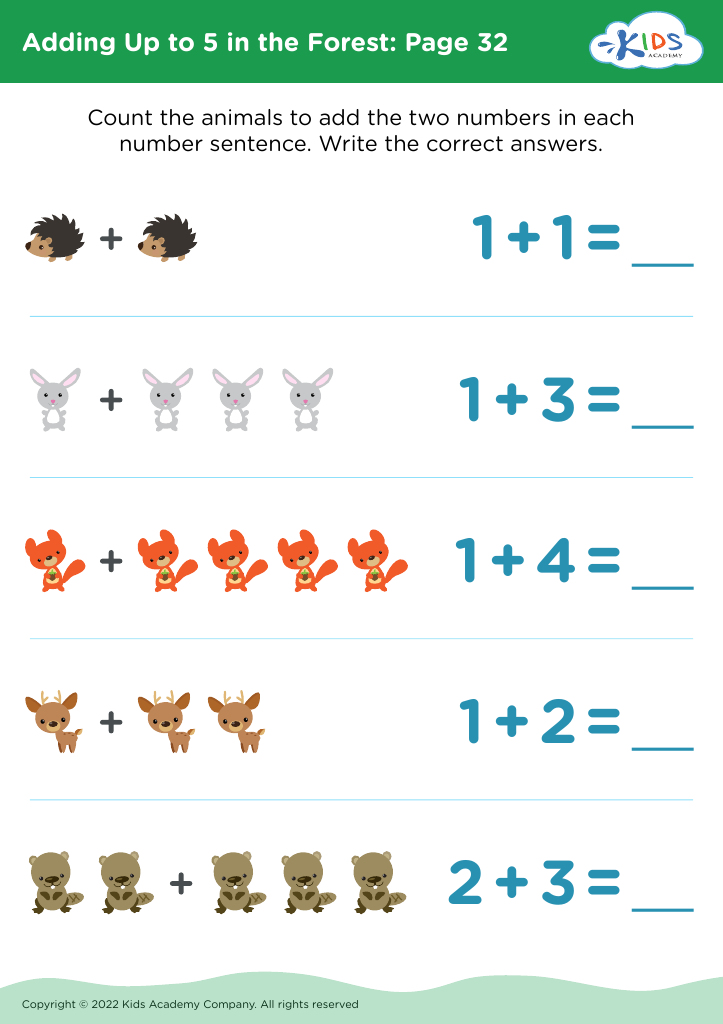
Adding Up to 5 in the Forest: Page 32
Worksheet
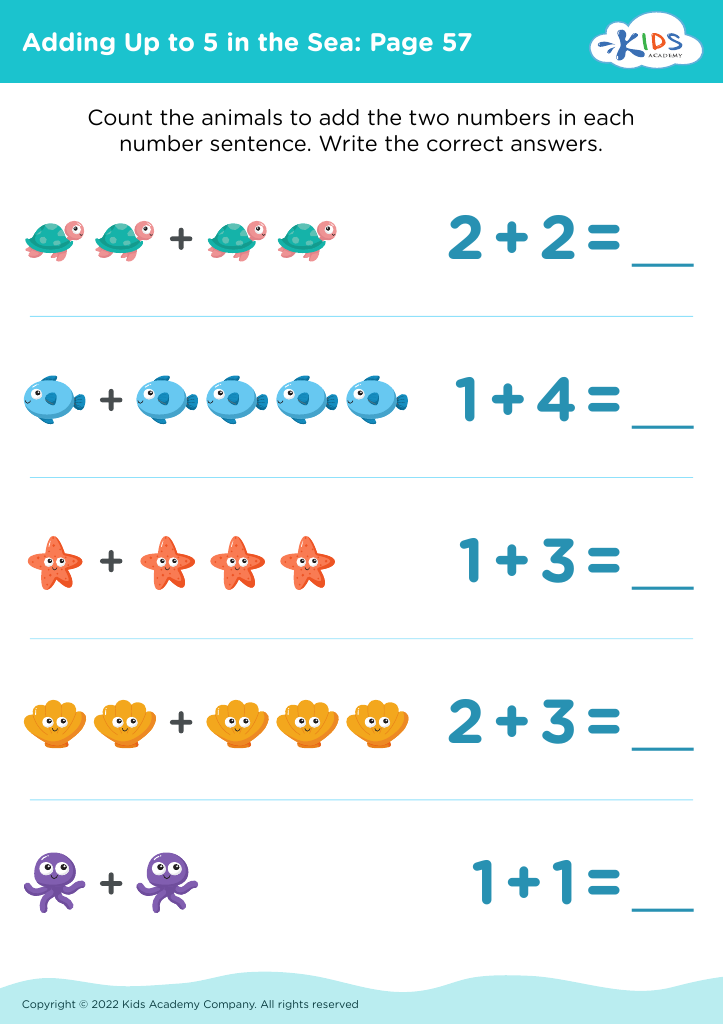
Adding Up to 5 in the Sea: Page 57
Worksheet
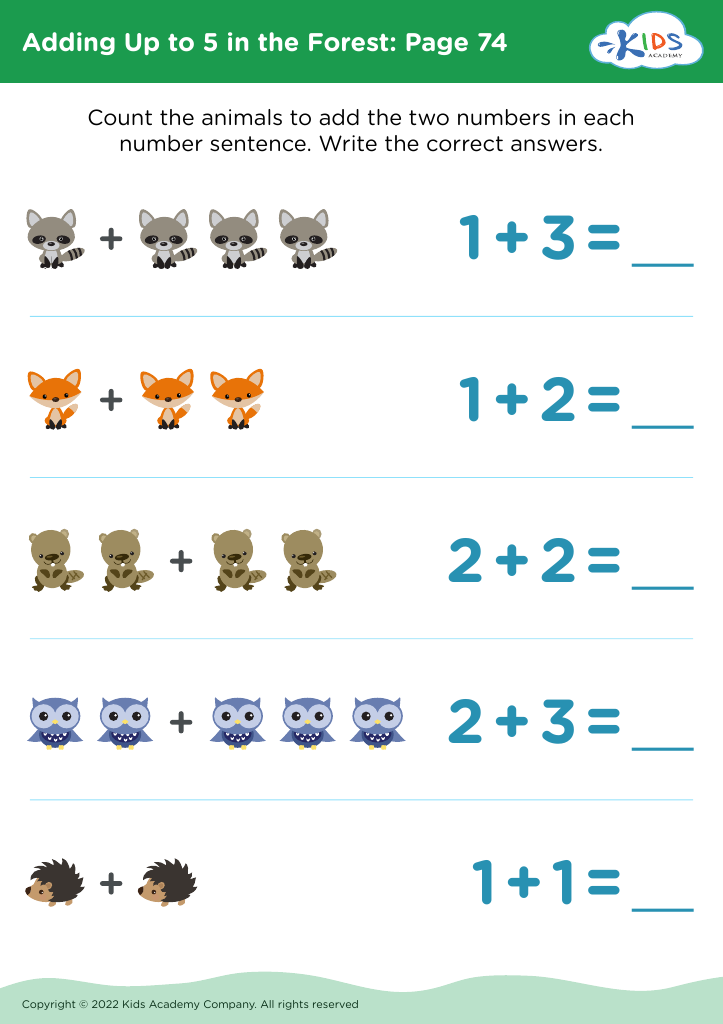
Adding Up to 5 in the Forest: Page 74
Worksheet
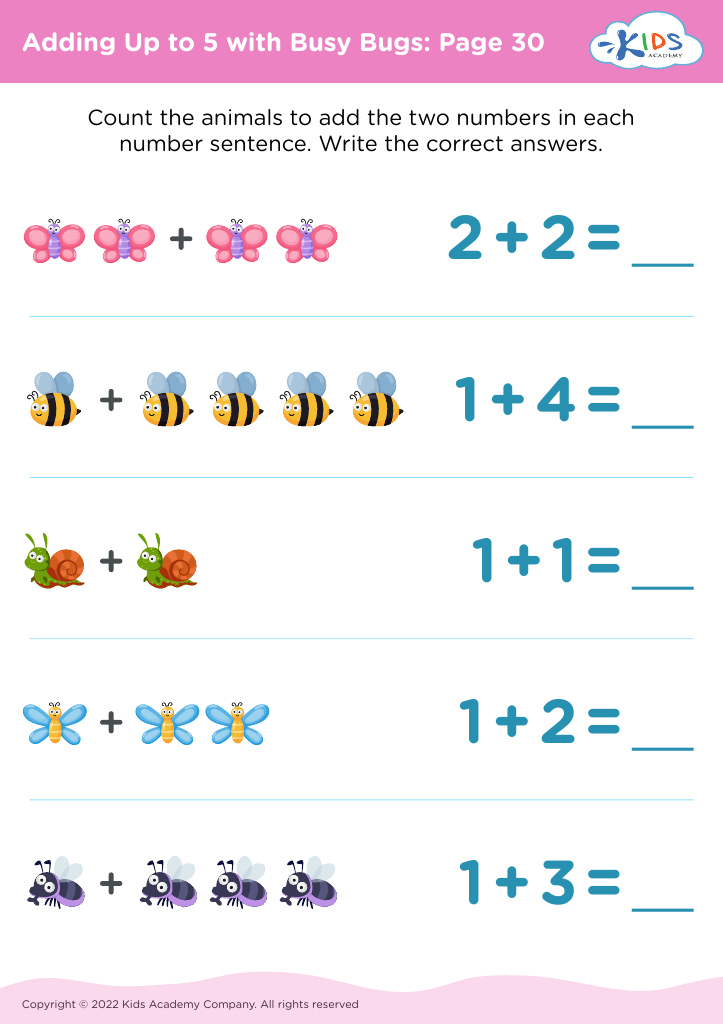
Adding Up to 5 with Busy Bugs: Page 30
Worksheet
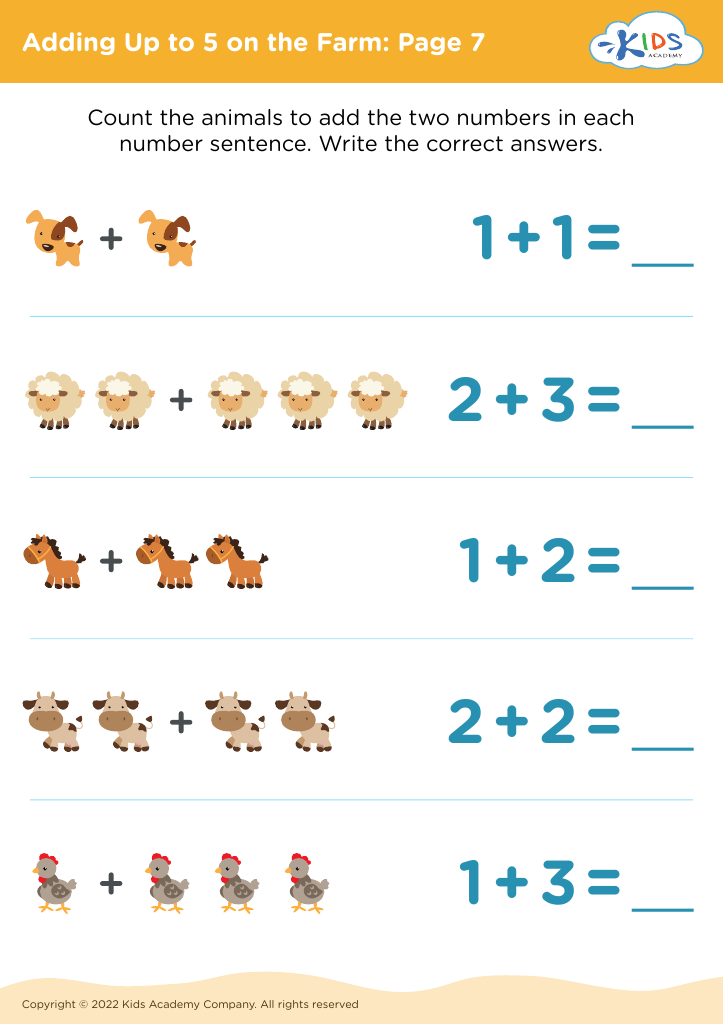
Adding Up to 5 on the Farm: Page 7
Worksheet
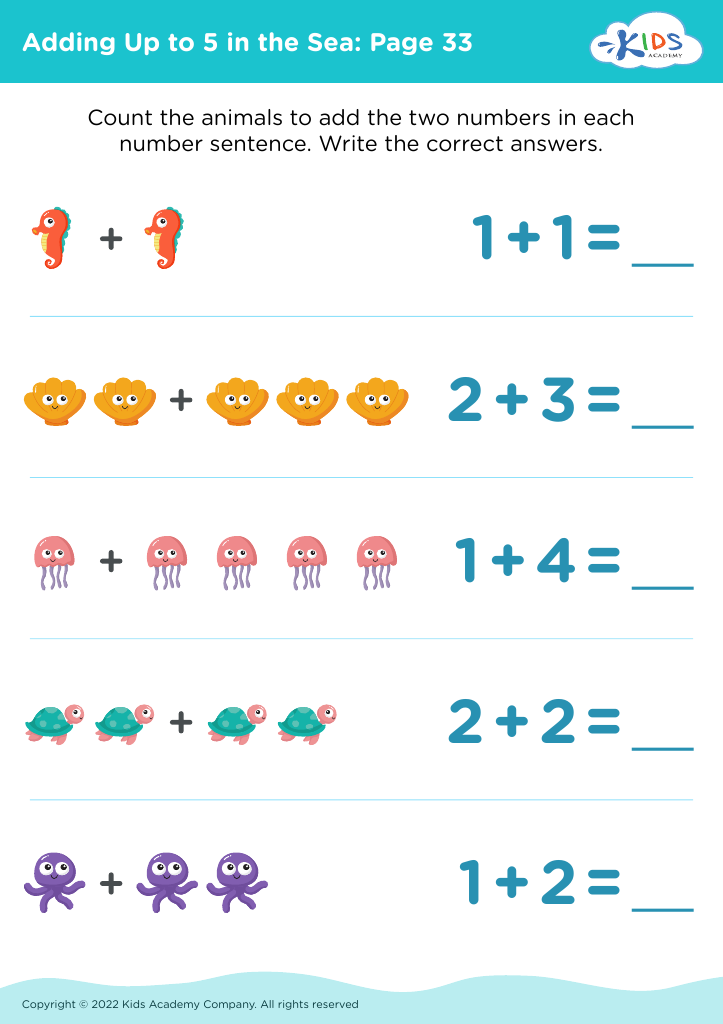
Adding Up to 5 in the Sea: Page 33
Worksheet
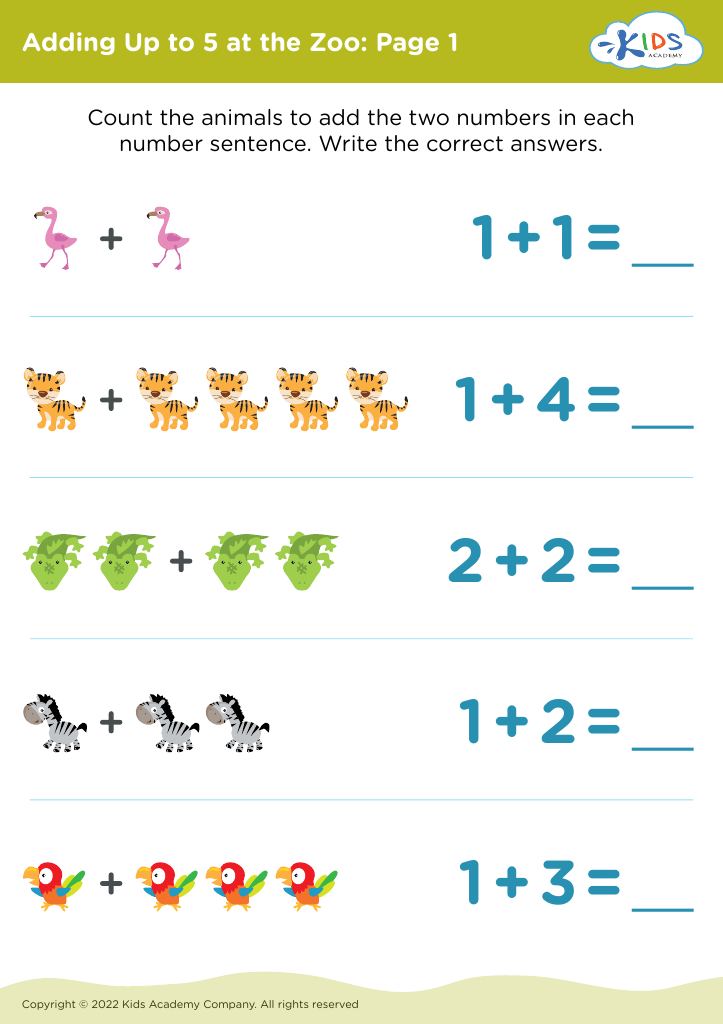
Adding Up to 5 at the Zoo: Page 1

Adding Up to 5 at the Zoo: Page 1

Adding Up to 5 at the Zoo: Page 1
Worksheet
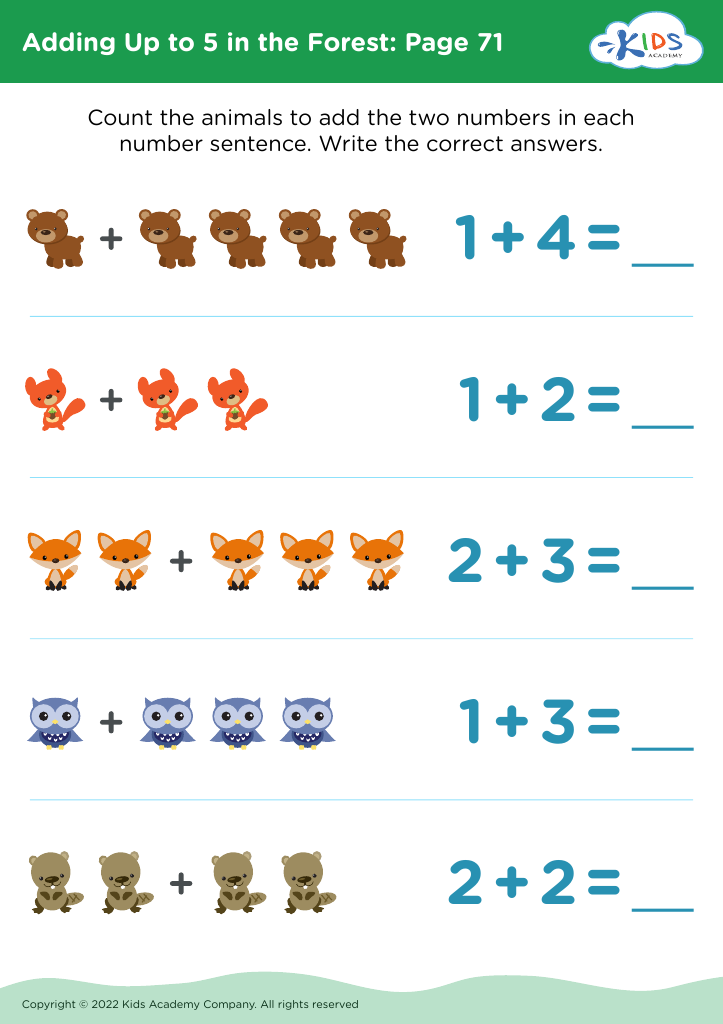
Adding Up to 5 in the Forest: Page 71
Worksheet
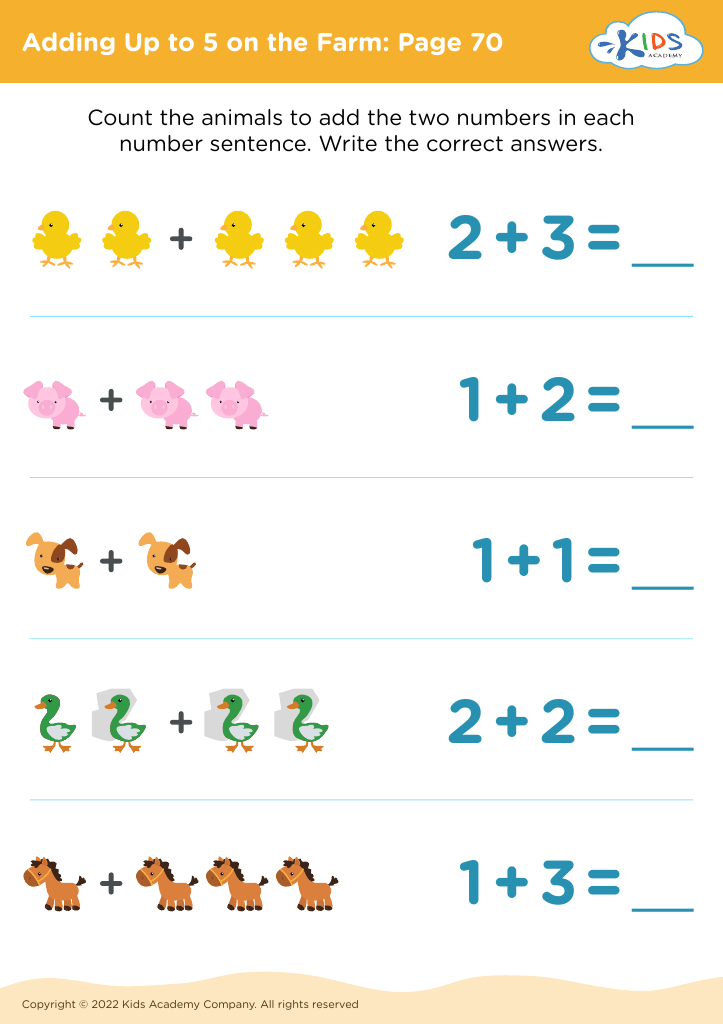
Adding Up to 5 on the Farm: Page 70
Worksheet
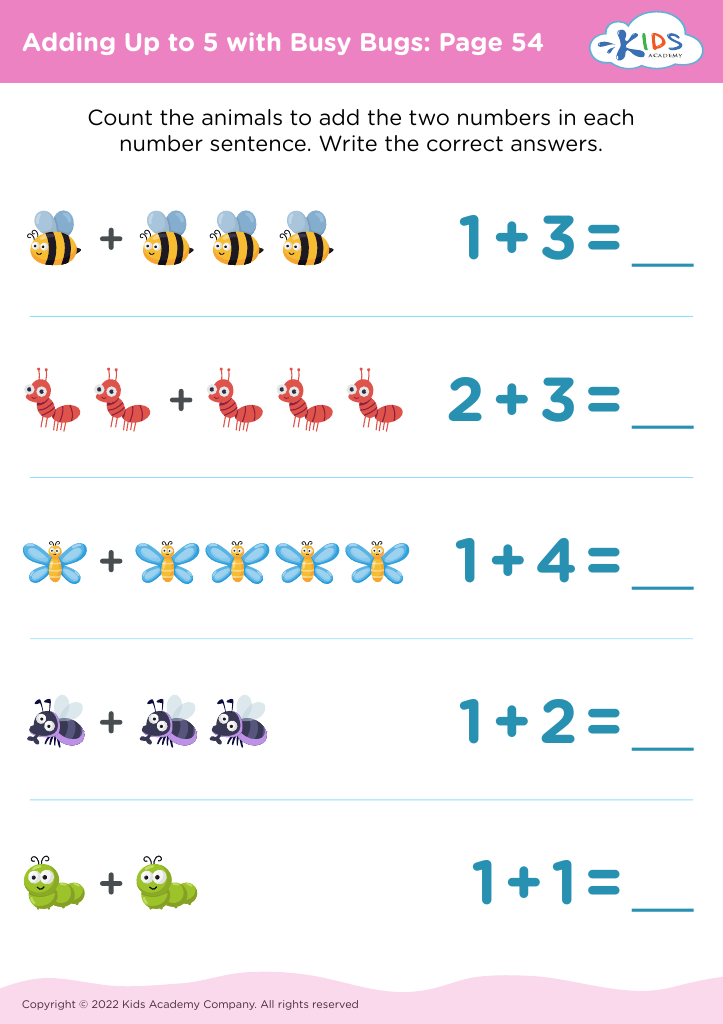
Adding Up to 5 with Busy Bugs: Page 54
Worksheet
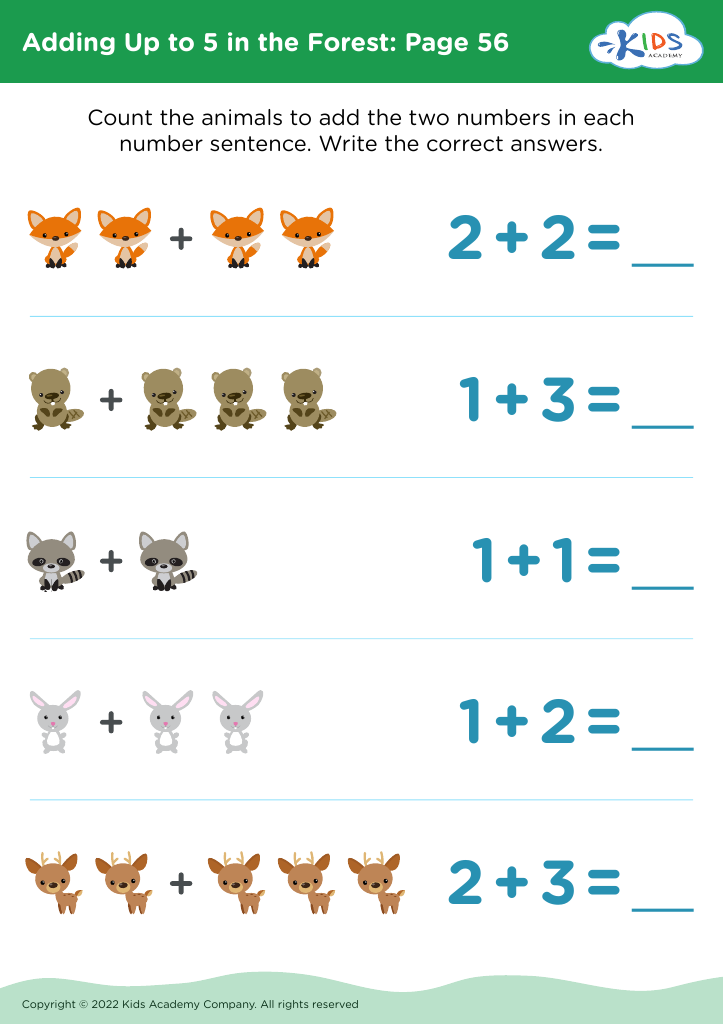
Adding Up to 5 in the Forest: Page 56
Worksheet
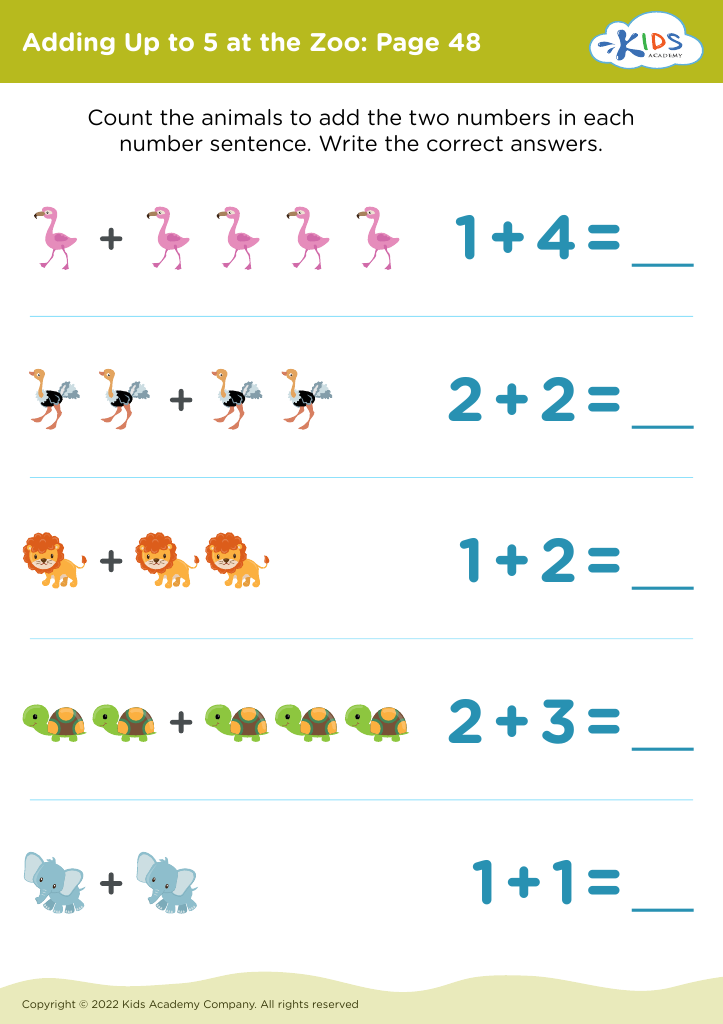
Adding Up to 5 at the Zoo: Page 48
Worksheet
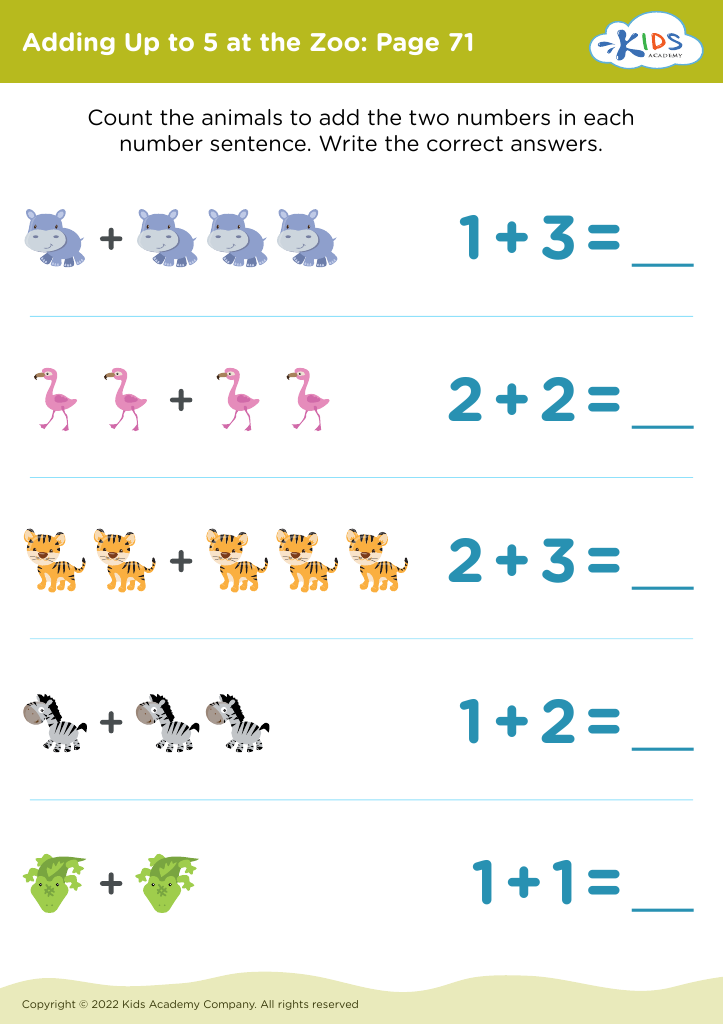
Adding Up to 5 at the Zoo: Page 71
Worksheet
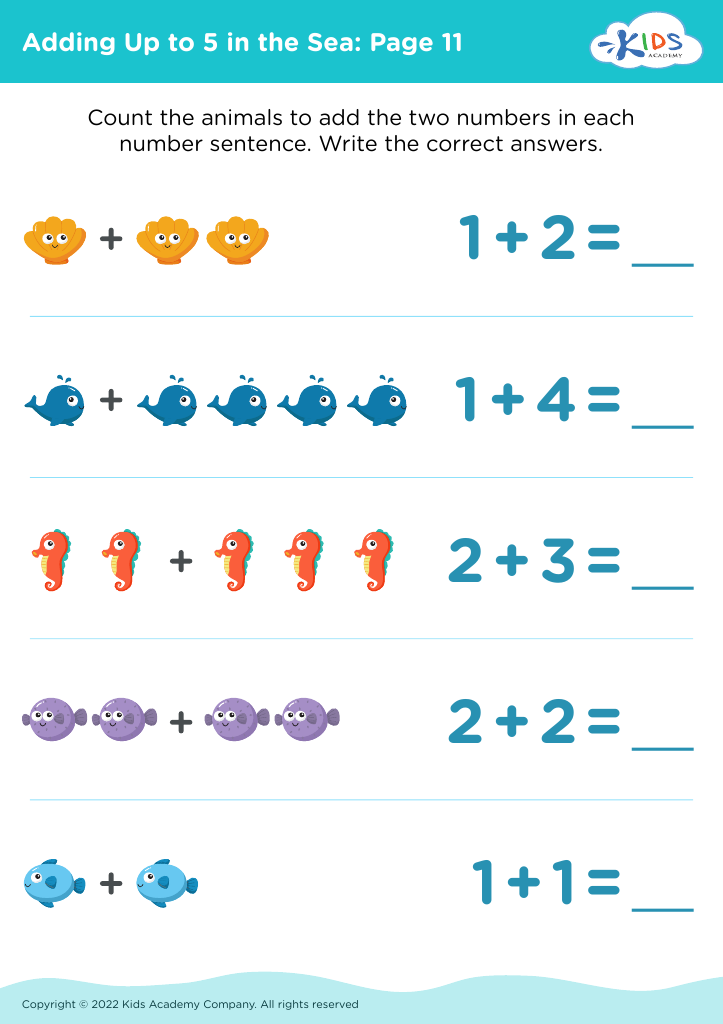
Adding Up to 5 in the Sea: Page 11
Worksheet
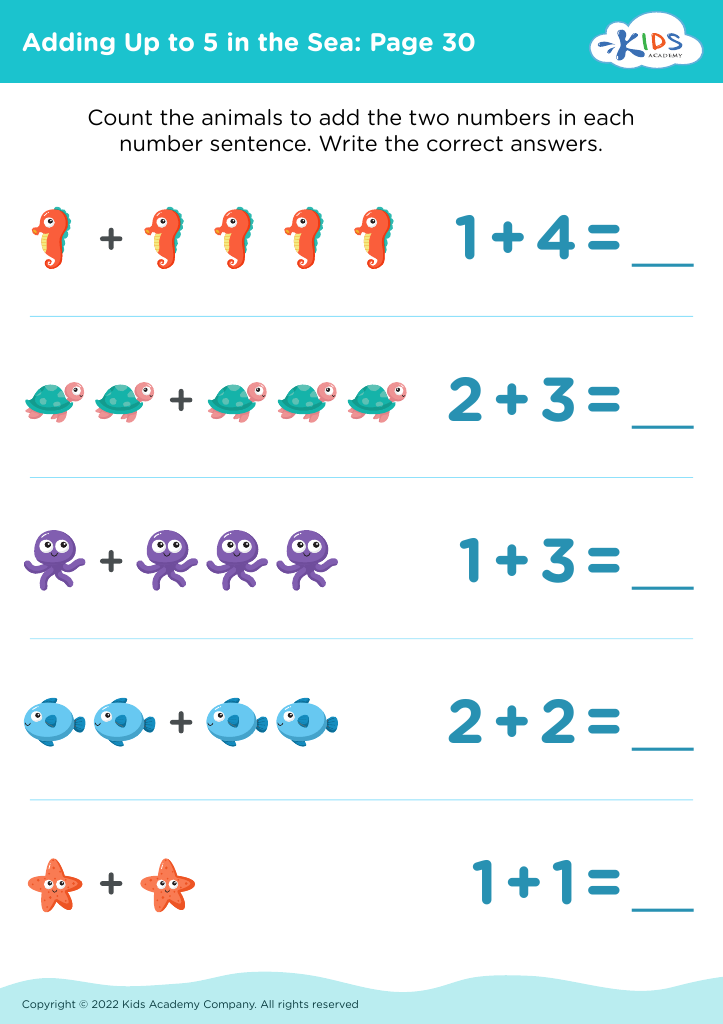
Adding Up to 5 in the Sea: Page 30
Worksheet
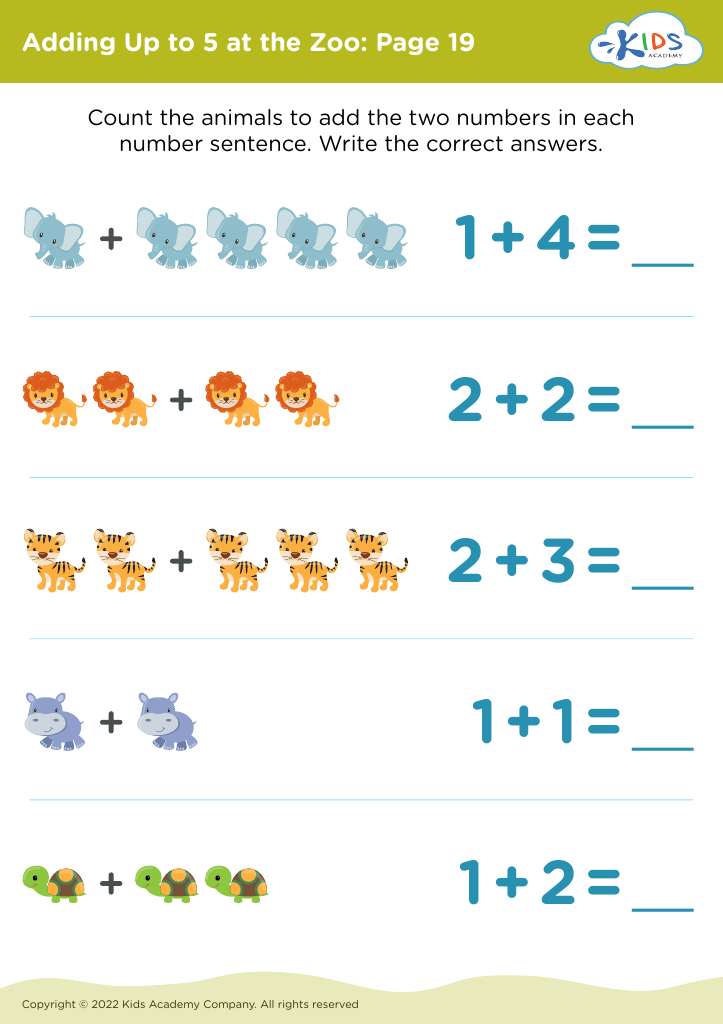
Adding Up to 5 at the Zoo: Page 19
Worksheet
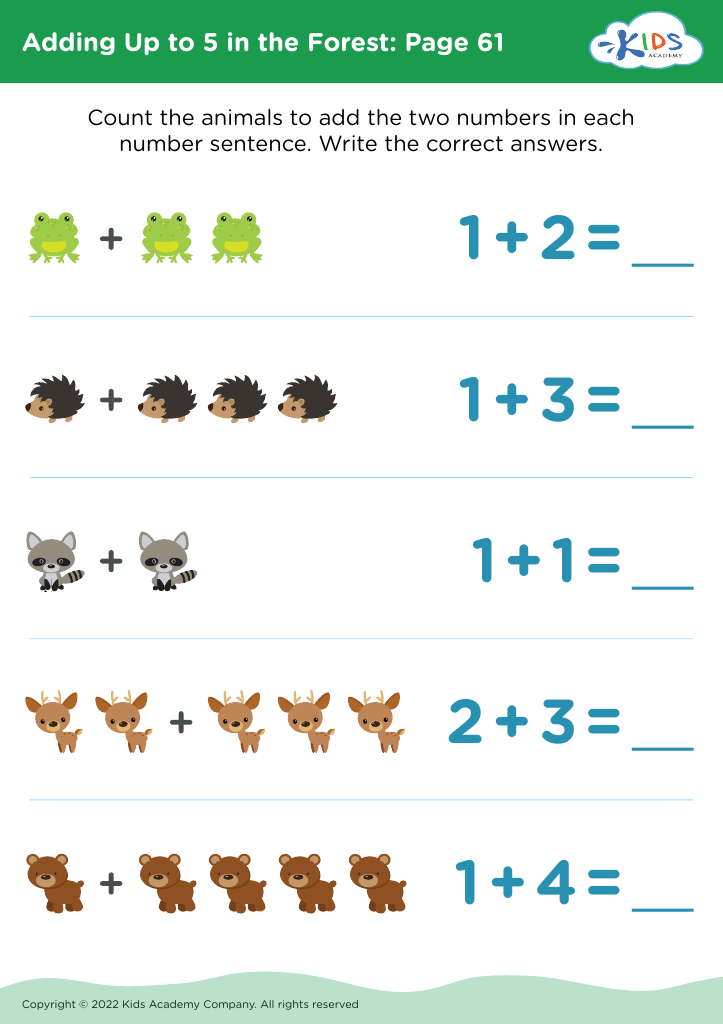
Adding Up to 5 in the Forest: Page 61
Worksheet
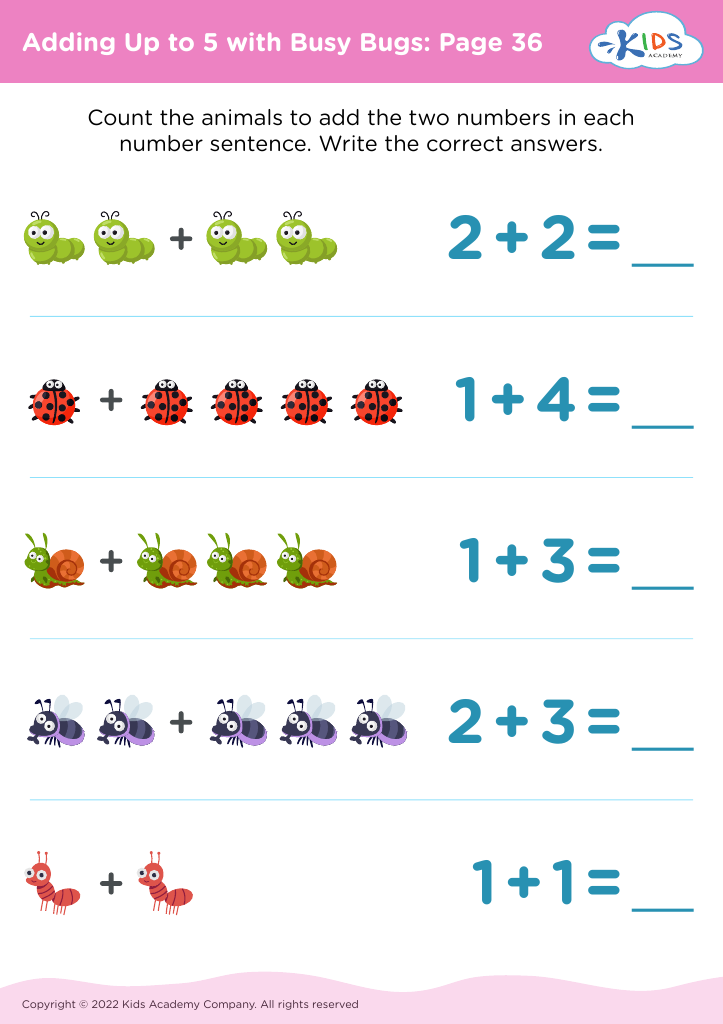
Adding Up to 5 with Busy Bugs: Page 36
Worksheet
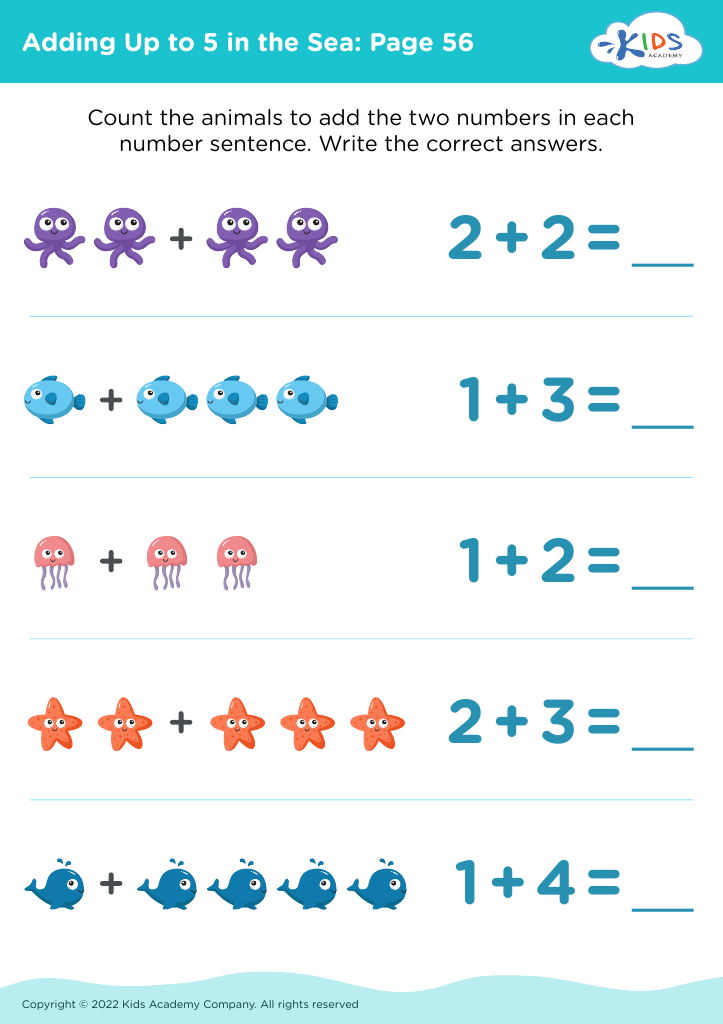
Adding Up to 5 in the Sea: Page 56
Worksheet
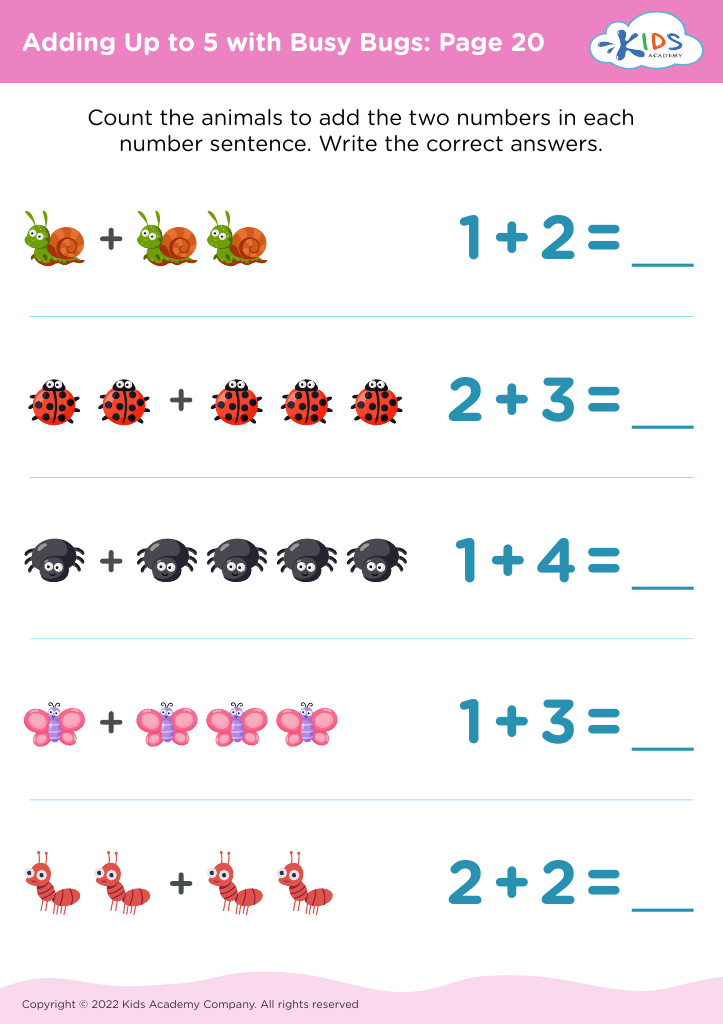
Adding Up to 5 with Busy Bugs: Page 20
Worksheet
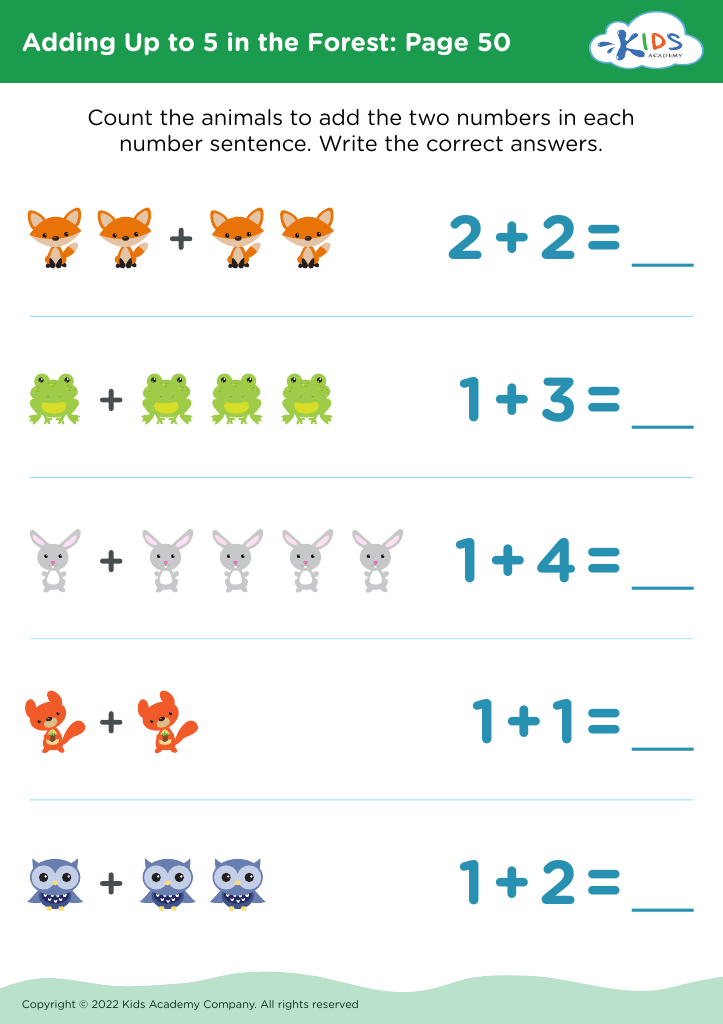
Adding Up to 5 in the Forest: Page 50
Worksheet
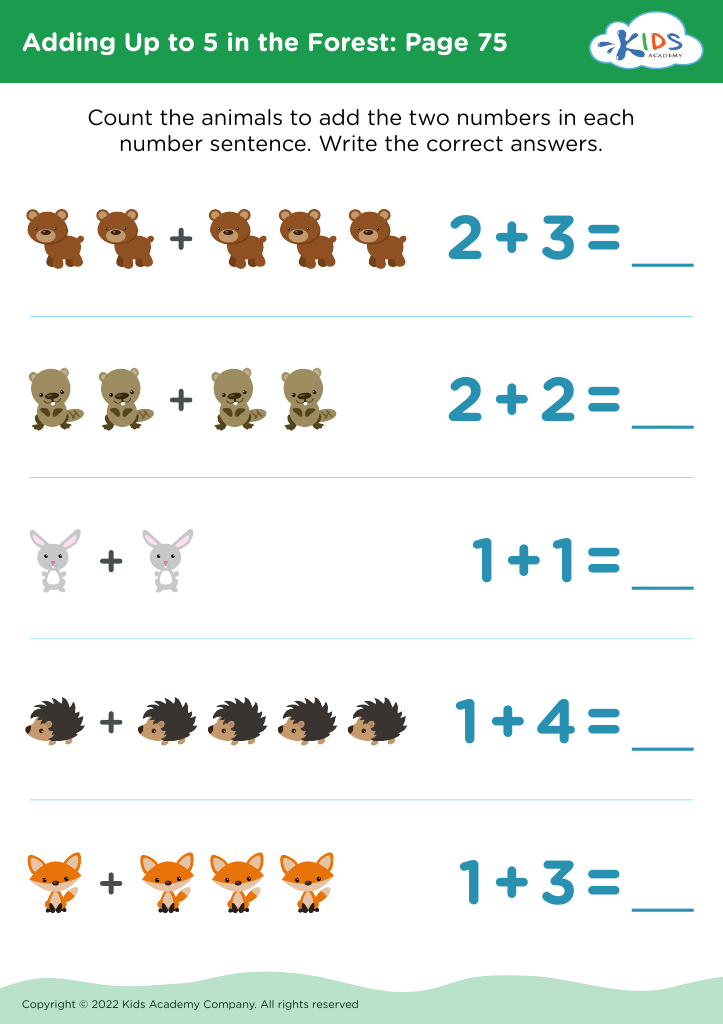
Adding Up to 5 in the Forest: Page 75
Worksheet


Counting skills adding up to 5 for ages 5-7 are foundational for young children's mathematical development and have practical implications that extend into everyday life. At this early stage, kids are just beginning to understand numbers, quantities, and simple mathematical concepts. Learning to count and add up to 5 is like building the ground floor of a house—they need this solid base to support more complex math skills in the future.

First, developing counting skills helps young children enhance their number sense. Number sense is the ability to understand, relate, and connect numbers. It's vital for understanding more complicated math operations later on, such as subtraction, multiplication, and division. Secondly, early counting and addition practice aid children in developing logical thinking and problem-solving skills. Even simple exercises like adding up to 5 require a child to reason and make decisions, which are critical cognitive abilities.

Furthermore, mastering these basic skills also fosters confidence. A child who feels competent with early math is more likely to approach more challenging math tasks with a positive attitude and less anxiety. This can lead to better performance and a lifelong interest in mathematics.

From practical standpoints like counting items in their environment, to laying the groundwork for future learning, counting to 5 is a pivotal milestone for young learners. Teachers and parents should place significant attention on these fundamental skills to ensure a robust mathematical foundation.