Filters

349 filtered results

Clear all filters
Favorites
With answer key
Interactive

349 filtered results

Difficulty Level

Grade


Check out this FREE Trial Lesson on Adding Up to 5 for age 5-7!

Sorting Objects into 3 Categories

Favorites
With answer key
Interactive
  • 5-7
  • Number Recognition
  • Adding Up to 5
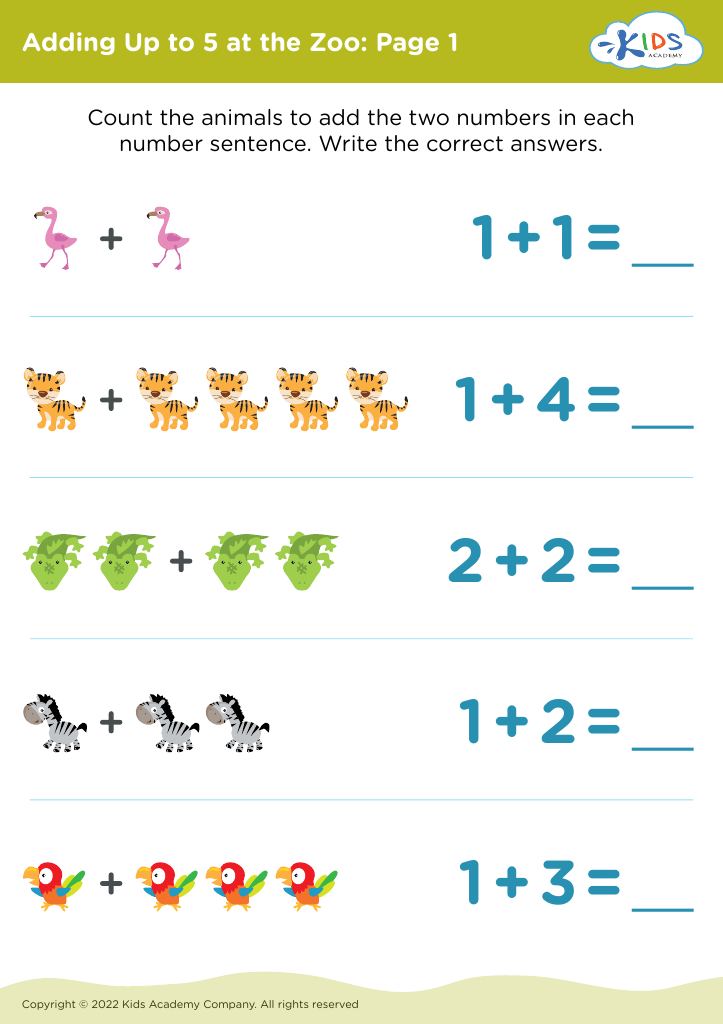
Adding Up to 5 at the Zoo: Page 1

Adding Up to 5 at the Zoo: Page 1

Adding Up to 5 at the Zoo: Page 1
Worksheet
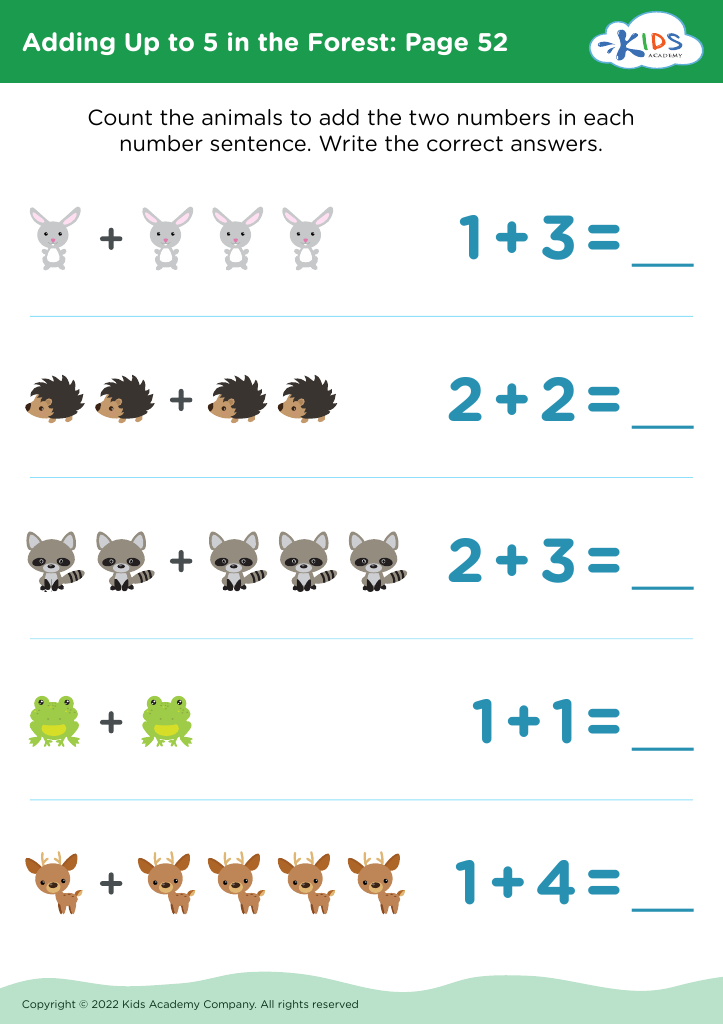
Adding Up to 5 in the Forest: Page 52
Worksheet
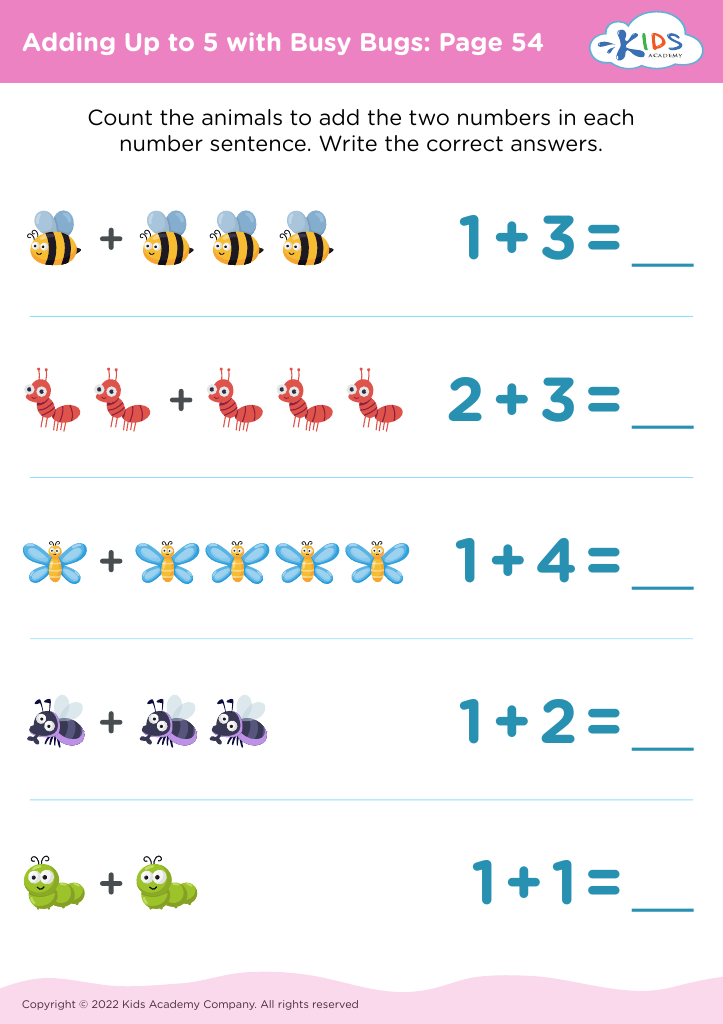
Adding Up to 5 with Busy Bugs: Page 54
Worksheet
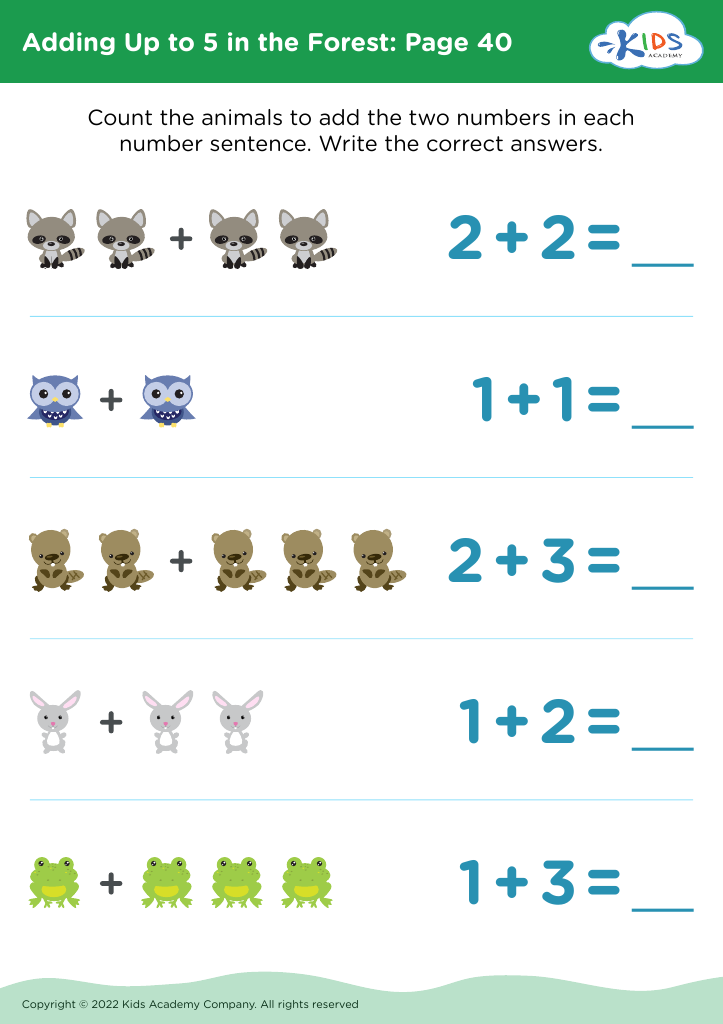
Adding Up to 5 in the Forest: Page 40
Worksheet
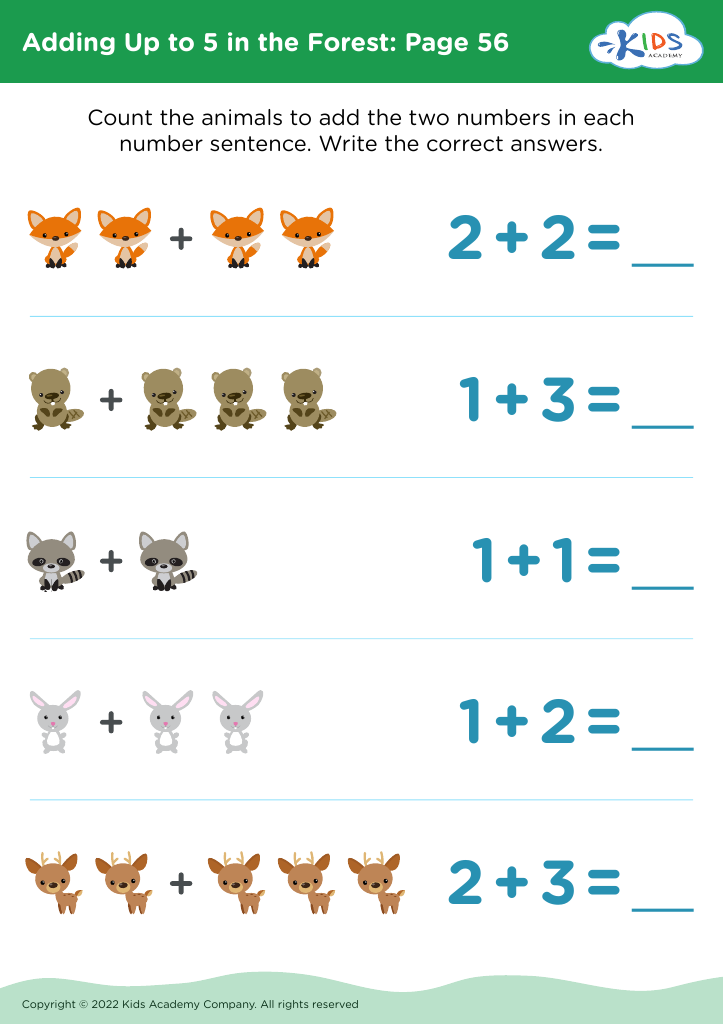
Adding Up to 5 in the Forest: Page 56
Worksheet
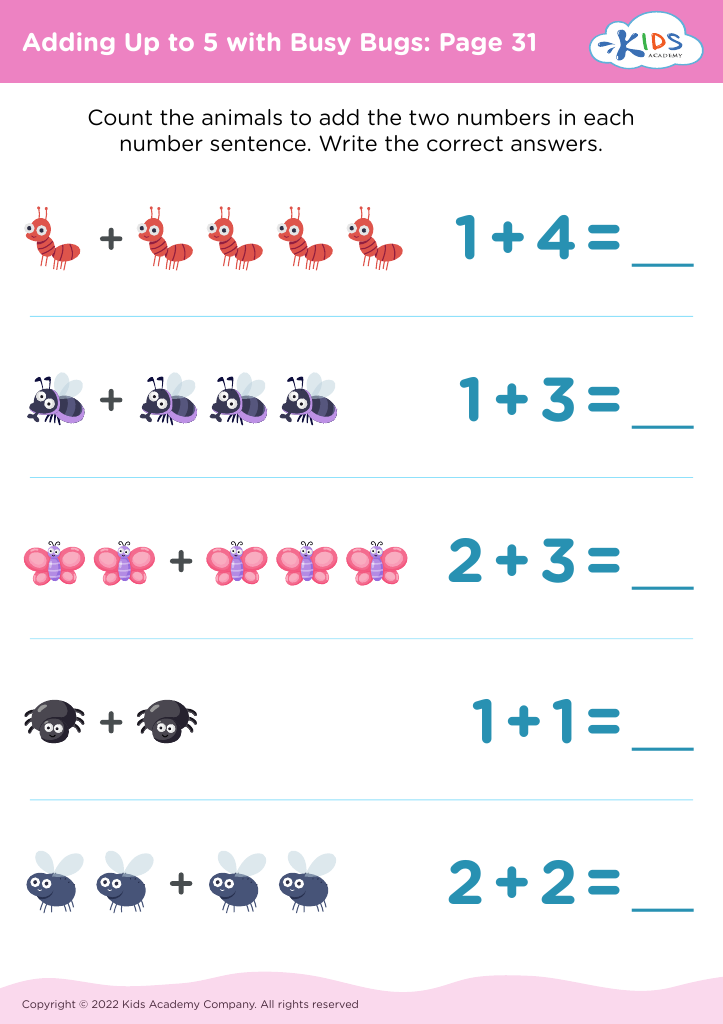
Adding Up to 5 with Busy Bugs: Page 31
Worksheet
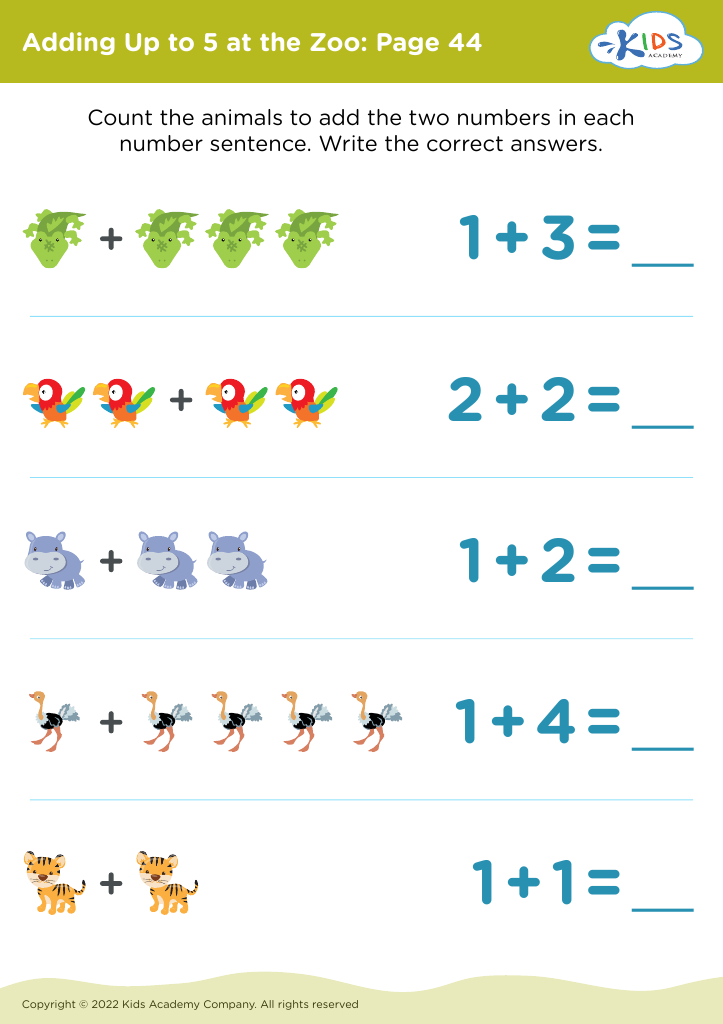
Adding Up to 5 at the Zoo: Page 44
Worksheet
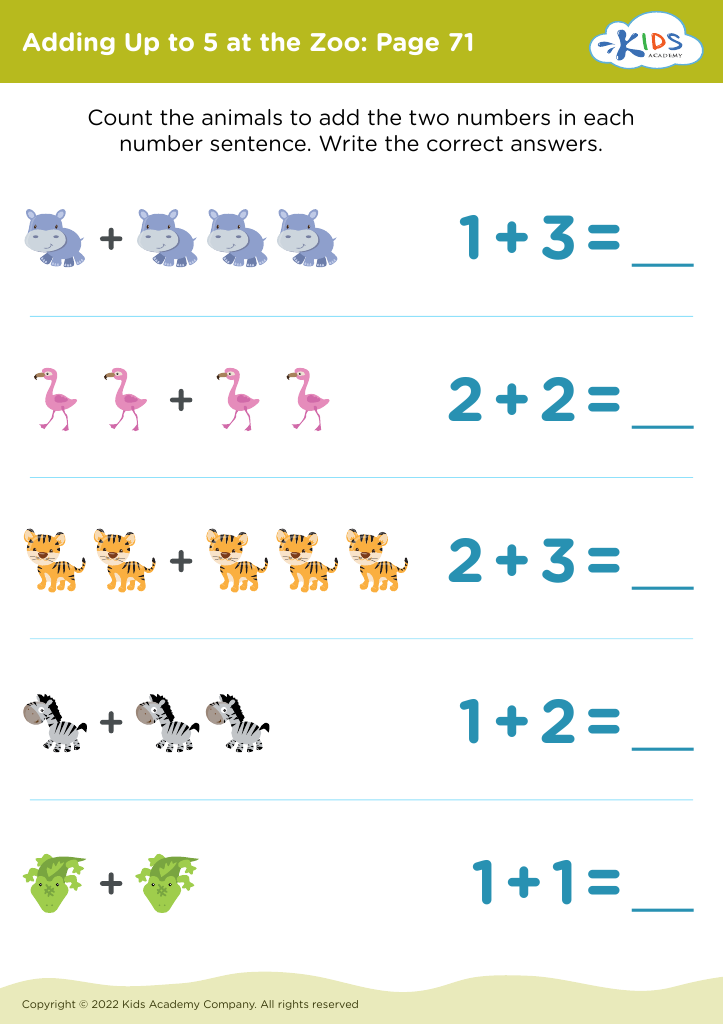
Adding Up to 5 at the Zoo: Page 71
Worksheet
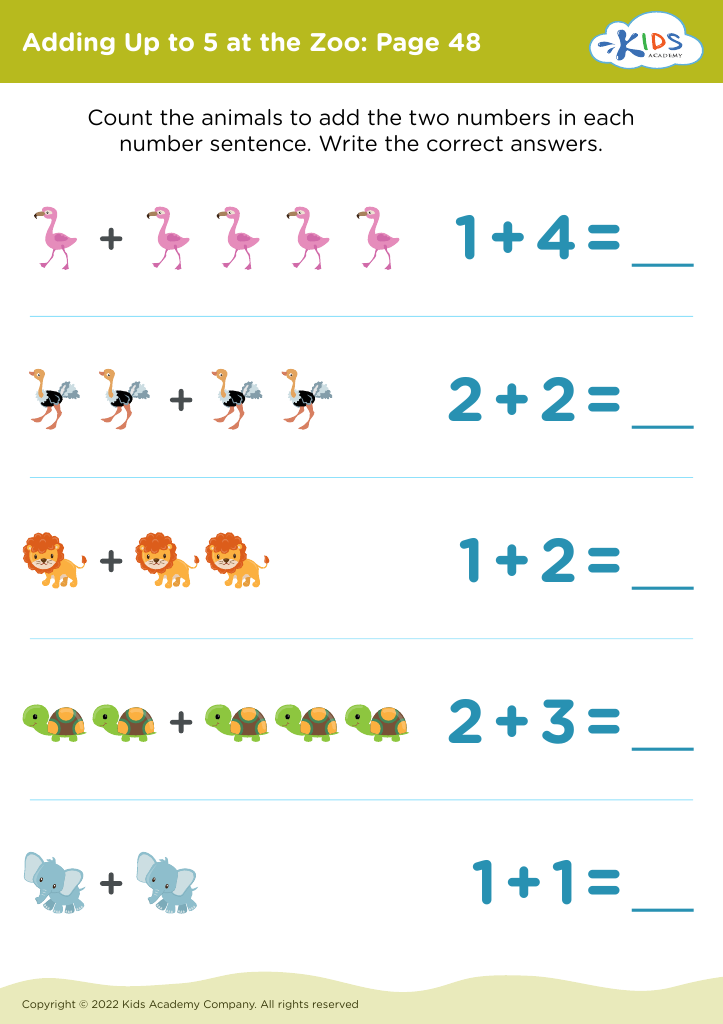
Adding Up to 5 at the Zoo: Page 48
Worksheet
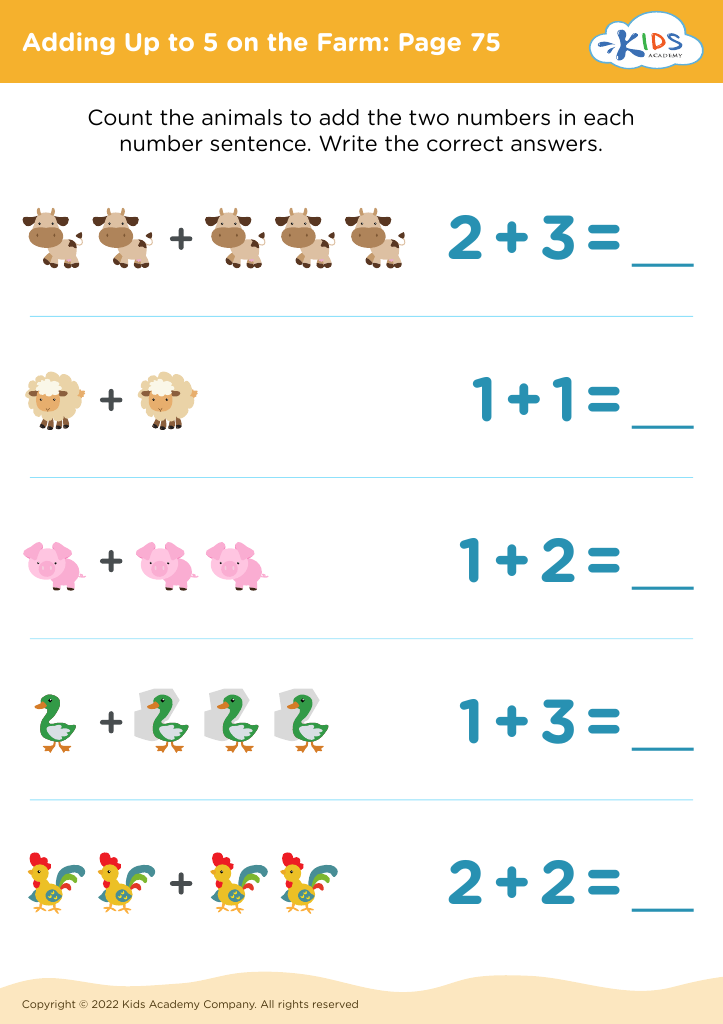
Adding Up to 5 on the Farm: Page 75
Worksheet
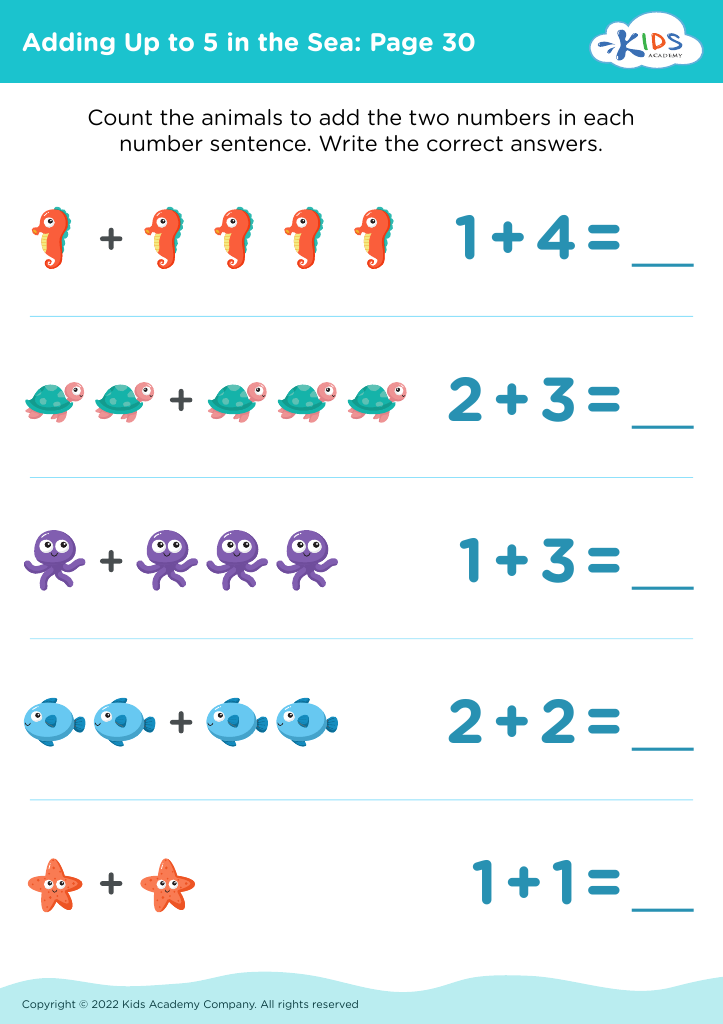
Adding Up to 5 in the Sea: Page 30
Worksheet
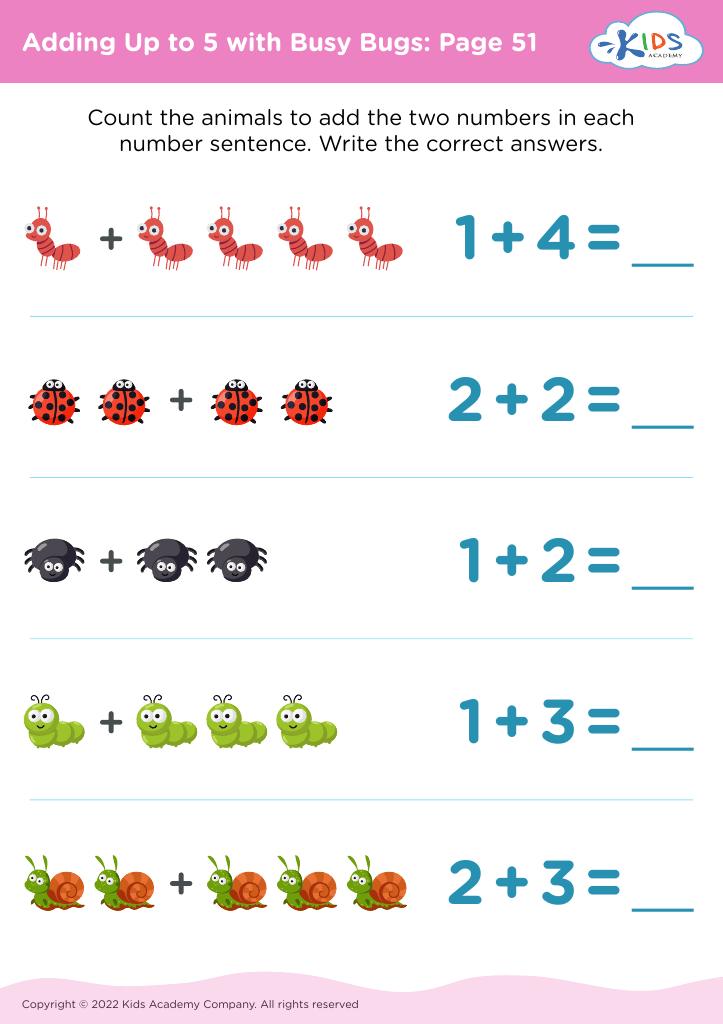
Adding Up to 5 with Busy Bugs: Page 51
Worksheet
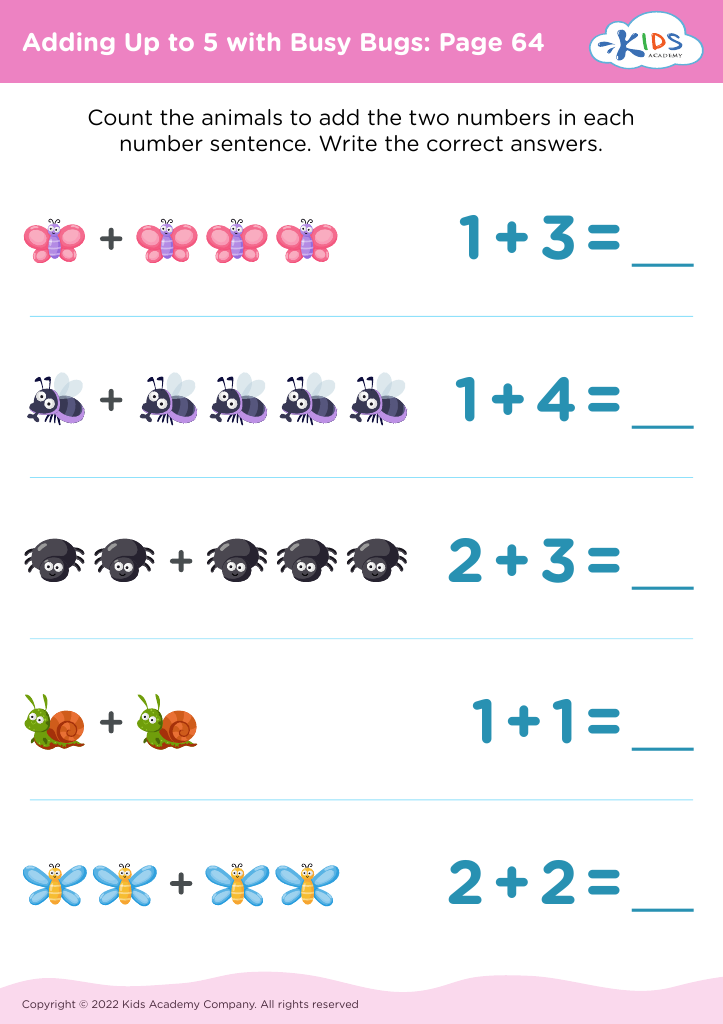
Adding Up to 5 with Busy Bugs: Page 64
Worksheet
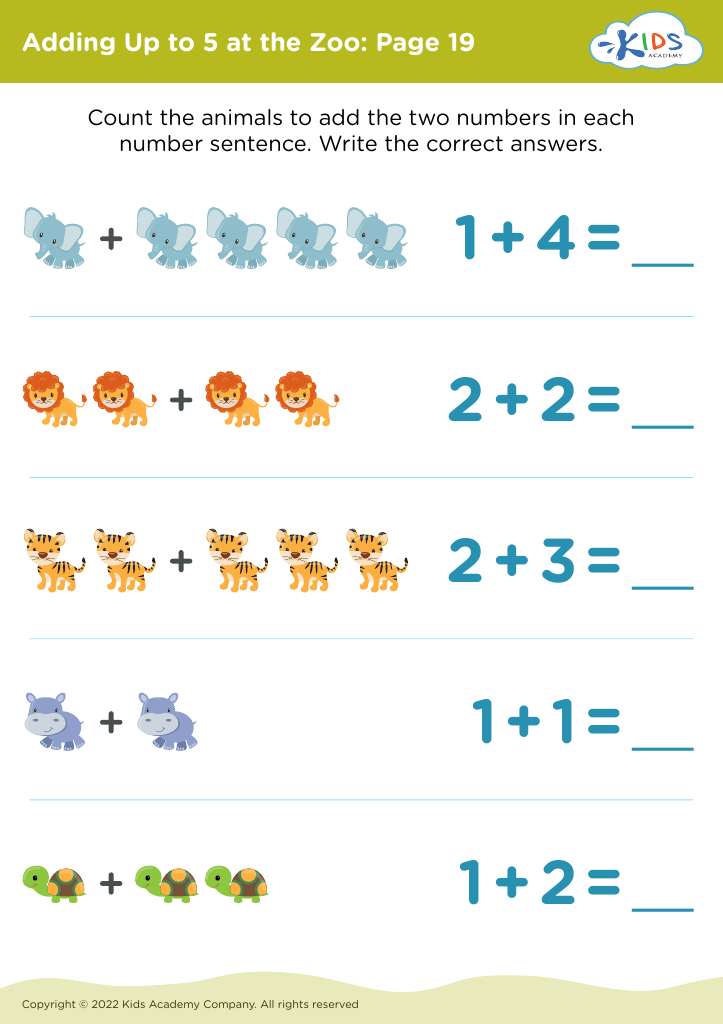
Adding Up to 5 at the Zoo: Page 19
Worksheet
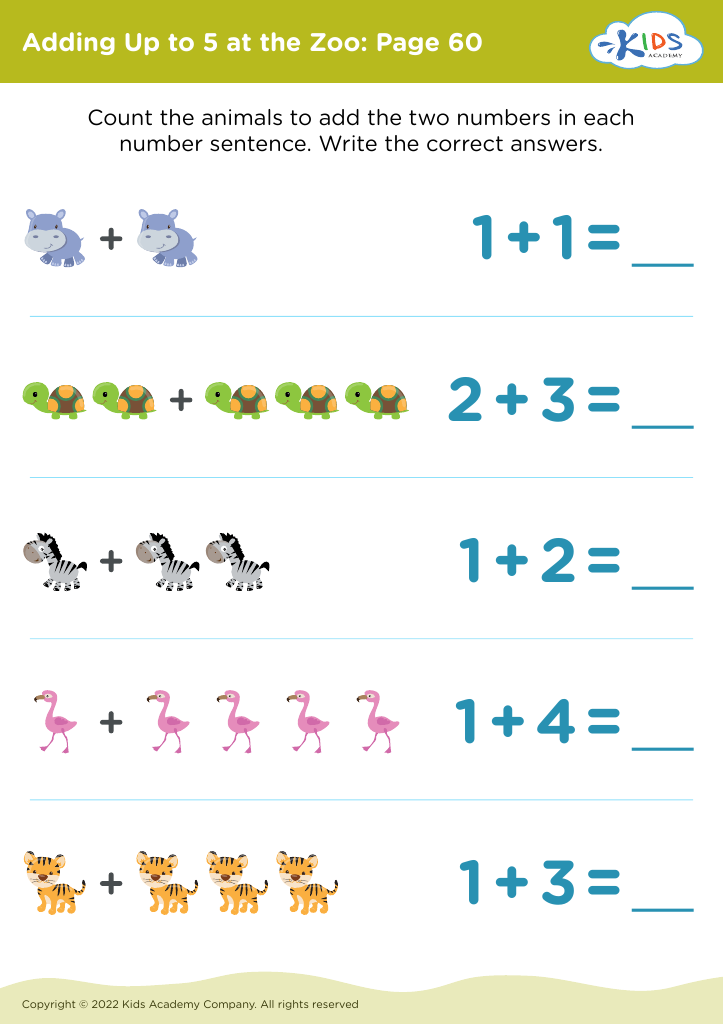
Adding Up to 5 at the Zoo: Page 60
Worksheet
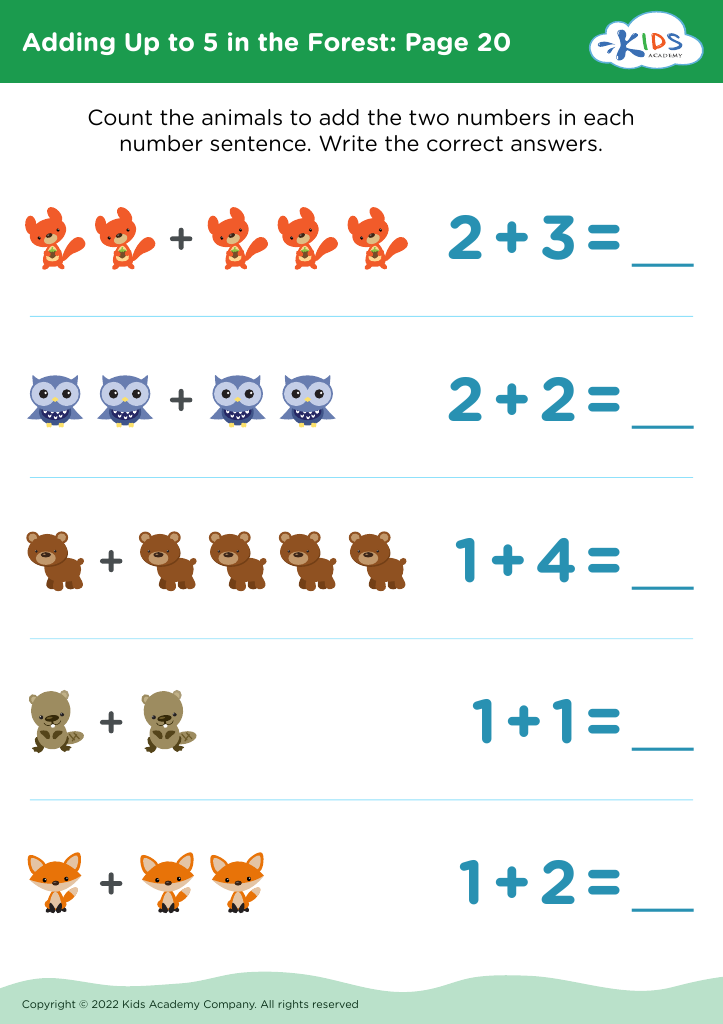
Adding Up to 5 in the Forest: Page 20
Worksheet
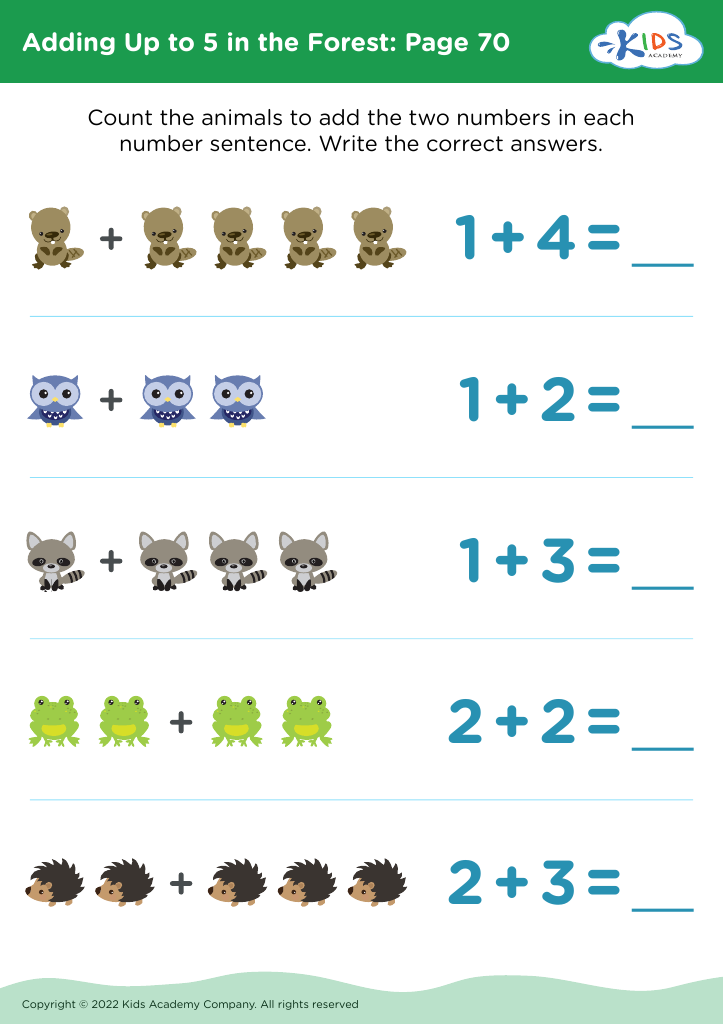
Adding Up to 5 in the Forest: Page 70
Worksheet
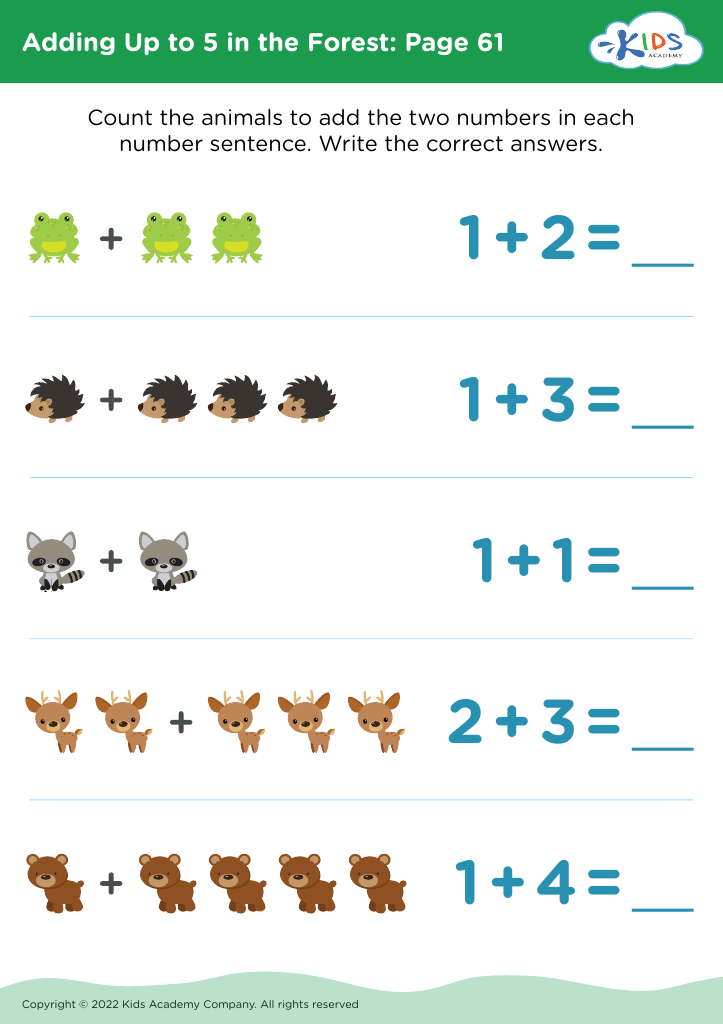
Adding Up to 5 in the Forest: Page 61
Worksheet
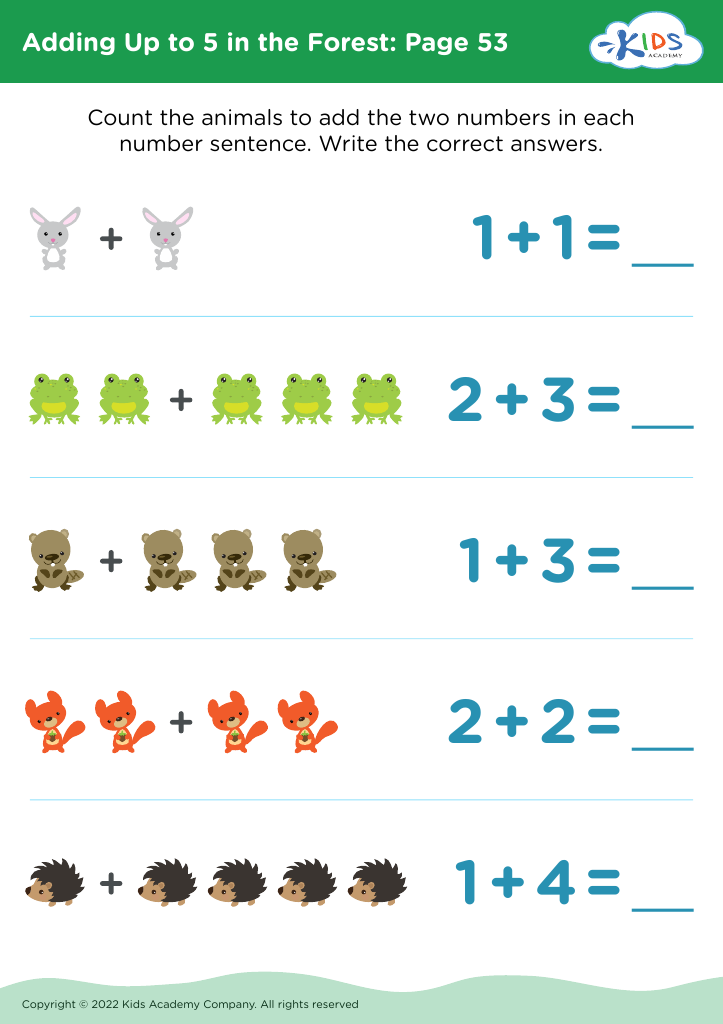
Adding Up to 5 in the Forest: Page 53
Worksheet
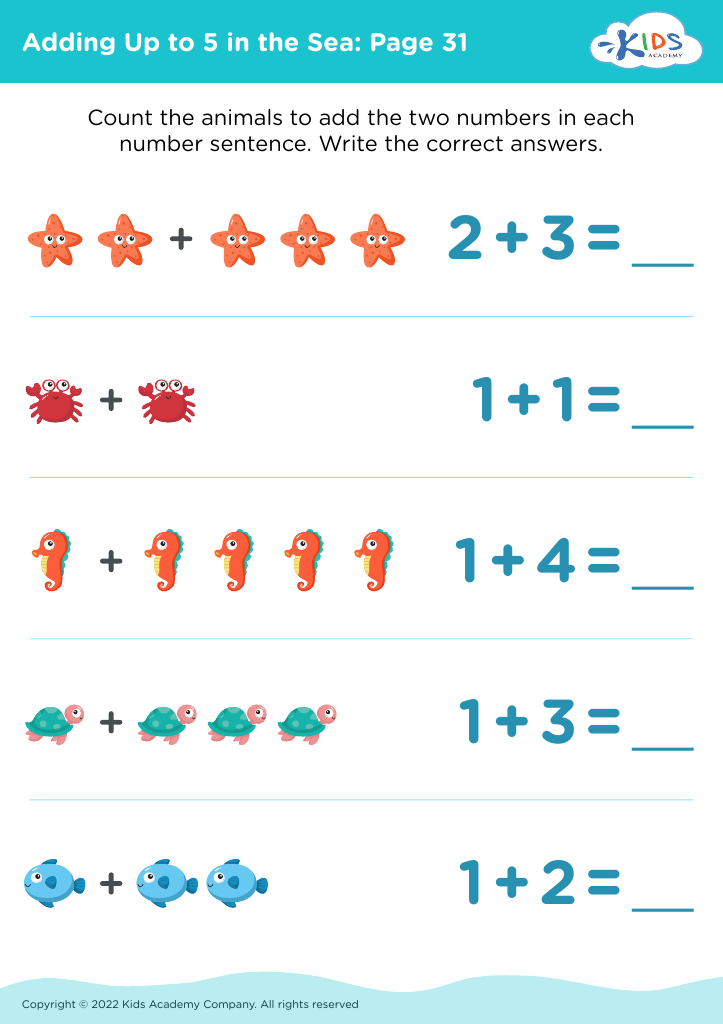
Adding Up to 5 in the Sea: Page 31
Worksheet
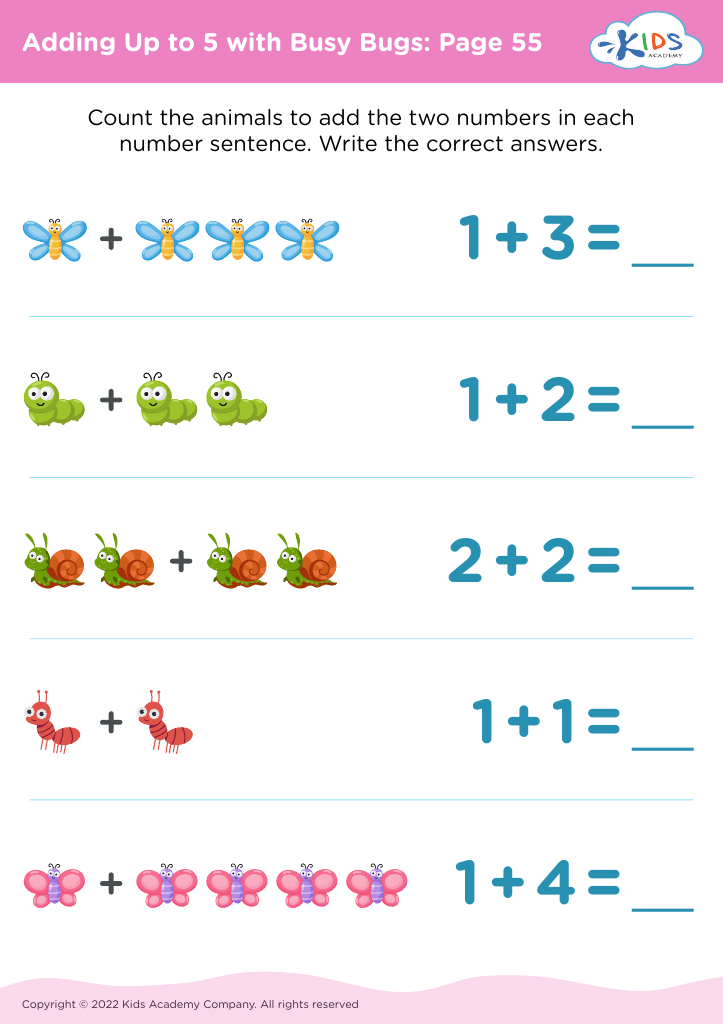
Adding Up to 5 with Busy Bugs: Page 55
Worksheet
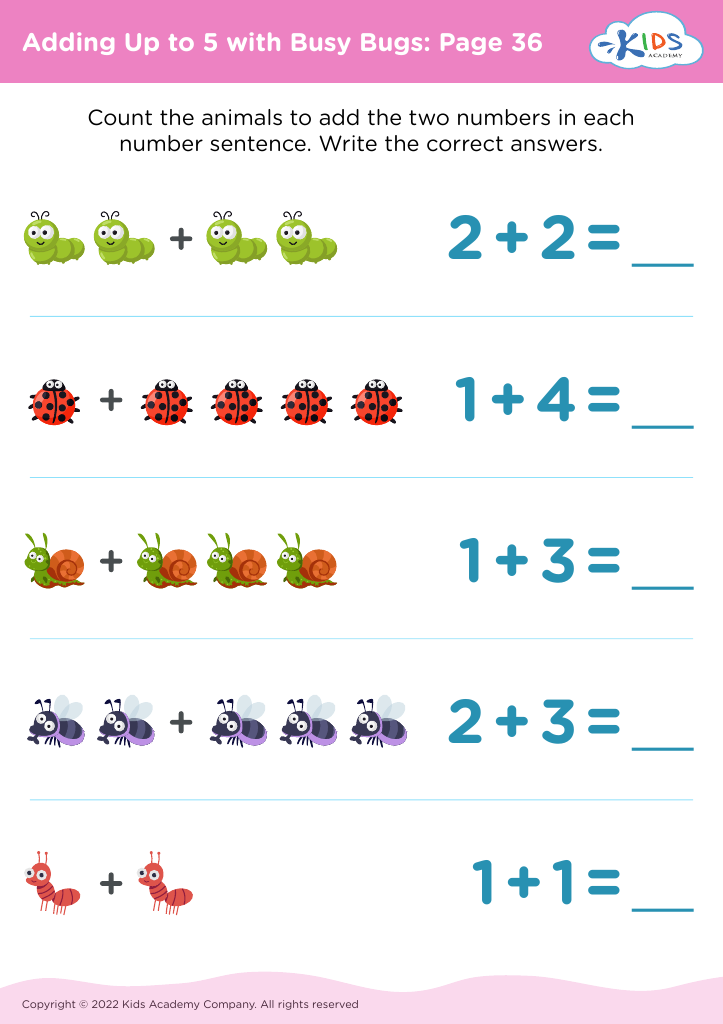
Adding Up to 5 with Busy Bugs: Page 36
Worksheet
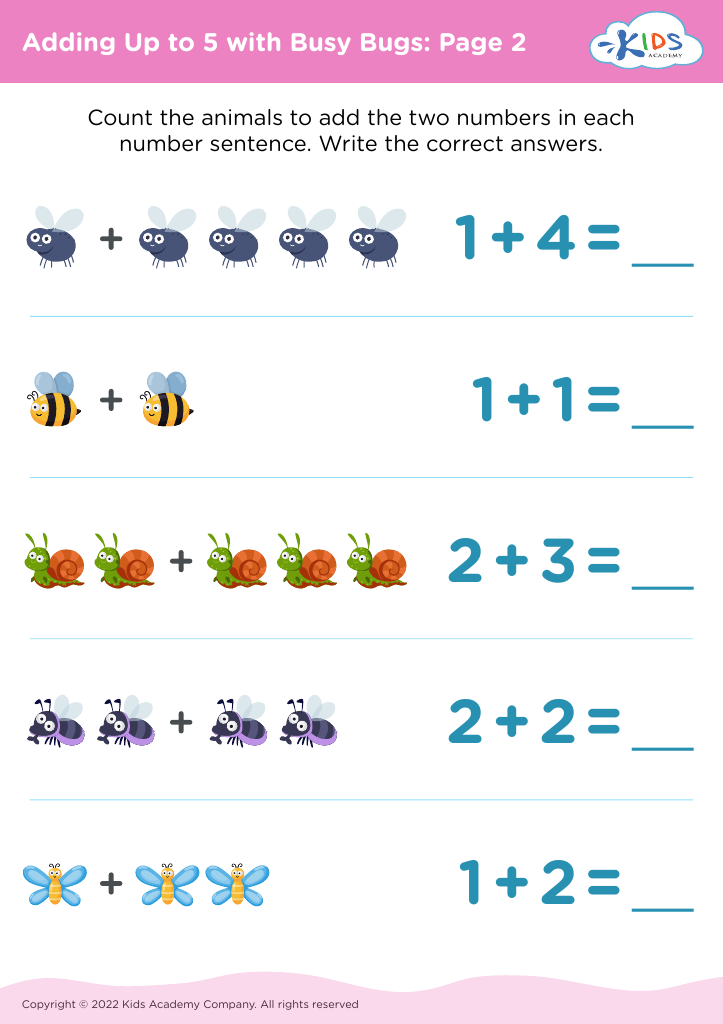
Adding Up to 5 with Busy Bugs: Page 2
Worksheet
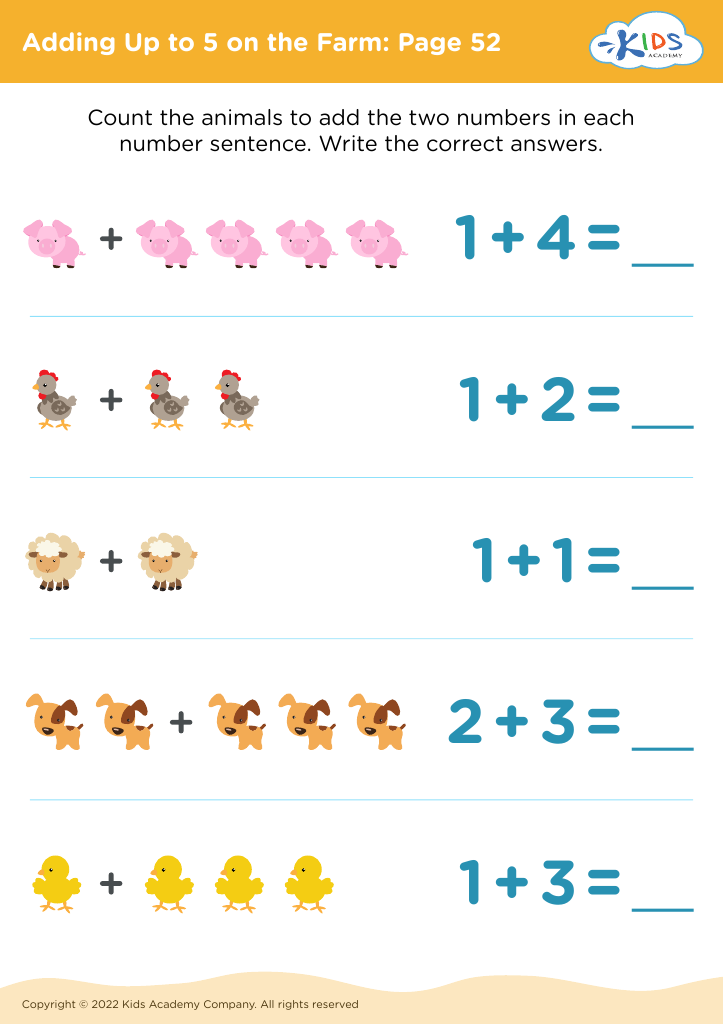
Adding Up to 5 on the Farm: Page 52
Worksheet


Number recognition and the ability to comprehend basic addition concepts, particularly adding up to 5, are foundational skills for children ages 5-7. Mastering these concepts is crucial as they serve as stepping stones for future mathematical understanding and academic success.

Firstly, number recognition develops a child's ability to identify and understand numbers, which fosters confidence in engaging with math. Recognizing numbers lays the groundwork for more complex operations, influencing a child's ability to tackle advanced math concepts down the line.

Secondly, addition within this range nurtures critical thinking and problem-solving skills. By engaging with problems involving sums up to 5, children learn to manipulate numbers, recognize patterns, and develop logical reasoning skills.

Additionally, these basic skills can help children in real-life situations, such as counting objects, sharing items, or managing money, nurturing their independence and practical knowledge.

Encouraging number recognition and addition in a fun, interactive way can significantly enhance a child's attitude toward math. Parents and teachers play a vital role in this process by creating engaging learning experiences, setting a positive tone for future learning, and helping children grow into confident, capable learners.