Problem-Solving Skills Adding Up to 5 Worksheets for Ages 5-7 - Page 2
37 filtered results
-
From - To



.jpg)



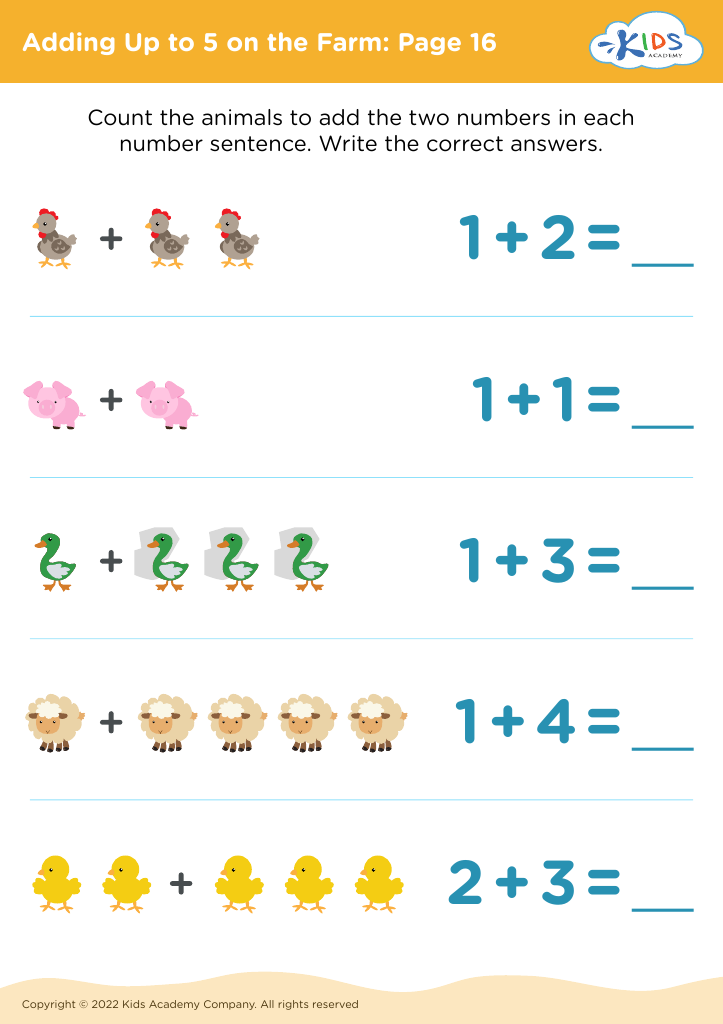
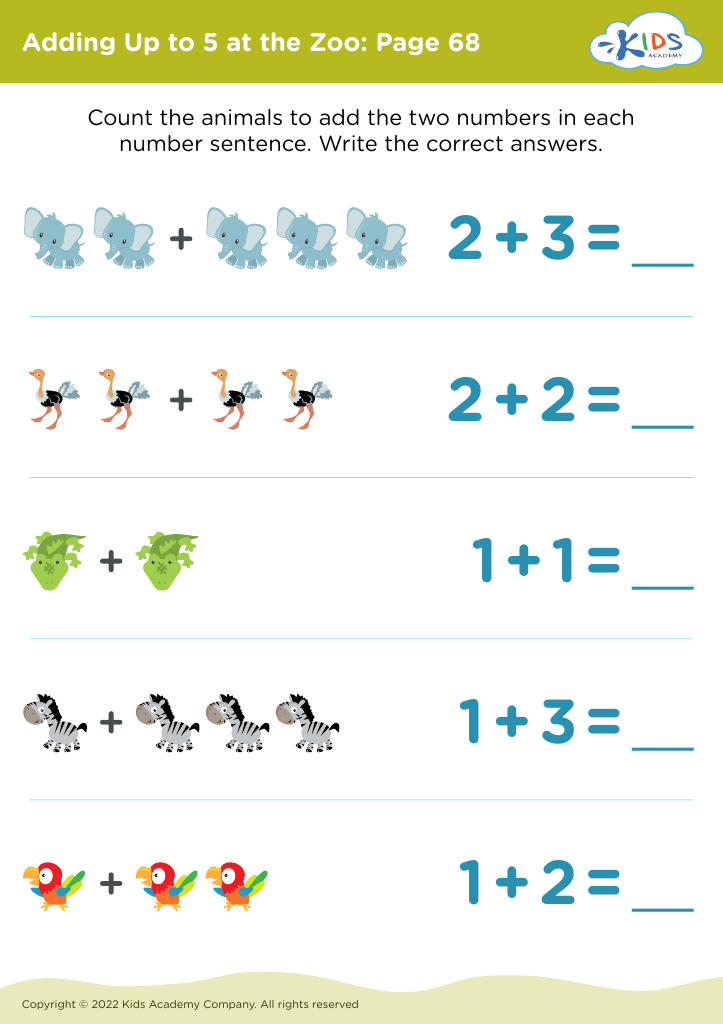
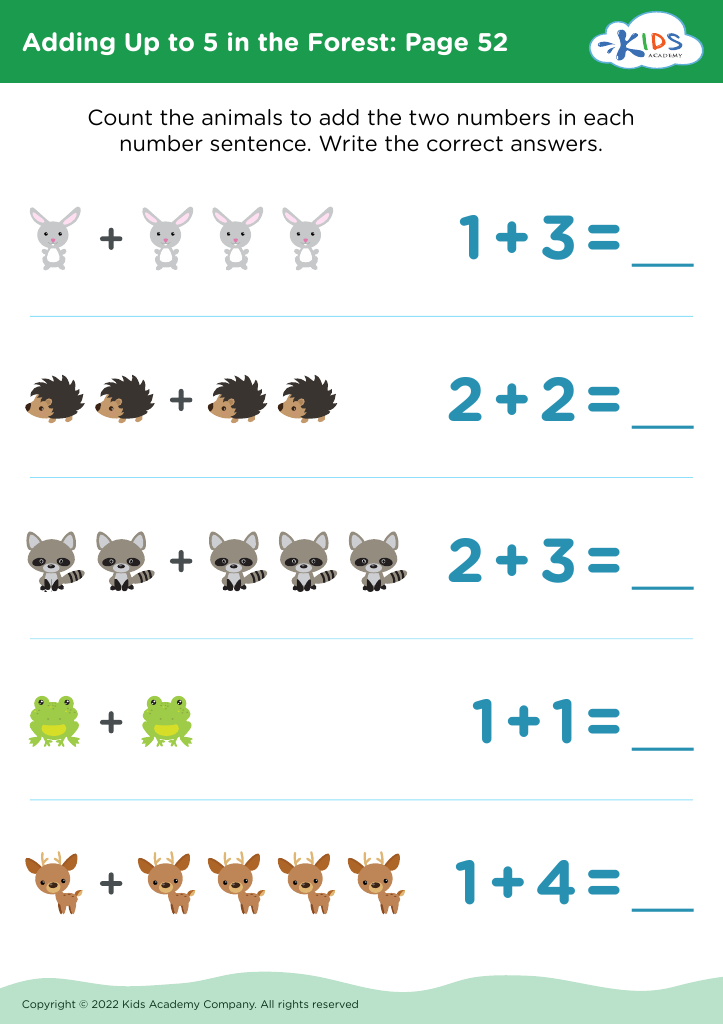
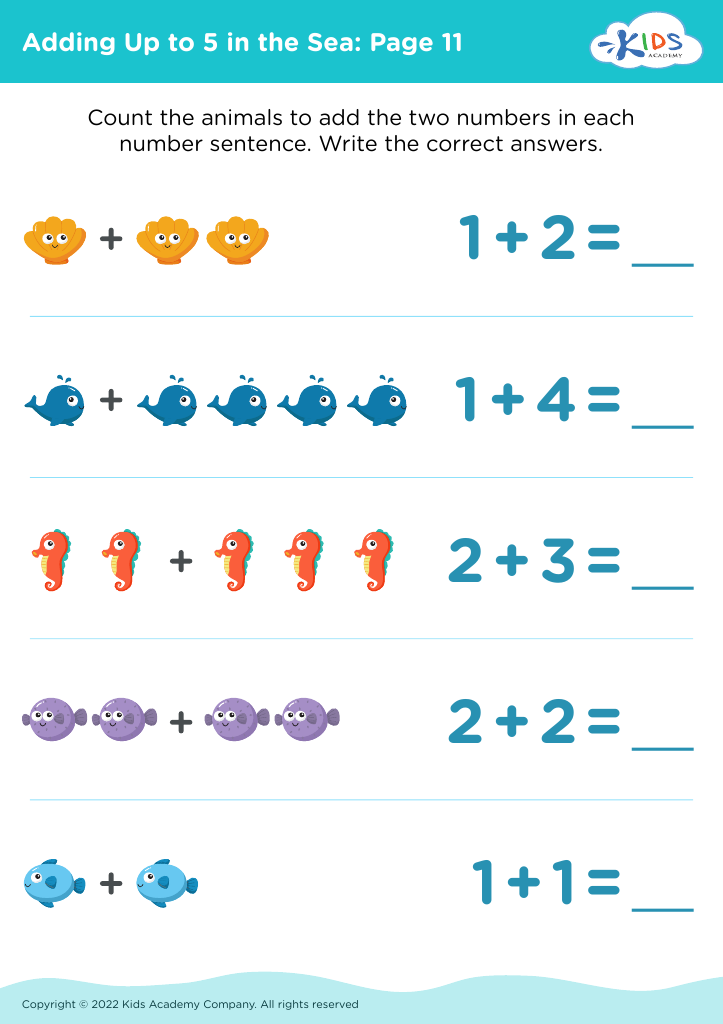
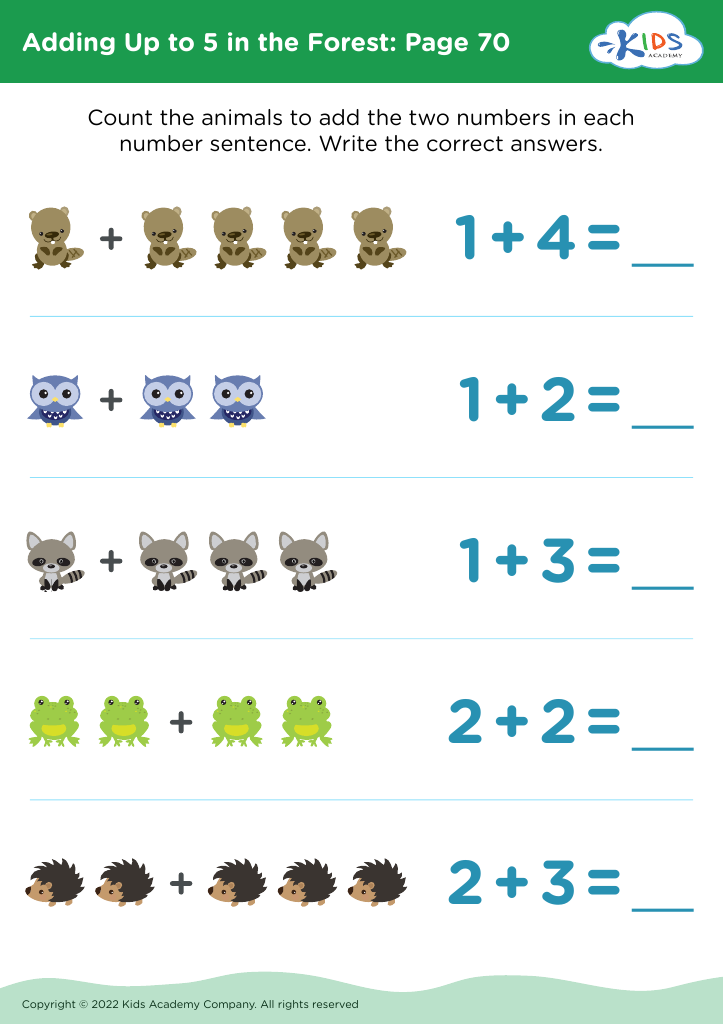
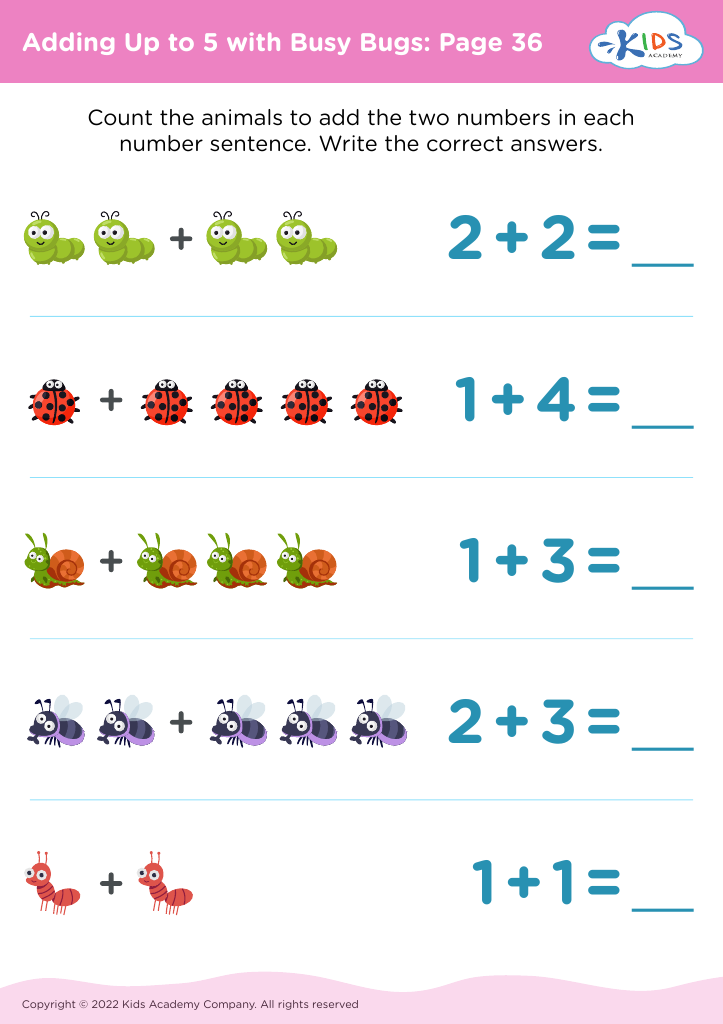
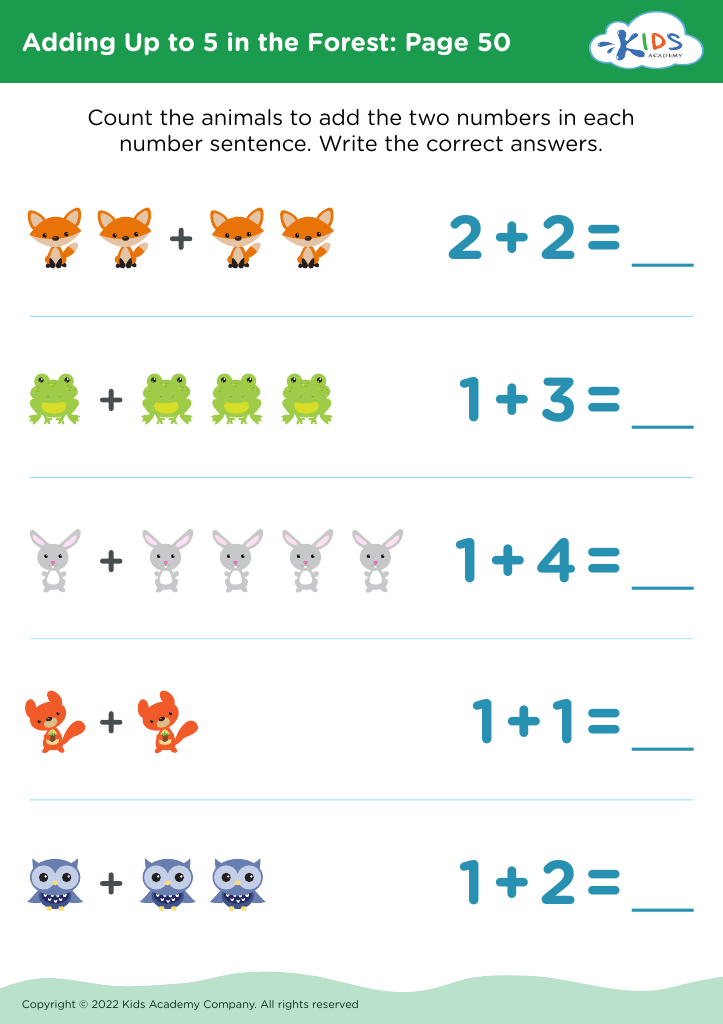
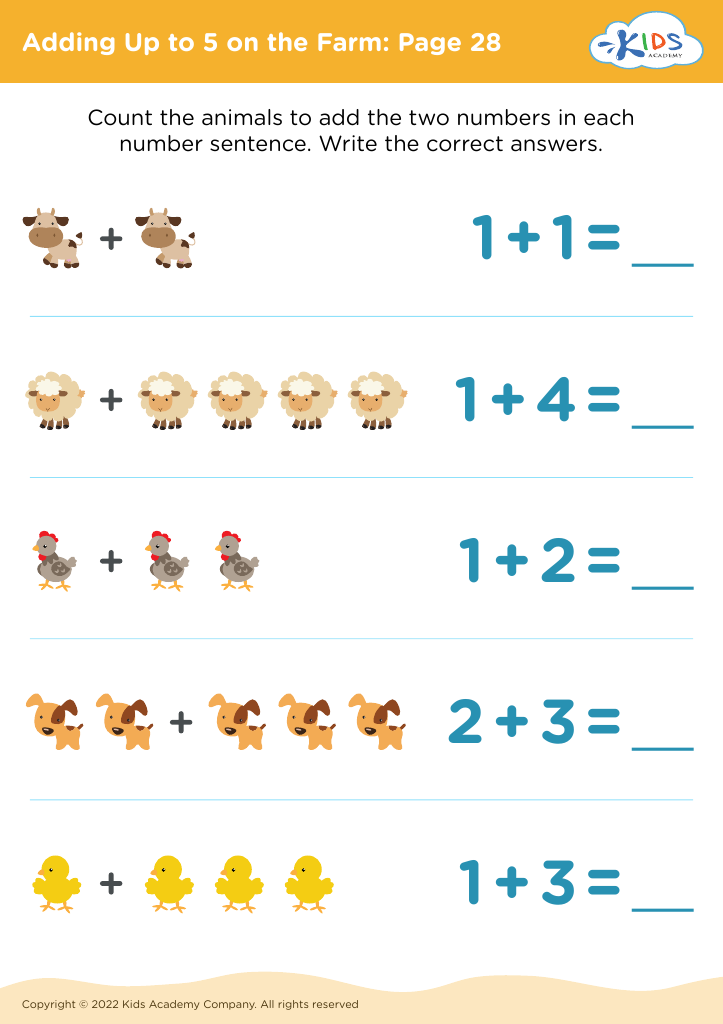
Problem-solving skills are fundamental building blocks for a child's intellectual development, and one crucial aspect is understanding and mastering basic addition, such as adding up to five. Parents and teachers should prioritize this for children aged 5-7 because it forms the foundation for future mathematical learning and cognitive development. At this age, children's brains are rapidly developing, making it an ideal time to nurture these important skills.
Learning to add small numbers enhances a child's numerical comprehension, enabling them to grasp more complex mathematical concepts later on. It also improves their logical thinking and ability to approach problems methodically. Additionally, practicing addition helps children develop fine motor skills and hand-eye coordination when they write and manipulate objects to visualize problems.
Beyond academics, problem-solving can positively impact various life skills. It promotes patience, perseverance, and adaptability, qualities highly beneficial for personal growth and social interactions. It also boosts confidence as children experience the satisfaction of finding solutions independently.
Engaging in fun and interactive addition activities, whether through games, stories, or hands-on items like blocks, can significantly enhance a child's enthusiasm for learning. By focusing on addition up to five, parents and teachers equip children with a critical toolset that supports a wide array of future educational and life experiences.








