Filters

84 filtered results

Clear all filters
Favorites
With answer key
Interactive

84 filtered results

Difficulty Level

Grade


Check out this FREE Trial Lesson on Adding Up to 5 for age 5-7!

H

Favorites
With answer key
Interactive
  • 5-7
  • Visual Learning
  • Adding Up to 5
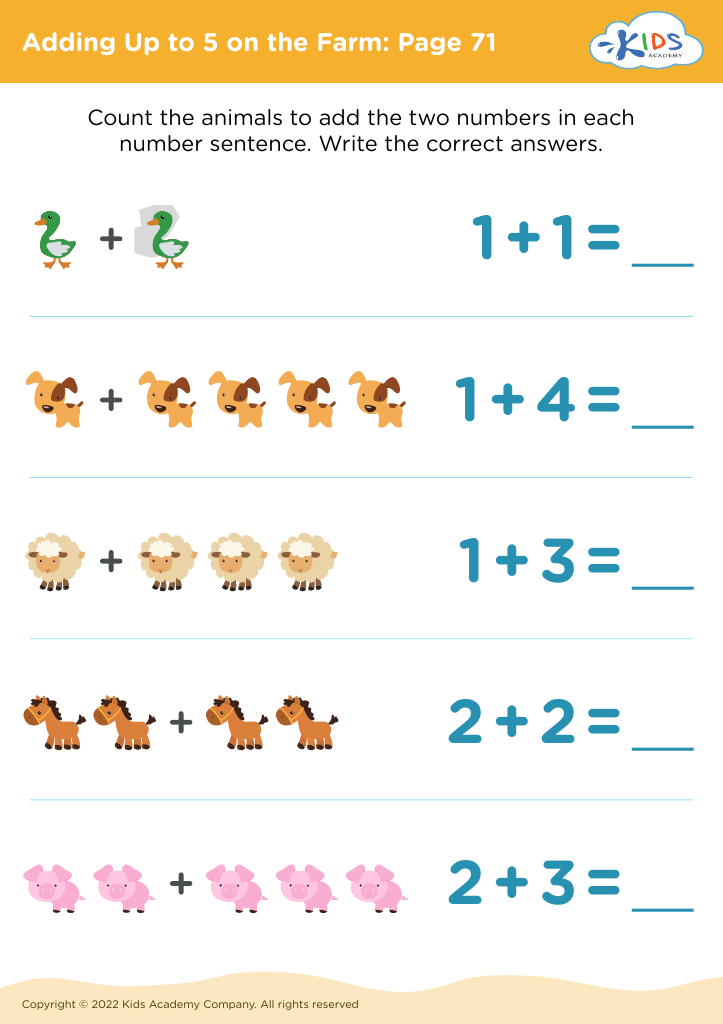
Adding Up to 5 on the Farm: Page 71
Worksheet
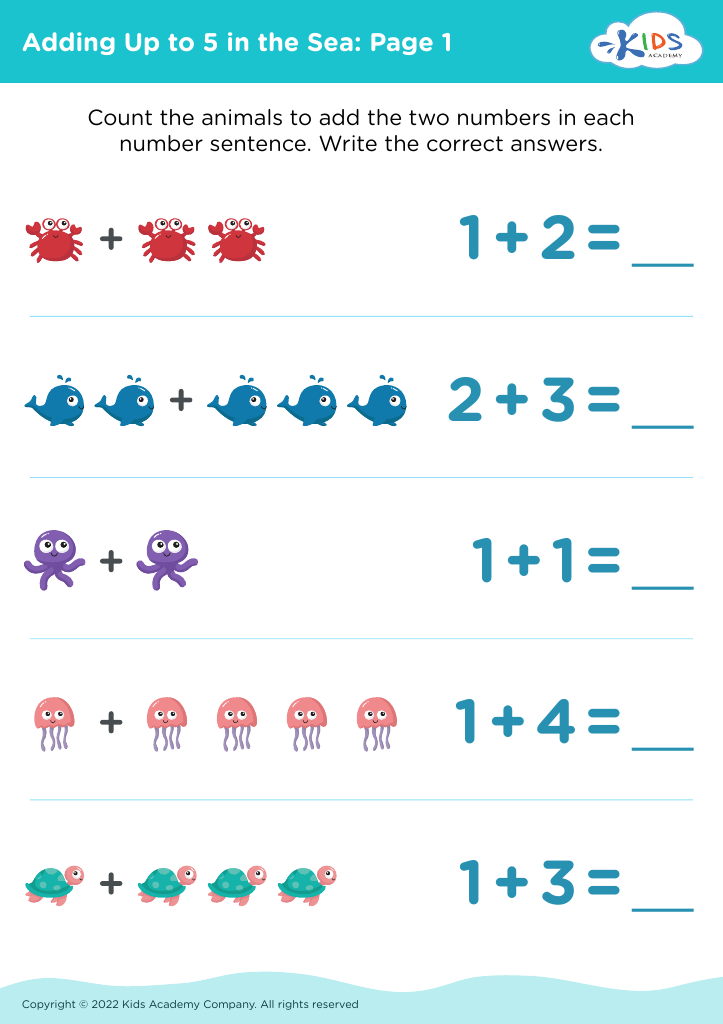
Adding Up to 5 in the Sea: Page 1

Adding Up to 5 in the Sea: Page 1

Adding Up to 5 in the Sea: Page 1
Worksheet
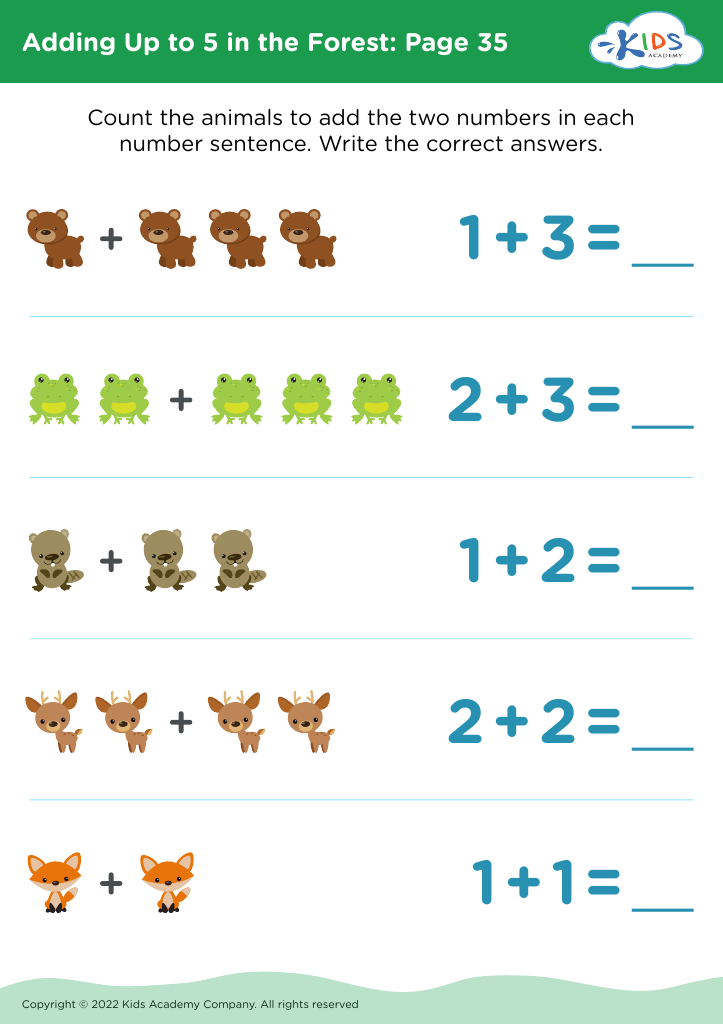
Adding Up to 5 in the Forest: Page 35
Worksheet
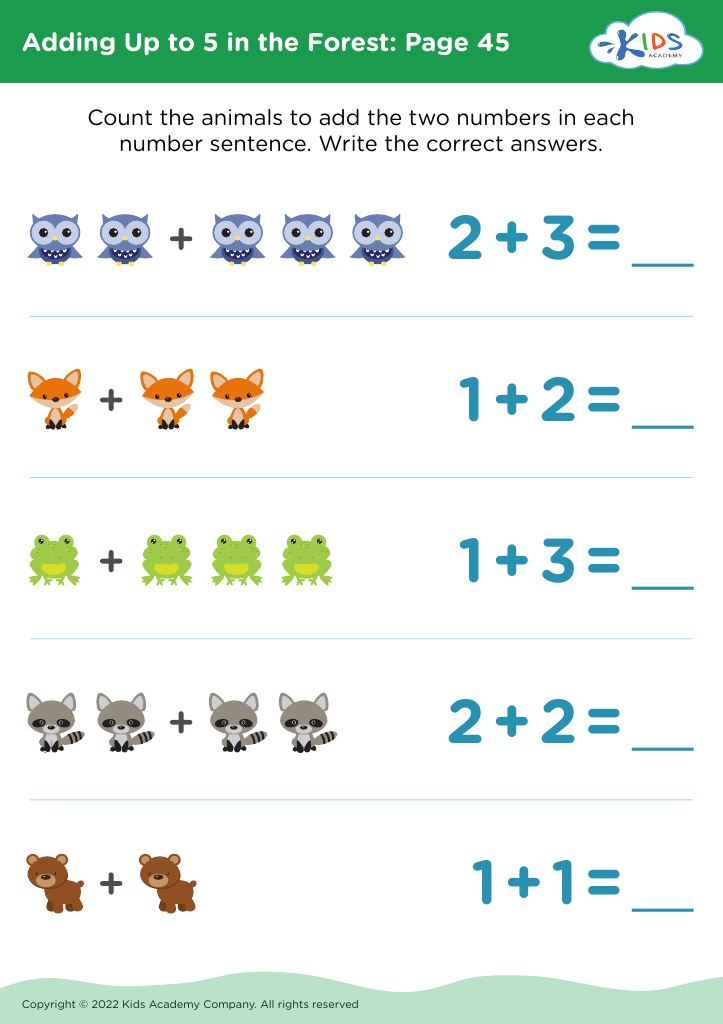
Adding Up to 5 in the Forest: Page 45
Worksheet
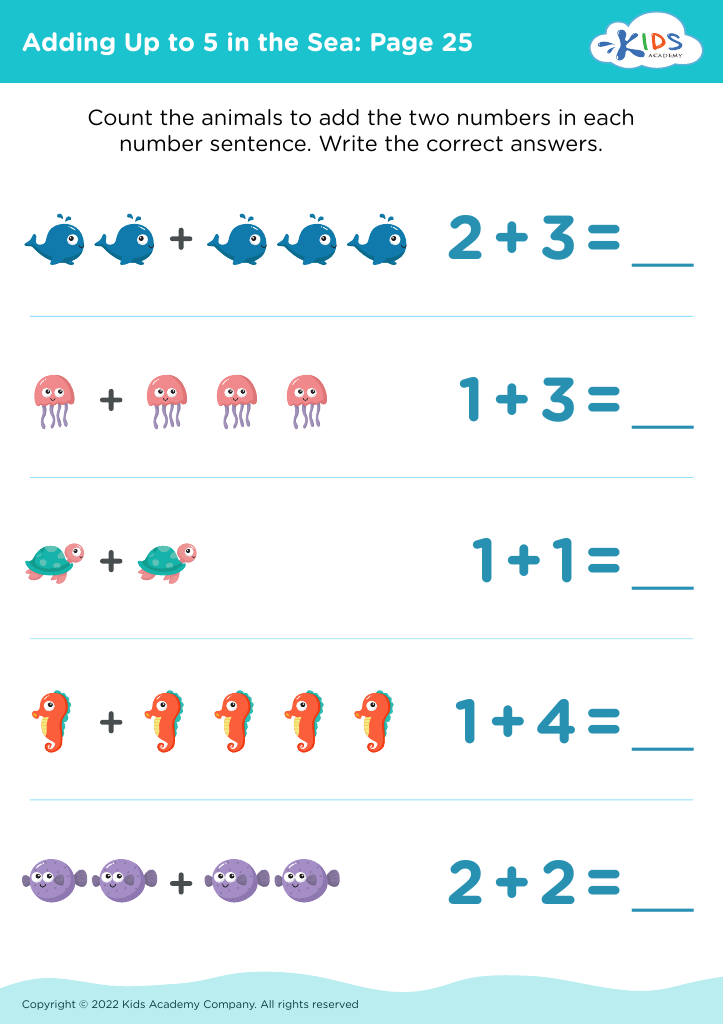
Adding Up to 5 in the Sea: Page 25
Worksheet
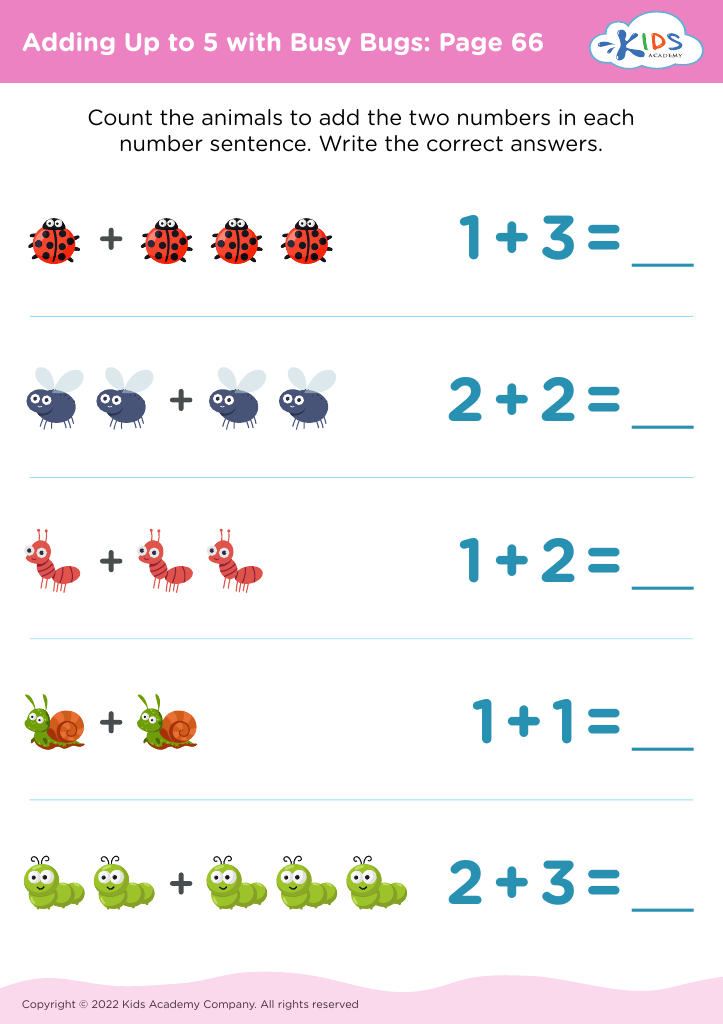
Adding Up to 5 with Busy Bugs: Page 66
Worksheet
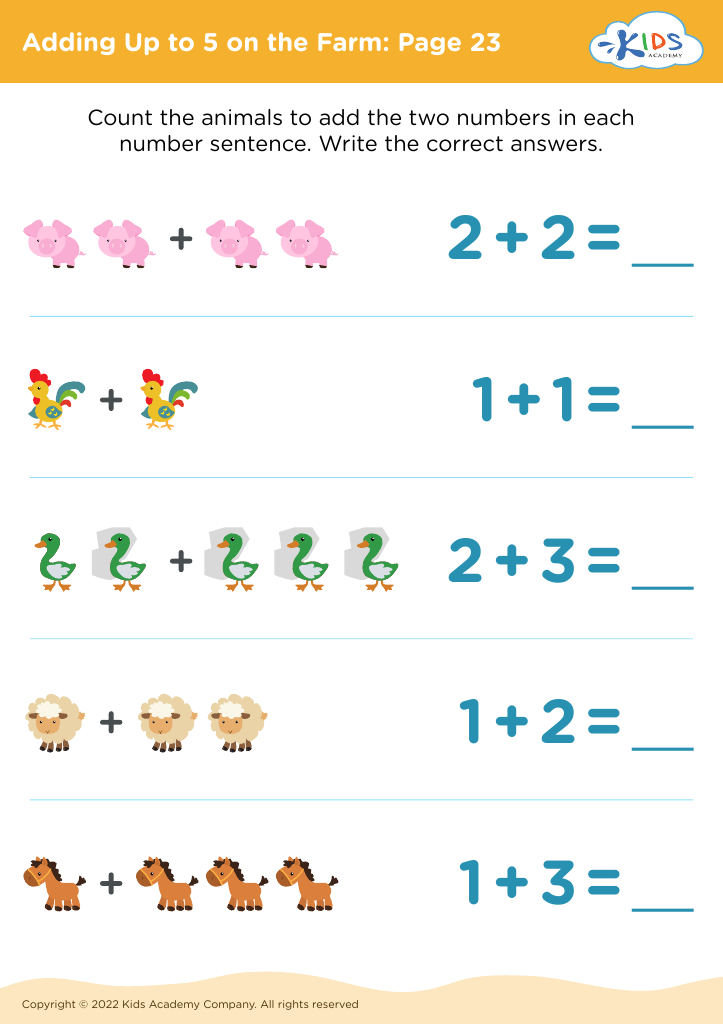
Adding Up to 5 on the Farm: Page 23
Worksheet
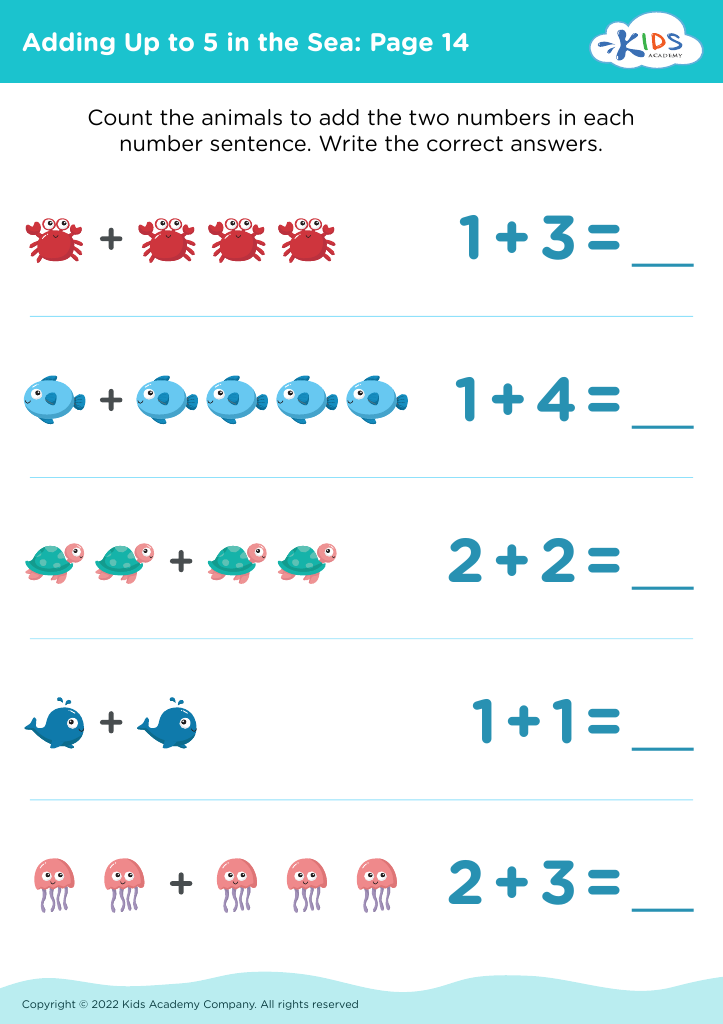
Adding Up to 5 in the Sea: Page 14
Worksheet
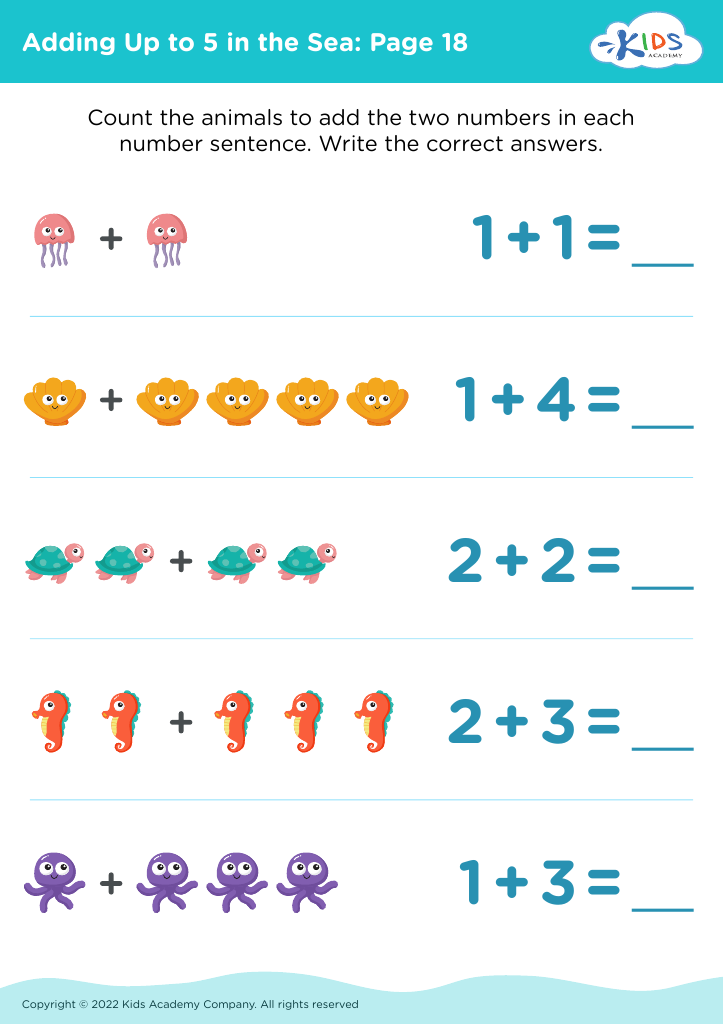
Adding Up to 5 in the Sea: Page 18
Worksheet
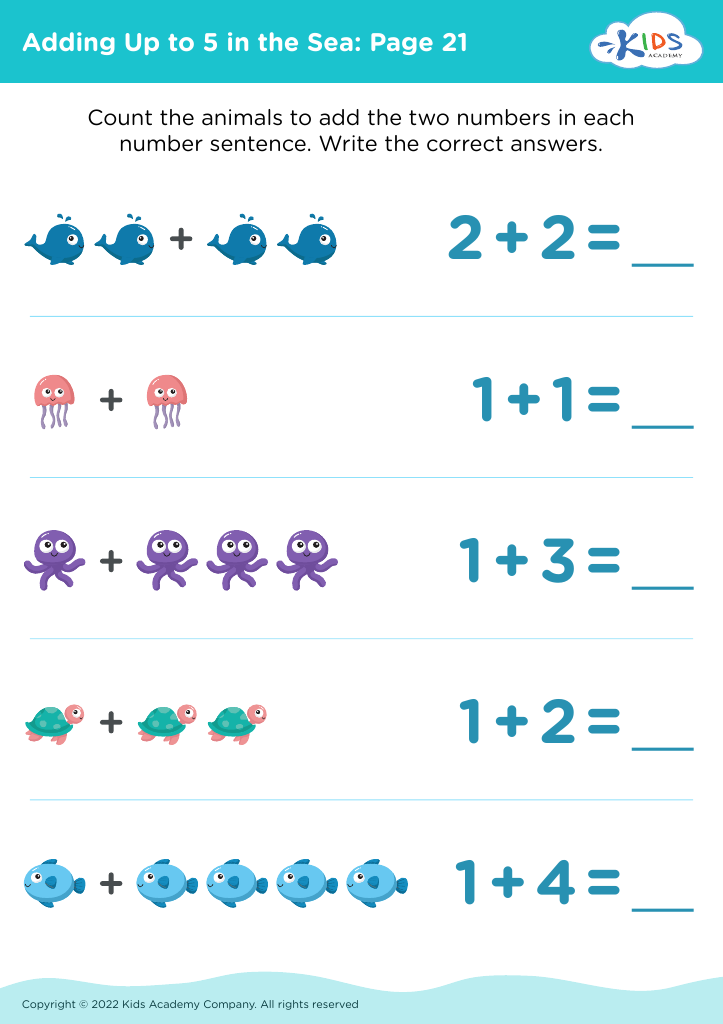
Adding Up to 5 in the Sea: Page 21
Worksheet
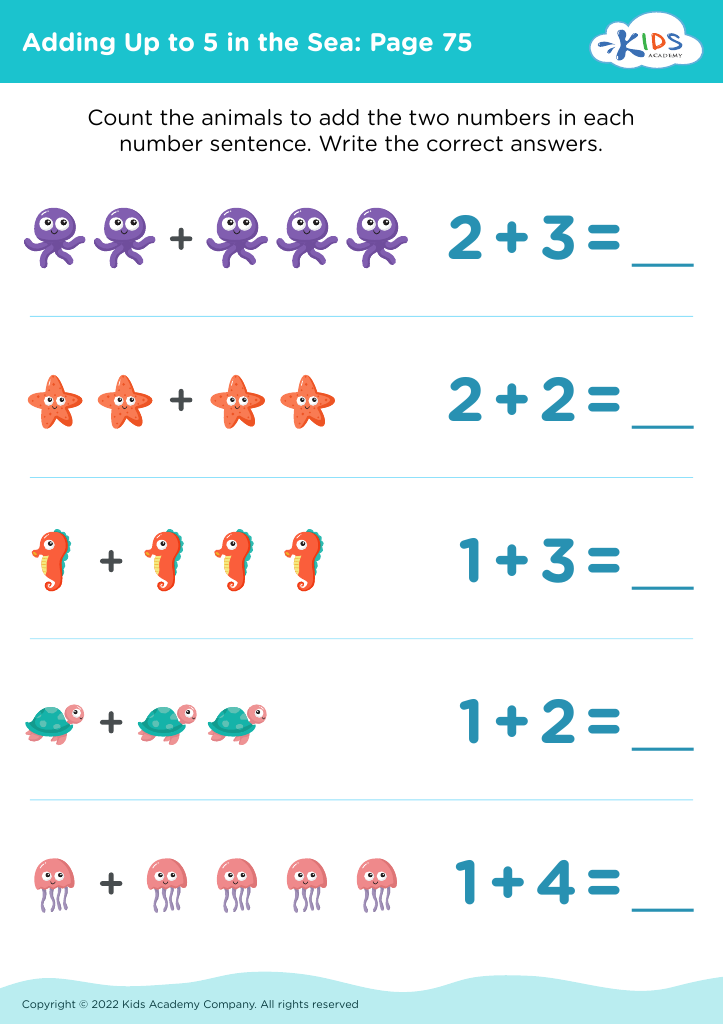
Adding Up to 5 in the Sea: Page 75
Worksheet
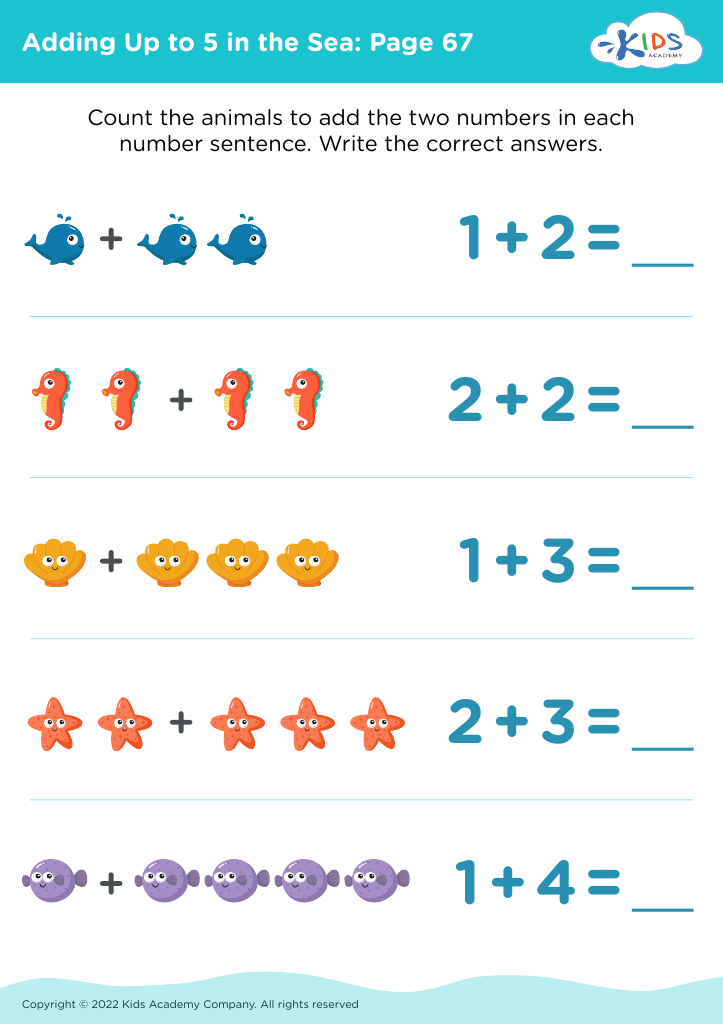
Adding Up to 5 in the Sea: Page 67
Worksheet
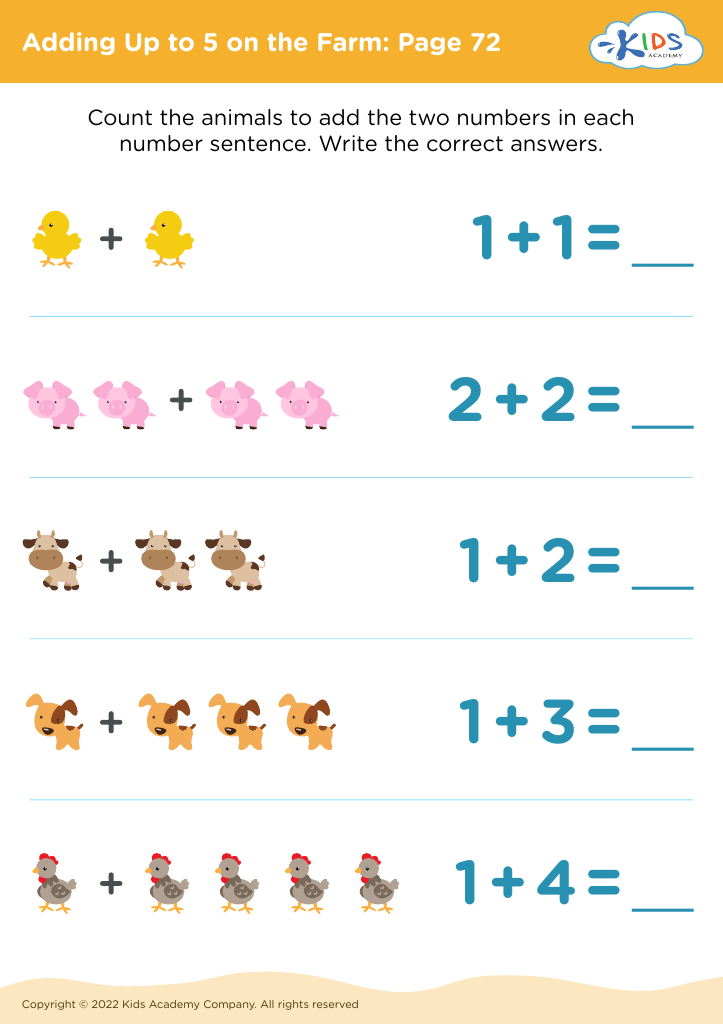
Adding Up to 5 on the Farm: Page 72
Worksheet
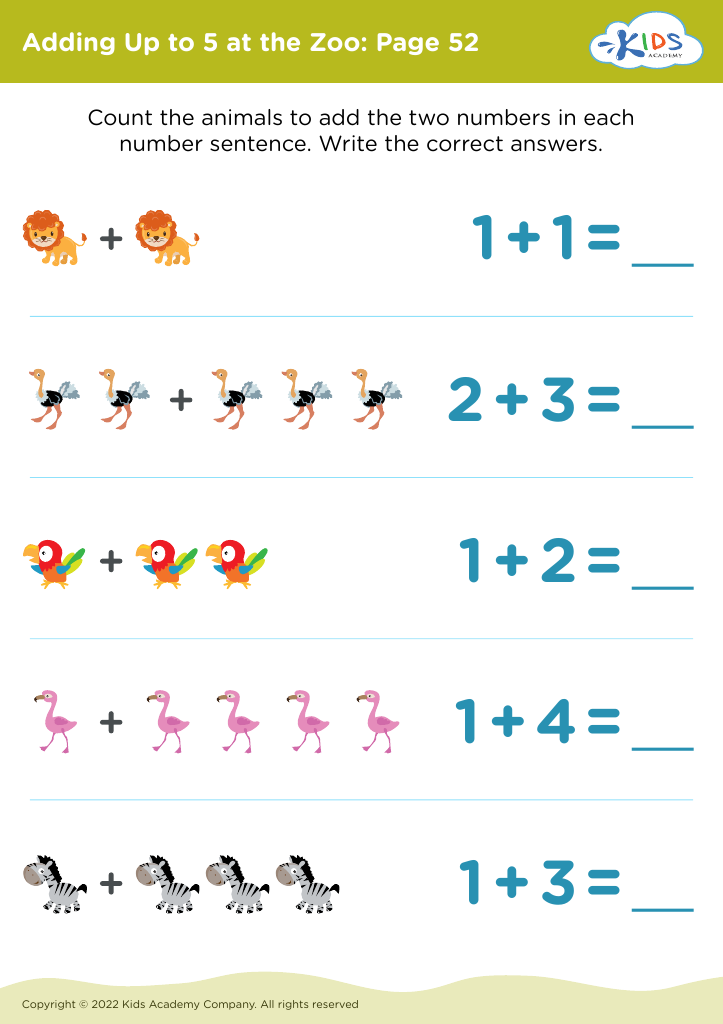
Adding Up to 5 at the Zoo: Page 52
Worksheet
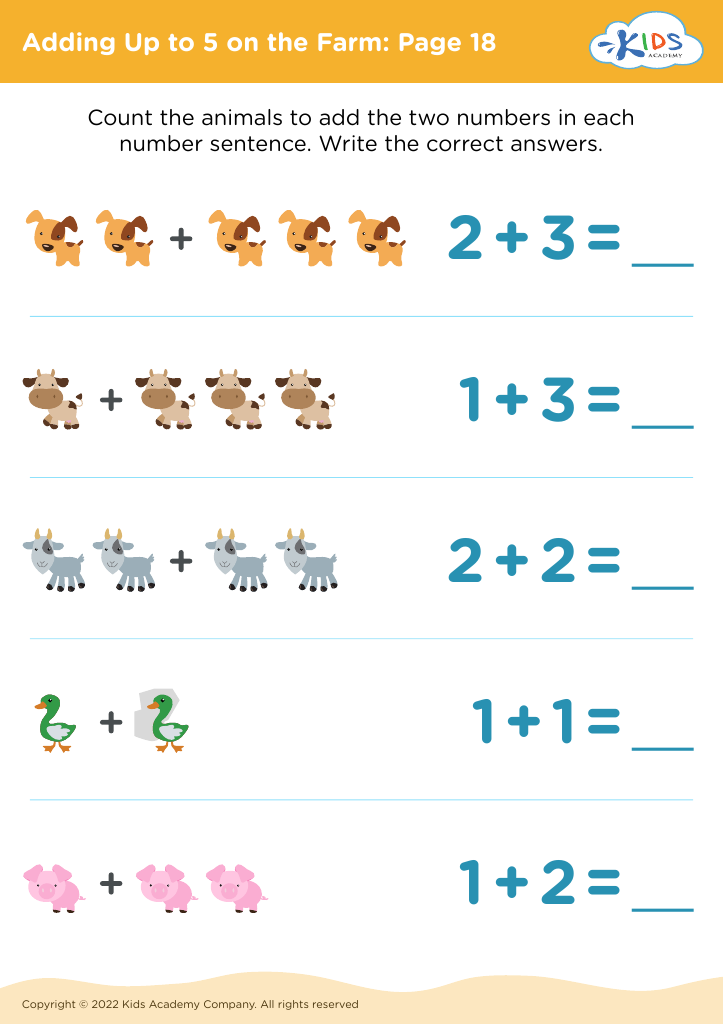
Adding Up to 5 on the Farm: Page 18
Worksheet
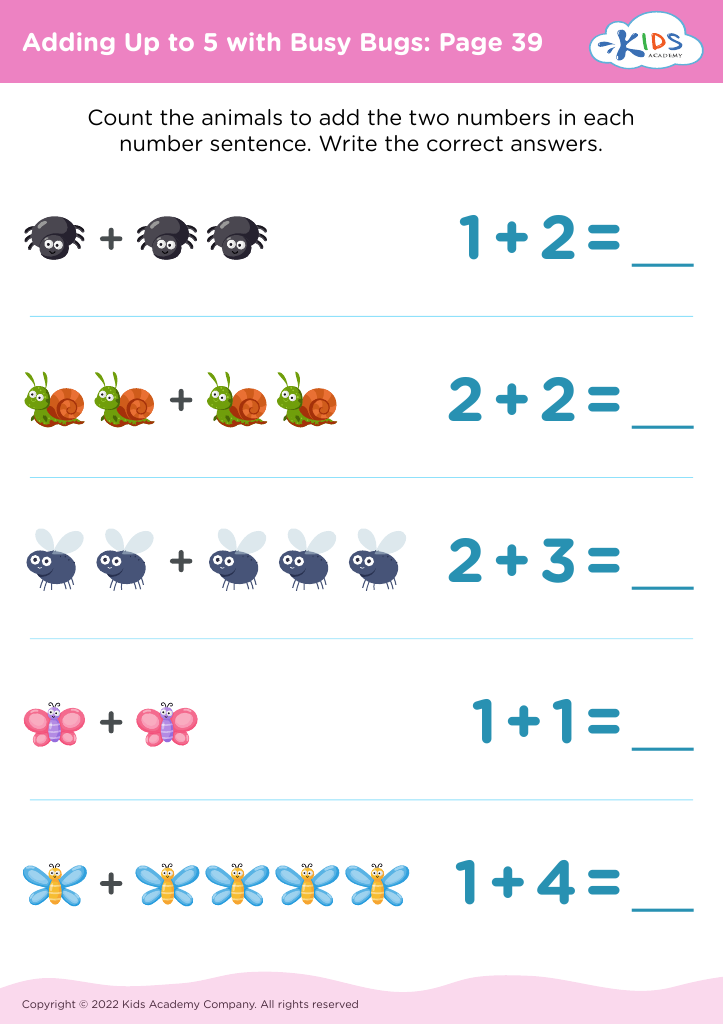
Adding Up to 5 with Busy Bugs: Page 39
Worksheet
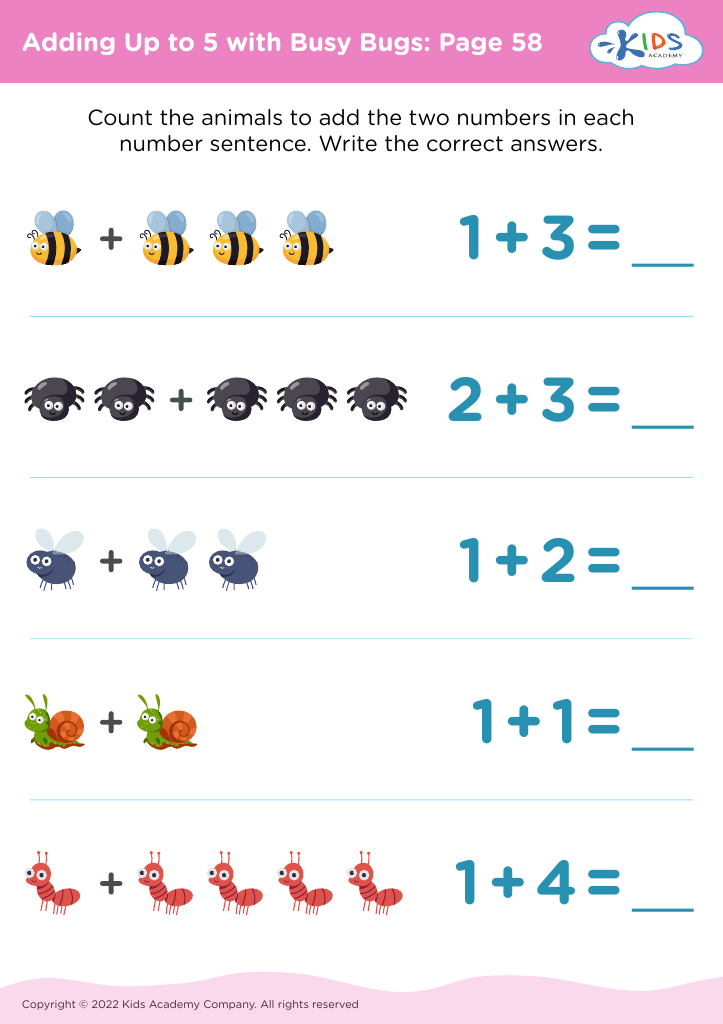
Adding Up to 5 with Busy Bugs: Page 58
Worksheet
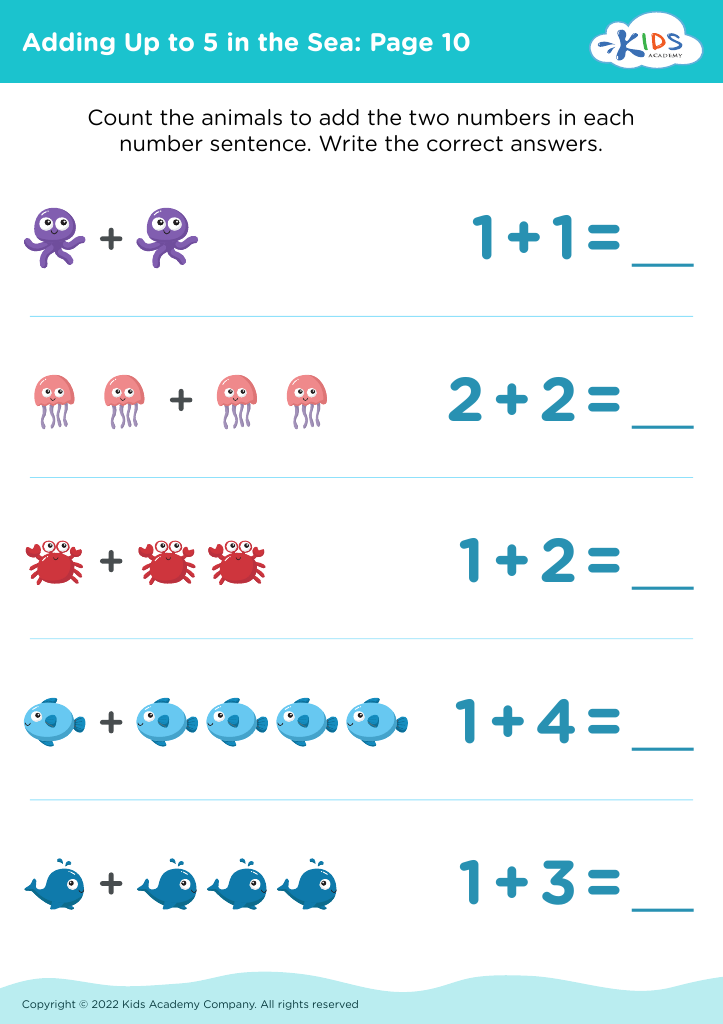
Adding Up to 5 in the Sea: Page 10
Worksheet
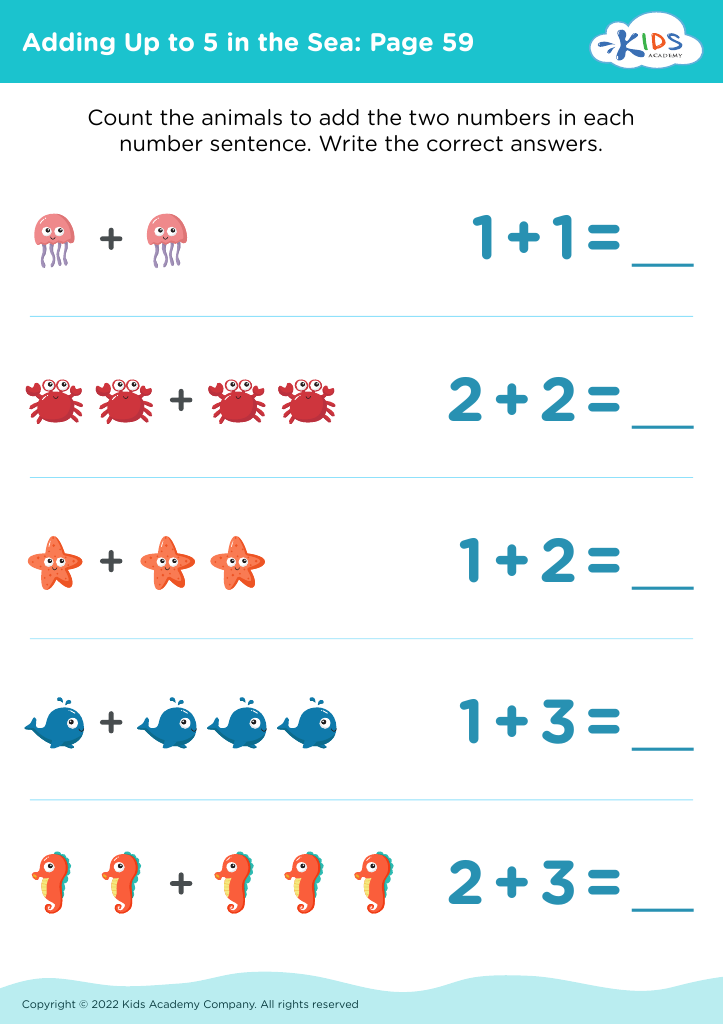
Adding Up to 5 in the Sea: Page 59
Worksheet
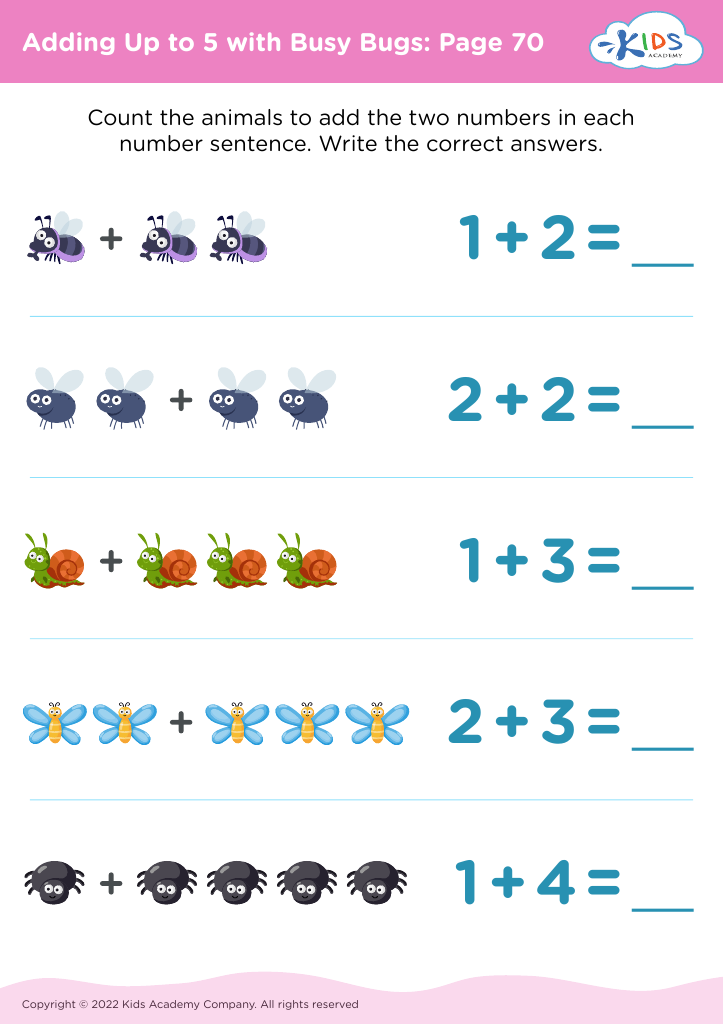
Adding Up to 5 with Busy Bugs: Page 70
Worksheet
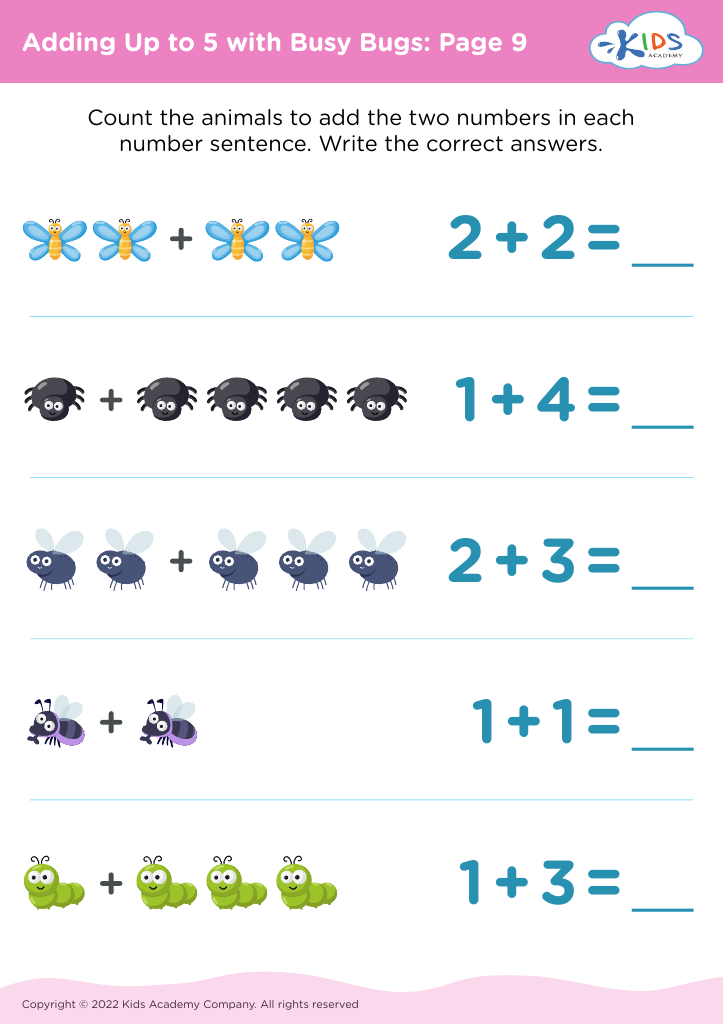
Adding Up to 5 with Busy Bugs: Page 9
Worksheet
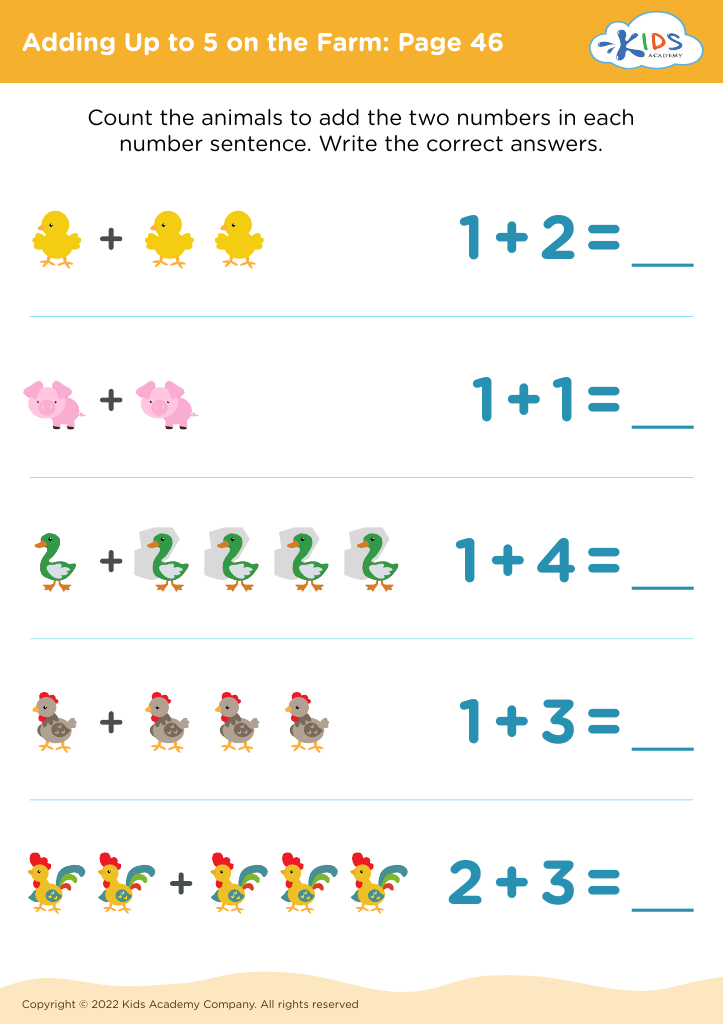
Adding Up to 5 on the Farm: Page 46
Worksheet
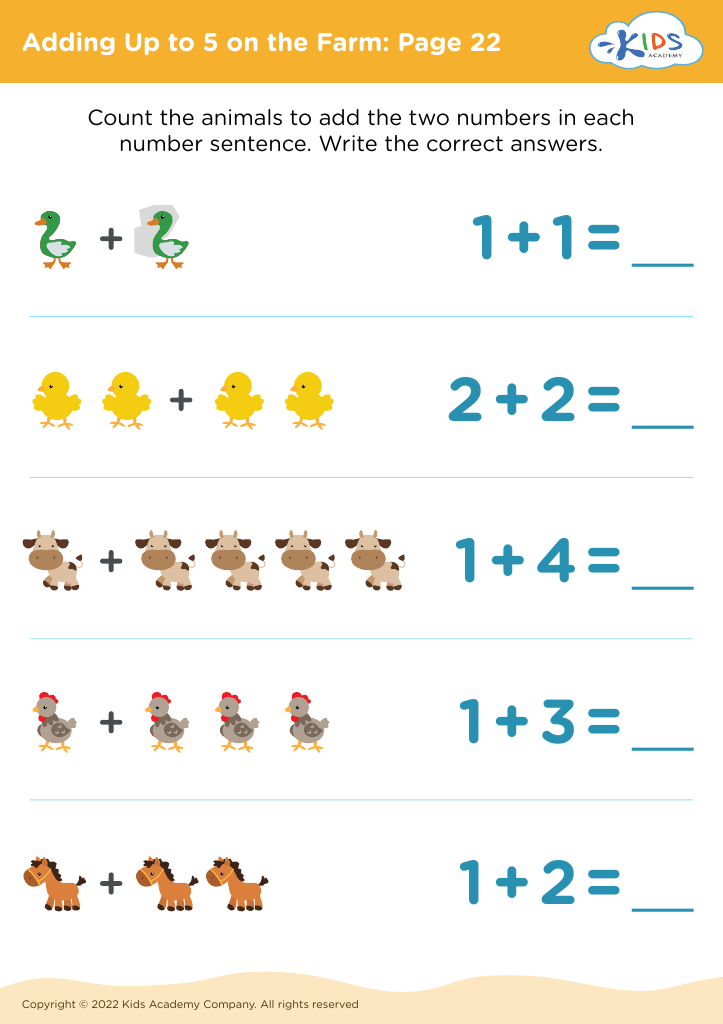
Adding Up to 5 on the Farm: Page 22
Worksheet
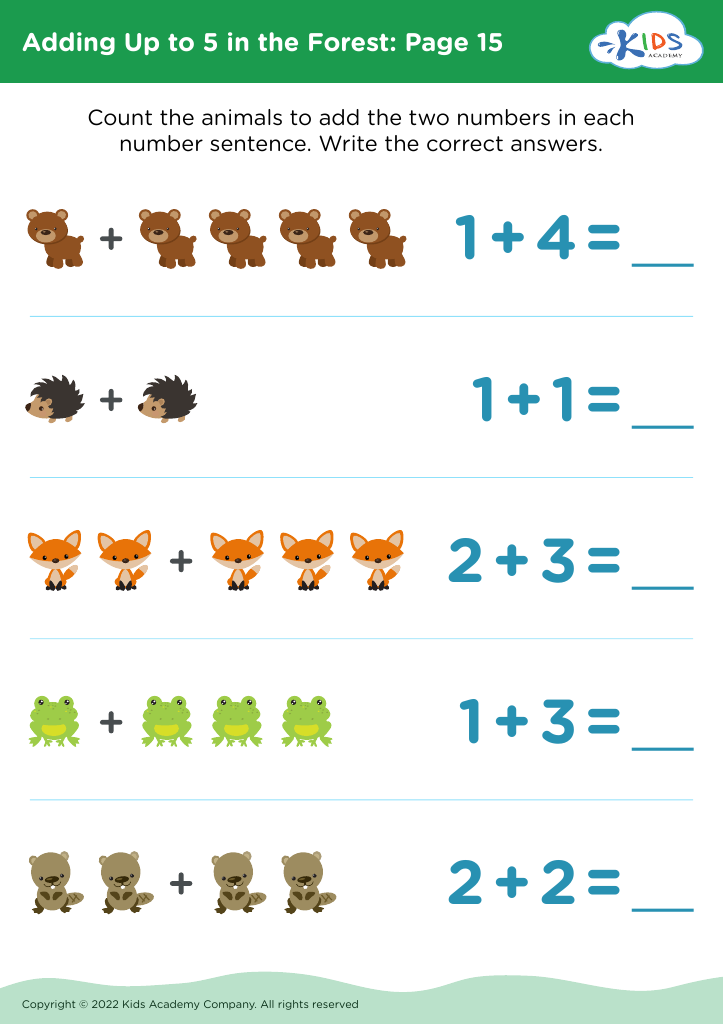
Adding Up to 5 in the Forest: Page 15
Worksheet


Visual learning is an essential method for helping young children, especially those aged 5-7, grasp fundamental math concepts such as adding up to 5. At this developmental stage, children are highly responsive to visual stimuli, which helps in cementing basic math skills.

When children use visual aids like fingers, counters, or picture cards, they can better internalize the concept of addition. These tools make abstract concepts tangible and relatable, fostering a deeper understanding. Visual learning helps bridge the gap between concrete and abstract thinking, a critical developmental transition at this age.

Moreover, engaging with visual materials caters to various learning styles. Some children may not grasp arithmetic quickly through verbal explanation alone. Visual representations can illustrate relationships between numbers in a way that resonates with visual and kinesthetic learners.

Research also shows that visual learning can improve retention and recall, essential skills for young learners who are in the early stages of building their educational foundations. This method supports differentiated learning by enabling teachers and parents to tailor activities to meet individual needs.

Incorporating visual learning is not just about making math fun; it equips children with essential problem-solving skills, encourages critical thinking, and lays a robust foundation for future mathematical concepts. This makes an investment in visual learning highly valuable for both parents and teachers.