Basic Addition Addition and Subtraction Word Problems Worksheets for Ages 5-7
5 filtered results
-
From - To
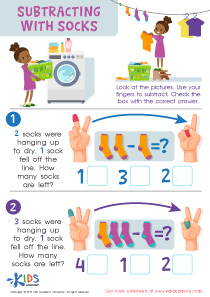
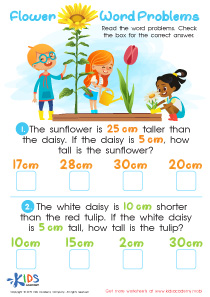
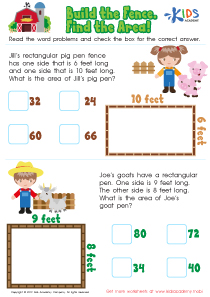
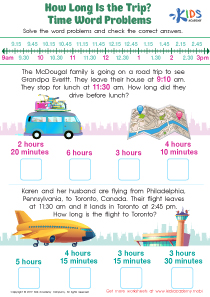
Welcome to our “Basic Addition and Subtraction Word Problems Worksheets” for ages 5-7! This collection of engaging worksheets is designed to help young learners practice fundamental math skills through fun, real-life scenarios. Each worksheet features colorful illustrations and relatable stories, making math enjoyable and applicable. Children will advance their addition and subtraction abilities as they solve various problems that enhance critical thinking and comprehension. Our resources support early math learning by fostering confidence and enthusiasm. Perfect for teachers, parents, and homeschooling families, these worksheets provide an exciting way to build essential math skills in a supportive environment. Explore the fun today!
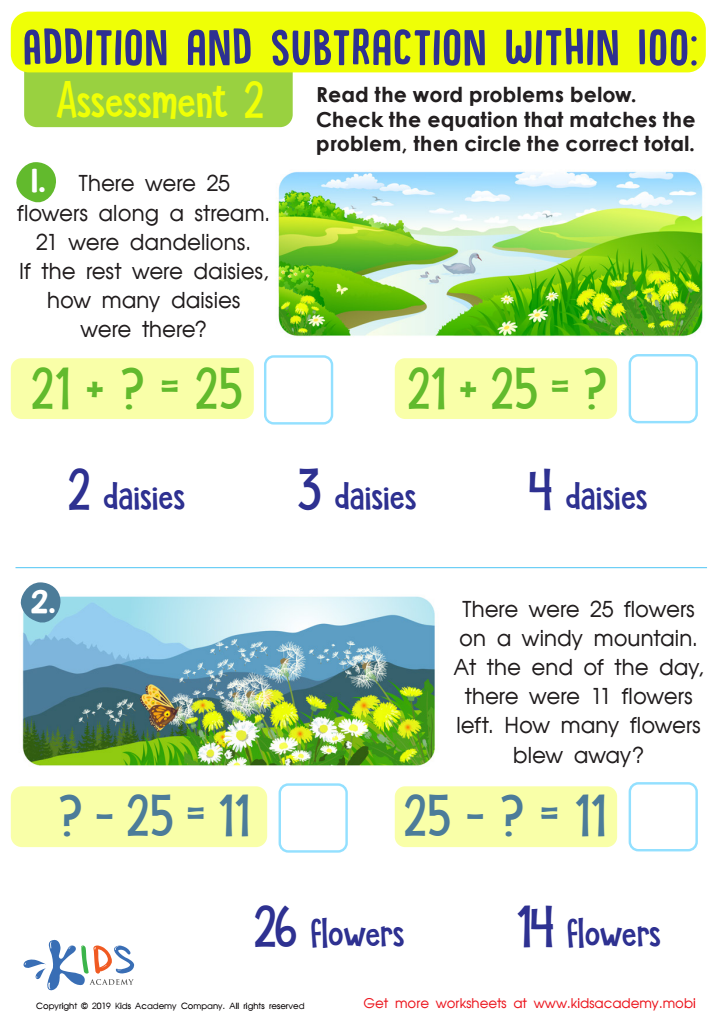
Assessment 2 Math Worksheet
 Assign to My Students
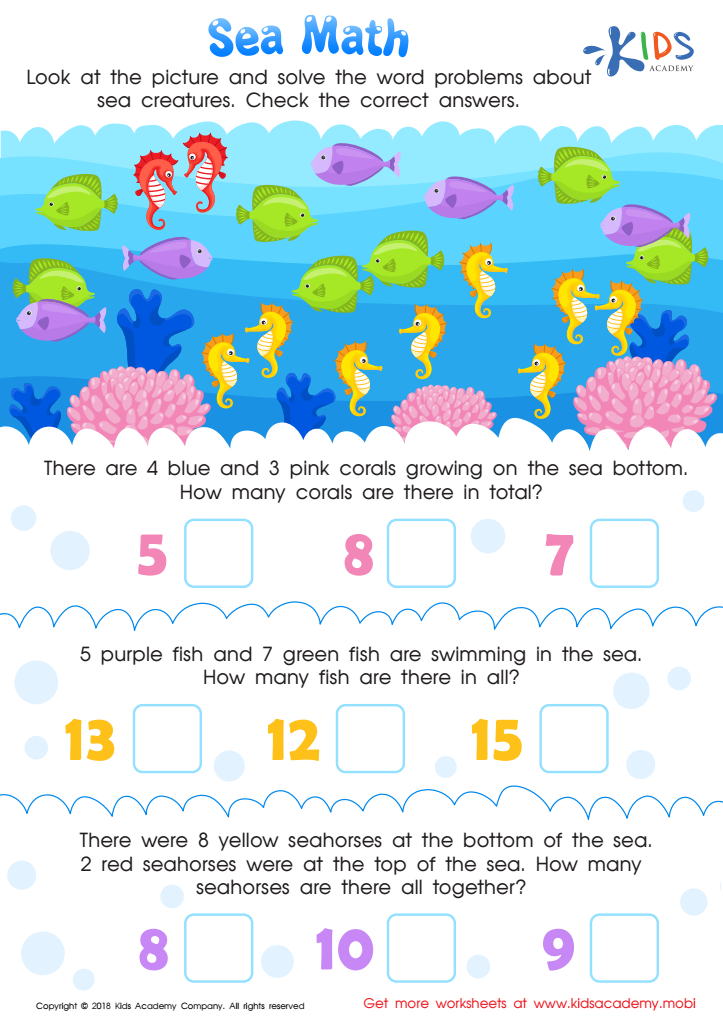
Sea Math Worksheet
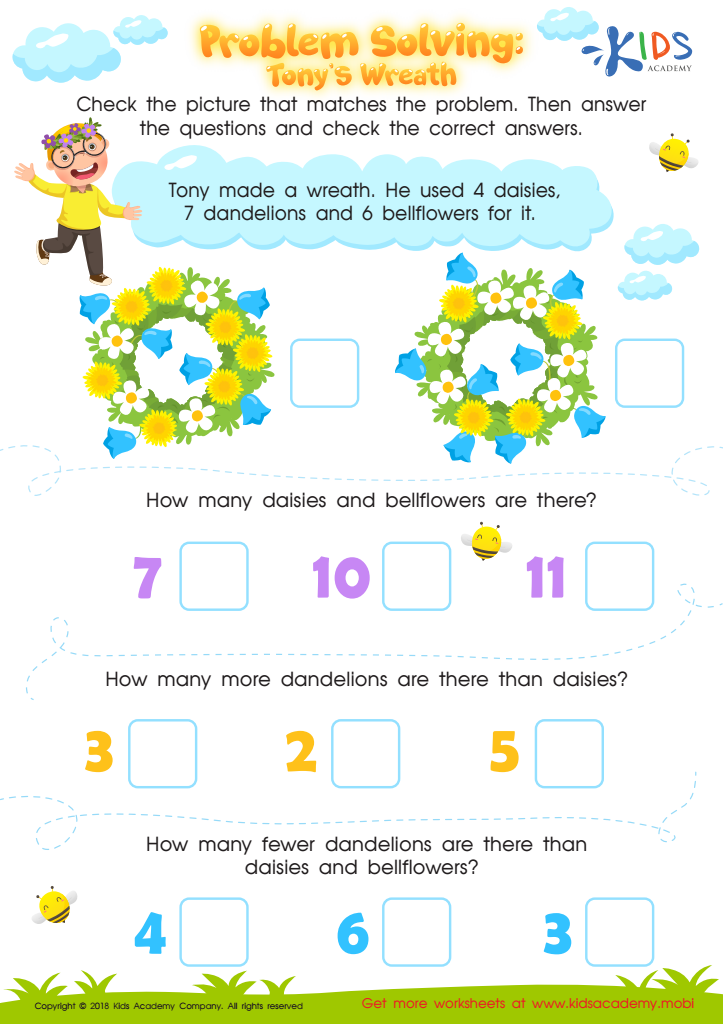
Problem Solving: Tony's Wreath Worksheet
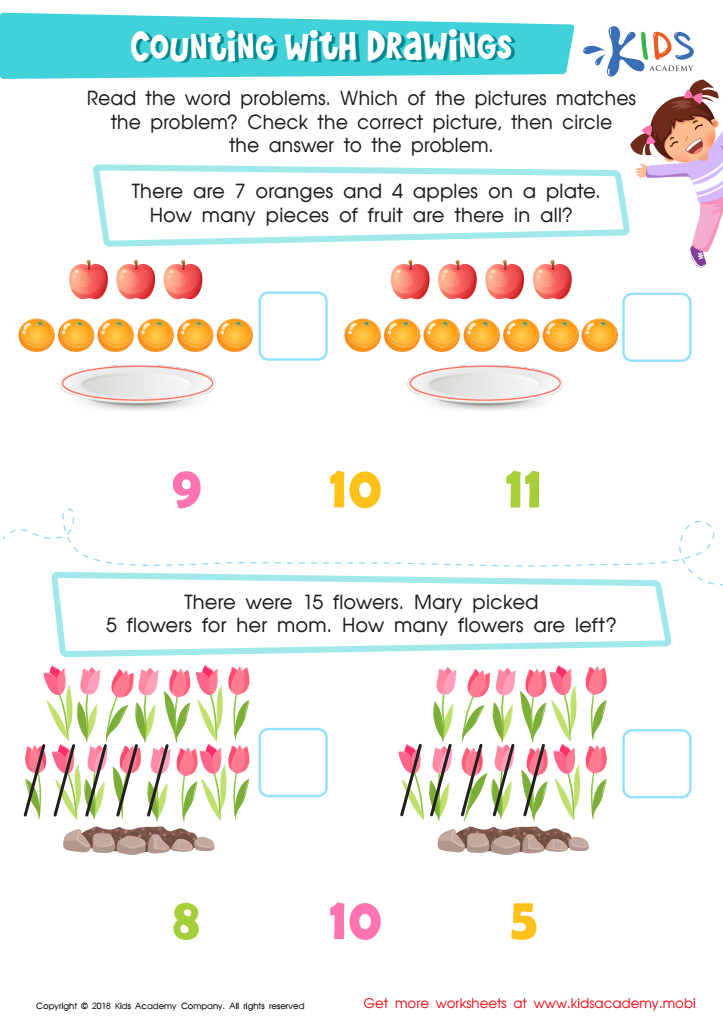
Counting with Drawings:Fruits & Flowers Worksheet
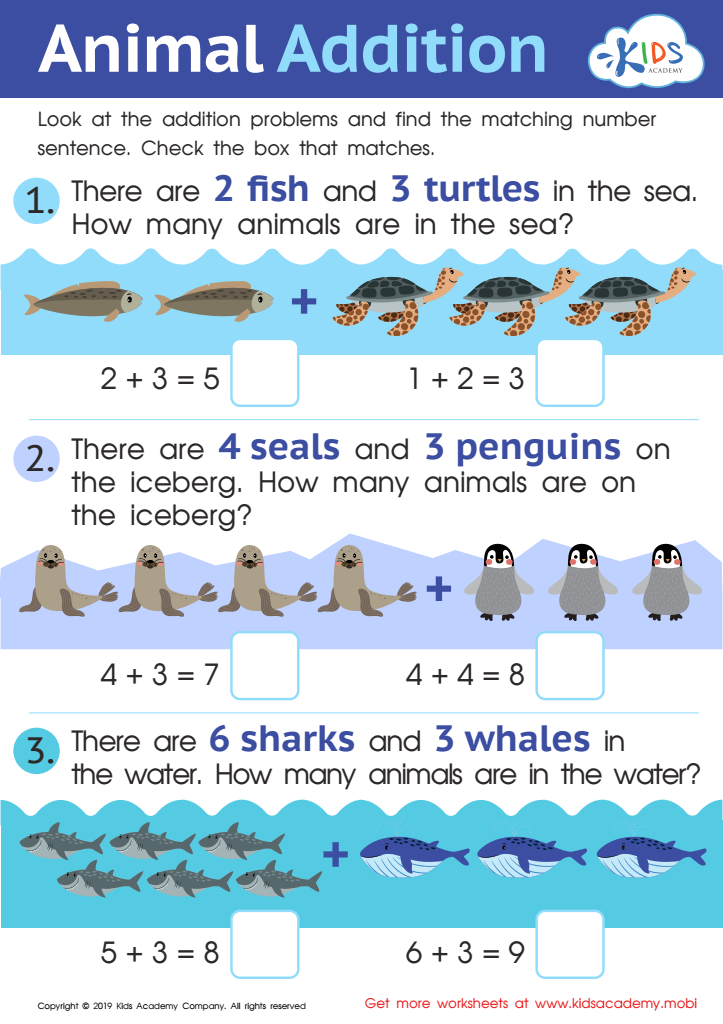
Animal Addition Worksheet








Basic addition and subtraction word problems are crucial for the development of young learners aged 5-7. These foundational skills not only help children grasp essential arithmetic concepts but also foster critical thinking and problem-solving abilities. Engaging with word problems encourages kids to analyze situations, identify relevant information, and decide on appropriate mathematical operations.
Additionally, these exercises help link math to real-life scenarios, making learning more relatable and enjoyable. When parents and teachers emphasize word problems, they aid in developing children's literacy skills as well, since interpreting word problems requires reading comprehension.
Furthermore, tackling age-appropriate word problems builds confidence in young learners. As they progress from simple calculations to more complex scenarios, students cultivate resilience and adaptability—essential traits for lifelong learning.
In a broader sense, mastering these skills lays the groundwork for future math success, laying the foundation for more advanced topics in later grades. Overall, engaging with addition and subtraction word problems equips children with essential tools to navigate both academic challenges and everyday situations, making it important for both parents and teachers to prioritize this aspect of early education.