Filters

122 filtered results

Clear all filters
Favorites
With answer key
Interactive

122 filtered results

Difficulty Level

Grade


Check out this FREE Trial Lesson on Addition & Subtraction for age 5-7!

Adding with Objects from Stories

Favorites
With answer key
Interactive
  • 5-7
  • Cognitive Development
  • Addition & Subtraction
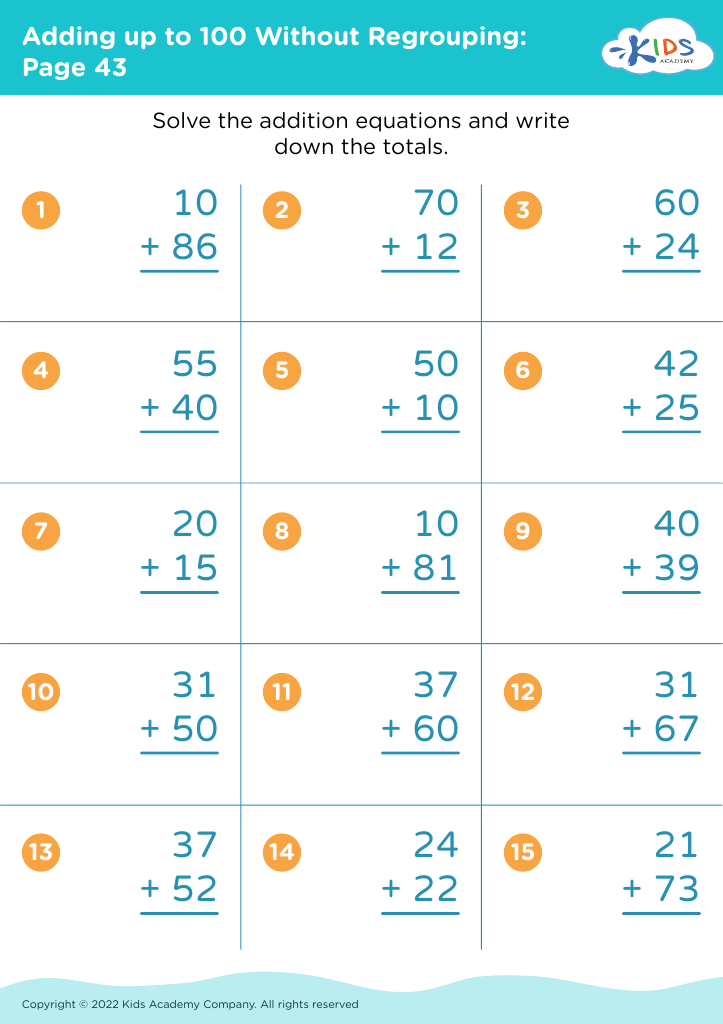
Adding up to 100 Without Regrouping: Page 43
Worksheet
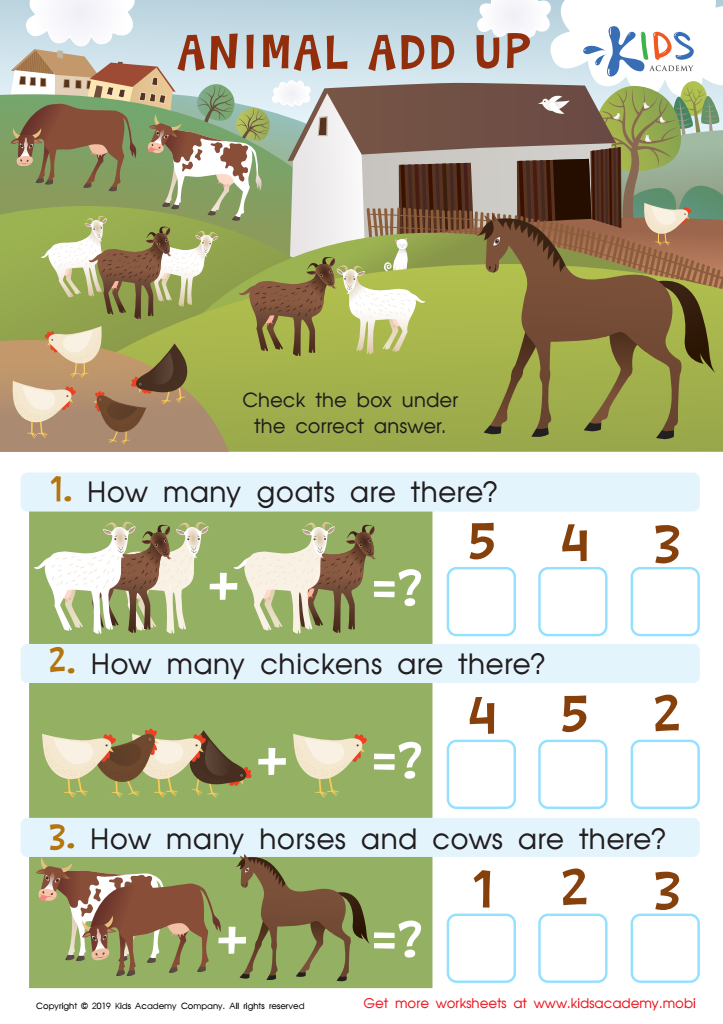
Animal Add Up Worksheet

Animal Add Up Worksheet

Animals are fun to observe and interact with. They can be seen at the zoo, parks, farms and in homes with pets. This worksheet helps kids identify animals, and build addition skills. Look at the picture with them and help name each animal. After that, add the animals up and check the box for the correct answer. 80 words.
Animal Add Up Worksheet
Worksheet
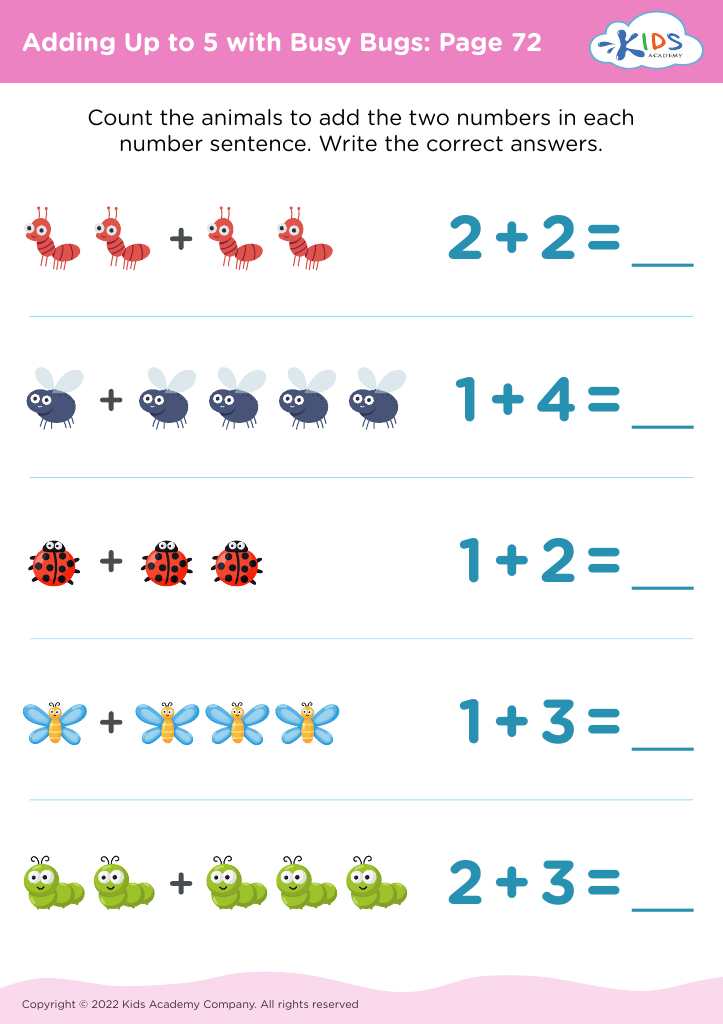
Adding Up to 5 with Busy Bugs: Page 72
Worksheet
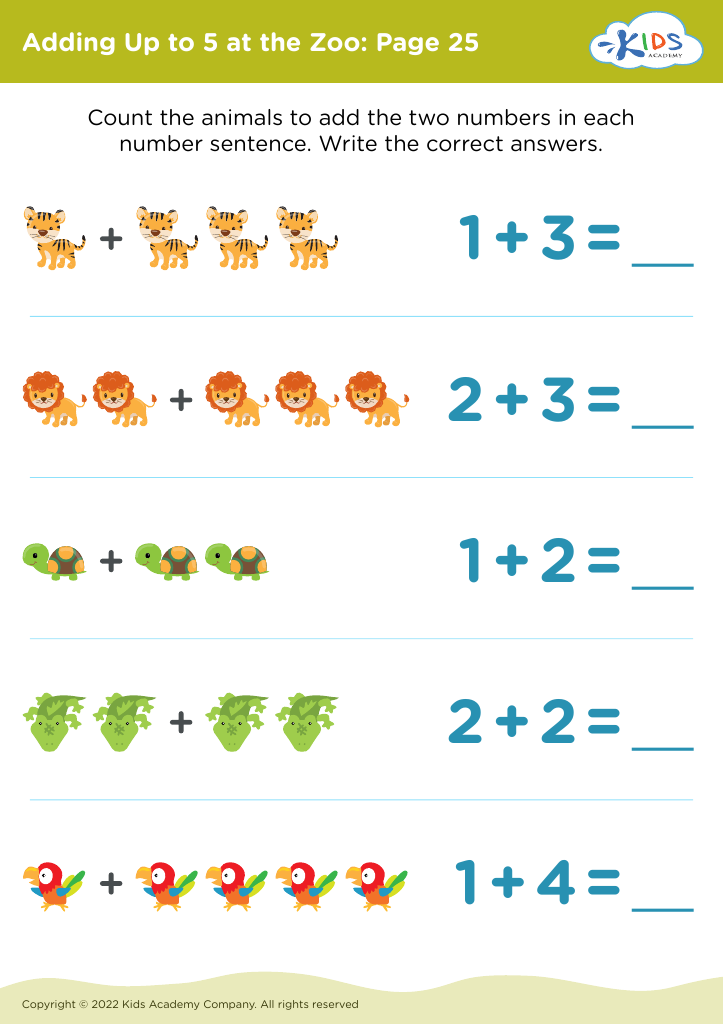
Adding Up to 5 at the Zoo: Page 25
Worksheet
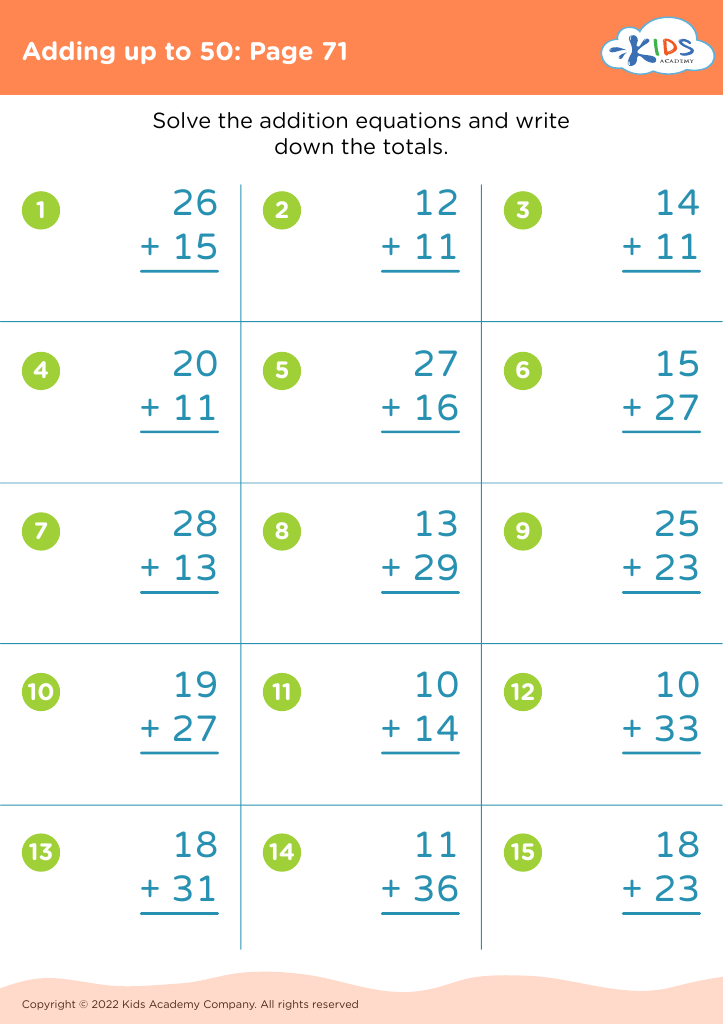
Adding up to 50: Page 71

Adding up to 50: Page 71

Adding up to 50: Page 71
Worksheet
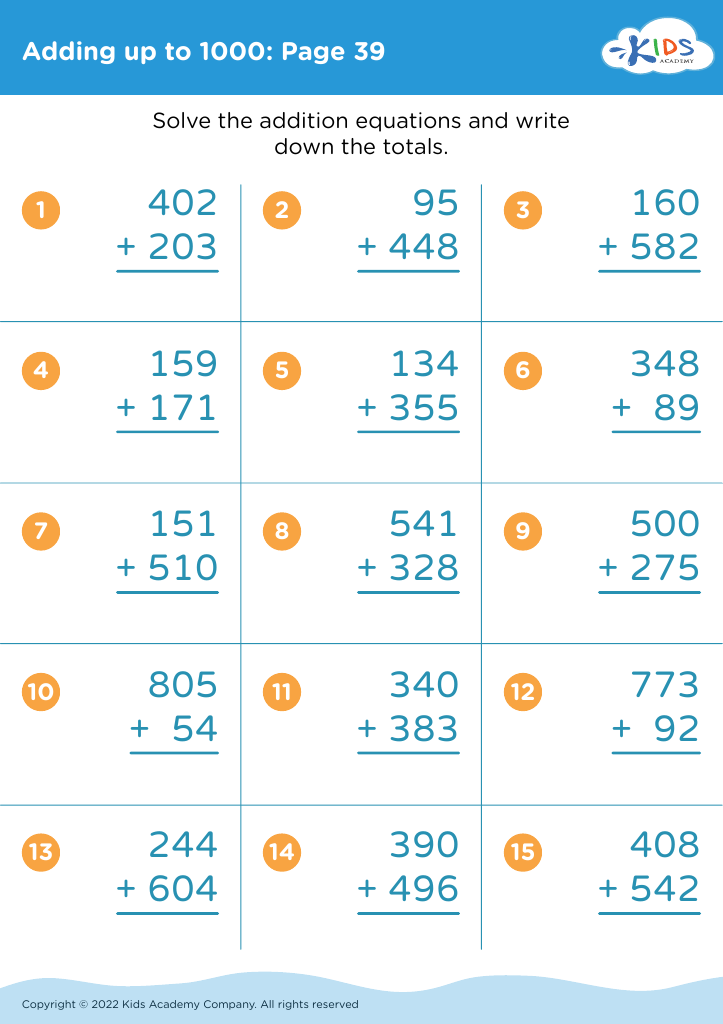
Adding up to 1000: Page 39

Adding up to 1000: Page 39

Adding up to 1000: Page 39
Worksheet
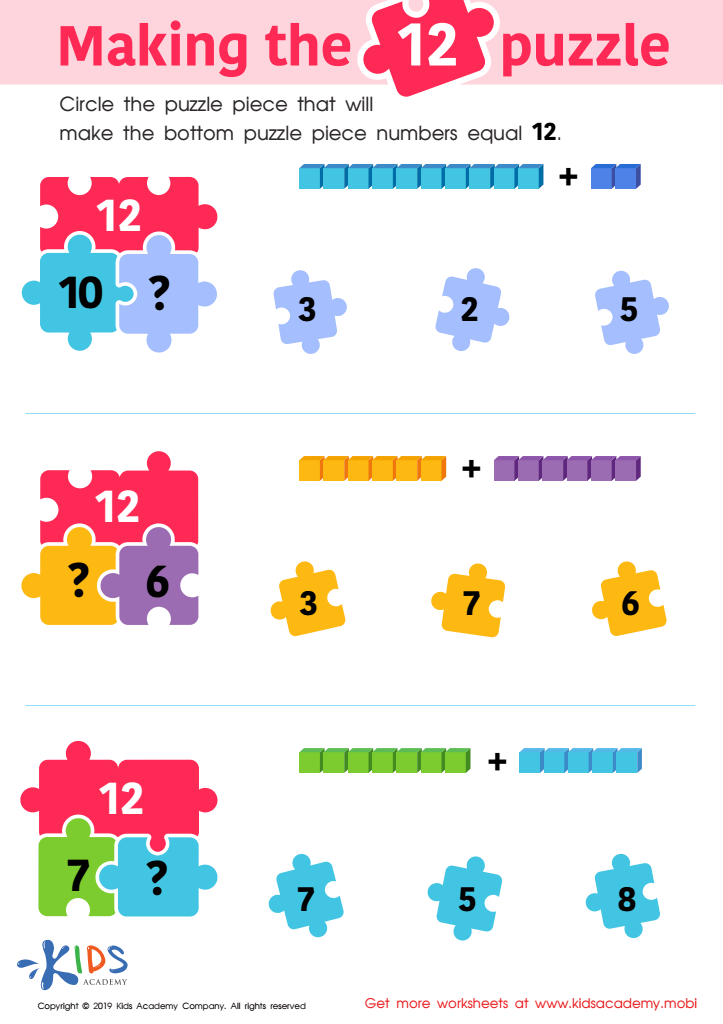
Making the 12 Puzzle Worksheet
Making the 12 Puzzle Worksheet
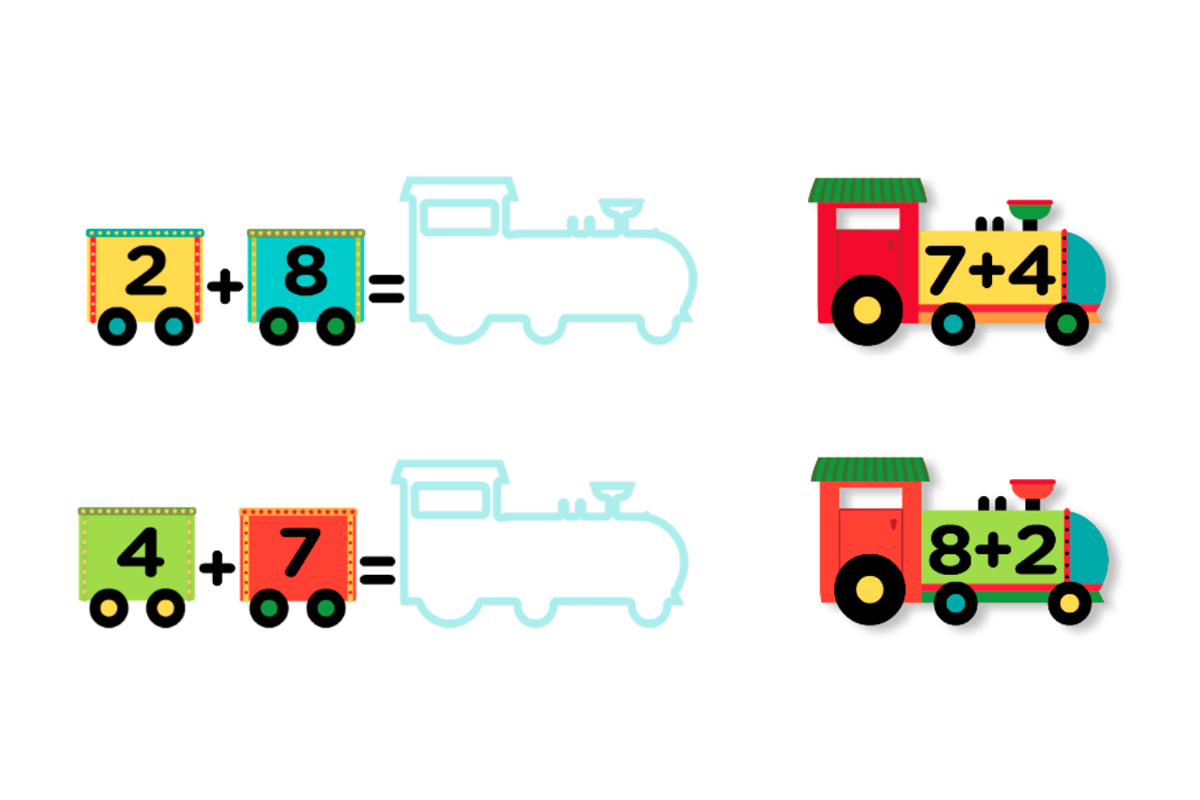
Engage preschoolers in learning with this fun and colorful worksheet. Ask them to look at the picture and identify the missing equation on each puzzle piece; then help them solve the problems. When all the puzzle pieces make the bottom numbers equal 12, have them circle it. This is a great way to combine learning and fun!
Making the 12 Puzzle Worksheet
Worksheet
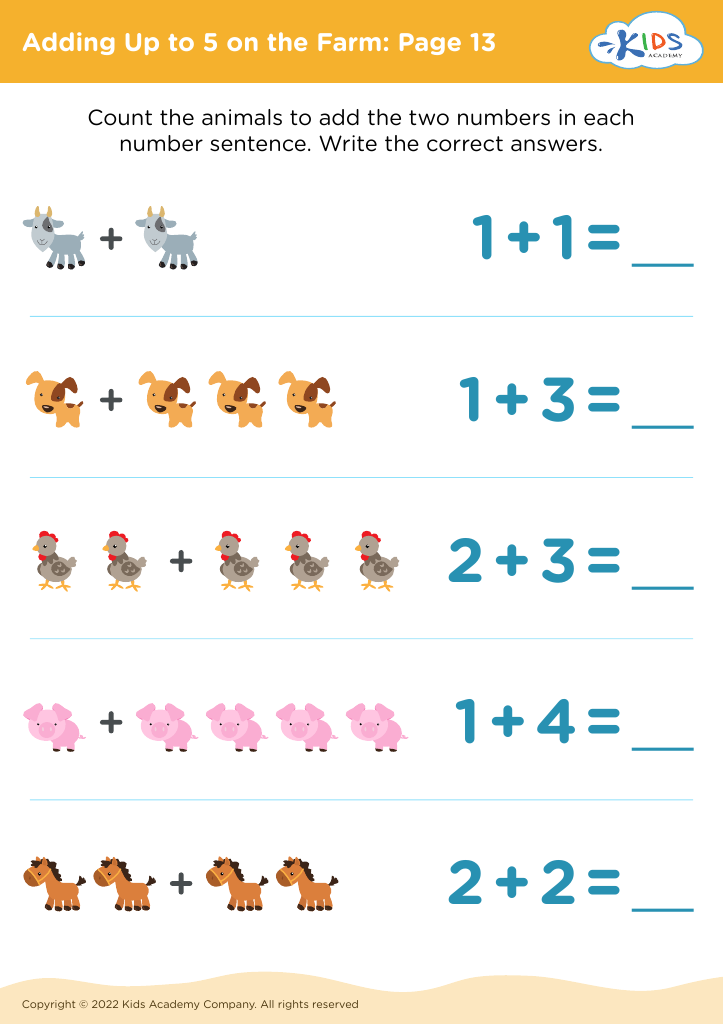
Adding Up to 5 on the Farm: Page 13
Worksheet
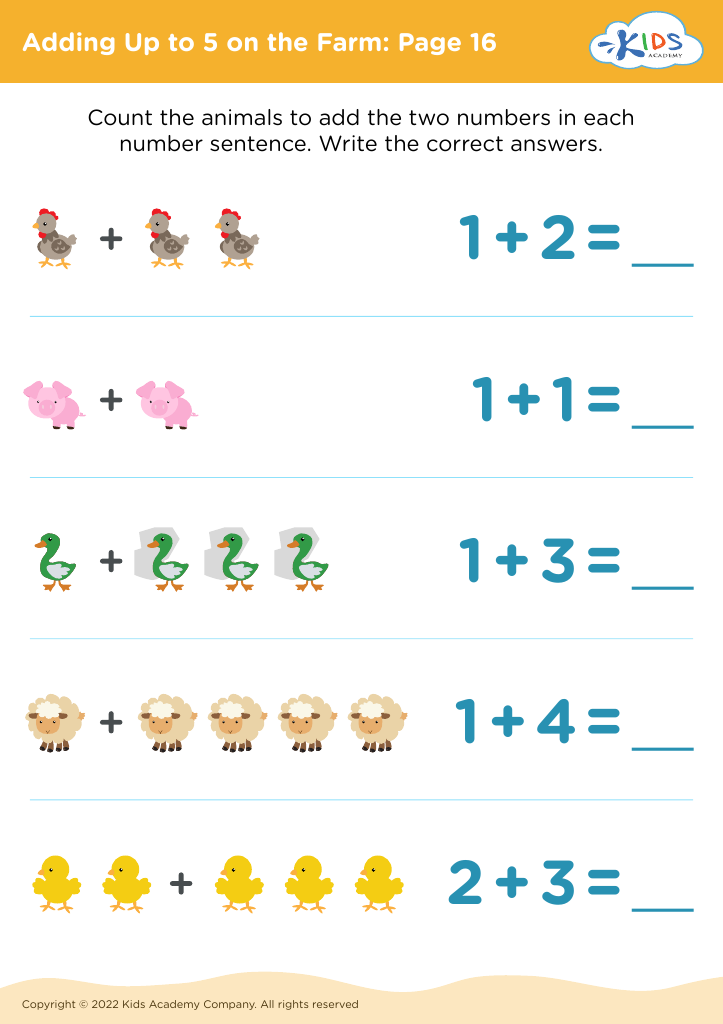
Adding Up to 5 on the Farm: Page 16
Worksheet
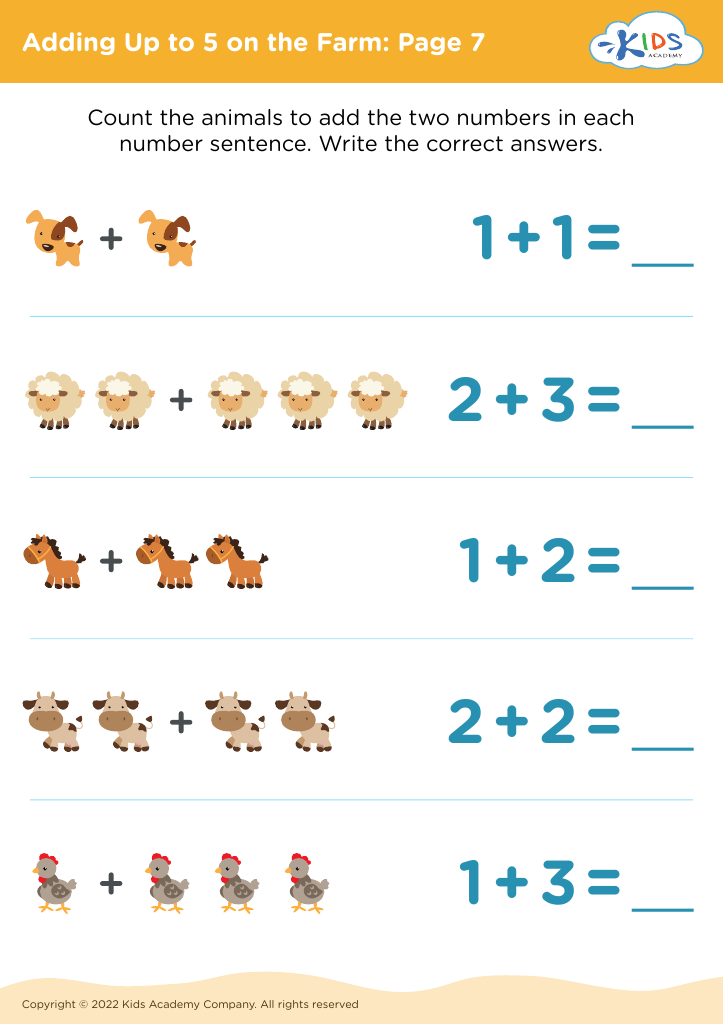
Adding Up to 5 on the Farm: Page 7
Worksheet
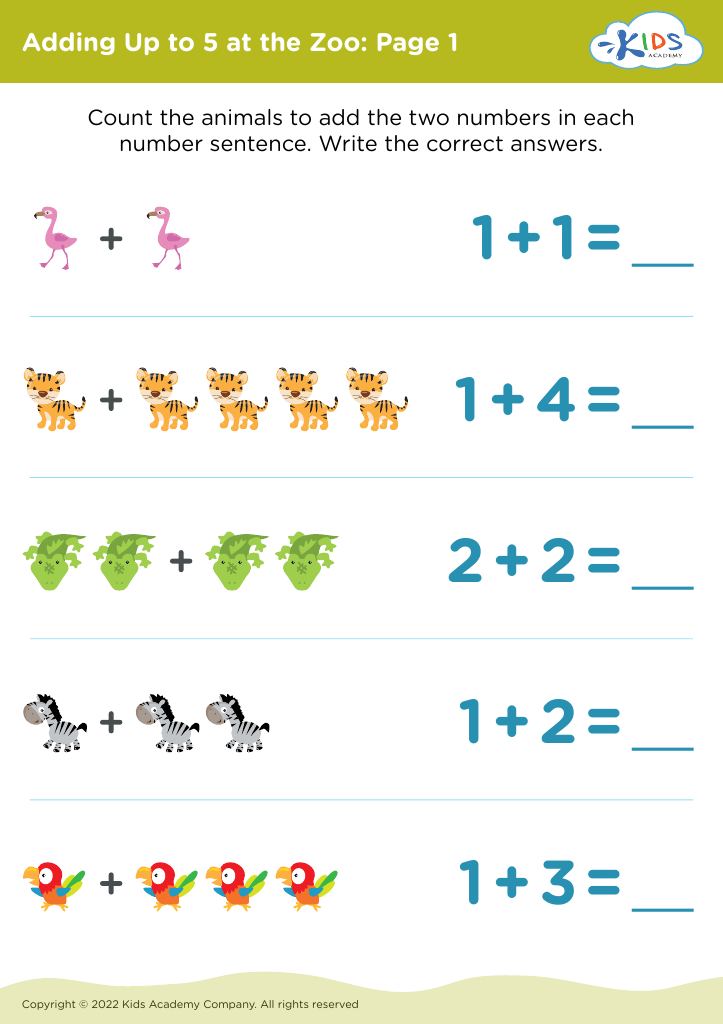
Adding Up to 5 at the Zoo: Page 1

Adding Up to 5 at the Zoo: Page 1

Adding Up to 5 at the Zoo: Page 1
Worksheet
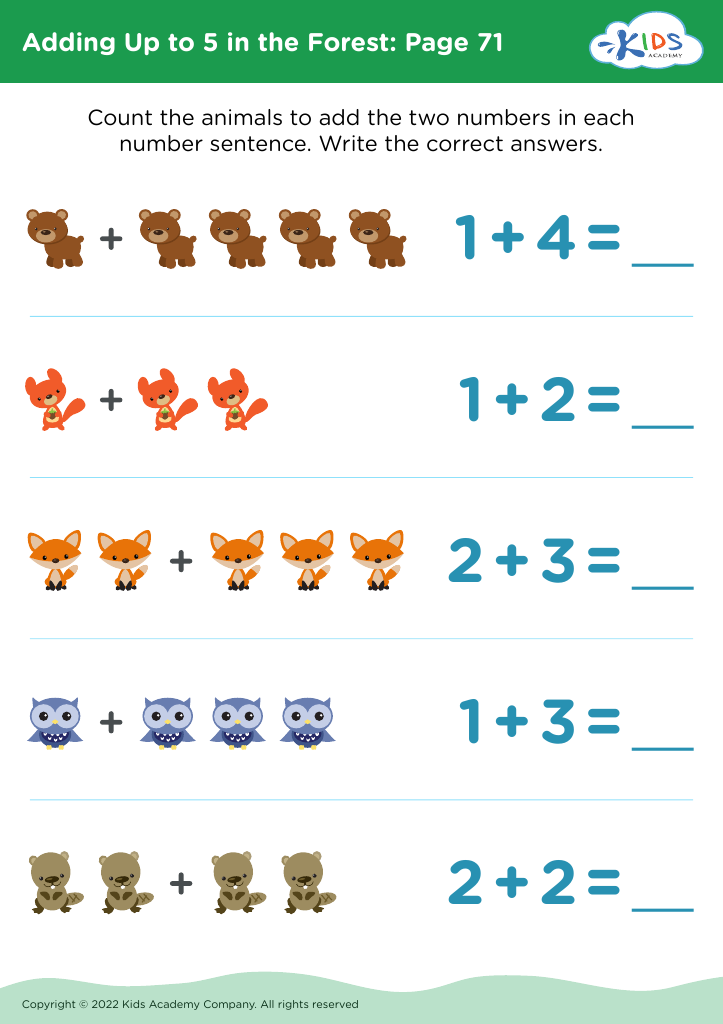
Adding Up to 5 in the Forest: Page 71
Worksheet
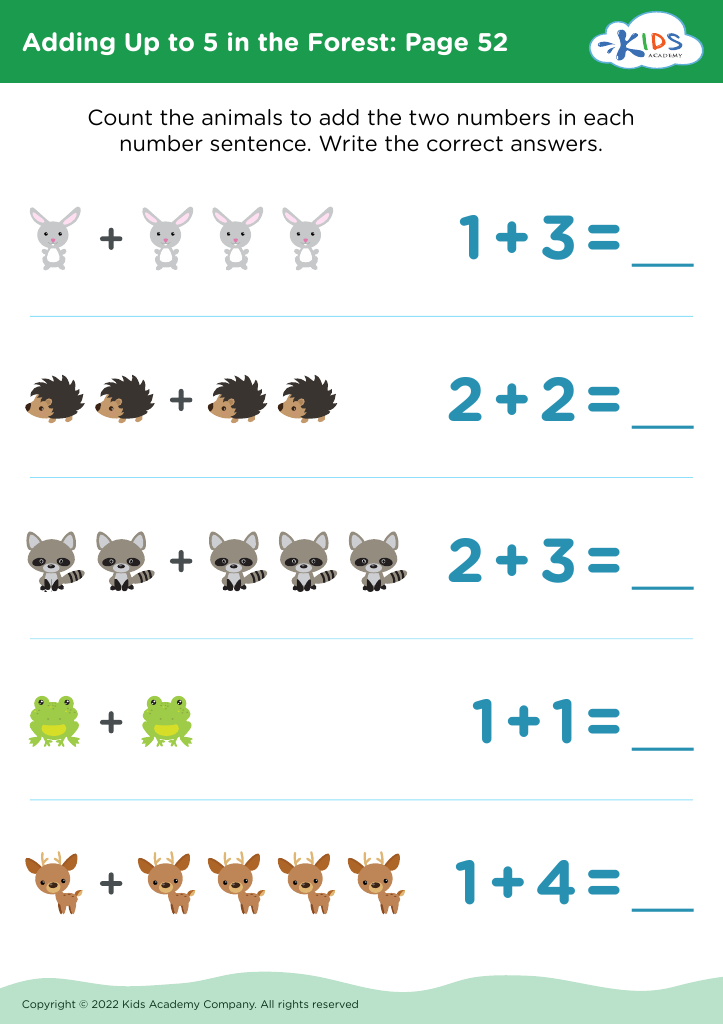
Adding Up to 5 in the Forest: Page 52
Worksheet
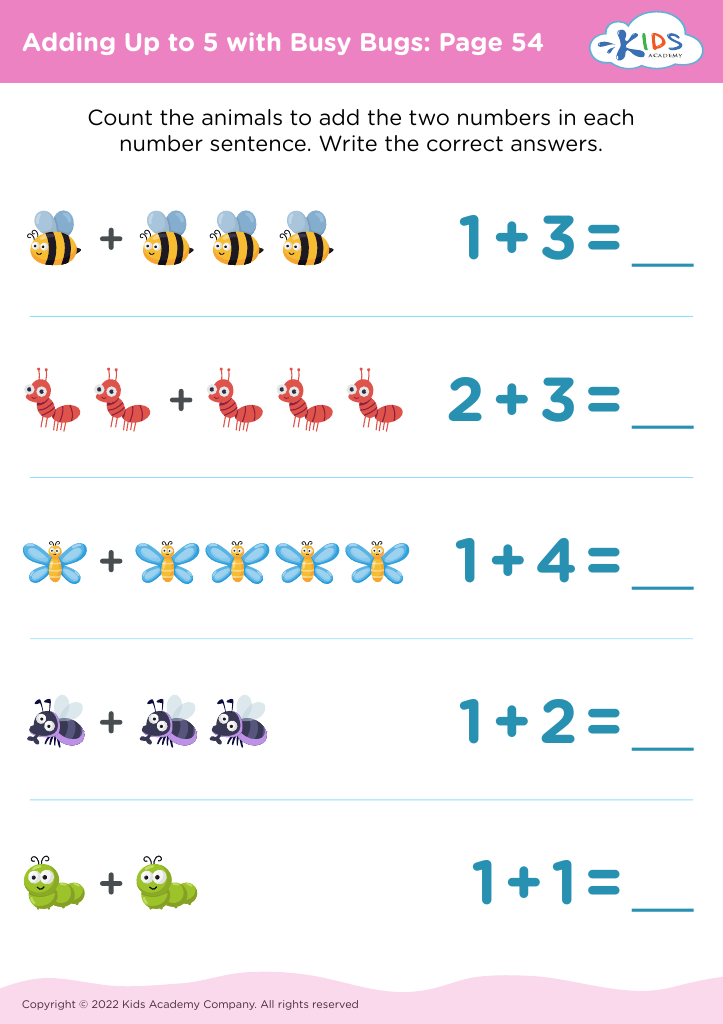
Adding Up to 5 with Busy Bugs: Page 54
Worksheet
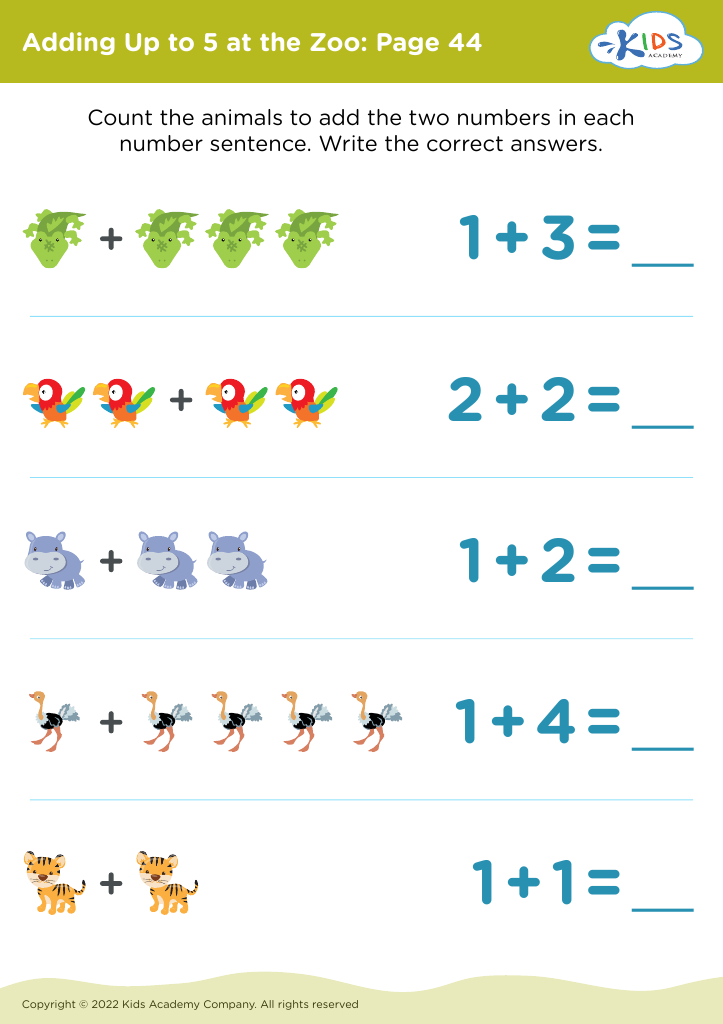
Adding Up to 5 at the Zoo: Page 44
Worksheet
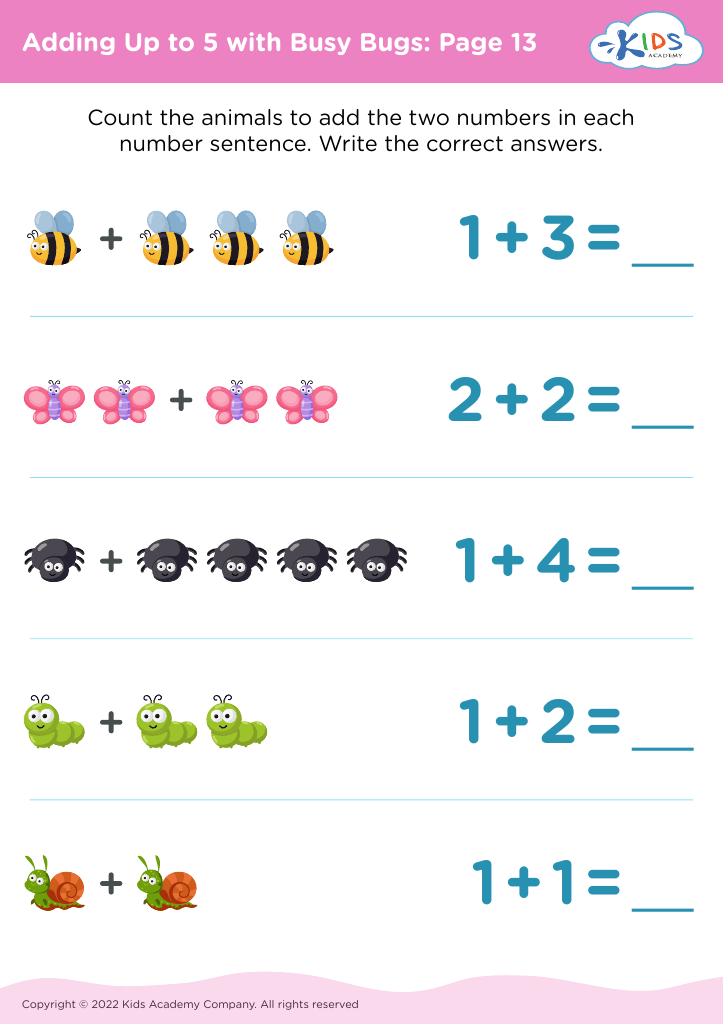
Adding Up to 5 with Busy Bugs: Page 13
Worksheet
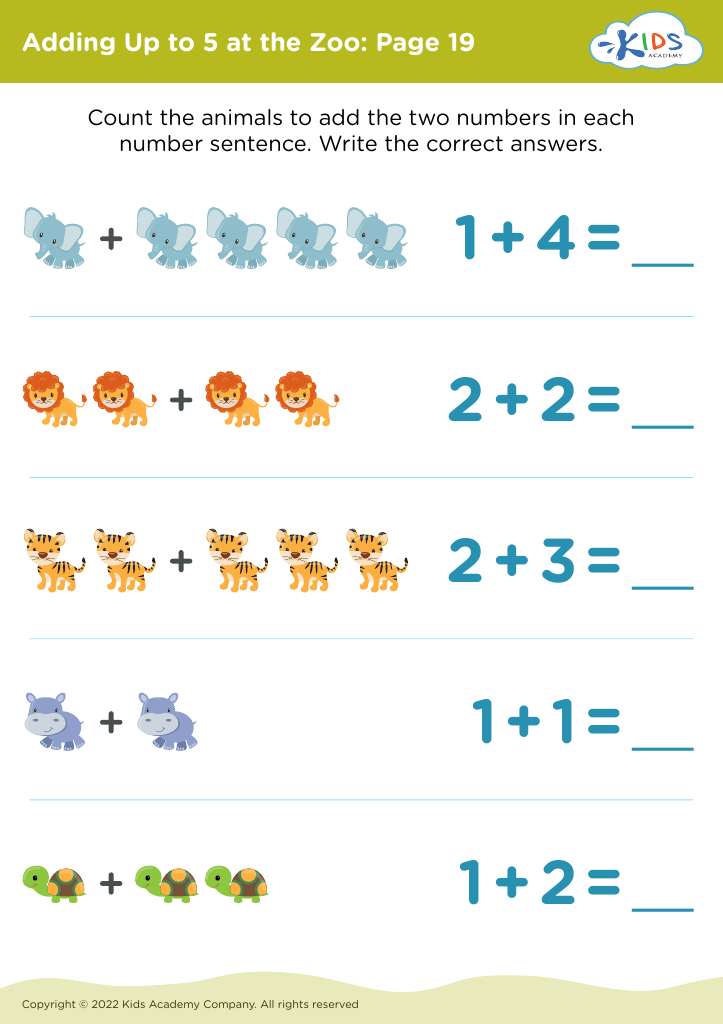
Adding Up to 5 at the Zoo: Page 19
Worksheet
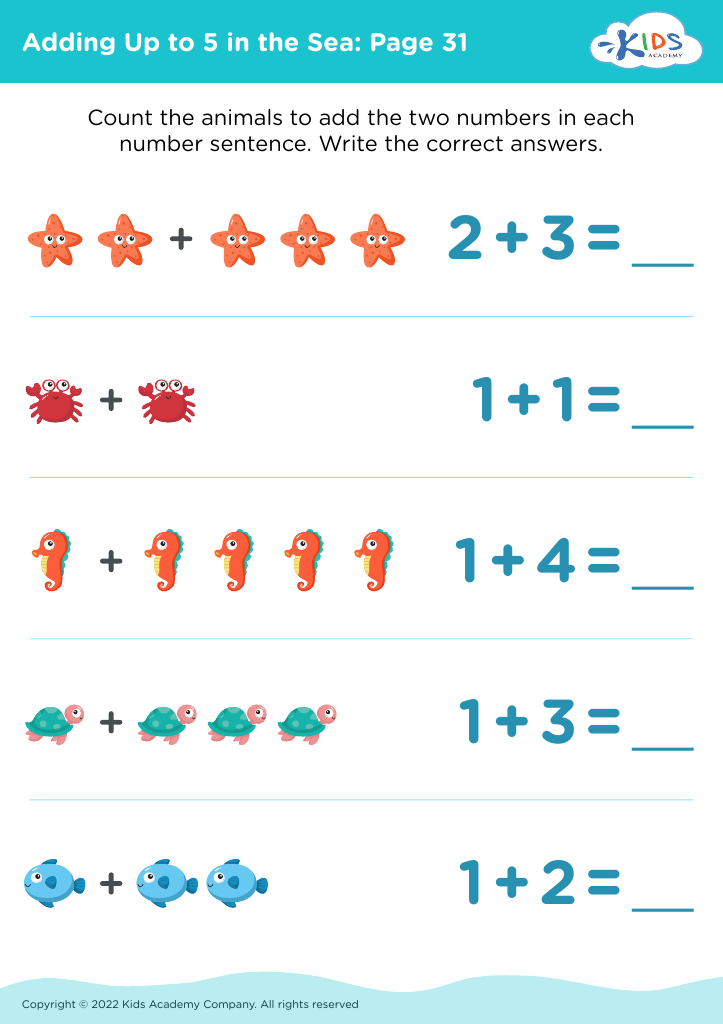
Adding Up to 5 in the Sea: Page 31
Worksheet
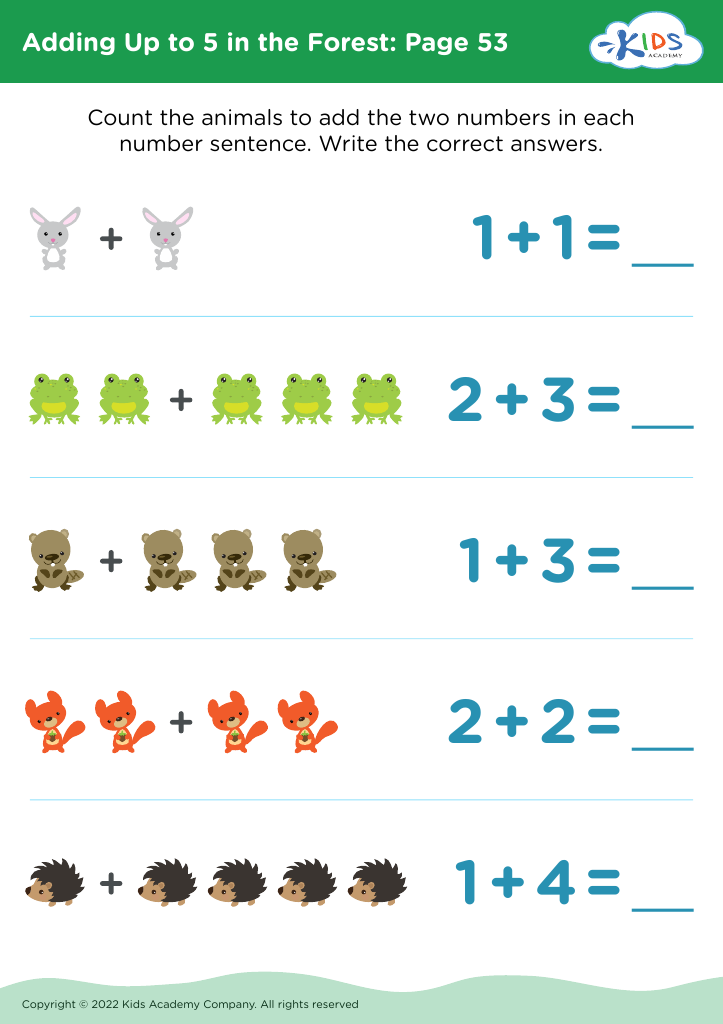
Adding Up to 5 in the Forest: Page 53
Worksheet
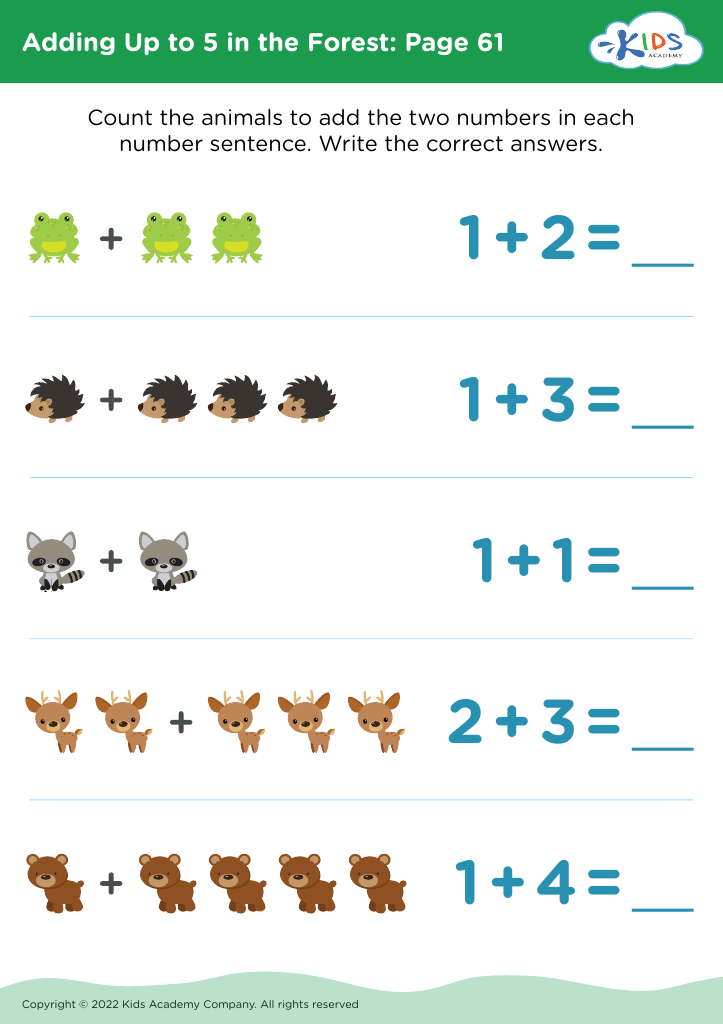
Adding Up to 5 in the Forest: Page 61
Worksheet
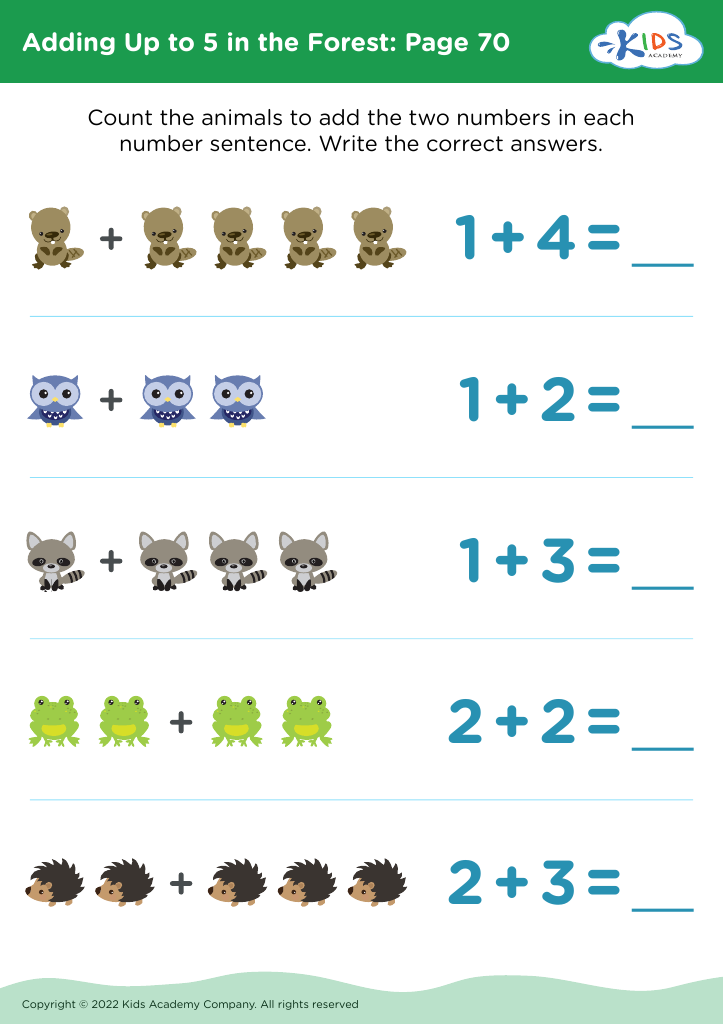
Adding Up to 5 in the Forest: Page 70
Worksheet
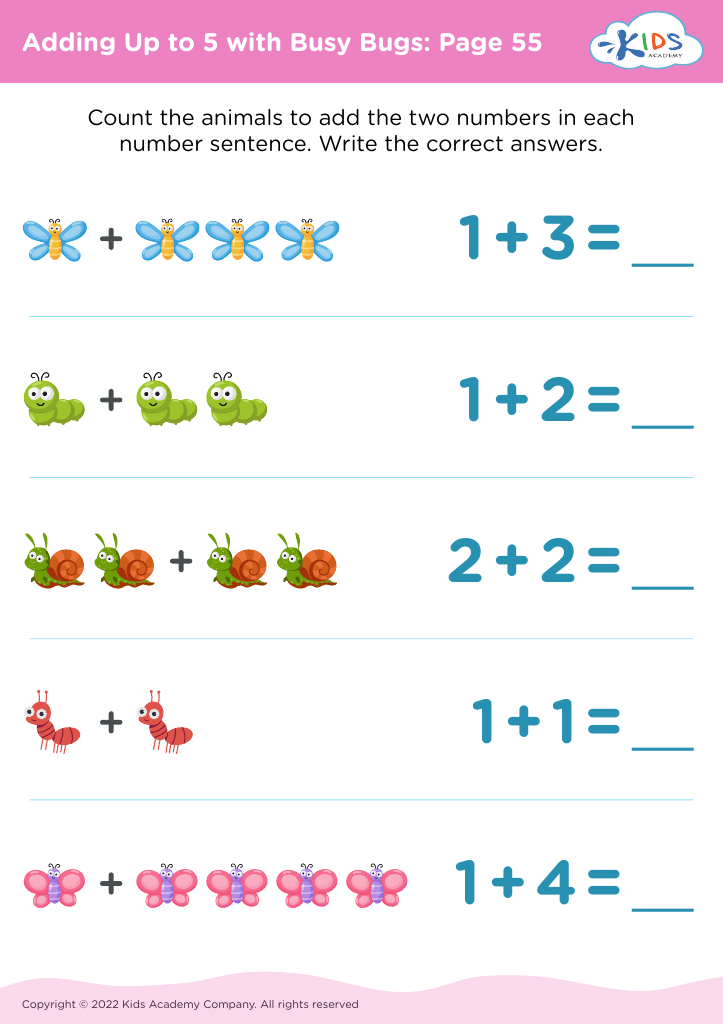
Adding Up to 5 with Busy Bugs: Page 55
Worksheet
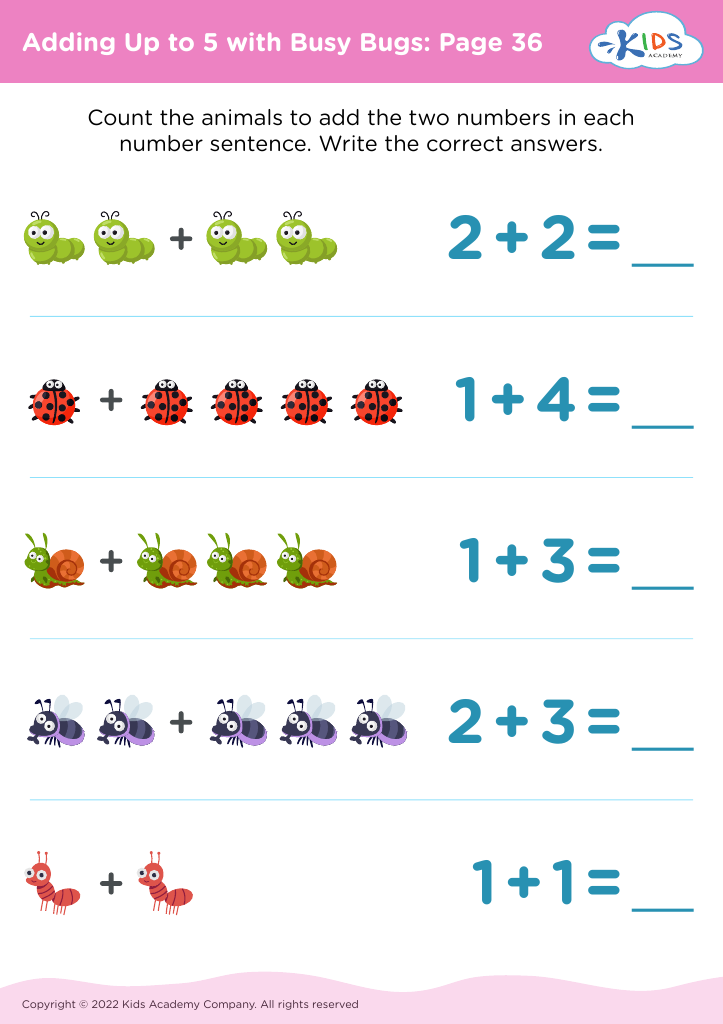
Adding Up to 5 with Busy Bugs: Page 36
Worksheet
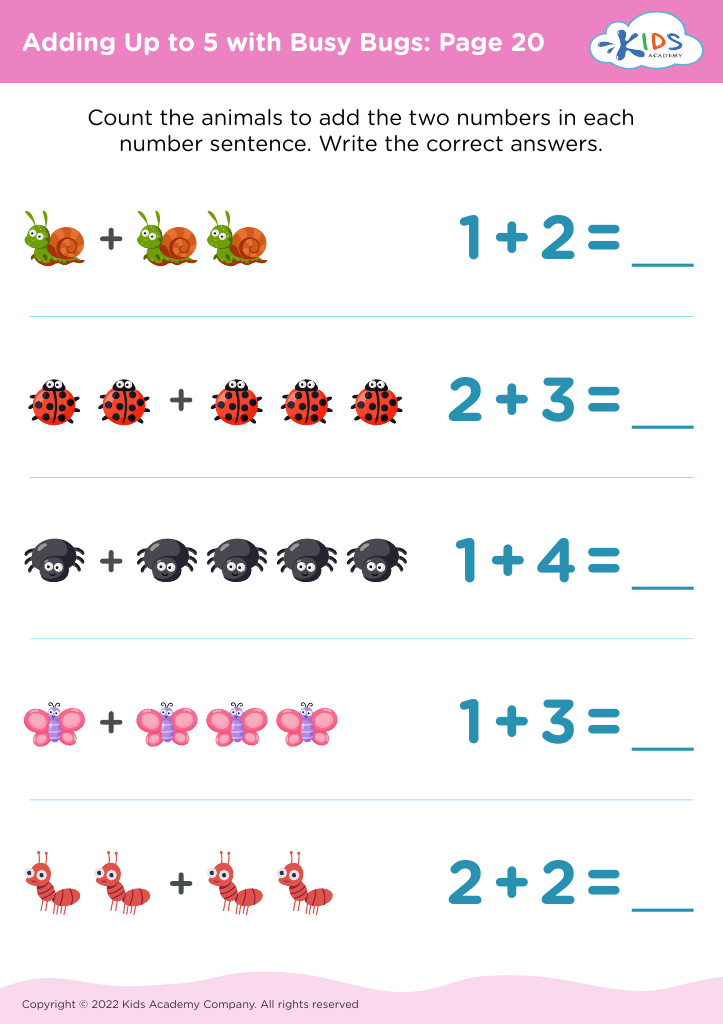
Adding Up to 5 with Busy Bugs: Page 20
Worksheet


Understanding and supporting cognitive development in addition and subtraction for children aged 5-7 is crucial for several reasons. Firstly, this foundational period is critical for future mathematical proficiency. At this age, children's brains are exceptionally receptive to new information, and early math skills can enhance their problem-solving abilities and logical thinking, setting a strong groundwork for more complex concepts later on.

Early competence in addition and subtraction provides children with essential tools needed for everyday tasks, increasing their confidence and independence. For instance, simple arithmetic helps them understand timings, make basic financial decisions, and engage in games and activities that require counting and calculation. When parents and teachers nurture these skills, they foster a positive attitude towards learning and resilience in overcoming challenges.

Moreover, developing these cognitive skills supports other areas of education. Math-related activities enhance memory, attention span, and reasoning abilities. Teaching addition and subtraction in engaging, hands-on ways can improve fine motor skills and encourage a level of curiosity and critical thinking that benefits the entire academic spectrum.

Collectively, emphasizing cognitive development in addition and subtraction ensures that children are not only equipped for academic success but also for everyday life, cultivating well-rounded, confident, and capable individuals.