
Critical thinking development Addition & Subtraction Worksheets for Ages 5-7
3 filtered results
Difficulty Level
Grade
Age
-
From - To
Subject
Activity
Standards
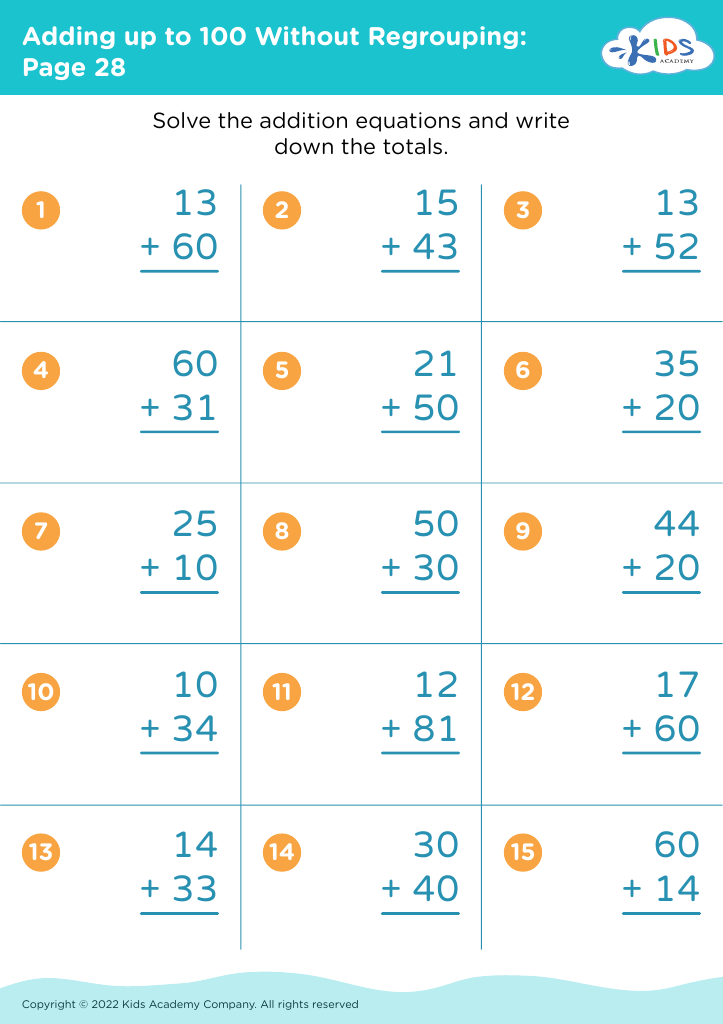
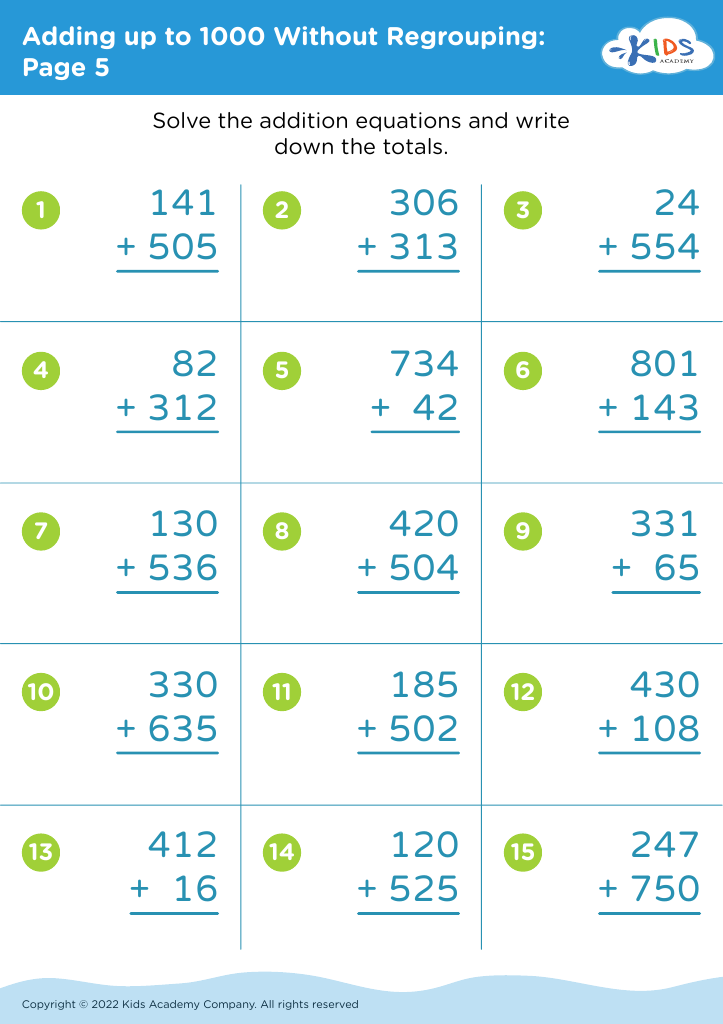
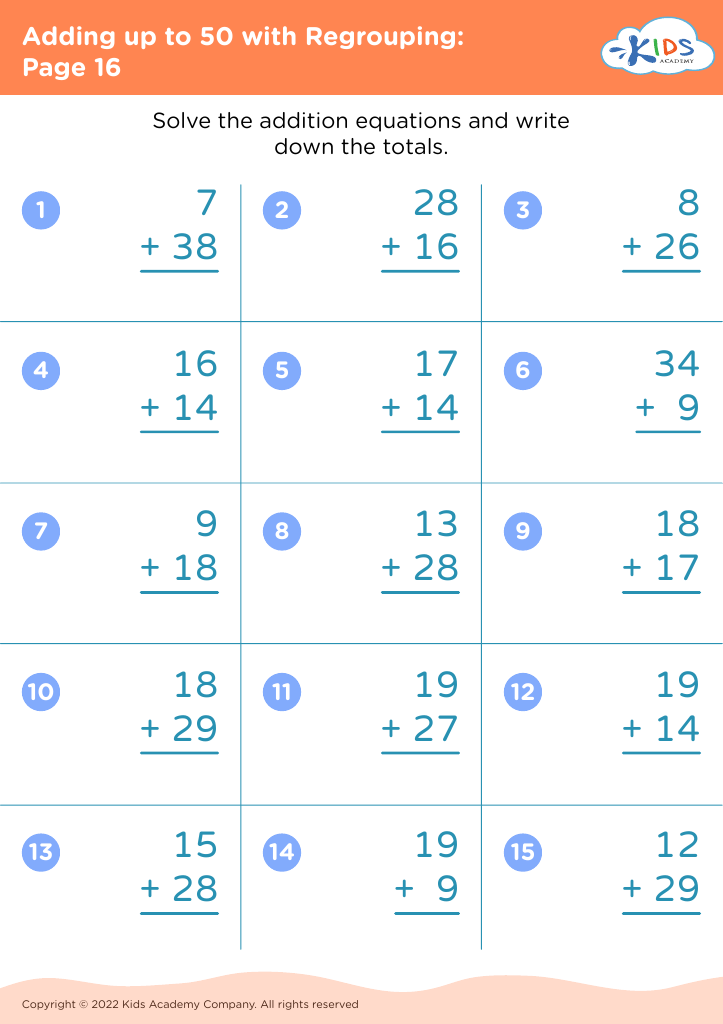
Boost your child's math skills with our "Critical Thinking Development Addition & Subtraction Worksheets for Ages 5-7." Designed to enhance critical thinking, these printable worksheets offer a fun and engaging way for young learners to master foundational math concepts. By combining basic addition and subtraction problems with logical reasoning exercises, these activities not only reinforce essential arithmetic skills but also promote problem-solving abilities, attention to detail, and analytical thinking. Perfect for parents and teachers looking to support early grade math proficiency, these worksheets ensure a comprehensive learning experience for children ages 5 to 7. Download now and watch your child thrive!
Favorites
With answer key
Interactive
Join Kids Academy for Free
Who is primarily going to use this learning content?








Critical thinking development in the context of addition and subtraction for children aged 5-7 is essential for several reasons. Firstly, fostering critical thinking at an early age equips children with foundational problem-solving skills that are crucial not only in academics but in daily life decisions. When children engage in activities like addition and subtraction puzzles, they learn to analyze information, make judgments, and arrive at logical conclusions. This builds their confidence and promotes a growth mindset, as they see problems as opportunities to learn and experiment.
Secondly, these mathematical exercises improve cognitive functioning by encouraging children to process numbers and understand the principles underlying basic arithmetic operations. Instead of rote memorization, they learn to recognize patterns, reason quantitively, and develop spatial and numerical relationships. These skills are transferable to other academic subjects and real-world situations, making the learning process more comprehensive.
Lastly, early development of these skills provides a strong base for more complex math concepts that they will encounter in later grades. Children who are comfortable with addition and subtraction are better prepared for multiplication, division, and advanced mathematical reasoning. By prioritizing critical thinking around these foundational arithmetic operations, parents and teachers are supporting a child's long-term academic success and cognitive flexibility.








