Logical thinking development Addition & Subtraction Worksheets for Ages 5-7
9 filtered results
-
From - To
Enhance your child's logical thinking skills with our engaging Addition and Subtraction Worksheets designed specifically for ages 5-7! Perfect for young learners, these worksheets provide a fun and interactive way to practice basic math while building critical reasoning abilities. Each activity encourages problem-solving and helps children understand the relationships between numbers. With colorful illustrations and captivating exercises, your child will enjoy honing their skills in a supportive, educational environment. These printables are ideal for home or classroom use, making math enjoyable and accessible while paving the way for a solid foundation in early mathematics. Unlock your child's potential today!
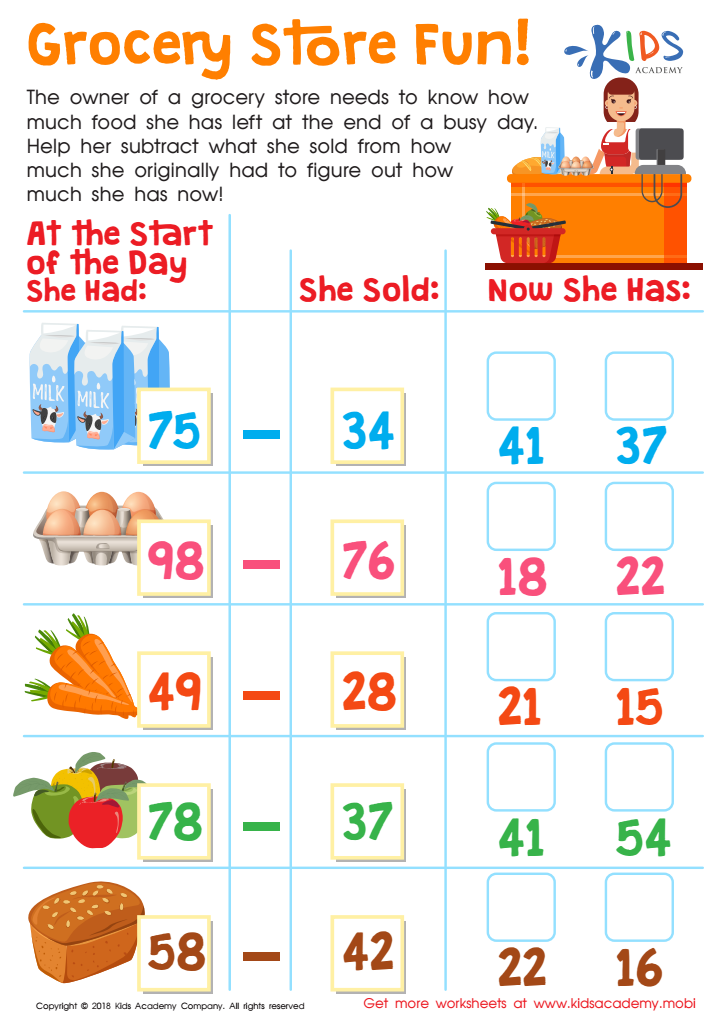
Grocery Store Fun! Worksheet
 Assign to My Students
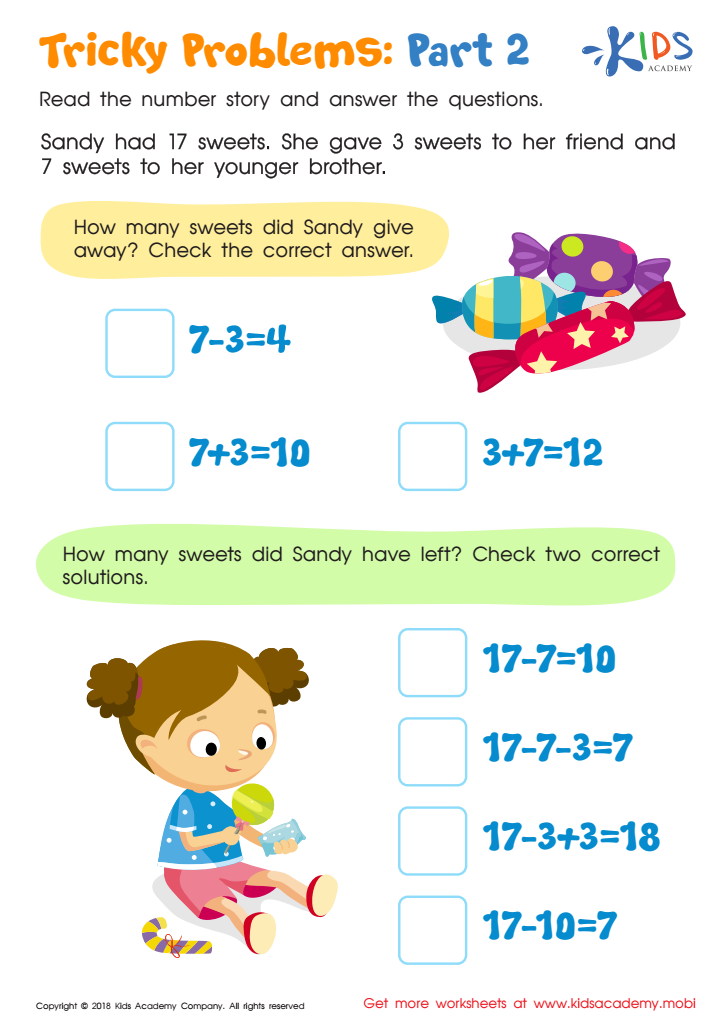
Tricky Problems Worksheet: Part 2
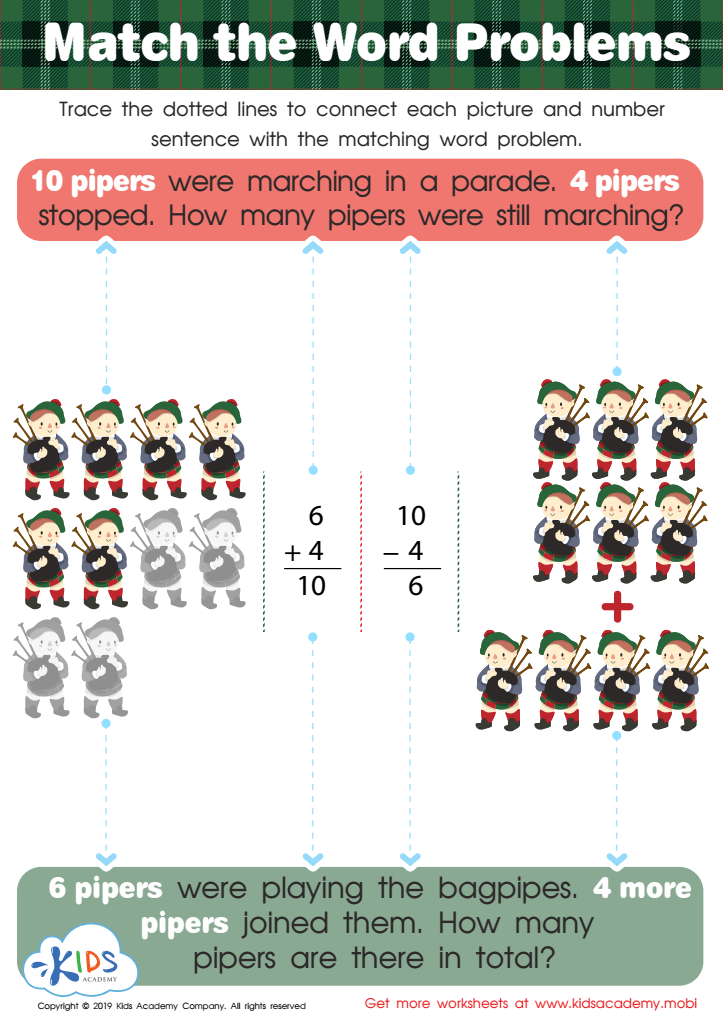
Match the Word Problems Worksheet
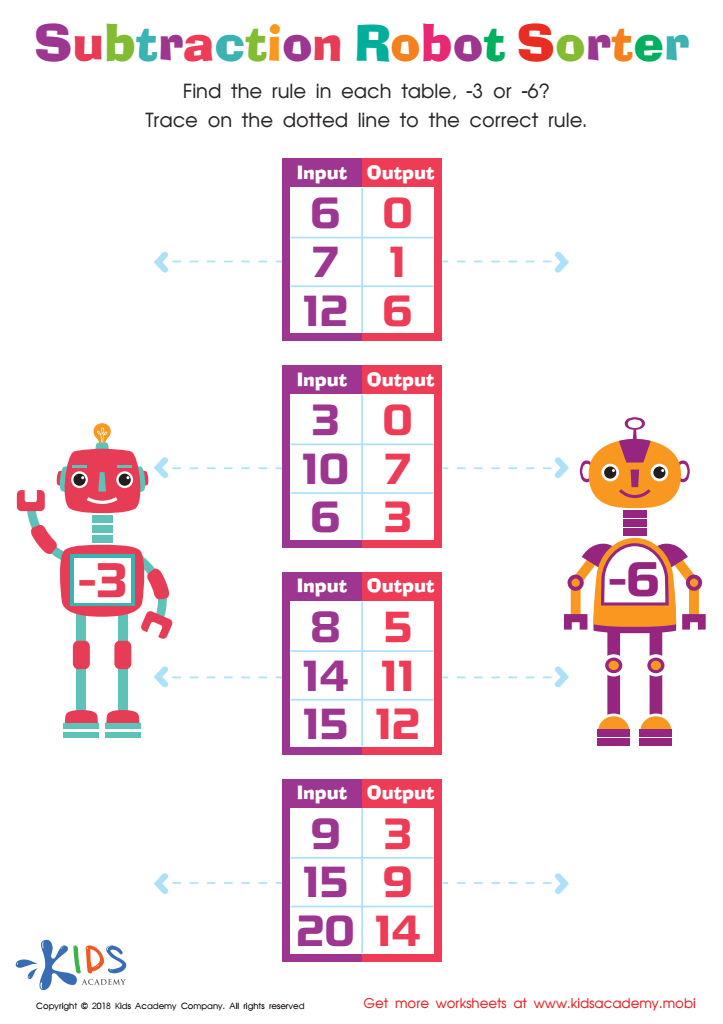
Subtraction Robot Sorter Worksheet
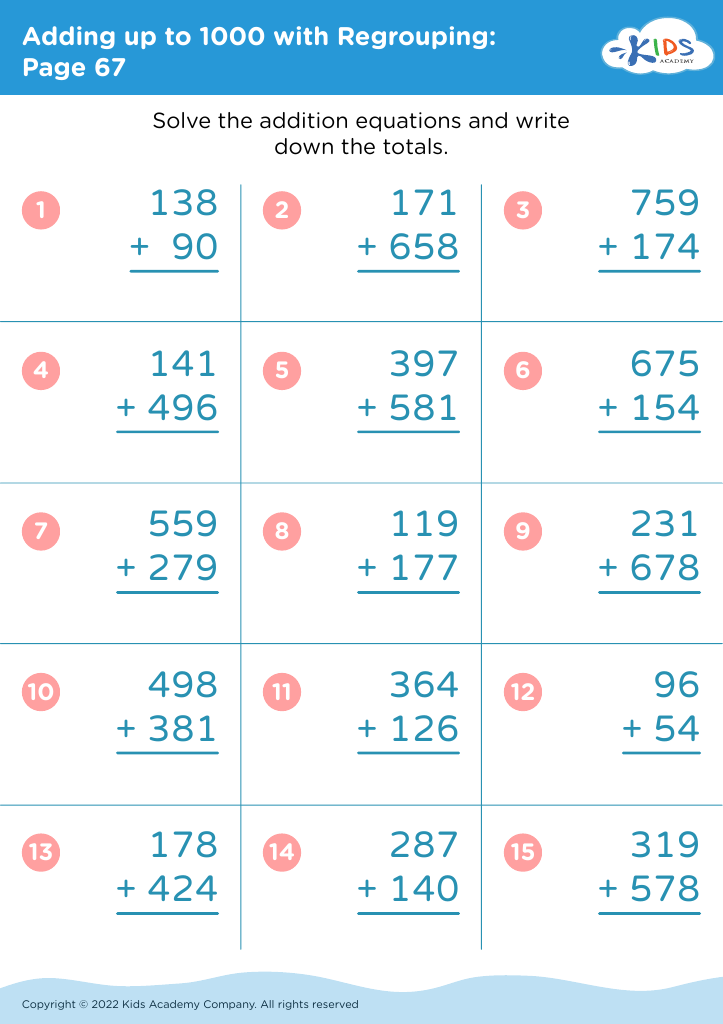
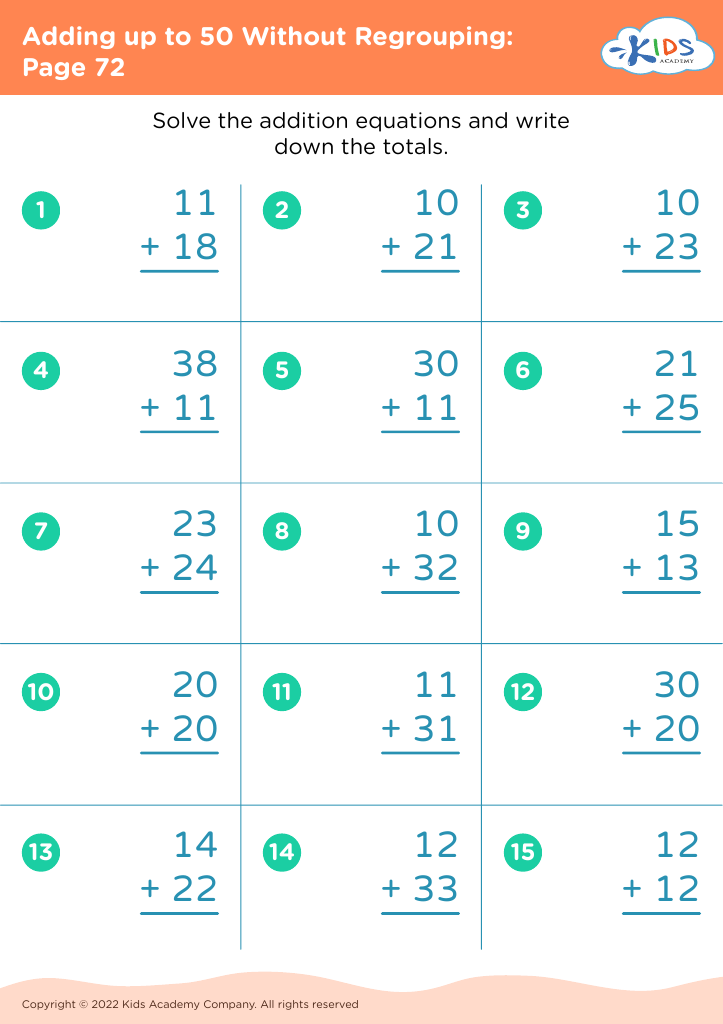
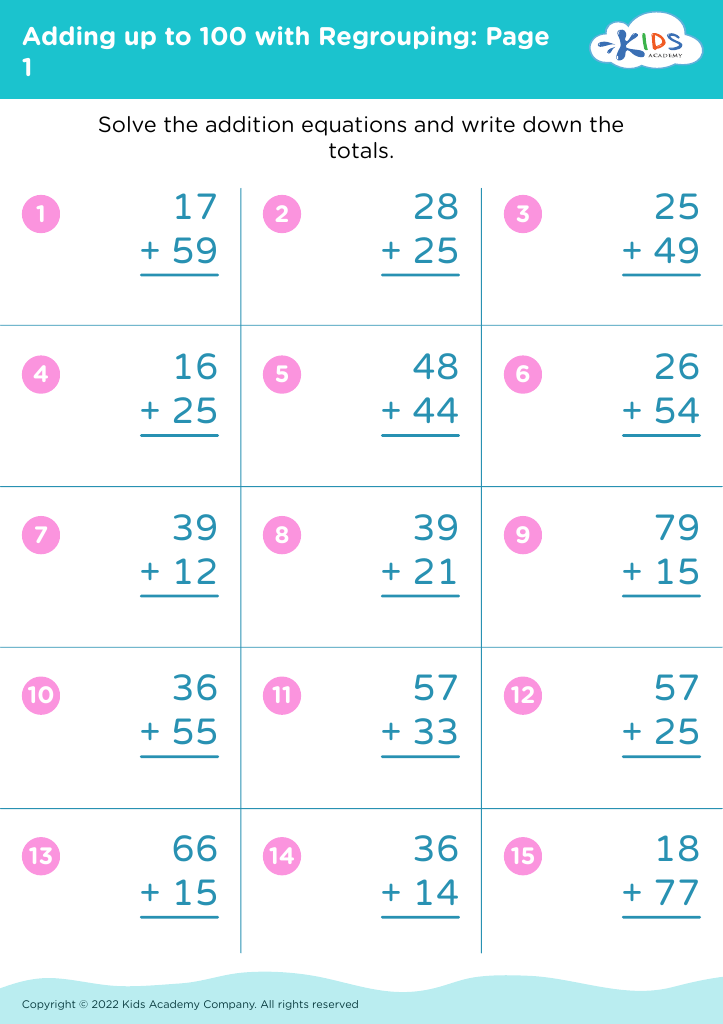








Logical thinking is a critical skill that lays the foundation for successful problem-solving in life, especially in mathematics. For children aged 5-7, the development of logical thinking through addition and subtraction is crucial. This stage is where learners begin to understand numerical relationships and patterns, which are essential for grasping more complex mathematical concepts later on.
Parents and teachers should care about fostering logical thinking because it enhances cognitive abilities, helping children to think critically and make reasoned judgments. Utilizing addition and subtraction in everyday scenarios encourages children to apply their mathematical understanding practically. This not only strengthens their numerical skills but also boosts their confidence as they become adept problem solvers.
Additionally, early mastery of these foundational skills can lead to greater academic success and lessen future math anxiety. Engaging children in structured play or games that involve counting, measuring, or comparing quantities motivates them to learn while having fun. Thus, supporting logical thinking through addition and subtraction at this age is not merely about arithmetic; it forms a comprehensive skill set that is fundamental for lifelong learning and critical reasoning, ultimately nurturing more thoughtful, capable adults.








