Recognizing Patterns Addition & Subtraction Worksheets for Ages 5-7
22 filtered results
-
From - To
Discover our "Recognizing Patterns Addition & Subtraction Worksheets for Ages 5-7" designed to engage young learners in mastering essential math skills. Perfect for children in early grades, these worksheets combine fun visual patterns with addition and subtraction exercises to enhance problem-solving abilities and logical thinking. Aimed at building a solid foundation in mathematics, these activities support cognitive development while keeping kids entertained and motivated. Aid your child's learning journey and confidence in math with interactive and educational worksheets from Kids Academy! Make math practice enjoyable and effective—explore our collection today!
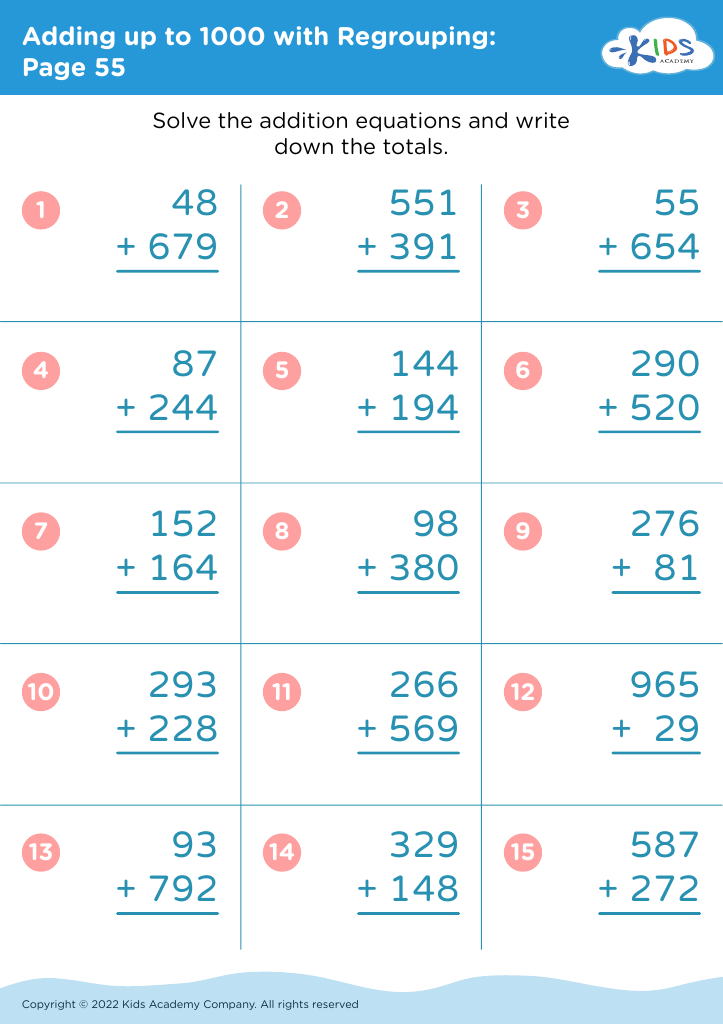
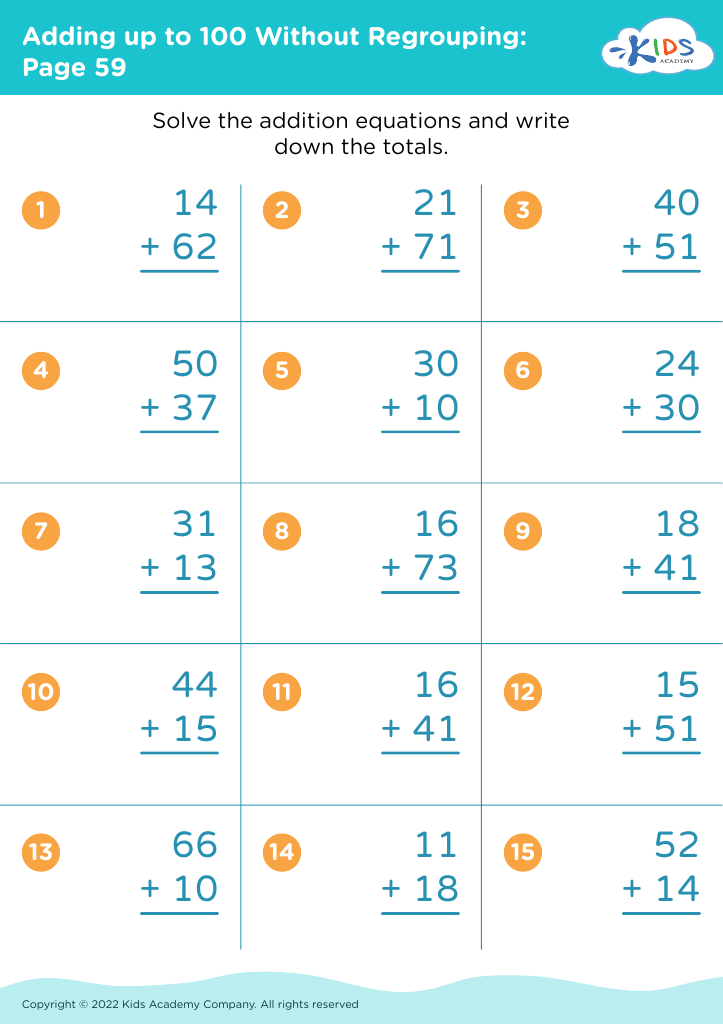
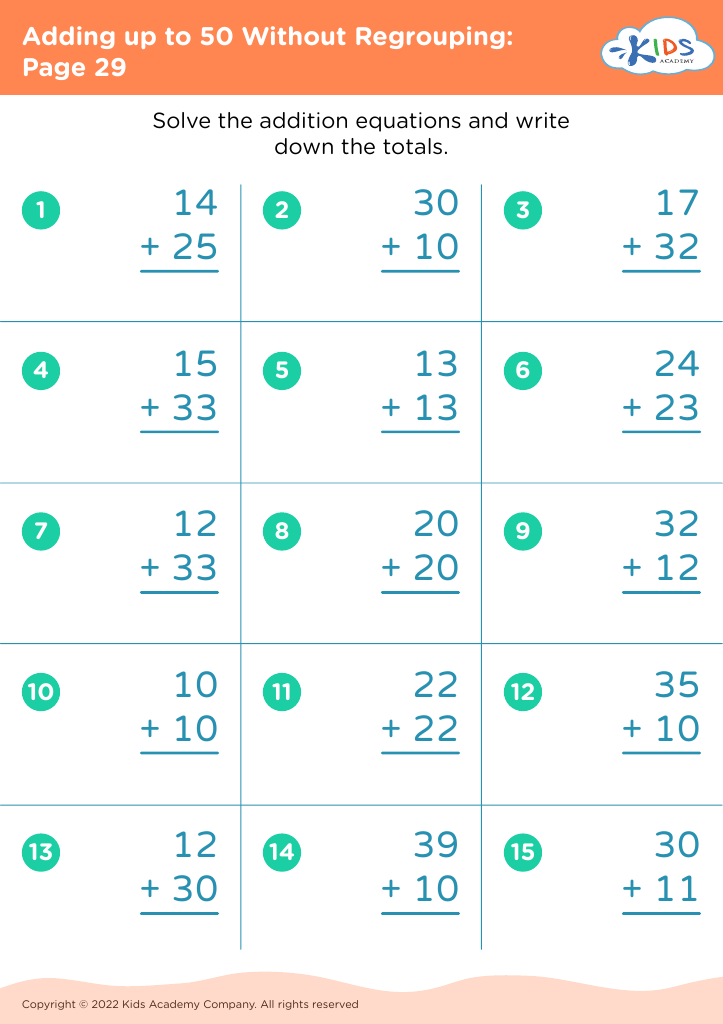
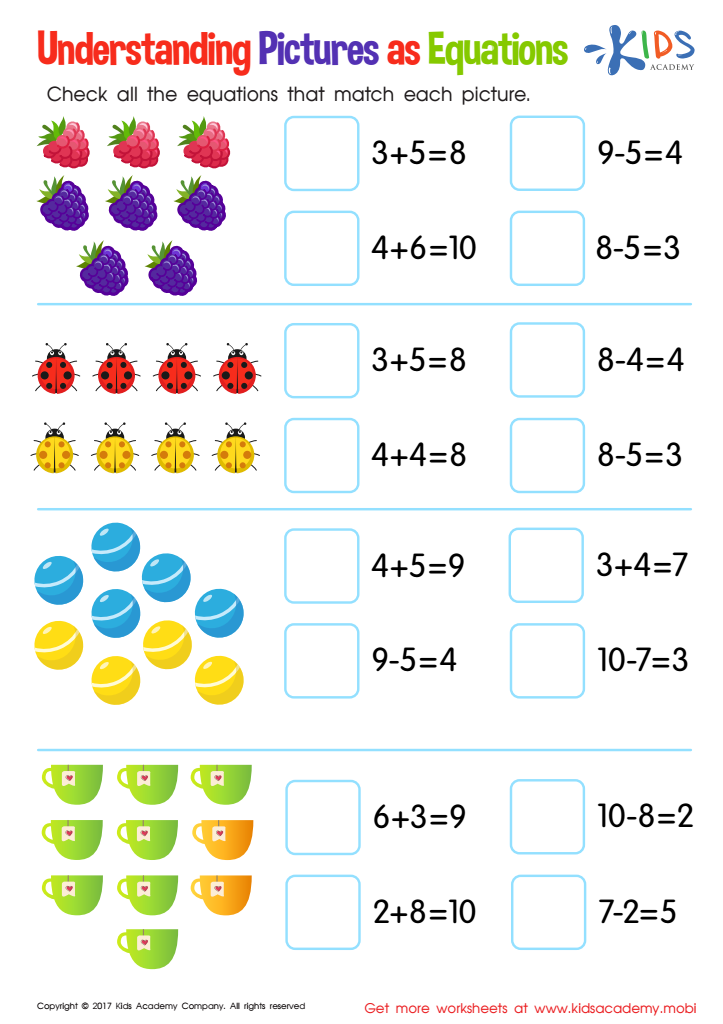
Understanding Pictures as Equations Worksheet
 Assign to My Students
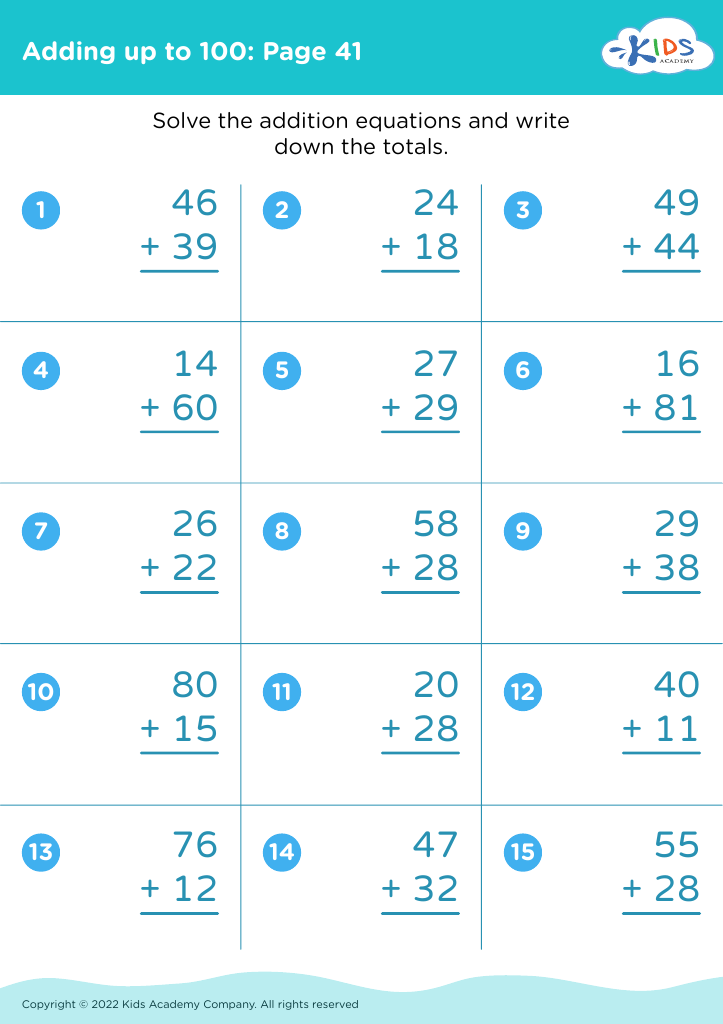
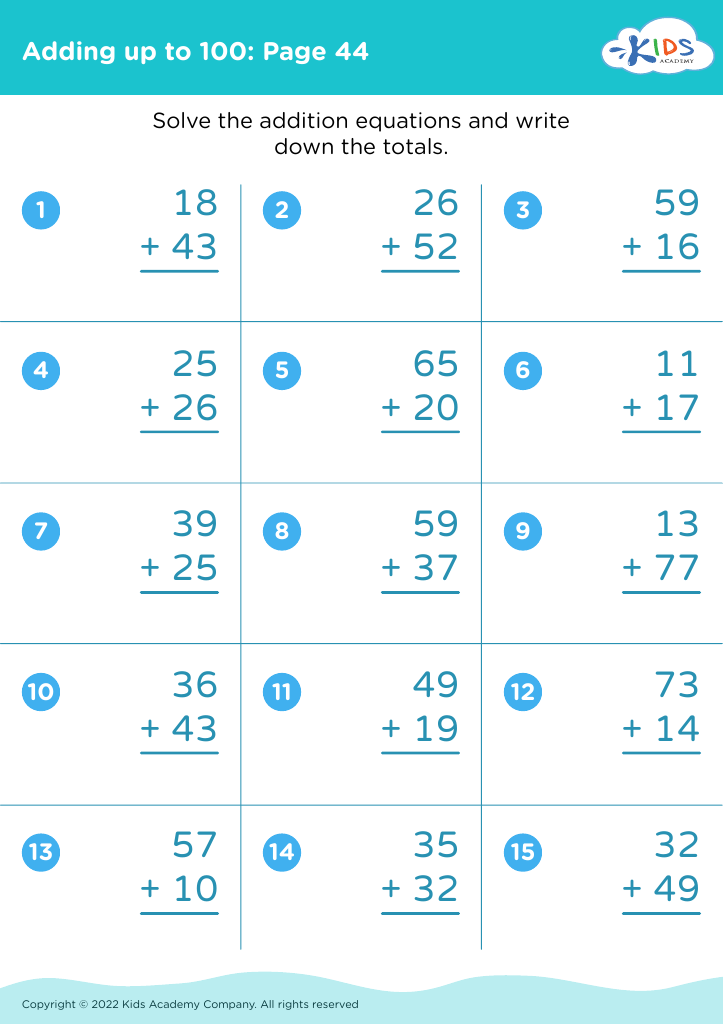








Recognizing patterns in addition and subtraction for children aged 5-7 lays a vital foundation for their future math success and cognitive development. At this early stage, students often encounter basic arithmetic problems and exercises that necessitate an understanding of repeating sequences or regularities.
First, mastering patterns enables children to predict answers and solve problems more efficiently. For instance, understanding that adding 1 repeatedly produces a sequential number pattern (1, 2, 3, 4, etc.) helps them quickly determine the results of more complex problems without undue stress. This not only boosts their calculation skills but also enhances their confidence and enthusiasm towards math.
Moreover, grasping these patterns develops critical thinking and problem-solving abilities. Recognizing regularities helps children discern relationships between numbers, understand properties of operations, and make connections between different concepts within mathematics. These skills are not just academic; they translate into everyday decision-making and logical reasoning abilities.
Furthermore, the joy of discovering patterns can engender a love for learning and intellectual curiosity. When students see math as a systematic, predictable, and similar extension of enjoyable puzzles, they are more likely to engage with enthusiasm and maintain a positive outlook on more challenging subjects in future grades. Thus, both parents and teachers play crucial roles in encouraging this fundamental arithmetic skill.








