Welcome to our collection of "Simplifying Fractions Addition & Subtraction Worksheets" designed for children aged 5-7! These engaging worksheets provide young learners with a fun way to grasp the fundamentals of fractions through interactive exercises. Featuring colorful illustrations and age-appropriate problems, our resources encourage the development of crucial math skills, including simplifying fractions before adding or subtracting. Each worksheet is tailored to boost confidence and foster a love for learning. Perfect for home practice or classroom activities, these worksheets will guide your child in mastering the basics of fractions, ensuring a solid foundation for future mathematical challenges. Explore our collection today!
Check out this FREE Trial Lesson on Addition & Subtraction for age 5-7!

X

Favorites
With answer key
Interactive
  • 5-7
  • Simplifying Fractions
  • Addition & Subtraction
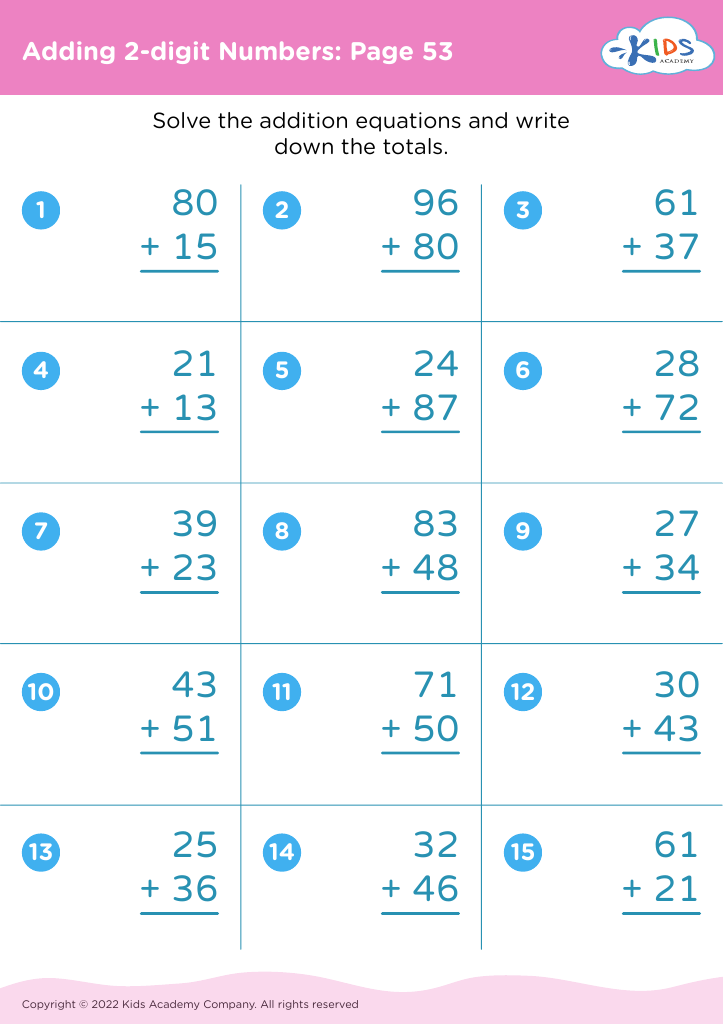
Adding 2-digit Numbers: Page 53

Adding 2-digit Numbers: Page 53

Adding 2-digit Numbers: Page 53
Worksheet
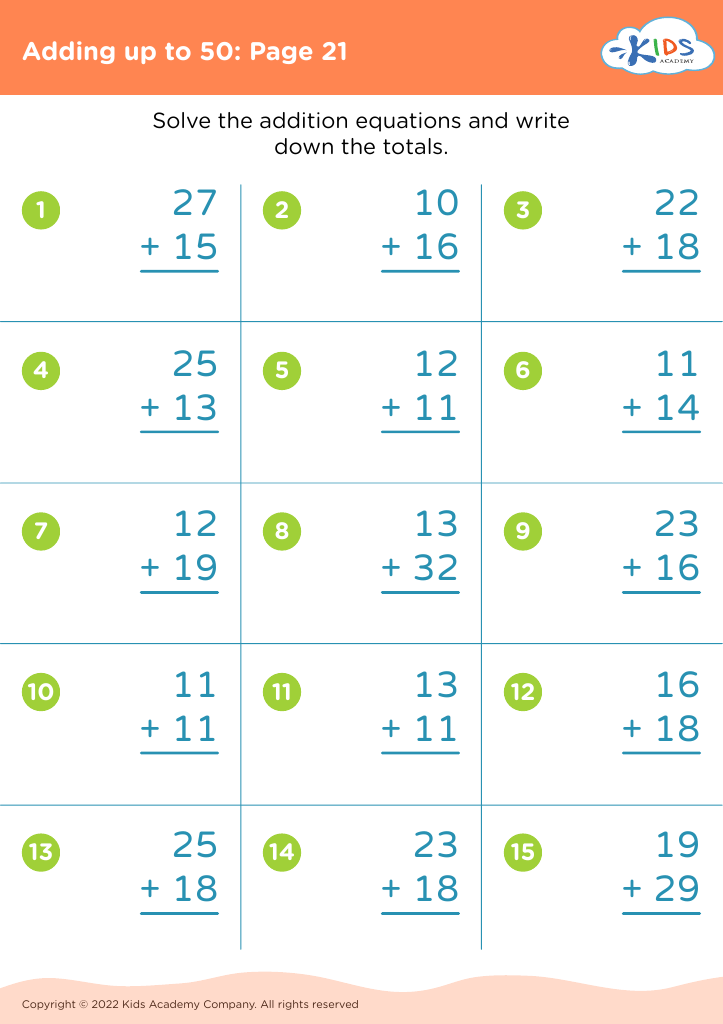
Adding up to 50: Page 21

Adding up to 50: Page 21

Adding up to 50: Page 21
Worksheet
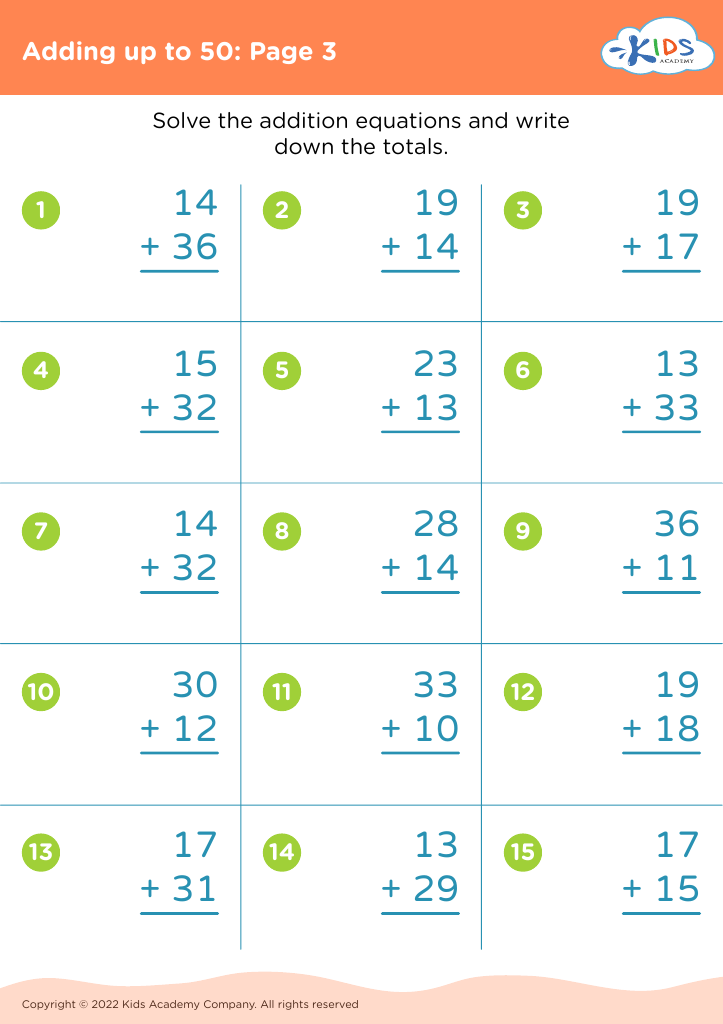
Adding up to 50: Page 3

Adding up to 50: Page 3

Adding up to 50: Page 3
Worksheet
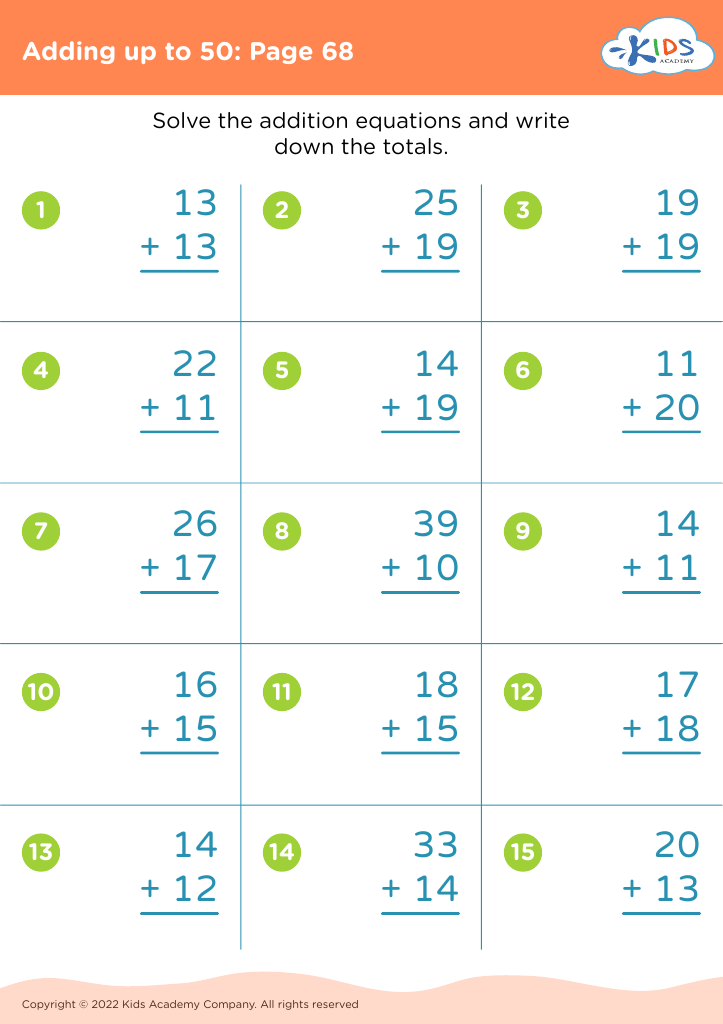
Adding up to 50: Page 68

Adding up to 50: Page 68

Adding up to 50: Page 68
Worksheet
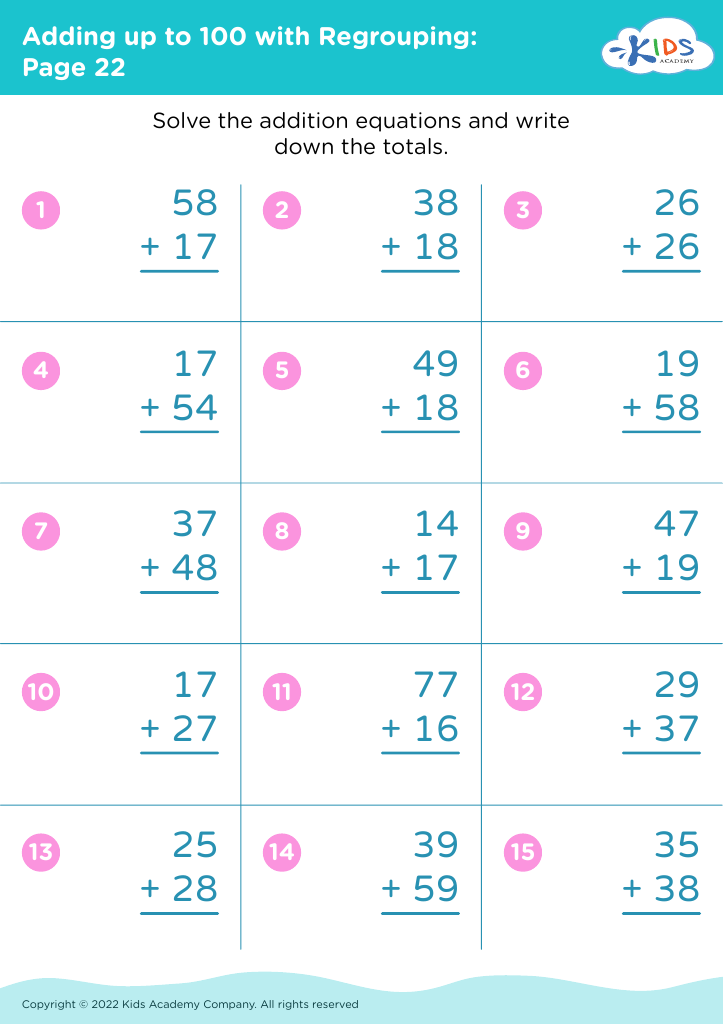
Adding up to 100 with Regrouping: Page 22
Worksheet
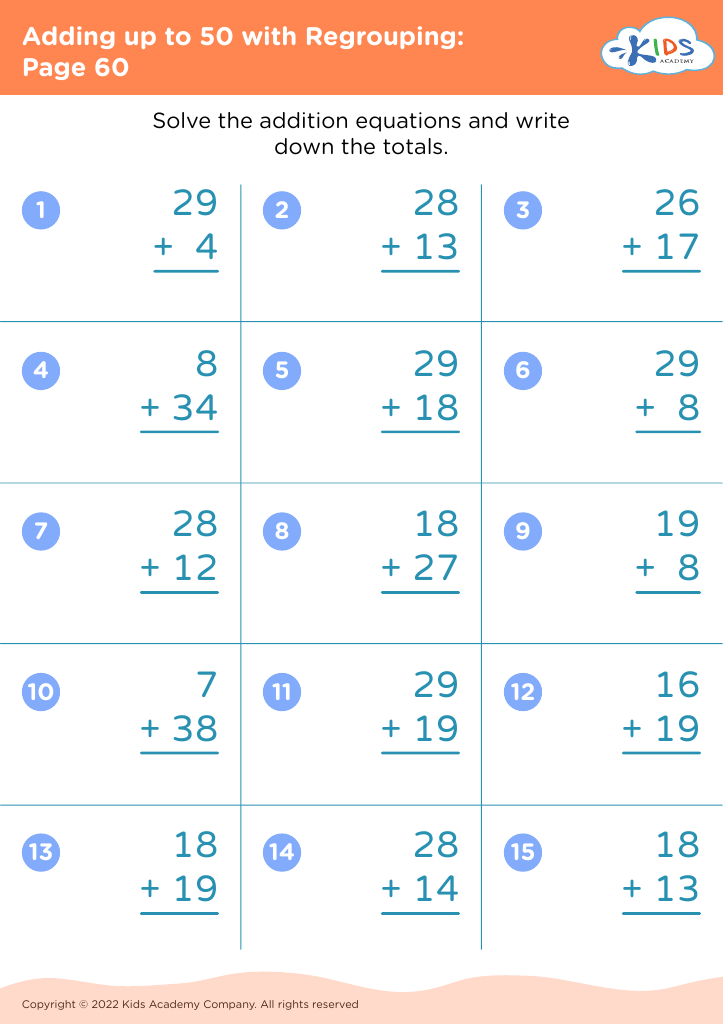
Adding up to 50 with Regrouping: Page 60
Worksheet
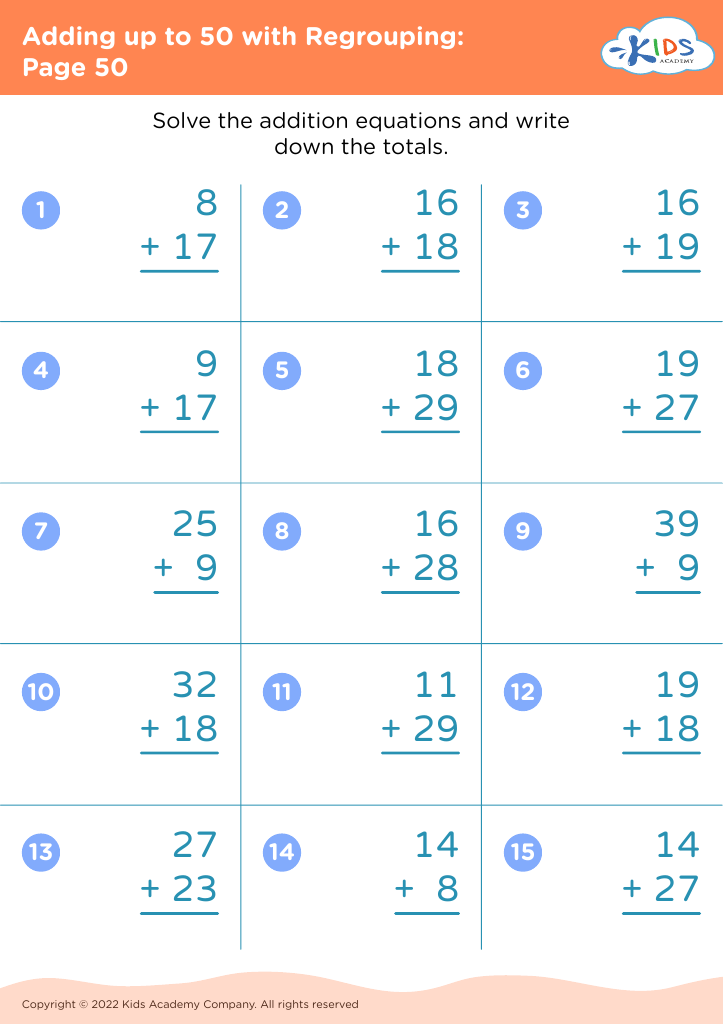
Adding up to 50 with Regrouping: Page 50
Worksheet
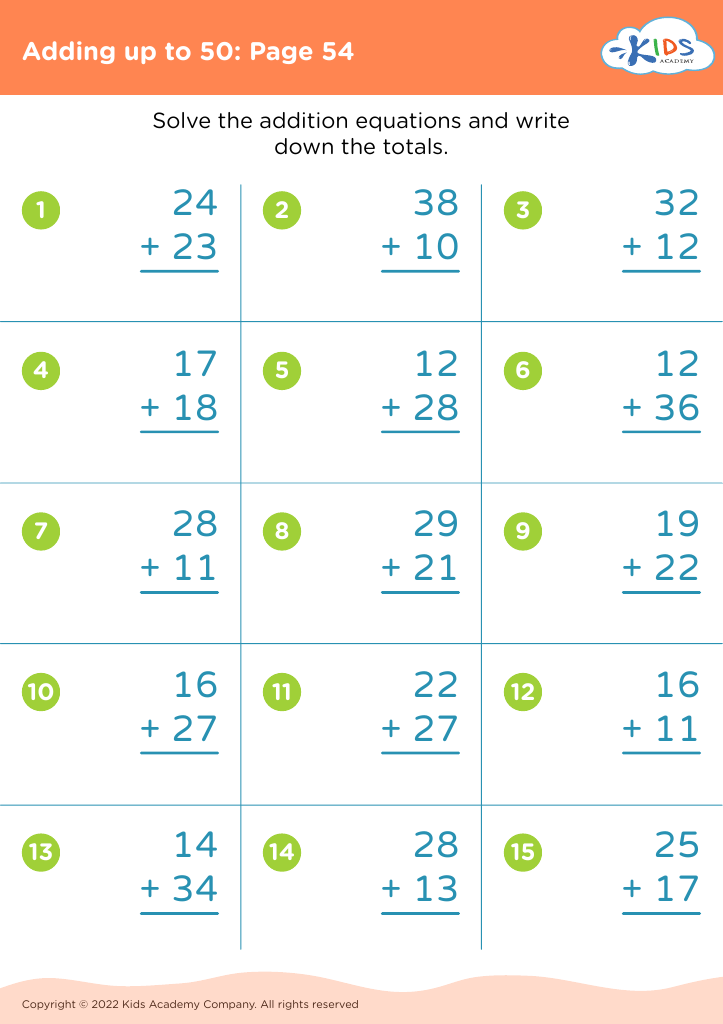
Adding up to 50: Page 54

Adding up to 50: Page 54

Adding up to 50: Page 54
Worksheet
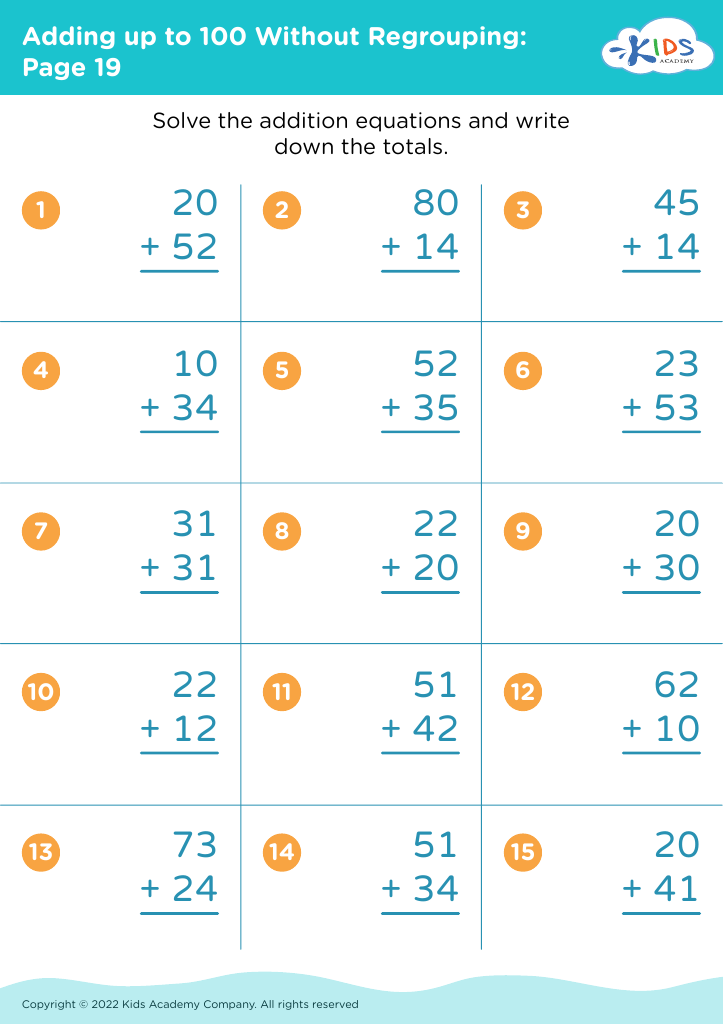
Adding up to 100 Without Regrouping: Page 19
Worksheet
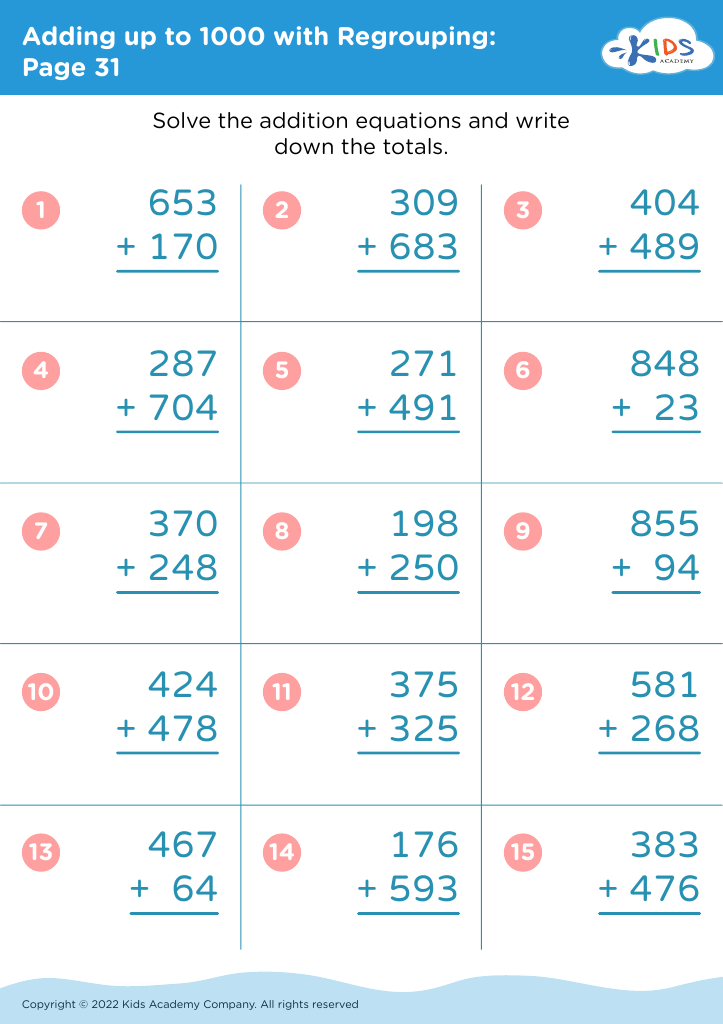
Adding up to 1000 with Regrouping: Page 31
Worksheet
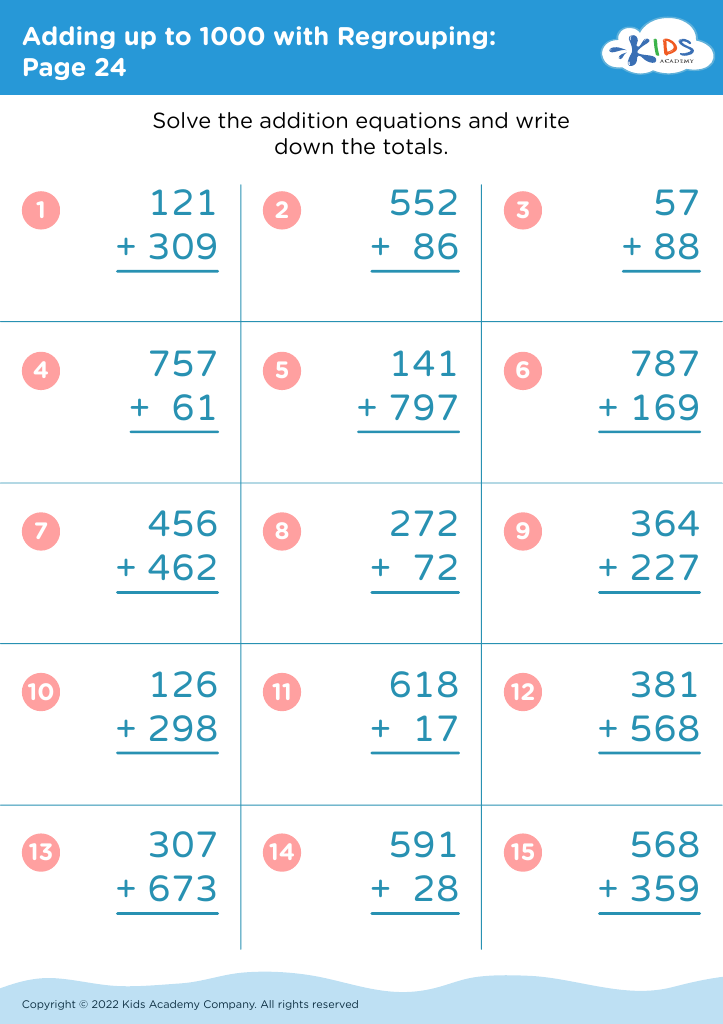
Adding up to 1000 with Regrouping: Page 24
Worksheet
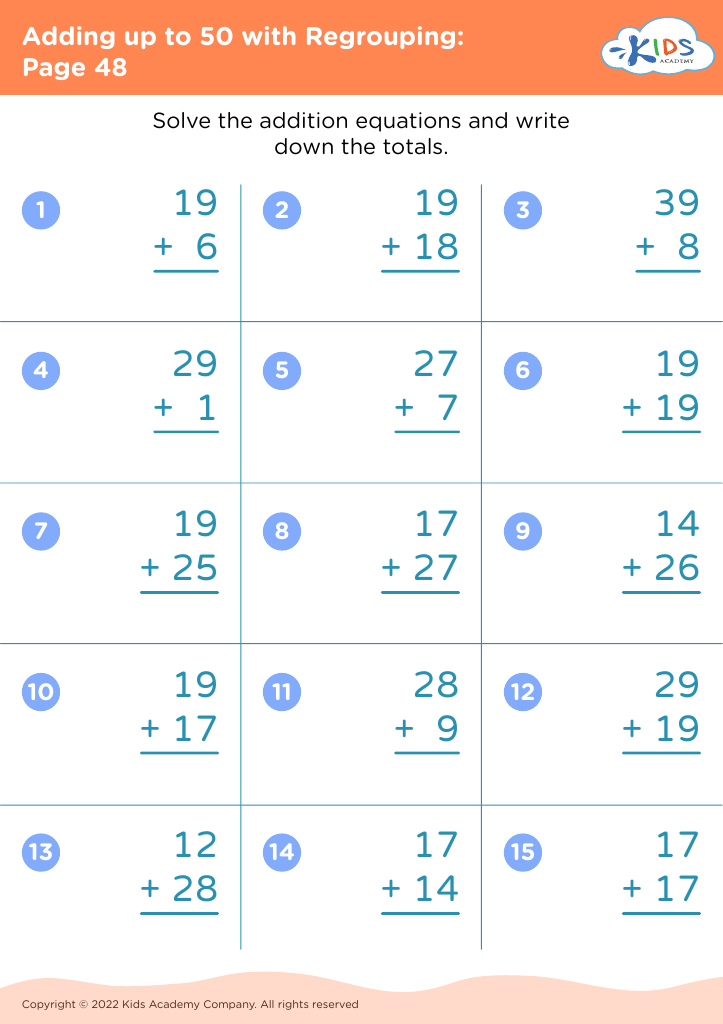
Adding up to 50 with Regrouping: Page 48
Worksheet
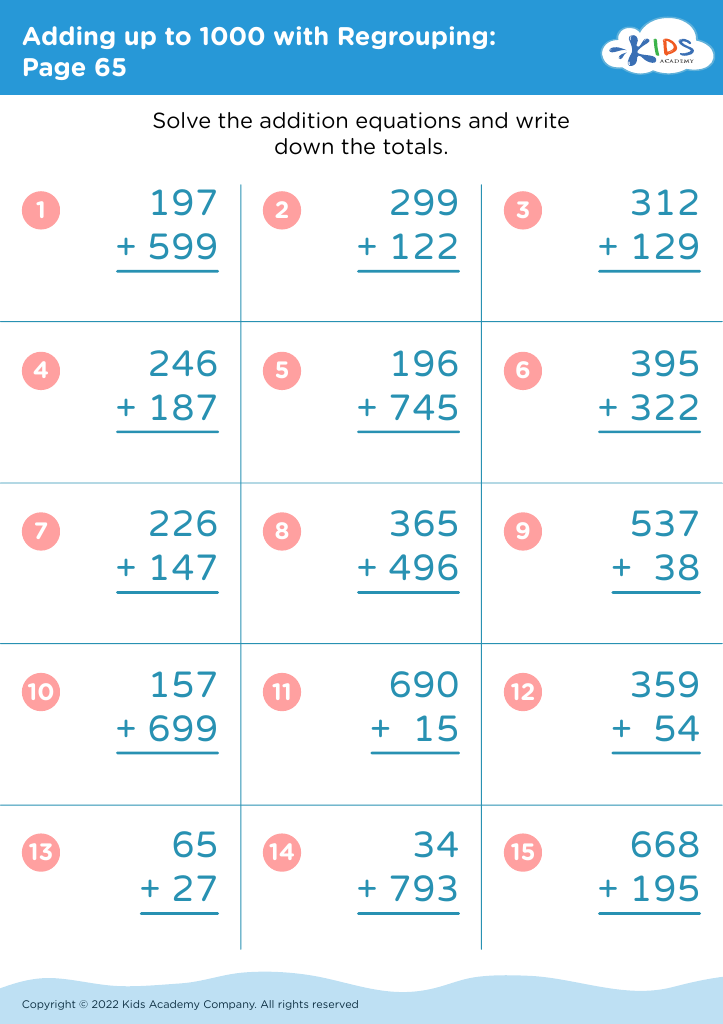
Adding up to 1000 with Regrouping: Page 65
Worksheet
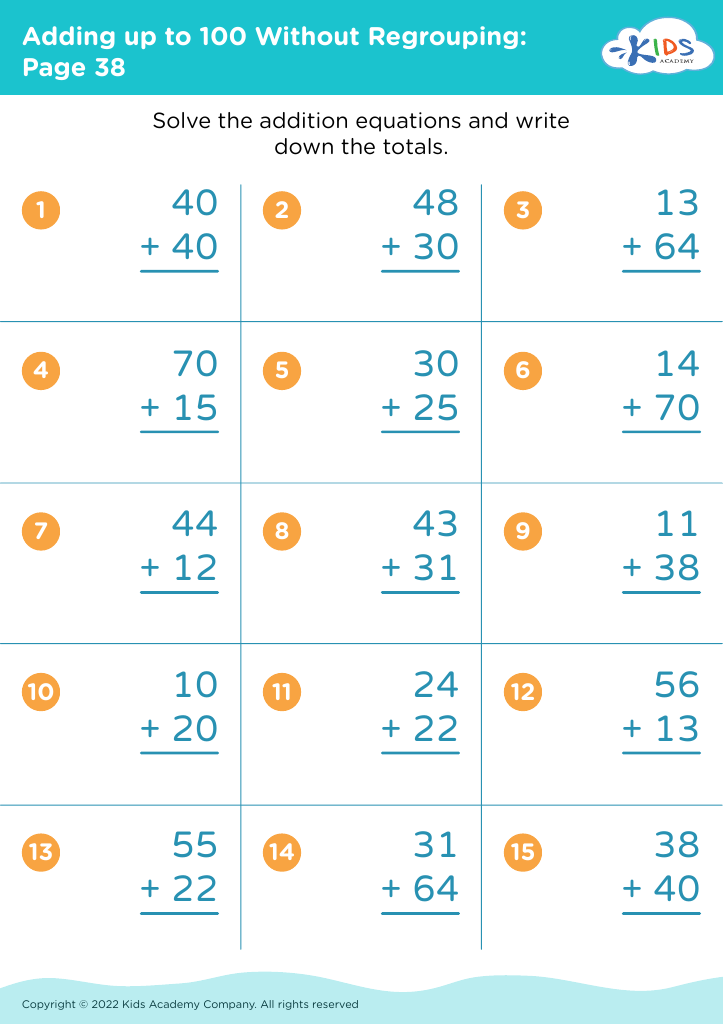
Adding up to 100 Without Regrouping: Page 38
Worksheet
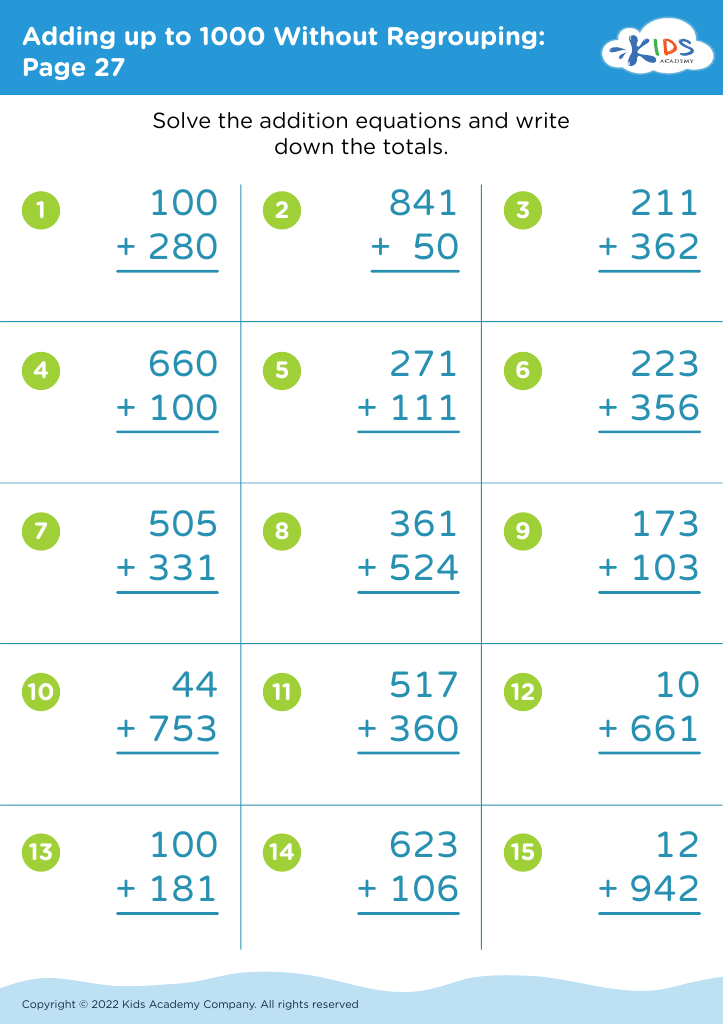
Adding up to 1000 Without Regrouping: Page 27
Worksheet
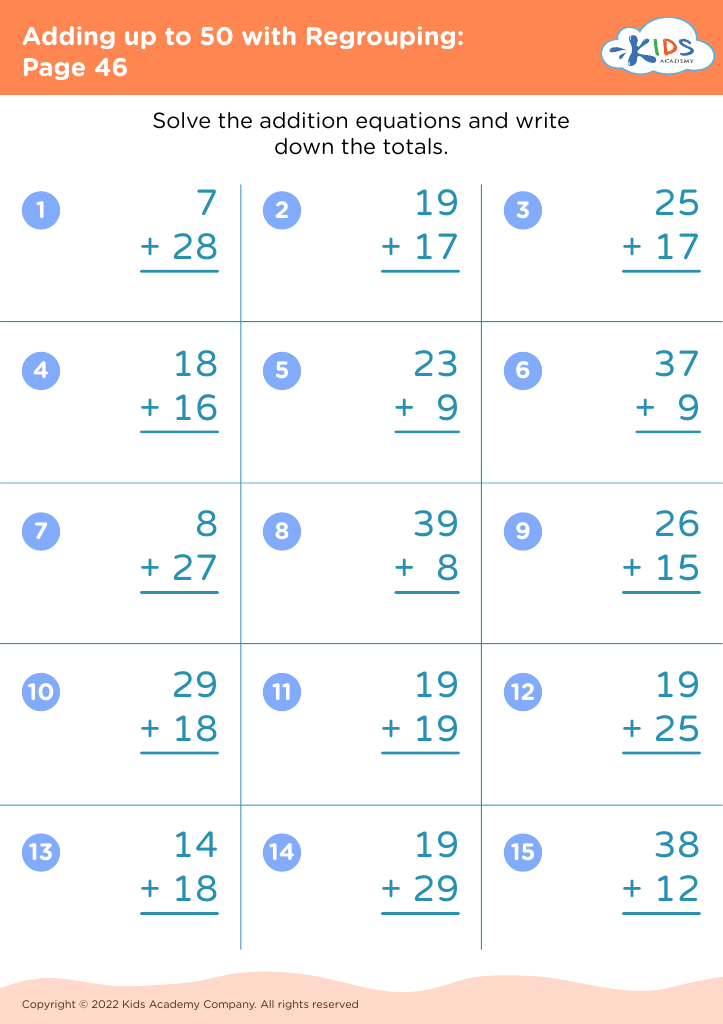
Adding up to 50 with Regrouping: Page 46
Worksheet
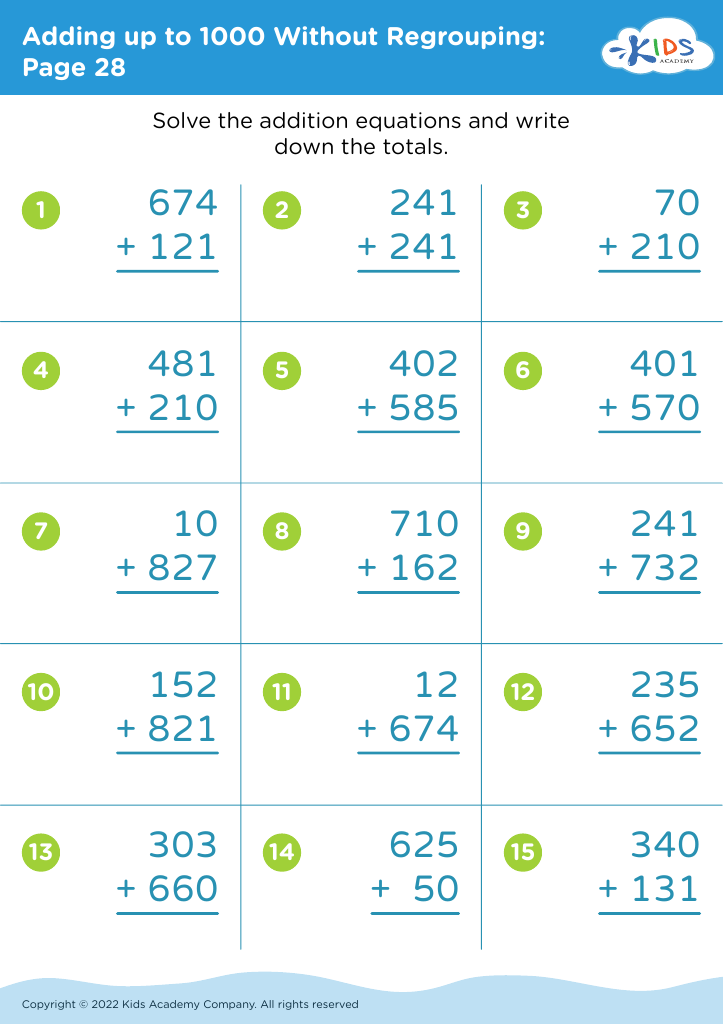
Adding up to 1000 Without Regrouping: Page 28
Worksheet
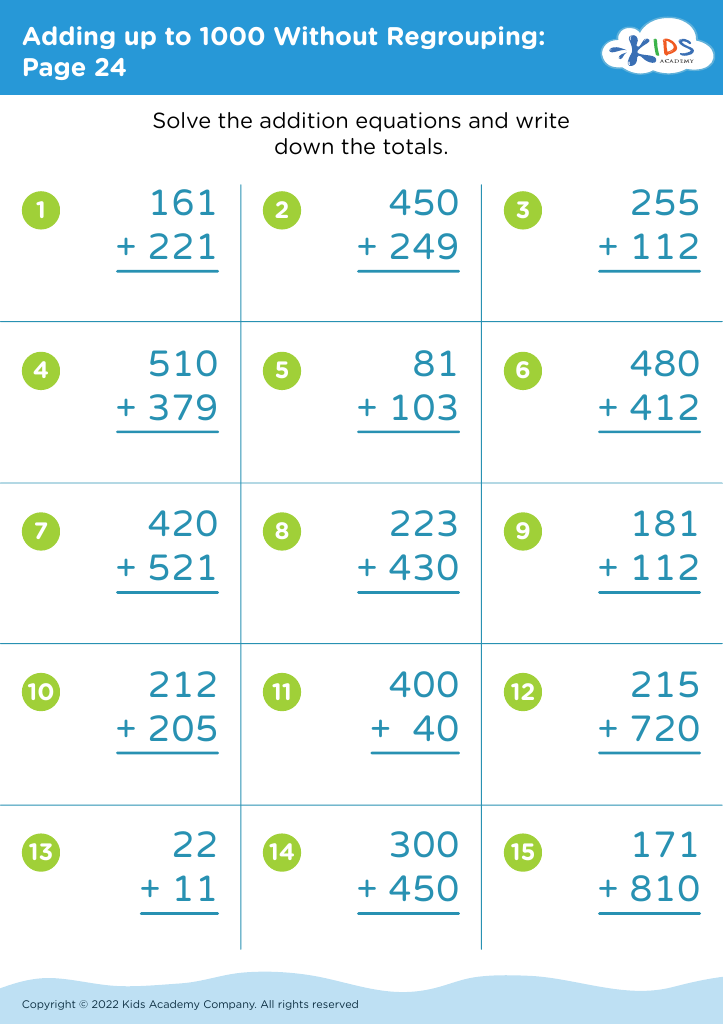
Adding up to 1000 Without Regrouping: Page 24
Worksheet


Simplifying fractions addition and subtraction is a crucial math skill that introduces foundational concepts in numeracy for children aged 5-7. At this early stage, students are developing their number sense, and understanding fractions fosters critical thinking regarding parts of a whole. By focusing on simplification, young learners can easily grasp the relationship between numbers, which supports their ability to perform more complex operations as they progress.

Teaching children to simplify fractions helps reinforce their understanding of equivalent values—showing them that different numbers can represent the same quantity. This fosters flexibility in thinking about numbers, enhancing problem-solving skills. Additionally, simplified fractions make it easier for young learners to visualize and compare different quantities, which is an essential life skill.

Moreover, simplifying fractions can engage parents and teachers collaboratively in the learning process. It encourages meaningful conversations about math, allowing adults to model rational problem-solving and the joy of math. By ensuring comprehension at this stage, parents and teachers lay the groundwork for more advanced mathematical concepts, promoting a positive attitude towards math and boosting confidence in their children's ongoing academic journey. Investing time in these fundamental skills is crucial for fostering lifelong learners.