Subtraction practice Addition & Subtraction Worksheets for Ages 5-7 - Page 4
76 filtered results
-
From - To
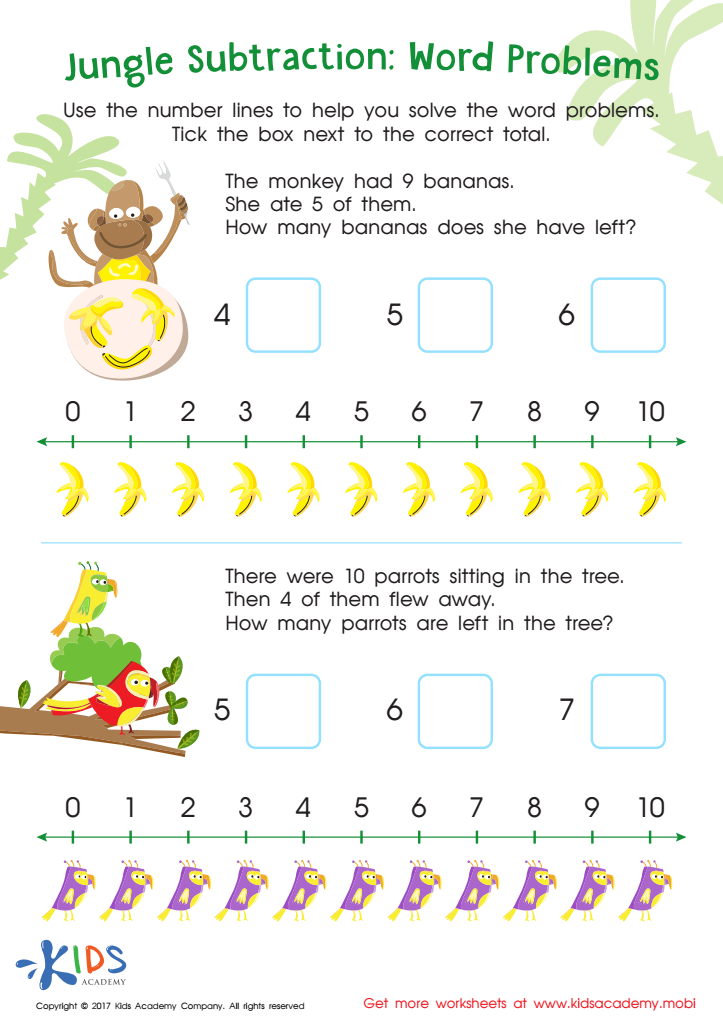
Jungle Subtraction Word Problems Substraction Worksheet
 Assign to My Students
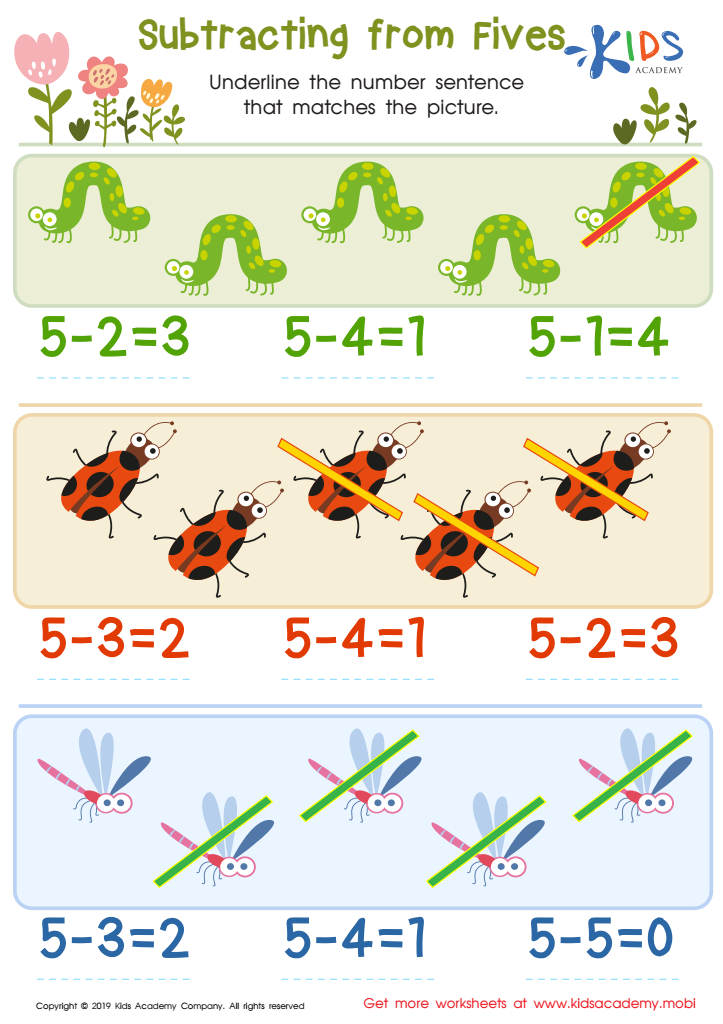
Subtracting From Fives Worksheet








Subtraction and addition practice for children aged 5-7 is vital for numerous reasons. First, these foundational skills are crucial for developing mathematical understanding. Mastery of addition and subtraction helps young learners build confidence and lays the groundwork for more complex math concepts, such as multiplication and division.
Furthermore, these early practices support cognitive development, enhancing critical thinking and problem-solving skills. By engaging in consistent subtraction and addition exercises, children hone their ability to process information quickly and accurately—skills that are transferable across subjects and daily life.
Parents and teachers also play a key role in fostering a positive attitude toward math. By providing support and encouragement in these basic skills, they help mitigate math anxiety that some children might face. Additionally, incorporating fun and interactive methods, like games or hands-on activities, can make learning enjoyable and engaging, ensuring children stay interested.
Finally, consistent practice can help track a child’s learning progress, allowing parents and teachers to identify areas where additional support might be needed. Overall, subtraction and addition practice not only equips children with essential academic skills but also inspires a love for learning that can carry into their future education.








