Understand number relationships Addition & Subtraction Worksheets for Ages 5-7
3 filtered results
-
From - To
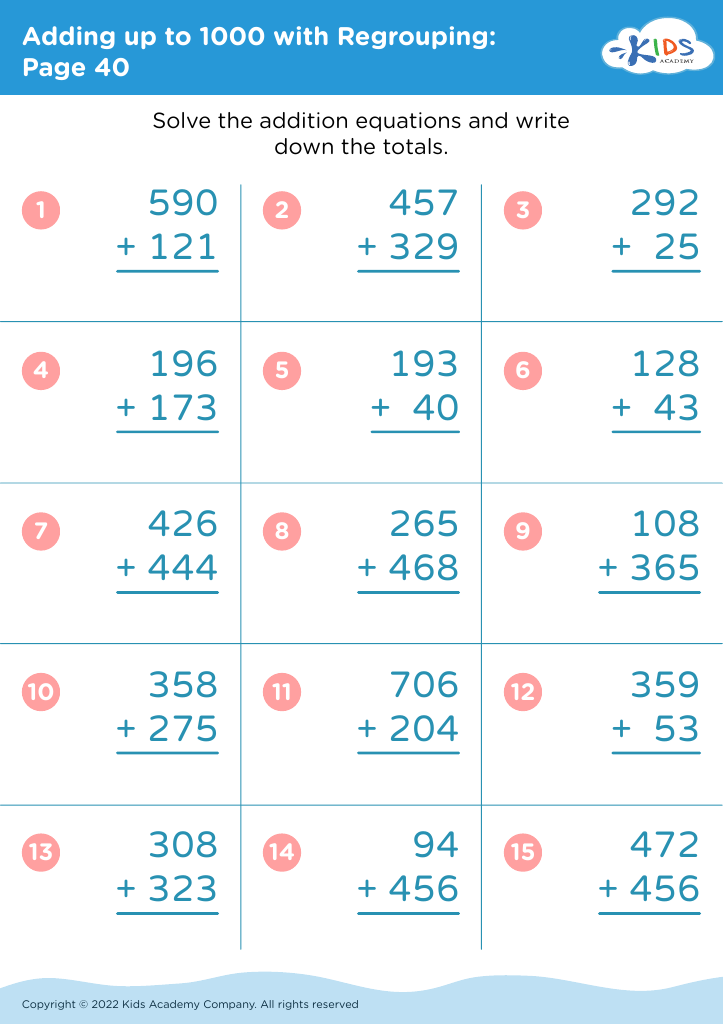
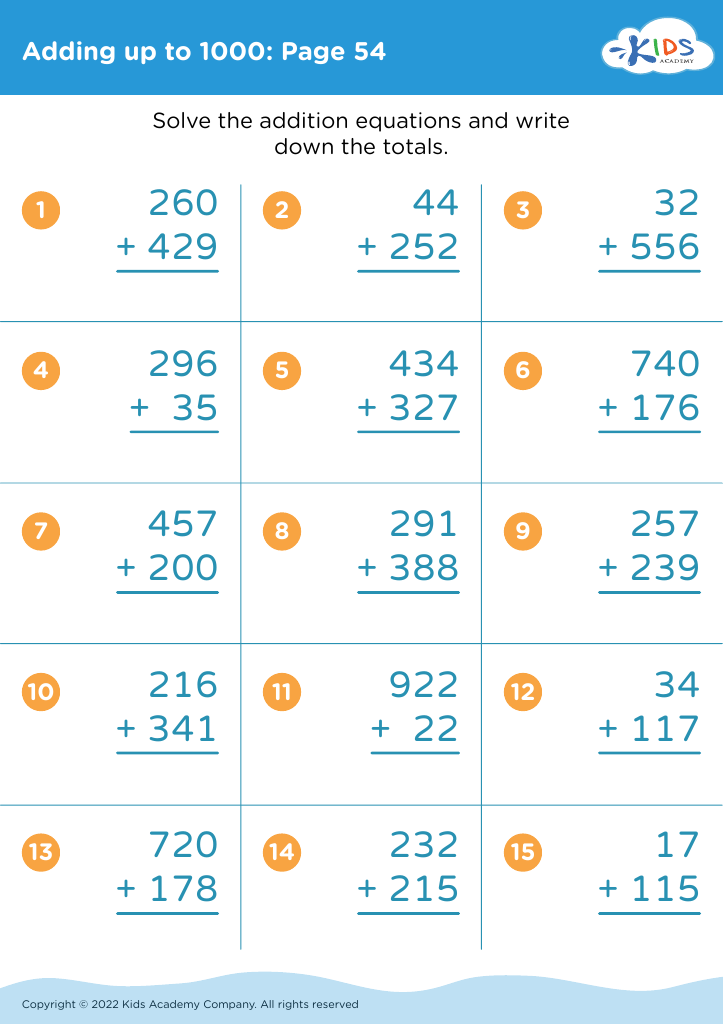
Introduce young learners to the foundational concepts of math with our "Understand Number Relationships: Addition & Subtraction Worksheets" designed for ages 5-7. These engaging, printable worksheets help children grasp the essential relationships between numbers while improving their addition and subtraction skills. Our expertly crafted activities make learning fun and interactive, encouraging kids to develop strong numerical fluency. Perfect for both classroom use and homeschooling, these resources aim to build confidence and proficiency in young mathematicians, setting them up for future success. Visit Kids Academy to explore our full range of educational materials and start nurturing your child's mathematical journey today!
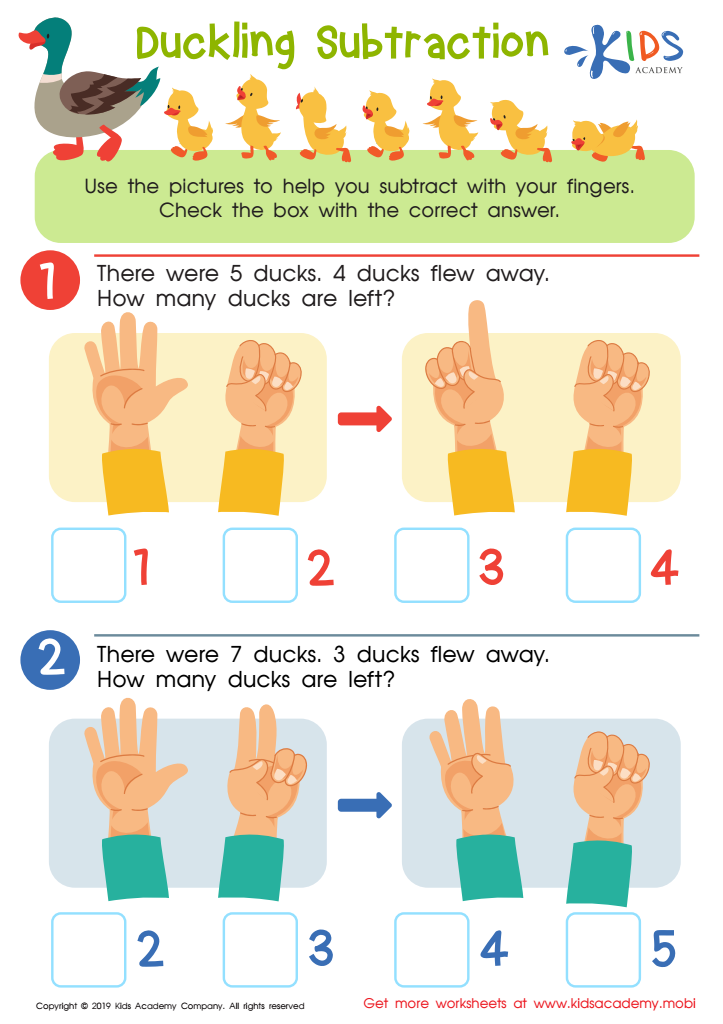
Duckling Subtraction Worksheet
 Assign to My Students








Understanding number relationships, including addition and subtraction, is foundational for children aged 5-7 because it forms the basis for all future mathematics learning. At this developmental stage, children are just beginning to grasp basic math concepts and cognitive skills to handle numbers effectively.
For parents and teachers, nurturing this understanding helps children develop crucial problem-solving abilities and logical thinking. When children learn how numbers relate to each other through addition and subtraction, they begin to see patterns, make predictions, and understand the significance of numbers in their daily lives, be it sharing snacks or dividing toys.
Additionally, mastering these basic math skills can boost children’s confidence and interest in math, setting a positive tone for more complex mathematical concepts in later years. It minimizes the potential for future struggles in school, where math remains a core subject across grades.
As children assimilate these skills, they are better prepared for real-world situations requiring financial literacy, measurements, and logical decisions. Thus, fostering a robust understanding of number relationships during these formative years has long-term benefits, equipping children with valuable knowledge and confidence that extends well beyond the classroom.








